
 English Literature
Plays
Romeo and Juliet
William Shakespeare; complete source text.
Not rated yetRate this bookRomeo and Juliet announces its tragic outcome before showing how attraction, family hostility, haste, and failed communication bring it about. The play's five acts compress a courtship and secret marriage into a rapidly narrowing sequence of choices. This guide covers the Prologues, the complete action, and the final inquiry, while distinguishing chance events from the social pressures that make them lethal.
 Free
About this book
Romeo and Juliet announces its tragic outcome before showing how attraction, family hostility, haste, and failed communication bring it about. The play's five acts compress a courtship and secret marriage into a rapidly narrowing sequence of choices. This guide covers the Prologues, the complete action, and the final inquiry, while distinguishing chance events from the social pressures that make them lethal.
The hosted PDF is Academic Master’s 2026 formatting of Project Gutenberg eBook #1513, first released in 1998. It contains the complete source text and Gutenberg notices. Its displayed 118-page count refers to PDF sheets, including front matter and notices, rather than the pagination of an early printed edition.
Academic relevance. Cornell’s Spring 2026 ENGL 2080 course description explicitly lists this play for study. This documents course use of the work rather than assignment of this particular PDF. View the institutional source
Editorial suitability: undergraduate English literature and drama students practising close reading, with guidance where unfamiliar language requires it. This is Academic Master’s assessment, rather than a level stated by the author.
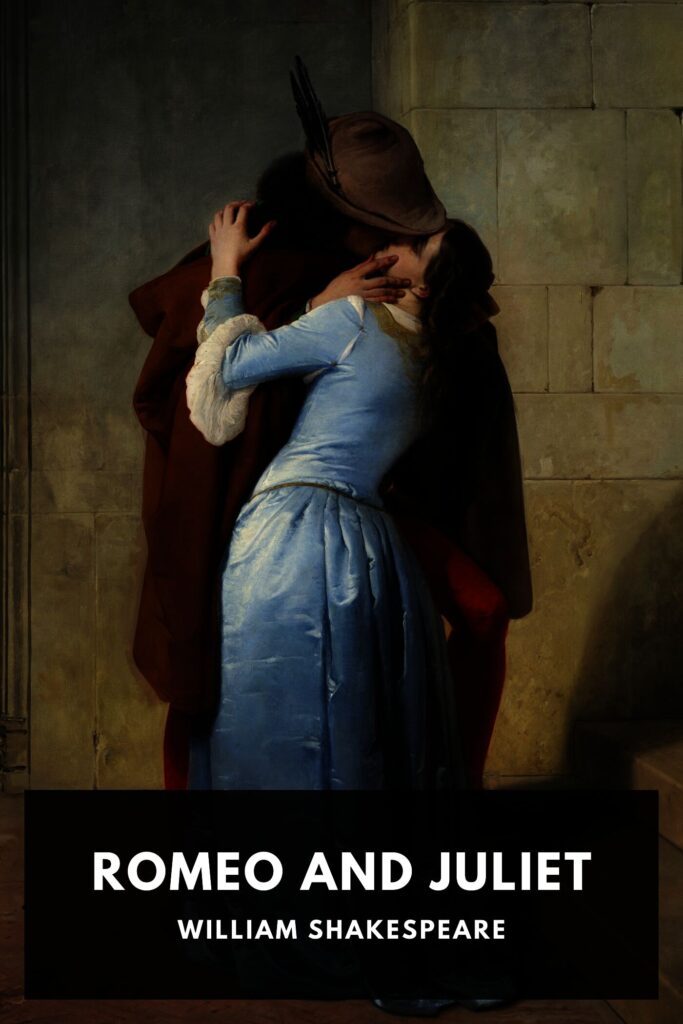
Cover image: Standard Ebooks edition. The hosted PDF uses the Project Gutenberg source described above.
Source licence: Full Project Gutenberg License. Required source notices and licence terms are retained in the downloadable files.
Book summary
About this work
Romeo and Juliet announces its tragic outcome before showing how attraction, family hostility, haste, and failed communication bring it about. The play's five acts compress a courtship and secret marriage into a rapidly narrowing sequence of choices. This guide covers the Prologues, the complete action, and the final inquiry, while distinguishing chance events from the social pressures that make them lethal.
Act-by-act summaries
Prologue and Act I — A feud before a love affair
The opening Chorus tells the audience that the children of rival households will die and that their deaths will end the feud. This foreknowledge shifts attention toward the causes and missed alternatives within the action. A street quarrel draws servants and family members into violence until the Prince threatens severe punishment. Romeo initially mourns an unreturned attachment to Rosaline, not Juliet. Paris approaches Capulet about marrying Juliet, and the family prepares a feast. Romeo attends with friends, where Mercutio's Queen Mab speech places dreams and desire within a wider, unsettling imagination. Romeo and Juliet meet and share a patterned exchange before discovering their families' opposition. Tybalt recognizes Romeo and resents Capulet's decision to tolerate his presence, leaving an unresolved threat within the evening's celebration.
Act II — A promise made under secrecy
A second Chorus describes the lovers' changed attachments and the obstacles to open courtship. In the orchard scene, Romeo and Juliet negotiate the meaning of names, the speed of their commitment, and the practical need for marriage. Juliet's questions help turn elevated declarations into arrangements, rather than leaving the scene as an uninterrupted expression of spontaneous feeling. Friar Lawrence agrees to marry them, partly hoping their union will reconcile the households, though he warns against sudden change and excess. The Nurse carries messages, creating a fragile communication network dependent on intermediaries. The act ends with the lovers moving toward marriage. Their relationship gains a formal commitment, but secrecy prevents that commitment from publicly reorganizing the feud that surrounds it.
Act III — A hidden marriage and a public catastrophe
Tybalt challenges Romeo, who refuses to fight because the secret marriage has made them relatives. Mercutio does not understand that refusal and takes up the quarrel. Romeo's attempt to intervene contributes to the circumstances in which Mercutio is fatally wounded. Romeo then kills Tybalt and is banished. Juliet receives confused news before understanding that her husband has killed her cousin; her response must reconcile grief, loyalty, and the knowledge of a marriage others cannot see. After a night together, Romeo leaves for Mantua. Capulet abruptly arranges Juliet's marriage to Paris, and her resistance brings threats of rejection. When the Nurse recommends accepting Paris, Juliet withdraws her confidence in her. Each damaged relationship further reduces the channels through which she can seek help.
Act IV — A dangerous remedy and an accelerated timetable
Juliet turns to Friar Lawrence and threatens death rather than a second marriage. He supplies a potion that will make her appear dead, with a plan to inform Romeo and reunite them after she wakes in the family tomb. Juliet returns home and appears to accept her father's arrangement, prompting him to move the wedding earlier. Alone, she confronts fears about the potion, the tomb, and the possibility of waking without assistance before drinking it. The household discovers her apparently lifeless body, and wedding preparations become funeral preparations. The audience knows the appearance is temporary, but most characters respond to it as death. The act makes the success of the remedy depend on timing and communication that neither Juliet nor the Friar can fully control.
Act V — Failed delivery and irreversible conclusions
Balthasar tells Romeo that Juliet is dead because he has witnessed the funeral, not because he knows the potion's history. Romeo buys poison and returns to Verona. Friar John explains that quarantine prevented delivery of Lawrence's message, leaving the essential correction undelivered. At the tomb, Romeo encounters and kills Paris, then sees Juliet and interprets signs of vitality without understanding their cause. He drinks the poison before she wakes. Lawrence arrives, but Juliet refuses to leave with him and kills herself after discovering Romeo dead. The final inquiry assembles letters, testimony, and bodies into a more complete account than any participant possessed during the crisis. The families promise memorials and reconciliation, a public repair achieved too late to save their children.
Time, knowledge, and the distribution of responsibility
Keep prophecy and social causation in the same analysis. The Prologue establishes a destined-seeming pattern, but individual actions remain dramatically consequential: adults promote secrecy or obedience, friends escalate quarrels, and messages depend on fallible routes. The lovers' haste is part of this pattern rather than its sole explanation. Compare the shared sonnet at their meeting, the negotiations in the orchard, and the broken communication of the final act to see how language moves from coordination to isolation. The ending's reconstruction also matters. It shows that the tragedy includes a failure to make relevant knowledge available in time, not simply the absence of truth. Posthumous understanding can change the community without reversing the damage.
Study instructions
- Build a calendar of events and mark every change in the wedding timetable, travel plan, or expected message.
- Compare Romeo's language about Rosaline with the dialogue Juliet helps create at their first meeting.
- Track who knows about the marriage after each scene and explain how secrecy changes the meaning of Romeo's refusal to fight.
- Distinguish Juliet's fears before drinking the potion from events the play establishes as actually occurring.
- Compare Balthasar's report with the undelivered letter: both concern Juliet, but only one includes the plan.
- Read the final inquiry as an assembly of partial evidence and identify which earlier deaths might have been prevented by shared knowledge.
Questions for reflection
- How does knowing the ending affect the audience's response to moments of hope?
- What pressures make the Friar's risky plan appear to Juliet as a remaining possibility?
- Do the promised memorials constitute accountability, reconciliation, or an inadequate substitute for both?
Sources and coverage
This original study guide follows the complete work in the linked Project Gutenberg edition and includes the ending. Poem numbers and act divisions follow that source; thematic reading groups are editorial aids, not additional chapters of the original. Plot summary and interpretation are distinguished through the reading questions. Historical title-page attributions do not by themselves settle authorship. Read the source text; Edition details.
About access & copyright
Check this edition’s source and licence before reusing its files or content. A library listing does not grant additional rights.
Read our Library Access & Copyright policyForeknowledge
Explain how the Prologue shapes the audience’s attention.
Feud
Trace the expansion of a private quarrel into civic disorder.
Early attachment
Identify Rosaline as the object of Romeo’s opening love.
Chance encounter
Explain how the unread guest list prepares attendance at the feast.
Reader ratings & reviews
Share your thoughts
Your review helps other students choose the right resources.
KEEP LEARNING
Your next great read
English Literature English Literature
Thomas Lord Cromwell
View Thomas Lord Cromwell — book English Literature
Sir John Oldcastle
View Sir John Oldcastle — book English Literature
The Merry Devil of Edmonton
View The Merry Devil of Edmonton — book English Literature
The Puritan Widow
View The Puritan Widow — book English Literature
The London Prodigal
View The London Prodigal — book English Literature
King Edward III
View King Edward III — book English Literature
Fair Em
View Fair Em — book English Literature
Arden of Feversham
View Arden of Feversham — book English Literature



