
Abstract
By examining the relevant literature, it is fund that many students and parents always faced confusion while selecting appropriate course. Available Study focused on student’s academic performance, placement area but there is a lack of study which focused course selection among multiple graduation courses considering on all demographic, personal, academic and social factors. So, to fill this gap, authors have identified influencing factor by using feature selection technique mutual information gain on collected data. Study focused on comparison of accuracy of naive bayse, SVM classifiers without ensemble bagging classifier with accuracy of naive bayse, SVM classifiers with ensemble bagging classifier. Descriptive research method using a survey was used for the present study. The online questionnaires were used to collect data from the students who are perusing course from various streams such as medical, engineering and commerce and management. Convenience sampling method was used to determine the participants of the study. A total of 91 student’s data from all stream were collected for the study. Google colab was used for the study. The results show that that the performance accuracy of classifiers has increased after applying Ensemble bagging classifier. The naïve bayse classifier showed the best performance with an accuracy of 96% which increased from 89% after applying Ensemble bagging classifier.SVM also showed increase in accuracy from 67% to 78%.
Keywords: ensemble, influencing factors, bagging, classifier, feature selection
Introduction
The usefulness of data mining tools has been demonstrated in numerous fields such as Financial Analysis, Telecommunication Industry, retail Industry, health care etc. They play an important role in the decision-making process. One of these areas is e-learning where it has become extremely important to analyses and predicts students’ performance statistics [1]. A novel Veracity Scanning Model (VSM) was put forth in [2] to identify false material in the field of health care. Many researchers around the globe are interested in the growing amount of data that the Increased use of technology in education is producing on a daily basis [3]. The selection of an academic programme by students is influenced by various variables [4]. Ensemble methods are learning algorithms that build a group of classifiers and then classify new data points by weighing the forecasts of those classifiers [5]. To categories various kinds of data, many classification models have also been put forth, including K-nearest-neighbor, Random Forest, XGBoost, Neural Networks, etc. Bagging and boosting are two common ensemble ideas. Bagging aggregates the findings across multiple models, whereas boosting builds a stronger model out of multiple weak models [6]. In [7] Bagging ensemble technique Data from the training dataset is taken at random and placed into a bag. There are created a number of bags, each containing a portion of the training data collection. Next, a classification algorithm is taught on each bag to provide a model. In the boosting ensemble technique, the first model is trained using the entire training set, and the second model is trained using the results of the first model. It initially assigns each instance of the dataset identical weights. If an instance’s class is incorrect, the subsequent model will give it more weight and concentrate on this instance. This procedure is repeated until the desired accuracy or quantity of additional models is obtained. The Random Forest algorithm is a sizable group of unrelated Decision Tree algorithms. From the training dataset’s segments, which each contain a decision tree, Random Forest generates a large number of decision trees. Now, an instance was placed in a class by each Decision Tree model. The class that received the most votes will then be used as the instance’s class. About 40% of students are unsure of their career choices, according to a survey by the Council for Scientific and Industrial Research (CSIR). This could lead to the wrong career choice and subsequent employment in an area that is not a good fit for them, decreasing the human resource’s productivity [8].
Following are the research objectives:
1) To developed predictive model which suggest courses such as Medial, Engineering and Commerce & Management after 12th?
2) To compare model accuracy between traditional machine learning algorithms and ensembles algorithms.
The remaining section of the paper is structured as follows: Section II discusses the literature; Section III explains the methodology and Section IV highlights the results and discussion followed by Section V conclusion and future enhancements
Literature Survey
This section discusses various techniques used in the literature to tackle above mentioned challenges. Section A describes and focus on factors, techniques and area were consisted for the study; section B elaborates research gap. `
Previous Studies
Compared data mining algorithms such as J-48, Random Forest, Naive Bayes, Naive Bayes Multinomial, K-Star, and IBK for mark predictions. According to the results, random forest algorithms outperform the competition [9]. In [10] the decision tree method and the probabilistic classification method were used to create the model that forecasts the student’s performance in end semester examination. Used educational data mining to predict where students would be placed in software businesses. Students’ personal, pre-university, and operational traits were taken into account for the prediction. According to the study, the J48 Decision Tree Algorithm has an accuracy rate of 76.41%, making it the top algorithm overall. According to the research, students who use both Internet-based (Facebook, Twitter) and mobile-based (WhatsApp, WeChat, Line) networking methods perform better than those who use just one or the other [11].in [12] use artificial neural networks to forecast students’ graduation. Utilizing the psychological state of the student, the proposed system forecasts a career option. The accuracy of data mining algorithms like C4.5, Naive Bayes, K Star, and simple cart was examined and contrasted. The study reveals that C4.5 works superior to others [13]. In [14] proposed a model to find extremely favorable association rules from student enrollment data. In [15], a new attribute selection measurement function (heuristic) was applied to the C4.5 DT algorithm to create a knowledge-based decision method for choosing the appropriate engineering branch. Using big data hadoop-hive software, a model was created to compare the performance of colleges based on placements, the student-staff ratio, affiliations, students’ performance, and student rating [16]. Developed an expert system using CLIPS in [17] to assist new students in choosing a faculty at Gomal University based on the student’s aptitudes, including intelligence, understanding, comprehension, and mathematical concepts, as well as his or her prior academic performance. In [18] Based on the student’s abilities and capabilities as determined by the test module results, the developed expert system uses rules to determine the faculty or major that is the most appropriate for him. On the data collection, various data mining algorithms including ID3, K-Means, Naive Bayes, and Random Forest were used. The study found that Random Forest provides improved results or accuracy as data size increases. Focused on the use of data mining methods for student enrollment in higher education. Identify additional places where data mining can be used [19]. In [20] revealed that Parents’ professions, the media, and students’ own preferences all interact to influence students’ career choices. A proposed system for predicting people’s career choices based on their personality traits, interests, and capacity to enroll in courses is implemented in [21], and it demonstrated 94% accuracy, which is better than 5.0 without an adaptive boosting algorithm. In [22] created the K-Nearest Neighbor and Certainty Factor algorithms-based Student Career Prediction System. The certainty factor technique and the K nearest neighbor approach both have excellent accuracy. create a fuzzy logic-based decision support system to assist university applicants who are faced with the admissions choice issue [23]. In [24] predicted student’s estimated career using ID3, Classification and Regression Tree, Random Forest, Support Vector Machines, Neural Networks CART and Multi-Layer Perceptron (MLP). In [25] created a web-based Expert System for Career Guidance using Rule based knowledge-base. Designed Cognitive model which investigate and find an appropriate job related to software career(s) in the software industry for the students [26]. In [27] Developed recommendation system using Feed-forward back propagation probabilistic neural network and Classification using Fuzzy Logic and Rough Set for students to select course engineering Stream. Developed an Intuitive Career System to predict the career using Binary classification, Logistic Regression, K-Nearest Neighbors and Stochastic Gradient Descent, random forest [28]. In [29] proposed an expert system using a machine learning approach for assessing student’s career using Artificial Neural Network. Designed a framework of expert system using ID3, J48, IB1 fuzzy logic for career selection [30]. In [31] used Apriori and Naïve Bayes algorithm to predict Student’s Branch Prediction and second is Stream Analysis of engineering course. Developed Model based on Naive Bayes algorithm to predict whether the student will enroll to university or not [31]. In [32] Designed Recommendation System using VM, Random Forest decision tree, One Hot encoding, XG boost Logistic Regression and Linear Discriminate Analysis for choosing a right field in CSE/IT stream. Developed Intelligent Career Counseling Bot artificial intelligence algorithms [33]. In [34] created framework for Multilevel Expert System to advice Career path Nearest Neighbor (NN). created a framework using Clustering and Apriori Association Rule Algorithm for e-learning Course Recommendation System [35]. In [36] used REP Tree algorithm, neural network to designed a model for branch selection while taking the admission in the engineering. Proposed algorithm used to predict the career choice of a student accurately based on Naïve Bayes, K-Star and SVM using the majority voting methodology worked together in incremental ensemble [37]. In [38] designed a fuzzy logic-based career recommendation system for UiTM Perlis Students. Online Career Counselor System based on Artificial Intelligence [39]. According to the study, EDM can be applied in a variety of contexts, including identifying at-risk students, prioritizing the educational needs of different student groups, increasing graduation rates, accurately assessing institutional performance, allocating resources on campus, and enhancing topic curriculum renewal [40]. In [41] concluded that Subset Evaluator did better than the other three feature selection algorithms, and IBK demonstrated high accuracy of 99.680%. Compared to using only Naive Bayes, the proposed system’s accuracy of 86.66% was achieved using an improved Naive Bayesian mining method [42]. In [43] to predict the student’s success, construct the classification model using Support Vector Machines, Decision Trees, and Gradient Boosting algorithms. Researchers come to the conclusion that the Boosting algorithm outperforms other classifications. In [44, 46, 47] proposed ‘Content Similarity Measure (CSM)’ algorithm in the healthcare domain. In [45] using a classification algorithm in data mining, predicted student success in a distributed environment.
Potential Research Gaps
Following is the summarized list of potential research gaps identified through extensive literature from section A
1) The issue of identifying influencing variables from all demographic, personal, academic, and social factors while choosing a course is not addressed by the prior study work.
2) The authors found that the Identifying and implementing Ensemble Bagging Classifier plays a significant role in the classification of course stream.
Methodology
Study is a descriptive study for the purpose of comparing accuracy of predictive model of course selection using bagging ensemble algorithm and traditional algorithms. Descriptive research method using a survey was used for the present study. The online questionnaires were used to collect data from the students who are perusing course from various stream such as medical, engineering & commerce and management. Convenience sampling method was used to determine the participants of the study. A total of 91 student’s data from all stream were collected for the study. On the basis of the factors identified from the literature, a questionnaire was prepared and delivered on a convenience base to who are perusing graduation.
Experimental Results and Discussion
Study limitations. The four confusion matrices each contain 27 evaluation cases, although the survey collected 91 responses. The procedure selecting those cases, class mapping and feature-selection validation protocol are not specified. The plotted classifier label GB differs from the Naïve Bayes name used in the text and captions. The matrices support the rounded accuracy percentages, but the classifier identity and generalizability of the results remain unresolved.
To describe the factors affected to the students while course selection, data file generated from online Google form is converted to comma separated file. Factors such as SSC score, HSC board, HSC scored, Entrance examination, Entrance score, birth order, mothers’ occupation, father occupation, no of siblings, time spent with friend, time for study, category, parents’ occupation field, family income, personality features, parent occupation, area of living, thing like to do most, tempted factors were considered in the analyses. In the current study we have applied machine learning feature selection technique mutual information gain. Analysis is based on python code using Google colab. From Figure 1 to Figure 3 shows the 10 influencing factors while course selection which received after performing feature selection using mutual information gain. Study revealed that 10 factors namely SSC Score, Entrance Examination name, Entrance examination score, category, Mother’s Qualification, Father’s job, personality feature, HSC/diploma stream mostly considered by students while course selection. While other factors such as birth order, family income, area of living and HSC score were not considered while course selection. The current study compared accuracy of predictive models using Machine learning classifier such as naïve bayse, SVM with Ensemble bagging techniques and without Ensemble bagging technique.
The performance evaluation of various classifiers is measured through accuracy, precision, recall, and F1-score and presented graphically through Figure. 2 to Figure 8.
Figure 8 shows accuracy of Machine learning classifier such as naïve bayse, SVM with Ensemble bagging techniques and without Ensemble bagging technique. It can be seen that the performance accuracy of classifiers has increased after applying Ensemble bagging technique. The naïve bayse classifier showed the best performance with an accuracy of 96% which increased from 89% after applying Ensemble bagging classifier.SVM also showed increase in accuracy from 67% to 78%.
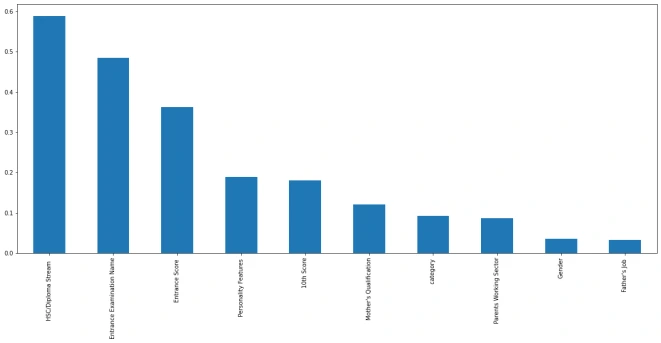
Figure 1: Feature Selection-mutual information gain
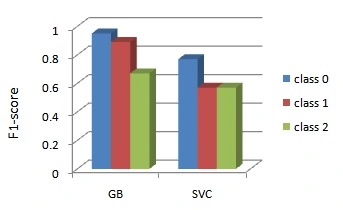
Figure 2: F1-score without bagging algorithm
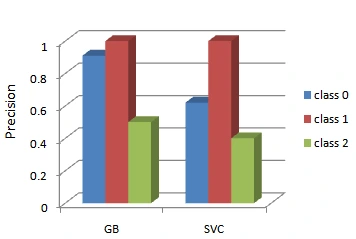
Figure 3: Precision without bagging algorithm
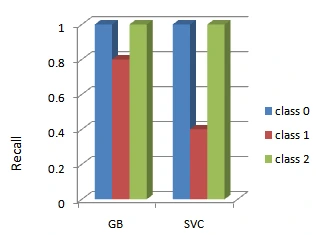
Figure 4: Recall without bagging algorithm
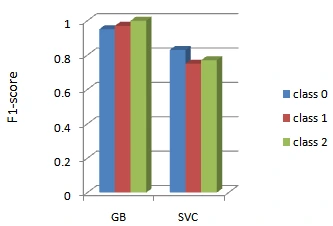
Figure 5: F1-score with bagging algorithm
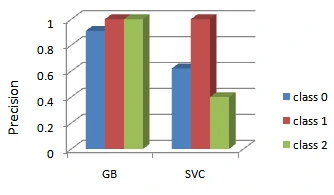
Figure 6: Precision with bagging algorithm
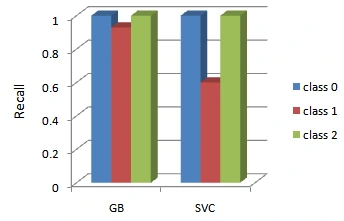
Figure: 7 Recall with bagging algorithm
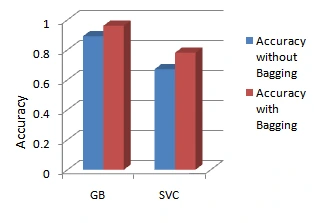
Figure 8: Accuracy of algorithms
From Figure. 9. to Figure. 12. shows the confusion matrix of Naive bayse, SVM classifier with and without Ensemble bagging classifier respectively.
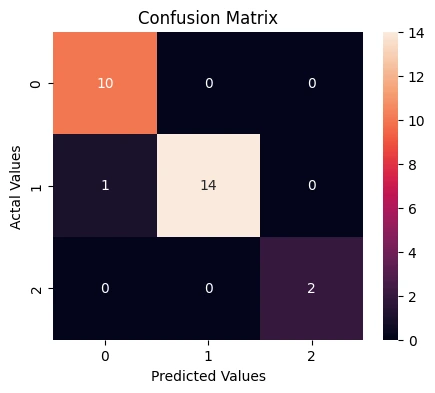
Figure 9: Confusion matrix of Naïve Bayse classifier with bagging classifier
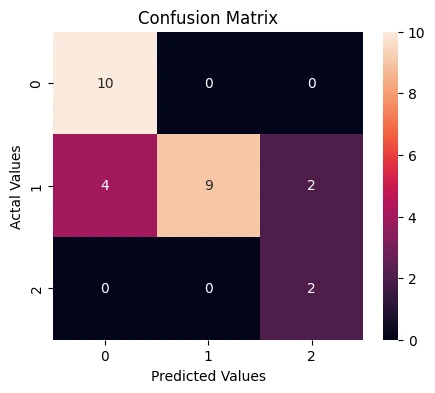
Figure 10: Confusion matrix of SVM classifier with bagging classifier
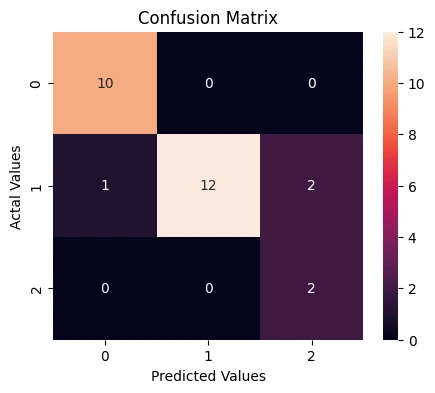
Figure.11: Confusion matrix of Naïve Bayse classifier without bagging classifier
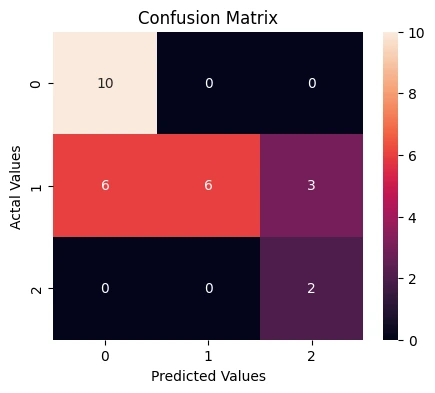
Figure.12: Confusion matrix of SVM classifier without bagging classifier.
Conclusion and Future Enhancements
In this study, survey conducted on the students who are perusing graduation course from Medical, Engineering and Commerce & Management streams has aimed to identify influencing factors of students while course choice decision. Machine learning features selection methods such as Mutual information gain was applied on the collected data to find out the important features which were considered by the students while course selection. According to the analysis 10 factors namely SSC score, Entrance Eamnationname, Entrancescore, personality, Father’s occupation, mother’s qualification, hobby, category, HSC/Diploma stream are mostly considered by students while course selection. while other factors such family income, area of living, fathers’ qualification, HSC board, time spend for study, time set with friends, number of siblings birth order, family income were not considered while course selection. The experimental results show that that the performance accuracy of classifiers has increased after applying Ensemble bagging classifier. The naïve bayse classifier showed the best performance with an accuracy of 96% which increased from 89% after applying Ensemble bagging classifier.SVM also showed increase in accuracy from 67% to 78%.
Research results will help students and parents in decision-making process while course selection.
In the future, the author wants to compare the accuracy of models by applying other Ensemble classifiers.
References
Asmae Bentaleb1, Jaafar Abouchabaka1 “Ensemble Learning for Mining Educational Data” Journal of Theoretical and Applied Information Technology 15th May 2022. Vol.100. No 9
Yashoda Barve1, Jatinderkumar R. Saini2*, Ketan Kotecha3, Hema Gaikwad4,” Detecting and Fact-checking Misinformation using “Veracity Scanning Model” (IJACSA) International Journal of Advanced Computer Science and Applications, Vol. 13, No. 2, 2022
M. Ramaswami and R. Bhaskaran (2009)” A Study on Feature Selection Techniques in Educational Data Mining” Journal of Computing, Volume 1, Issue 1, December 2009, ISSN: 2151-9617 HTTPS://SITES.GOOGLE.COM/SITE/JOURNALOFCOMPUTING/
Thomas G Dietterich “Ensemble Methods in Machine Learning”, Oregon State University Corvallis Oregon USA tgdcsorstedu
Yinkai Wang, Kaiyi Guan, Aowei Ding,” Ensemble Machine Learning System for Student Academic Performance Prediction”, George Mason University (2021)
Samuel-Soma M Ajibade1, Nor Bahiah Binti Ahmad2, Siti Mariyam Shamsuddin3,” Educational Data Mining: Enhancement of Student Performance model using Ensemble Methods”, Joint Conference on Green Engineering Technology & Applied Computing 2019, doi:10.1088/1757-899X/551/1/012061
Umesh Kumar Sah1, Mrs. Awantika Singh2,” Student Career Prediction Using Machine Learning”, International Journal of Scientific Development and Research (IJSDR) www.ijsdr.org, May 2022 IJSDR | Volume 7 Issue 5 ISSN: 2455-2631
Bhrigu Kapur, Nakin Ahluwalia,” Comparative Study on Marks Prediction using Data Mining and Classification Algorithms” International Journal of Information Systems in the Service Sector, Volume 9 • Issue 1 • January-March 2017
Ditika Bhanushali, Seher Khan, Mohommad Madhia, Shoumik Majumdar (2018),” Student Performance Prediction and Analysis”, International Journal of Advanced Research in Computer and Communication Engineering, ISO 3297:2007 Certified Vol. 7, Issue 3, March 2018
Kavita Pabreja (2017),” Comparison of Different Classification Techniques for Educational Data”, International Journal of Science, Engineering and Information Technology © 2018 IJSRCSEIT | Volume 3 | Issue 3 | ISSN: 2456-330.
Asep Nurhuda, Dewi Rosita (2017),” Prediction Student Graduation on Time Using Artificial Neural Network on Data Mining Students STMIK Widya Cipta Dharma Samarinda”, ICEEG ’17, June 14-16, 2017, Turku, Finland. Copyright 2017 ACM 978-1-4503-5248-2/17/06…$15.00., DOI: http://dx.doi.org/10.1145/3108421.3108431
Lokesh S. Katore, Bhakti S. Ratnaparkhi, Dr. Jayant S. Umale (2015),” Novel Professional Career prediction and recommendation method for individual through analytics on personal Traits using C4.5 Algorithm”, proceedings of 2015 global conference on communication technologies (GCCT 2015),978-1-4799-8553-1/15/$ 31 Advanced Research in Computer Science, Volume 8, No. 3, March April 2017, ISSN No. 0976-56
Zailani Abdullaha, *, Tutut Herawanb, Noraziah Ahmadb, Mustafa Mat Derisc “Mining significant association rules from educational data using critical relative support approach”, Procedia – Social and Behavioral Sciences 28 (2011) 97 – 101
Malaya Dutta Borah, Rajni Jindal, Daya Gupta Ganesh Chandra Deka (2011) “Application of knowledge-based decision technique to Predict student enrollment decision”, 2011 International Conference on Recent Trends in Information Systems, 978-1-4577-0792-6/11/$26.00 ©2011 IEEE
Jinka Thirunarayana (2018) “Counselling Guidance Using Big Data Analytics”, International Journal of Scientific Research in Computer Development and Research (IJSDR) www.ijsdr.org, May 2022 IJSDR | Volume 7 Issue 5 ISSN: 2455-2631
Muhammad Zaheer Aslam*, Nasimullah, Abdur Rashid Khan
A Proposed Decision Support System/Expert System for Guiding Fresh Students in Selecting a Faculty in Gomal University, Pakistan, Industrial Engineering Letters www.iiste.org ISSN 2224-6096 (Print) ISSN 2225-0581(Online) Vol 1, No.4, 2011
Subhalaxmi Panda, P. A Pattanaik, Tripti Swarnkar (2017)” A Higher Education Predictive Model Using Data Mining Techniques”, individual papers by the papers’ authors
P. Veeramuthu, R. Periasamy,” Application of Higher Education System for Predicting Student Using Data Mining Techniques”, International Journal of Innovative Research in Advanced Engineering (IJIRAE) ISSN: 2349-2163, Volume 1 Issue 5 (June 2014)
Esra Mahsereci Karabuluta*, Selma Ayşe Özelb, Turgay İbrikçib,c, c,” A comparative study on the effect of feature selection on classification accuracy” 2212-0173 © 2012 Published by Elsevier Ltd. doi: 10.1016/j.protcy.2012.02.068
Nikita Gorad, Ishani Zalte, Aishwarya Nandi, Deepali Nayak (2017)” Career Counselling Using Data Mining”, International Journal of Innovative Research in Computer and Communication Engineering (An ISO 3297: 2007 Certified Organization) Vol. 5, Issue 4, April 2017, ISSN(Online): 2320-9801 ISSN (Print): 2320-9798
Nunsina, Tulus, Zakarias Situmorang (2020) “Analysis Optimization K-Nearest Neighbor Algorithm with Certainty Factor in Determining Student Career” 2020 3rd International Conference on Mechanical, Electronics, Computer, and Industrial Technology (MECnIT)
Olha Proninaa and Olena Piatykop (2021),” The Decision Support System Education Career Choice Using Fuzzy Model”, COLINS-2021: 5th International Conference on Computational Linguistics and Intelligent Systems, April 22–23, 2021, Kharkiv, Ukraine EMAIL: pronina.lelka@gmail.com (O. Pronina); piatykop_o_ye@pstu.edu (O. Piatykop) ORCID: 0000-0001-7085-8027 (O. Pronina); 0000-0002-7731-3051 (O. Piatykop) ©️ 2021 Copyright for this paper by its authors. Use permitted under Creative Commons License Attribution 4.0 International (CC BY 4.0). CEUR Workshop Proceedings (CEUR-WS.org)
Md. Yeasin Arafath, Mohd. Saifuzzaman (2018),” Predicting Career Using Data Mining”, 2018 International Conference on Computing, Power and Communication Technologies (GUCON) Galgotias University, Greater Noida, UP, India. Sep 28-29, 2018
S. Saraswathi1, M. Hemanth Kumar Reddy2, S. Udaya Kumar3, M. Suraj4, Sk. Khaja Shafi5,” Design of An Online Expert System for Career Guidance”, Volume: 03 Special Issue: 07 | May-2014, Available @ http://www.ijret.org, IJRET: International Journal of Research in Engineering and Technology eISSN: 2319-1163 | pISSN: 2321-730
V. Chandra Prakash1, J.K. RSastry2*G. Reeshmika3, M. Pavani4, P. Chikitha Sree5, J.S Ravi Teja6, Development of a Comprehensive and Integrated Expert System for Career Assessment based on Cognitive models International Journal of Emerging Trends in Engineering Research, 7(11), November 2019, 617- 627
Grewal DS and Kaur K (2016) “Developing an Intelligent Recommendation System for Course Selection by Students for Graduate Courses”, Business and Economics Journal, Bus Eco J 2016, 7:2DOI: 10.4172/2151-6219.100020
Rucha Hemant Rangnekar, Khyati Pradeep Suratwala, Sanjana Krishna, Dr. Sudhir Dhage(2018),”Career PredicData Mining And Linear Classification “,978-1-5386-5257-2/18/$31.00 2018 IEEE
V. Sai kuswanth, Gogineni Krishna Chaitanya, B. Sekhar Babu, Uppuluri Lakshmi Soundharya (2019), “Machine Learning Approach for Student Career assessment in the modern world”, International Journal of Recent Technology and Engineering (IJRTE) ISSN: 2277-3878, Volume-7, Issue-6S, March 2019 699
M.L.Waghmode, Jamsandekar(2016),” Expert system for Career Selection: A Classifier Model”, Volume 4, Issue 1, January 2016 International Journal of Advance Research in Computer Science and Management Studies , ISSN: 2321-7782 ,Research Article / Survey Paper / Case Study Available online at: www.ijarcsms.com
Heena Sabnani, Mayur More, Prashant Kudale, Prof. Surekha Janrao (2018)” Prediction of Student Enrolment Using Data Mining Techniques”, International Research Journal of Engineering and Technology (IRJET) e-ISSN: 2395-0056 Volume: 05 Issue: 04 | Apr-2018 www.irjet.net p-ISSN: 2395-0072.
A Framework for Analytical Services Using Data Mining Techniques to Predict the Enrollment of Student at A University – A Case Study.
lakshmi prasanna, DR.D. Haritha (2019)” Smart Career Guidance and Recommendation System”, © IJEDR 2019 | Volume 7, Issue 3 | ISSN: 2321-9939
Dr. Gufran Ahmad Ansari (2017) “Career Guidance through Multilevel Expert System Using Data Mining Technique” I.J. Information Technology and Computer Science, 2017, 8, 22-29 Published Online August 2017 in MECS DOI: 10.5815/ijitcs.2017.08.03
Sunita B. Aher (2014),” EM&AA: An Algorithm for Predicting the Course Selection by Student in e-Learning Using Data Mining Techniques”, J. Inst. Eng. India Ser. B (January–March 2014) 95(1):43–54, DOI 10.1007/s40031-014-0074-3
Heena Sabnani, Mayur More, Prashant Kudale, Prof. Surekha Janrao (2018)” Prediction of Student Enrolment Using Data Mining Techniques”, International Research Journal of Engineering and Technology (IRJET) e-ISSN: 2395-0056 Volume: 05 Issue: 04 | Apr-2018 www.irjet.net p-ISSN: 2395-0072
Ms. Roshani Ade, Dr. P. R. Deshmukh (2014),” An incremental ensemble of classifiers as a technique for prediction of student’s career choice”, 978-1-4799-3486-7/14/$31.00_c 2014 IEEE
Career Path R Tajul Rosli Razak1, Muhamad Arif Hashim2, Noorfaizalfarid Mohd Noor3, Iman Hazwam Abd Halim4, Nur Fatin Farihin Shamsul recommendation System for UiTM Perlis Students Using Fuzzy Logic, 978-1-4799-4653-2/14/$31.00 © 2014 IEEE
Kartikey Joshi, Amit Kumar Goel, Tapas Kumar 2020, Online Career Counsellor System based on Artificial Intelligence: An approach IEEE 7th International Conference on Smart Structures and Systems ICSSS 2020
Abdulmohsen Algarni (2016) “Data Mining in Education”, (IJACSA) International Journal of Advanced Computer Science and Applications, Vol. 7, No. 6, 2016456 | P a g e www.ijacsa.thesai.org.
T. Velmurugan, C. Anuradha (2016) “Performance Evaluation of Feature Selection Algorithms in Educational Data Mining”, International Journal of Data Mining Techniques and Applications Volume: 05 Issue: 02 December 2016 Page No.131-139 ISSN: 2278-2419
Shumba, A. & Naong, M. (2012). Factors Influencing Students’ Career Choice and Aspirations in South Africa. Central University of Technology, Free State, 169-178.Retrieved from http://www.ashumba@cut.ac.za&almondshumba@yahoo.com
Khoo, K., Ban, T.K., Neng, C.Y., Hooi, B.K. & Joan, C.Y. (2015). Students Choices of choosing Colleges and Course of Study in Penang. ABC Research Alert, 3(1), 1-7. Retrieved from http://www.abcreal.weebly.com
Yashoda Barve, Jatinderkumar R. Saini “, Detecting and classifying online health misinformation with ‘Content Similarity Measure (CSM)’ algorithm: an automated fact-checking-based approach”, The Journal of Supercomputing, Online ISSN: 1573-0484, 2023
Krina Parmar, Prof. Dineshkumar Vaghela, Dr Priyanka Sharma (2015),” Performance Prediction of Students Using distributed Data Mining”, IEEE Sponsored 2nd International Conference on Innovations in Information Embedded and Communication Systems, ICIIECS’15
Yashoda Barve, Jatinderkumar R. Saini “, Detecting and classifying online health misinformation with ‘Content Similarity Measure (CSM)’ algorithm: an automated fact-checking-based approach”, The Journal of Supercomputing, Online ISSN: 1573-0484, 2023
Yashoda Barve, Jatinderkumar R. Saini Kaushika Pal3, Ketan Kotecha” A Novel Evolving Sentimental Bag-of-Words Approach for Feature Extraction to Detect Misinformation”, (IJACSA) International Journal of Advanced Computer Science and Applications, Vol. 13, No. 4, 2022
Cite This Work
To export a reference to this article please select a referencing stye below:

Academic Master Education Team is a group of academic editors and subject specialists responsible for producing structured, research-backed essays across multiple disciplines. Each article is developed following Academic Master’s Editorial Policy and supported by credible academic references. The team ensures clarity, citation accuracy, and adherence to ethical academic writing standards
Content reviewed under Academic Master Editorial Policy.





