
 Civil Engineering
Textbook
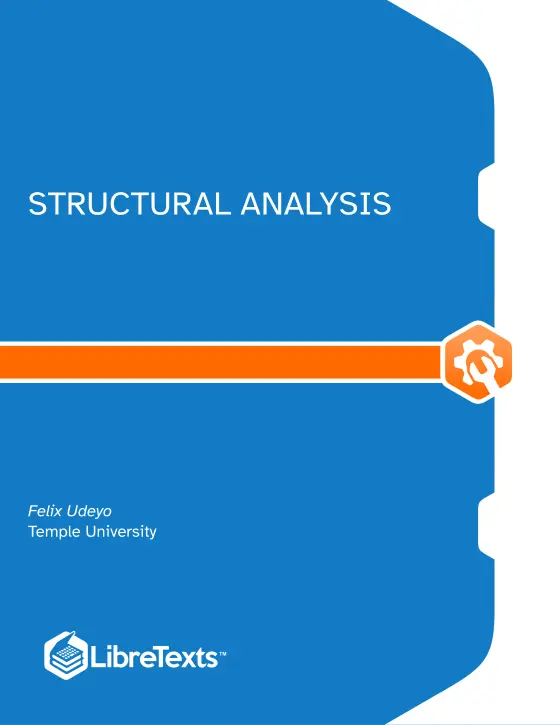
Structural Analysis
Not rated yetRate this bookStructural Analysis develops the behavior and analysis of beams, frames, trusses, arches, and cables before introducing deflection and indeterminate-structure methods. This guide follows the thirteen substantive chapters in the LibreTexts Udoeyo text, which nests them under export Sections 1.1–1.13.
Free reading is available at the official source. Opens in a new tab.
 Free
About this book
Structural Analysis develops the behavior and analysis of beams, frames, trusses, arches, and cables before introducing deflection and indeterminate-structure methods. This guide follows the thirteen substantive chapters in the LibreTexts Udoeyo text, which nests them under export Sections 1.1–1.13.
How to study this book
Review statics and mechanics of materials. Begin every problem with a structural idealization, loads, supports, axes, and sign conventions. Check determinacy and stability before selecting a method, and verify equilibrium and compatibility after solving. Use the tasks as academic calculations rather than approved designs.
Chapter-wise explanations and study tasks
Chapter 1 — Introduction to Structural Analysis (1.1)
Structural analysis connects an idealized model with forces and deformations. Identify what the model assumes about connections, members, materials, and geometry before interpreting its predictions.
Study task: Draw a structural idealization and list three real features deliberately excluded.
Chapter 2 — Loads and Loading Systems (1.2)
Load descriptions translate physical actions into quantities that an analysis can use. Keep load type, distribution, direction, and application point distinct.
Study task: Convert a hypothetical distributed loading description into a free-body diagram and an equivalent resultant.
Chapter 3 — Reactions, Determinacy, and Stability (1.3)
Support reactions and equilibrium must be considered alongside whether a system is adequately restrained. Counting unknowns alone is not a complete demonstration of stability.
Study task: Compare two support arrangements with similar reaction counts and explain any difference in stability.
Chapter 4 — Internal Forces in Beams and Frames (1.4)
Section cuts connect external loading with internal force and moment. Consistent signs and checks at discontinuities help verify diagrams.
Study task: Construct shear and moment diagrams for a simple beam and check them against loading and boundary conditions.
Chapter 5 — Plane Trusses (1.5)
Ideal truss analysis relates axial member forces to joint equilibrium. The model requires assumptions about joints and loading that should be stated before calculation.
Study task: Analyze a small truss and verify the result using both global and selected joint equilibrium.
Chapter 6 — Arches and Cables (1.6)
Arches and cables transfer loads through different structural actions and geometric relationships. The force pattern depends on supports and the assumed shape or loading.
Study task: Compare an idealized arch and cable carrying a stated load and identify how their support actions differ.
Chapter 7 — Geometric Deflection Methods (1.7)
Geometric approaches connect bending behavior with slopes and displacements. Boundary conditions and the adopted deformation assumptions control the result.
Study task: Find a simple beam deflection by a geometric method and verify its support conditions.
Chapter 8 — Work–Energy Deflection Methods (1.8)
Work and energy provide another route to deformation, including calculations that would be cumbersome through direct geometric integration. Identify which deformation contributions are included.
Study task: Compute a displacement using an energy approach and explain an assumption that permits a contribution to be neglected.
Chapter 9 — Determinate Influence Lines (1.9)
An influence line describes the response at a chosen location as a load moves. It differs from a force diagram for one fixed load arrangement.
Study task: Draw a simple influence line and use it to compare two positions of a moving load.
Chapter 10 — Force Method (1.10)
The force method supplements equilibrium with compatibility to solve an indeterminate structure. The chosen redundant and released system must produce a solvable formulation.
Study task: Select a redundant for a small structure and write the corresponding compatibility equation.
Chapter 11 — Slope–Deflection (1.11)
Member end relations connect moments with joint rotations and displacements. Assembly requires compatible joint behavior and equilibrium.
Study task: Set up slope–deflection equations for a small frame or beam and identify every unknown degree of freedom.
Chapter 12 — Moment Distribution (1.12)
Moment distribution organizes balancing and carry-over operations for an indeterminate system. The iterative arithmetic should remain connected to the structural equilibrium it approximates.
Study task: Carry out several distribution steps and check the remaining unbalanced joint moment.
Chapter 13 — Indeterminate Influence Lines (1.13)
Indeterminate influence lines require compatibility as well as equilibrium and may have curved forms. Distinguish the shape’s interpretation from the method used to derive it.
Study task: Compare determinate and indeterminate influence behavior for a selected response and explain why the forms differ.
Applied assignment
Analyze a small fictional beam or frame. Provide the model, loading, reaction calculation, internal-force diagrams, and one displacement result. Add an indeterminate extension using a clearly stated compatibility method and a moving-load interpretation. Verify signs, equilibrium, and boundary conditions independently.
Suggested reading plan
Read Chapters 1–3 for modeling, Chapters 4–6 for determinate forces, Chapters 7–8 for deformation, and Chapter 9 for moving loads. Continue with Chapters 10–13 for indeterminate methods and influence lines. Reuse one small structure to compare methods.
Questions for reflection
- Is the idealized structure stable under the stated restraints?
- Which compatibility condition supplies information that equilibrium cannot?
- Does the displacement result satisfy the physical supports and sign convention?
Edition and source notes
The LibreTexts export nests thirteen instructional chapters under a Chapters heading as Sections 1.1–1.13 and repeats some front matter. Copyright and dedication entries labeled 15 are not additional analysis chapters. The source uses Udeyo and Udoeyo spellings in different attribution lines; this guide follows the content without changing catalog author metadata.
About access & copyright
This page provides book information and study material. Full-text access is provided by the original publisher or authorised source; a listing does not grant permission to republish the book.
Read our Library Access & Copyright policyExplore the contents
Check the chapters covered in this edition.
Visit the official source
See reading, preview or purchase options.
Save for later
Keep this textbook in your saved collection.
Reader ratings & reviews
Share your thoughts
Your review helps other students choose the right resources.
KEEP LEARNING
Your next great read
Civil Engineering Buildings
Full Vol. II: Comparing Economic and Financial Impacts over the Life of Proposed Infrastructure Projects
View Full Vol. II: Comparing Economic and Financial Impacts over the Life of Proposed Infrastructure Projects — book Buildings
Project Evaluation: Essays and Case Studies
View Project Evaluation: Essays and Case Studies — book Civil Engineering
Analysis of Structural Member Systems
View Analysis of Structural Member Systems — book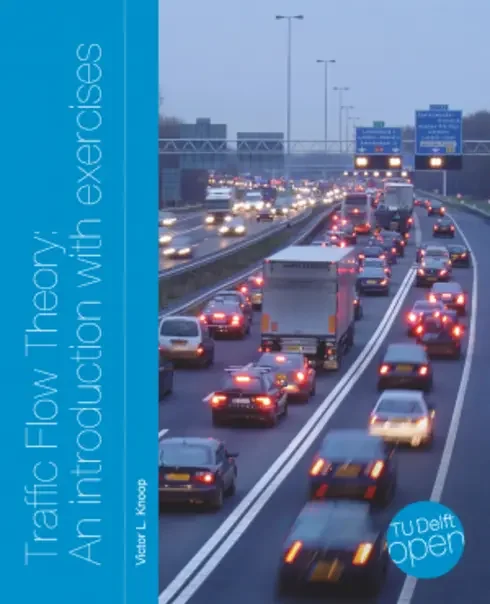 Civil Engineering
Traffic Flow Theory: An introduction with exercises
View Traffic Flow Theory: An introduction with exercises — book Civil Engineering
Ports and Waterways: Navigating the changing world
View Ports and Waterways: Navigating the changing world — book Civil Engineering
Basics of Fluid Mechanics
View Basics of Fluid Mechanics — book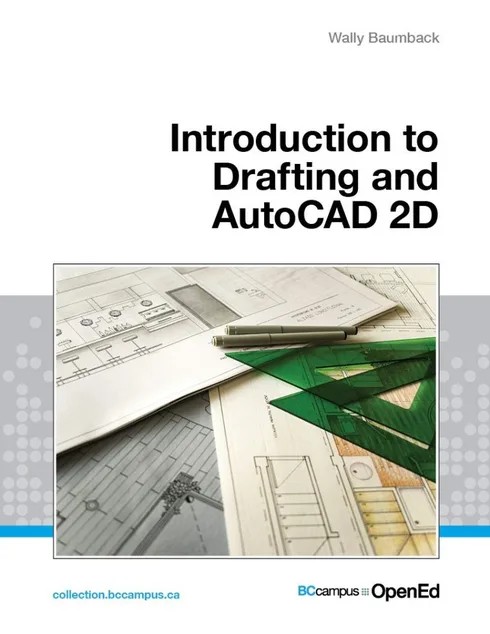 Civil Engineering
Introduction to Drafting and AutoCAD 2D
View Introduction to Drafting and AutoCAD 2D — book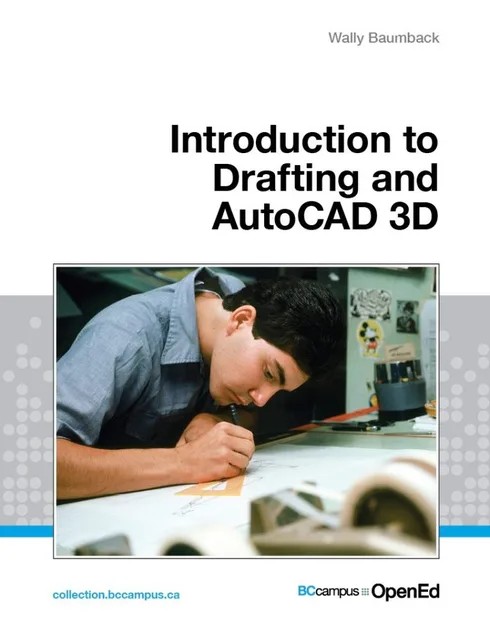 Civil Engineering
Introduction to Drafting and AutoCAD 3D
View Introduction to Drafting and AutoCAD 3D — book Civil Engineering



