
 Education
Curriculum planning and developmentTextbook
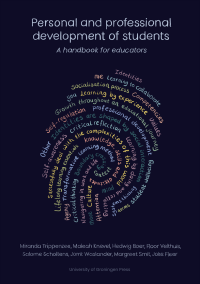
Personal and professional development of students: A handbook for educators
Not rated yetRate this bookPersonal and Professional Development of Students introduces the SCOPE approach for educators. The 2026 handbook connects identity, socialisation, subjectification, boundary crossing, and critical reflection with a practical pedagogy of experience and debriefing. This guide covers the introduction and three substantive sections in the linked PDF, with tasks for designing reflective learning that respects student agency and privacy.
Free reading is available at the official source. Opens in a new tab.
 Free
About this book
Personal and Professional Development of Students introduces the SCOPE approach for educators. The 2026 handbook connects identity, socialisation, subjectification, boundary crossing, and critical reflection with a practical pedagogy of experience and debriefing. This guide covers the introduction and three substantive sections in the linked PDF, with tasks for designing reflective learning that respects student agency and privacy.
Chapter-wise summaries and study tasks
Introduction
Personal and professional development concerns how students understand themselves, relate to others, and act in changing contexts. The introduction argues that subject knowledge and isolated skills do not fully prepare a person to make choices about work, responsibility, and well-being. Development connects values, capabilities, identity, experience, and the environments in which students participate. It should be integrated into education rather than offered as a detachable exercise in employability.
The SCOPE approach places reflective experience at the center of this work. Educators create conditions for students to examine their responses and consider alternative ways of acting, while avoiding a predetermined model of the ideal graduate's personality. Professional expectations and personal priorities can conflict, making the ability to question both important. The handbook distinguishes supporting development from promising that a course can remove structural pressures or solve mental-health problems. A useful learning design states its educational purpose and boundaries, explains why the activity belongs in the curriculum, and gives students meaningful agency over what they share.
Study task. Write a purpose statement for a fictional PPD activity in your subject. Distinguish knowledge, skills, identity, and values, and explain how participation and disclosure will be supported without requiring a preferred personal outcome.
The theoretical principles underlying the SCOPE approach
The theoretical chapter compares professional identity formation, socialisation, subjectification, and boundary crossing. Professional identity formation describes becoming part of a profession through more than technical competence, including its practices and values. This lens can be useful where a clear community of practice exists, but less complete where students move among several professional possibilities. Socialisation explains how environments communicate expectations, including those that are never formally taught.
Subjectification adds attention to the student as someone who can respond and judge rather than simply conform. Boundary crossing considers learning where different practices, roles, and perspectives meet. These concepts do different work: some describe processes, others educational aims or learning mechanisms. Combining them should preserve those distinctions. The chapter's examples invite educators to examine the tension between preparing students for an existing community and enabling them to question its assumptions. A student who disagrees thoughtfully with a professional norm is not automatically failing to develop.
Study task. Analyze a fictional placement dilemma through all four perspectives. Identify what each makes visible, then revise an activity that otherwise rewards conformity as if it were the only evidence of professional growth.
Reflection as a core component of PPD
Reflection connects experience with attention to one's assumptions, reactions, interpretations, and possible action. Critical reflection goes beyond narrating what happened or listing lessons that sound acceptable to a teacher. The chapter considers its functions in development and the difficulty of teaching or assessing a process that can involve personal material. Students may need support to notice experience before they can articulate it, and written prose is not the only possible form.
Assessment can create a tension: an assignment intended to promote inquiry may instead encourage performance of the answer a student thinks will receive credit. Educators should distinguish evidence of engaging with a reflective process from judging the desirability of a person's beliefs, emotions, or disclosures. Clear boundaries, an explanation of purpose, appropriate feedback, and respect for privacy support a more responsible design. Reflection does not mean endless inward examination; it becomes educationally useful when it opens understanding and considered choices about practice.
Study task. Compare a descriptive diary entry with a genuinely questioning reflection using fictional material. Design feedback focused on reasoning and process, and identify personal information that the student should not have to disclose.
A pedagogical approach for reflection on PPD
The pedagogical approach links a rationale and knowledge base with experience, observation, externalisation, sharing, and broadening perspective. An experience gives students something concrete to attend to; observing slows the move from reaction to judgment. Externalising through writing, speech, images, or other material forms can make a response available for further inquiry. A creative artifact is not valuable merely because it is attractive, but because it helps the learner examine experience.
Debriefing requires attentive questions and a teacher willing to remain close to what the student actually reports. Sharing should not become pressure to reveal intimate material or an opportunity for the educator to replace a student's meaning with the intended learning outcome. Broadening connects experience with concepts, other perspectives, and future choices where those connections are justified. The source uses some inconsistent step numbering, so follow the functions and relationships rather than treat a numeral as a separate theoretical claim. Iteration and skilled facilitation matter more than mechanically completing a sequence.
Study task. Plan a short fictional workshop with a rationale, experience, observation, externalisation, optional sharing, and debrief. Write neutral prompts and explain how you would respond if students' learning differed from what you anticipated.
How to study this book
- Read the introduction before selecting an activity so that its purpose and boundaries remain explicit.
- Use fictional cases when testing sensitive reflective exercises and allow alternatives to personal disclosure.
- Connect theoretical lenses with what students are actually being invited to do, rather than merely naming theories in a lesson plan.
- Practise non-leading debrief questions and review whose interpretation controls the discussion.
- Evaluate opportunities for reflection without grading students for expressing a preferred identity or emotion.
Questions for reflection
- Does the activity invite inquiry or reward conformity?
- What is the student free to keep private?
- How do professional expectations interact with the person's own values?
- What evidence shows learning without claiming access to the student's inner life?
Source edition and coverage
The guide follows the four substantive sections of the linked 2026 handbook by Miranda Trippenzee, Hedwig Boer, Margreet Smit, Salome Scholtens, Maleah Knevel, Jorrit Waslander, Floor Velthuis, and Joke Fleer. The available PDF contains Part 1 on theoretical background, pedagogy, and reflection; references to further resources are not treated as additional chapters present in this file. These are original study explanations and learning tasks. Read the complete book at the official source.
About access & copyright
This page provides book information and study material. Full-text access is provided by the original publisher or authorised source; a listing does not grant permission to republish the book.
Read our Library Access & Copyright policyExplore the contents
Check the chapters covered in this edition.
Visit the official source
See reading, preview or purchase options.
Save for later
Keep this textbook in your saved collection.
Reader ratings & reviews
Share your thoughts
Your review helps other students choose the right resources.
KEEP LEARNING
Your next great read
Education Education
START Handbook: How can I help my first-year students engage, persist and succeed?
View START Handbook: How can I help my first-year students engage, persist and succeed? — book Curriculum & Instruction
Teaching in a Digital Age: Guidelines for designing teaching and learning
View Teaching in a Digital Age: Guidelines for designing teaching and learning — book Curriculum & Instruction
Teaching Crowds: Learning and Social Media
View Teaching Crowds: Learning and Social Media — book Curriculum & Instruction
Efficacious Technology Management: A Guide for School Leaders
View Efficacious Technology Management: A Guide for School Leaders — book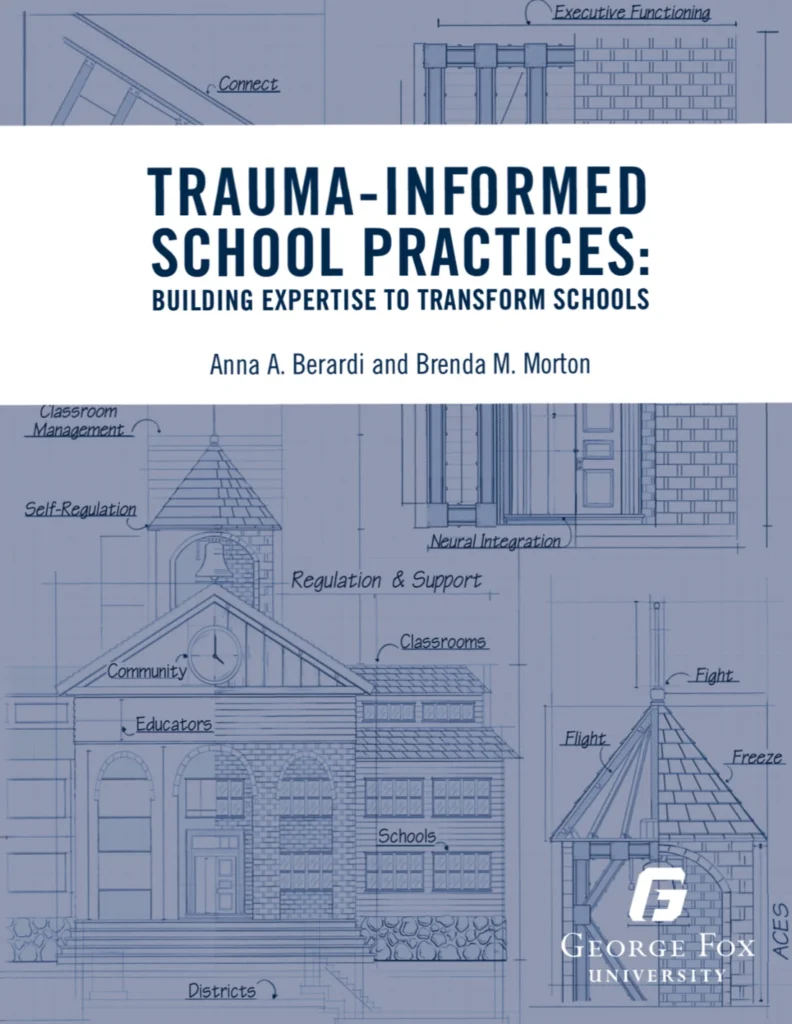 Education
Trauma-Informed School Practices: Building Expertise To Transform Schools
View Trauma-Informed School Practices: Building Expertise To Transform Schools — book Cultural & Ethnic Studies
Knowing Home: Braiding Indigenous Science with Western Science
View Knowing Home: Braiding Indigenous Science with Western Science — book Curriculum & Instruction
Teaching Early and Elementary STEM
View Teaching Early and Elementary STEM — book Computer Science
Game Based and Adaptive Learning Strategies
View Game Based and Adaptive Learning Strategies — book Curriculum & Instruction



