
Introduction to Space Syntax in Urban Studies
global changeTextbook
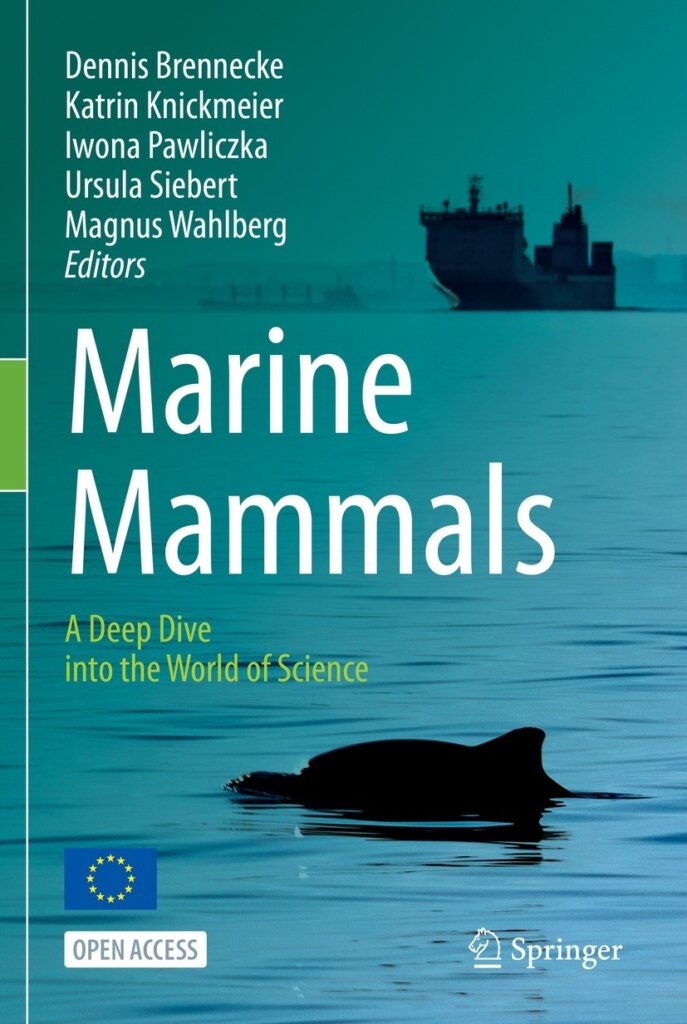
Marine Mammals
Not rated yetRate this bookMarine Mammals introduces the biology of aquatic mammals through their adaptations, use of sound and encounters with human activities. The 2023 volume edited by Dennis Brennecke and colleagues connects six chapters on biological foundations, fisheries, pollution and scientific careers. This guide follows that sequence with chapter explanations, practical study tasks and a reading plan centered on interpreting evidence.
Free reading is available at the official source. Opens in a new tab.
 Free
About this book
Marine Mammals introduces the biology of aquatic mammals through their adaptations, use of sound and encounters with human activities. The 2023 volume edited by Dennis Brennecke and colleagues connects six chapters on biological foundations, fisheries, pollution and scientific careers. This guide follows that sequence with chapter explanations, practical study tasks and a reading plan centered on interpreting evidence.
How to study this book
Keep a chapter notebook organized around a biological question, its proposed explanation and the evidence needed to investigate it. Compare species and environments before generalizing. For the chapters on human impacts, trace a pathway from an activity to exposure and then to a possible consequence. Use the original chapters' examples and activities to extend your notes, while distinguishing observations from interpretations.
Chapter-wise explanations and study tasks
Chapter 1: Who Are the Marine Mammals?
Marine mammals belong to several evolutionary lineages whose ancestors returned to aquatic environments independently. Their shared habitat therefore brings together animals with different histories, feeding strategies and degrees of dependence on land. The chapter connects this diversity with adaptations for movement, heat retention, breathing and diving. Streamlined bodies reduce resistance in water, while insulation and oxygen storage help explain other demands of aquatic life. Compare a trait's function with its evolutionary origin: similar environmental pressures can produce similar solutions in unrelated groups. The North and Baltic Sea examples provide a setting for examining variation among species and populations. Read each species account through the relationship between habitat, behavior and physical adaptation, keeping regional observations distinct from claims about every population.
Study task: Build a comparison chart for a cetacean, a seal and a sea otter. Record their ancestry, habitat, feeding strategy and insulation. Explain one similarity as convergent adaptation rather than evidence of close ancestry.
Chapter 2: Marine Mammal Acoustics
Bioacoustics examines how animals produce, detect and use sound. In marine environments, the subject connects communication and prey detection with the physics of sound propagation. The chapter brings biological questions together with recording methods and the skills of physicists and engineers. Distinguish a sound source from the sound reaching an animal: the surrounding environment influences what can be detected. Human activities introduce additional sounds, making acoustic research relevant to the assessment of disturbance and habitat use. A recording can establish that a signal was detected at a particular place and time, but interpreting its behavioral significance requires more information. Compare the evidence needed to identify an animal's presence with the evidence needed to explain a change in its behavior.
Study task: Sketch a sound pathway from a ship to a listening animal. Label the source, propagation environment, receiver and possible response. Propose a recording-based research question and identify what additional observations would be needed to interpret behavior.
Chapter 3: Whaling, Seal Hunting and the Effect of Fisheries on Marine Mammals
Human use of marine mammals has a history that must be considered alongside present interactions with fisheries. The chapter discusses whaling and seal hunting, then examines conflicts that arise when animals and fishing operations use the same waters. Bycatch is incidental capture in fishing gear; animals taking fish from gear create a different interaction involving losses to the catch or equipment. These mechanisms should be separated before evaluating a response. Alternative gear, acoustic deterrents and restrictions on fishing in particular places or seasons aim to change different parts of the interaction. Compare each option through its intended effect, practical demands and possible consequences. Assessing success also requires a suitable baseline: fewer observed captures may reflect reduced fishing effort rather than a more effective method.
Study task: Compare alternative gear, acoustic deterrents and a seasonal closure in a hypothetical fishery. For each, specify its intended mechanism, a potential limitation and an observation that could test whether it works.
Chapter 4: Plastic Debris and Its Impacts on Marine Mammals
Plastic debris connects the production and disposal of materials with processes that transport them into aquatic habitats. Its persistence allows items to travel and break into smaller fragments, changing how animals may encounter them. The chapter distinguishes direct ingestion of larger debris, entanglement and the intake of smaller fragments with prey. Each pathway poses a different question about exposure and harm. Visible litter provides useful evidence, but its abundance does not directly measure everything an animal encounters below the surface or through its diet. Link a proposed solution to a specific source or pathway rather than assuming that any cleanup addresses all forms of plastic pollution. The educational focus encourages systematic observation and reflection on how everyday material choices connect with environmental consequences.
Study task: Design a litter survey using photographs or existing records. Define categories before counting, separate entanglement hazards from possible ingestion hazards, and explain how sampling location could bias the results. Link one observed category to a feasible source-reduction action.
Chapter 5: Chemical Pollution and Diseases of Marine Mammals
Persistent contaminants can move through aquatic food webs and accumulate in organisms. Marine mammals help researchers investigate these processes because their feeding relationships and tissue burdens can reveal patterns of environmental exposure. The chapter connects pollution with questions about immune function and disease, requiring a distinction between exposure, biological response and a demonstrated health consequence. A measured chemical concentration describes one part of an explanation; it does not establish every step linking an environmental source to an illness. Consider how diet, location and other conditions might influence the pattern being studied. Research on individual animals also needs an explicit argument before it supports conclusions about an entire population. Read the chapter as an introduction to investigating environmental health, with attention to the evidence behind proposed mechanisms.
Study task: Draw a hypothetical food web and mark possible contaminant transfers. Then list the measurements needed to investigate a relationship between exposure and immune function, including a plausible alternative explanation for the pattern.
Chapter 6: How to Become a Marine Mammal Scientist
The closing chapter approaches marine mammal science through researchers' experiences and the skills their work requires. Career pathways vary, and an interview illustrates one person's route rather than a universal sequence of qualifications. Connect each account with the scientific activities involved: asking questions, collecting or interpreting evidence, working across disciplines and communicating results. Biology is one entry point, while quantitative, physical and engineering skills can also contribute to the field. The discussion acknowledges competition for positions while encouraging students to recognize their strengths and prepare deliberately. Use the accounts to identify skills that can be developed in stages and applied across research subjects. A useful reading outcome is a realistic learning plan grounded in the work you want to understand.
Study task: Choose two career accounts and compare their training, practical experience and research skills. Produce a short learning plan with one quantitative skill, one communication skill and one realistic way to learn about research practice.
Conservation case assignment
Choose one marine mammal and one pressure examined in the book. Prepare a short case analysis describing the habitat, the pathway of exposure or interaction and the evidence needed to assess an effect. Compare two possible responses and explain what each is intended to change. Specify an outcome that could be monitored and a limitation that would remain. Keep the proposed investigation distinct from a claim that the intervention has already been shown to work.
Suggested reading plan
- Read Chapter 1 and complete the adaptation comparison before moving to human impacts.
- Use Chapter 2 to connect sound physics with animal behavior and research measurement.
- Read Chapters 3 and 4 together, comparing fishing interactions with debris pathways.
- Use Chapter 5 to build an exposure-to-health evidence map.
- Finish Chapter 6, then write a short conservation proposal stating a question, evidence need and limitation.
Questions for reflection
- Why does a similar body shape not prove that two aquatic mammals are close relatives?
- How would you distinguish reduced bycatch from an apparent improvement caused by lower fishing effort?
- What extra evidence would strengthen a claim that contamination contributed to a disease outbreak?
Edition and source notes
This original study companion follows the 2023 first edition and its verified 6-chapter sequence. It draws on the publisher's book record, chapter abstracts and accessible introductory material. The explanations provide a conceptual guide; they do not reproduce the source or claim a complete review of every example and reference. Study tasks are original prompts rather than the book's assigned exercises.
About access & copyright
This page provides book information and study material. Full-text access is provided by the original publisher or authorised source; a listing does not grant permission to republish the book.
Read our Library Access & Copyright policyExplore the contents
Check the chapters covered in this edition.
Visit the official source
See reading, preview or purchase options.
Save for later
Keep this textbook in your saved collection.
Reader ratings & reviews
Share your thoughts
Your review helps other students choose the right resources.
KEEP LEARNING
Your next great read
Built Environment
 college
Prose Fiction: An Introduction to the Semiotics of Narrative
View Prose Fiction: An Introduction to the Semiotics of Narrative — book Cultural Rights
Non-Territorial Autonomy
View Non-Territorial Autonomy — book Business enterprises—Finance
The Brownian Motion
View The Brownian Motion — book Education
al Data Analytics for Teachers and School Leaders
View Educational Data Analytics for Teachers and School Leaders — book charged particle motion in Earth’s magnetosphere
Physics of Earth’s Radiation Belts
View Physics of Earth’s Radiation Belts — book Classical mechanics
Principles of Mechanics
View Principles of Mechanics — book bioinformatics
Bioimage Data Analysis Workflows
View Bioimage Data Analysis Workflows — book Behavioral sciences
Understanding Statistics and Experimental Design
View Understanding Statistics and Experimental Design — book evolving microstructures



