
 Engineering & Technology
Textbook
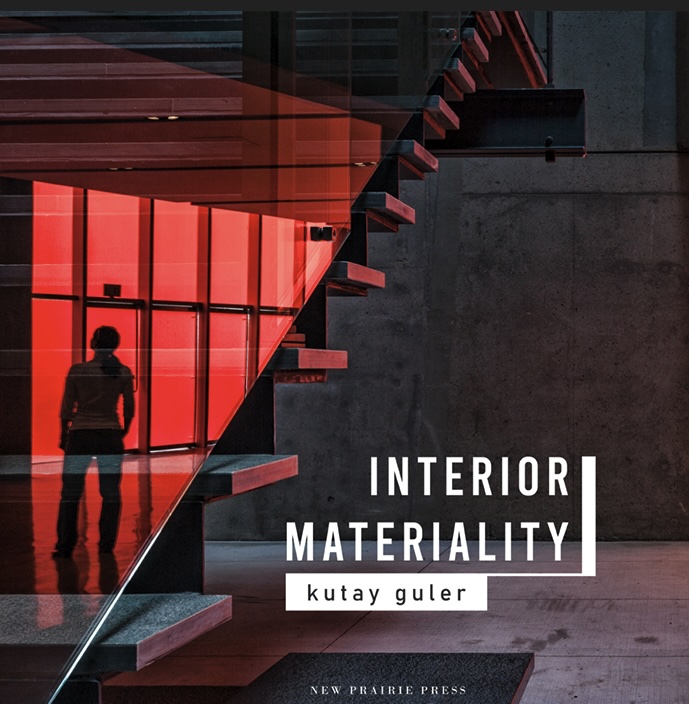
Interior Materiality
Not rated yetRate this bookKutay Guler’s Interior Materiality addresses how materials and finishes contribute to interior design. Its catalogue overview connects aesthetic choices with performance, occupants, environmental concerns, and specification.
Read on the publisher’s website. Opens in a new tab.
 Free
About this book
Kutay Guler’s Interior Materiality connects the sensory experience of a space with the properties and performance of its materials. Twelve chapters move from perception, health, safety, and sustainability through major material families to specification and cost considerations. The guide follows the 2021 text and emphasizes why a material suitable for one setting may be unsuitable for another. Appearance, durability, installation, maintenance, occupant needs, and environmental effects all shape selection. Standards, regulations, certification examples, and construction practices discussed in the source are educational context; current project requirements must be verified separately.
The detailed guide below follows the book’s chapter, unit, or section structure. Read it alongside the study instructions and the complete official text.
Book summary
Chapter-by-chapter summaries
Chapter 1: Introduction
Materials and finishes connect a design concept with a built interior. The chapter introduces material history, performance, surface attributes, weathering, and aging. A material is not defined only by its initial appearance: its behavior over time and interaction with use can change the intended experience. Processing and technological developments also affect what designers can obtain and achieve. The chapter encourages evaluating the complete application, including substrate, finish, installation, and environment. This establishes material selection as a reasoned decision about performance and meaning rather than a final decorative choice.
Chapter 2: Perception
People experience materials through visual and nonvisual senses. Color, light, texture, reflection, temperature, sound, and associations influence how a surface is perceived. The same material can appear different under another light source or beside another finish. Photographs and small samples may therefore omit important aspects of the eventual space. The chapter connects physical attributes with human interpretation without assuming every user responds identically. A designer needs to consider the intended occupants and setting, using evidence and samples to test an experience rather than relying only on the designer's first impression.
Chapter 3: Health and Safety
Material choices affect fire behavior, accessibility, indoor air quality, chemical exposure, and acoustics. The chapter distinguishes standards, regulations, guidelines, and product information as different kinds of guidance. Safety depends on the installed assembly and use, not simply a material's familiar name. A finish can meet an aesthetic aim while creating maintenance or occupant concerns. Historical examples of harmful materials show why claims require evidence and why knowledge changes. The chapter's references should support issue recognition, while current authoritative requirements and project-specific expertise remain necessary for actual selection and compliance.
Chapter 4: Sustainability
Sustainability considers the effects of materials across extraction, manufacture, transport, use, maintenance, and end of life. The chapter examines carbon footprint, recycling, certification, labels, and cleaning practices. A recycled ingredient does not automatically make a product preferable in every application, and durability can alter the lifetime resource cost. Claims such as recyclable, biodegradable, and compostable describe different conditions and should not be treated as synonyms. The chapter encourages evaluating evidence and tradeoffs rather than choosing a product solely because it carries a green label. The intended use and local recovery system matter.
Chapter 5: Paint and Wallcovering
Coatings and wallcoverings change the visual character and practical performance of a surface. The chapter connects paint and wallcovering properties with gypsum, plaster, preparation, and application. A finish depends on the condition and compatibility of the underlying surface, so specifying color alone leaves important work undefined. Durability, cleanability, texture, and environmental conditions affect suitability. Installation and repair can also shape cost and appearance over time. The chapter shows why a successful surface results from a system of materials and processes rather than from the selected top layer alone.
Chapter 6: Concrete and Masonry
Concrete, brick, and stone offer different combinations of strength, mass, texture, and finish. The chapter examines their properties and uses while connecting visible effects with manufacturing, bonding, joints, and installation. Materials that appear similarly solid can differ in porosity, maintenance, weight, and response to the environment. Mortar lines and surface treatment contribute to the overall design, not merely to construction. Selection should account for the actual assembly and support conditions. The chapter encourages comparing the material's intended role with its performance rather than assuming a familiar historical use guarantees suitability in every interior.
Chapter 7: Wood
Wood's species, grain, processing, moisture response, and construction form affect its performance. The chapter distinguishes solid wood, veneers, reclaimed material, and engineered products. Natural variation can be a desired visual quality but also requires attention to consistency and movement. Engineered wood can provide useful properties while introducing its own composition and specification questions. Sustainability involves sourcing and use, not simply the assumption that a natural material is always environmentally preferable. A successful selection connects the desired appearance with stability, fabrication, finish, maintenance, and the conditions of the installed setting.
Chapter 8: Glass and Ceramic
Glass and ceramic materials combine visual possibilities with specific fabrication and installation constraints. The chapter considers glass selection, glazing approaches, ceramics, porcelain, and their specification. Transparency, reflection, surface quality, thickness, and performance requirements need to be considered together. A tile's appearance does not establish its suitability for every floor or wall condition. Joints, substrates, supports, and sealants can affect the installed result. The chapter teaches readers to distinguish material families and product properties from the performance of a complete assembly, particularly where safety and durability matter.
Chapter 9: Textile
Textiles connect fibers, construction, finish, and intended use. The chapter compares natural and synthetic fibers and develops applications involving leather, carpet, upholstery, and other soft goods. Appearance and touch are important, but abrasion, staining, light exposure, cleaning, and installation can determine whether a selection remains useful. A textile suitable for a decorative feature may not tolerate an intensively used seat. Specification should therefore identify relevant performance and care requirements rather than a fiber name alone. The chapter also shows how manufacturing and finishing choices affect the qualities a designer experiences in a sample.
Chapter 10: Metal
Metals vary in composition, processing, finish, strength, weight, corrosion behavior, and appearance. The chapter distinguishes ferrous and nonferrous groups and considers how fabrication and finishing expand their uses. A metal's surface can change through oxidation or contact with other materials, making environmental and assembly conditions important. A polished sample does not reveal every long-term effect. Selection should connect the intended visual quality with fabrication feasibility, maintenance, and the physical requirements of the application. The chapter treats finishes as part of performance rather than merely a cosmetic layer applied after the important decisions.
Chapter 11: Plastic
Plastics include diverse polymers and composites rather than one uniform material. The chapter distinguishes thermoplastics and thermosets, manufacturing methods, and interior products. Processing, additives, reinforcement, and formulation affect strength, flexibility, appearance, and behavior under heat or use. A product's recyclability depends on more than a generic resin category, including collection and processing conditions. The chapter encourages specificity: a designer must investigate the actual product and application rather than infer every property from the word plastic. Environmental and health claims need the same evidence-based scrutiny applied to other material families.
Chapter 12: Specification
Specification converts a design intention into information that supports procurement, pricing, installation, and quality expectations. The chapter connects selection criteria with cost estimation, project documents, and knowledge of actual site conditions. A product description should identify the properties needed for the application, while vague wording can leave incompatible interpretations. Drawings and records may be incomplete, so direct investigation can be necessary. The chapter also distinguishes material price from the broader installed and maintained cost. Its central lesson is that a good design must be communicated precisely enough to be built and evaluated as intended.
Supplementary synthesis: Comparing complete material systems
Compare alternatives over the same intended use and time horizon. Include substrate preparation, installation, expected wear, cleaning, repair, replacement, and end-of-life possibilities. Then consider occupants' sensory and access needs alongside performance and environmental evidence. A cheaper unit price can create a more expensive installed system, while a durable material can be inappropriate if its maintenance requirements cannot be met. This additional synthesis connects the twelve chapters and explains why a sample board is useful but insufficient as the entire basis for specification.
Study instructions
After obtaining the text from the publisher, choose a material discussed in your course. Keep separate notes on appearance, performance, use conditions, maintenance, and the source of each claim. Identify what evidence would be needed before specifying it for an actual setting.
Compare alternatives against the same stated criteria rather than relying on appearance alone. Use contemporary manufacturer documentation and applicable standards for real project decisions, while treating the textbook as a learning resource. Read the complete relevant chapter before preparing a technical comparison.
Full-book practice and review: Compare materials as parts of a complete interior system, including substrate, finish, installation, maintenance, expected use, and end-of-life considerations. Connect perceived appearance with the separate questions of performance, health, safety, and sustainability. Create a small specification exercise in which each selected property answers a design requirement. State the tradeoff behind the choice and identify which claim would require product-specific documentation rather than a general statement about the material category.
Questions for reflection
- Which selection criteria follow from the intended use?
- What evidence supports a performance claim?
- How might maintenance affect a design choice?
The study suggestions and questions are independent Academic Master editorial material.
Sources and coverage
Coverage follows the twelve chapters of the 2021 text, reviewed through a complete institutional repository copy. Current standards and project compliance are outside this historical educational summary. These original summaries draw on the source text, including chapter or section introductions and selected explanations, examples, exercises, and review material. They are condensed study guides, not a page-by-page account or a replacement for the complete resource. Additional synthesis sections are identified separately.
About access & copyright
This page provides book information and study material. Full-text access is provided by the original publisher or authorised source; a listing does not grant permission to republish the book.
Read our Library Access & Copyright policySelection
Connect material choice with purpose.
Criteria
Separate appearance from performance.
Evidence
Record the basis of a technical claim.
Documentation
Make comparisons traceable.
Reader ratings & reviews
Share your thoughts
Your review helps other students choose the right resources.
KEEP LEARNING
Your next great read
Engineering & Technology Civil Engineering
Traffic Flow Theory: An introduction with exercises
View Traffic Flow Theory: An introduction with exercises — book Civil Engineering
Ports and Waterways: Navigating the changing world
View Ports and Waterways: Navigating the changing world — book Engineering & Technology
Building with Nature & Beyond: Principles for designing nature based engineering solutions
View Building with Nature & Beyond: Principles for designing nature based engineering solutions — book Applied
Introduction to Probability
View Introduction to Probability — book Civil Engineering
Basics of Fluid Mechanics
View Basics of Fluid Mechanics — book Business
Developing New Products and Services
View Developing New Products and Services — book Engineering & Technology
Notes on Diffy Qs: Differential Equations for Engineers
View Notes on Diffy Qs: Differential Equations for Engineers — book Electrical Engineering
Introduction to Linear, Time-Invariant, Dynamic Systems for Students of Engineering
View Introduction to Linear, Time-Invariant, Dynamic Systems for Students of Engineering — book Electrical Engineering



