
 Chemical Engineering
Textbook
Foundations of Chemical and Biological Engineering I
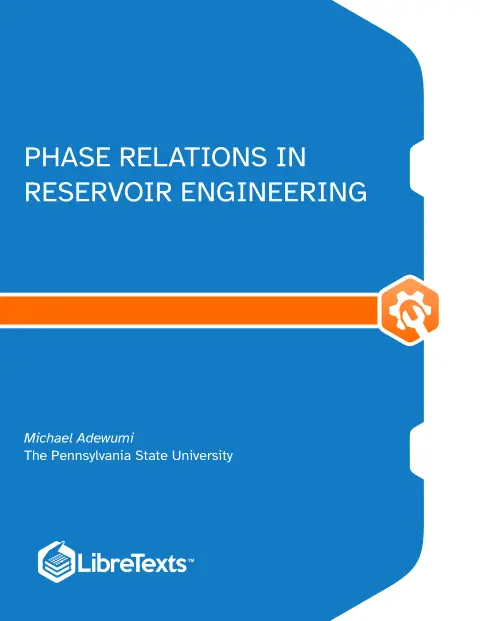
Not rated yetRate this bookFoundations of Chemical and Biological Engineering I by Jonathan Verret, Rosie Qiao, and Rana A. Barghout connects process diagrams and balances with reaction chemistry, phase behavior, energy, dynamics, economics, sustainability, and safety. This guide follows the eight main chapters and supporting appendix in the LibreTexts source.
Free reading is available at the official source. Opens in a new tab.
 Free
About this book
Foundations of Chemical and Biological Engineering I by Jonathan Verret, Rosie Qiao, and Rana A. Barghout connects process diagrams and balances with reaction chemistry, phase behavior, energy, dynamics, economics, sustainability, and safety. This guide follows the eight main chapters and supporting appendix in the LibreTexts source.
How to study this book
Begin with a process boundary, diagram, known quantities, unknowns, and units. State whether the system is reacting, at steady state, or changing with time. Reconcile material and energy balances before adding economic or environmental interpretation. Use fictional classroom processes and documented property assumptions.
Chapter-wise explanations and study tasks
Chapter 1 — Processes and Diagrams
Scoping, preliminary economics, flowsheeting, unit operations, material balances, and several diagram types connect an engineering question with a model. Each diagram has a purpose and level of detail.
Study task: Draw a simple block-flow diagram, label streams, and write a consistent overall material balance.
Chapter 2 — Reaction Chemistry
Rate, extent, rate laws, equilibrium, temperature dependence, mechanisms, and approximations describe different aspects of reaction behavior. Distinguish the amount reacted from the speed of change and from an equilibrium condition.
Study task: Compare a stoichiometric extent calculation with a rate-model question and state the information required by each.
Chapter 3 — Phase Equilibrium
Pressure and temperature conventions, phase rules, ideal-gas properties, vapor pressure, and multicomponent diagrams support phase calculations. A result depends on the chosen property model and equilibrium assumptions.
Study task: Interpret a simple phase-diagram example and identify the specified variables and remaining degrees of freedom.
Chapter 4 — Energy Balances
Heat capacity, phase change, and reaction effects enter energy accounting in different ways. Reference states and units must be consistent when combining terms.
Study task: Write an energy balance for a hypothetical heating process with a phase change and check every term’s units.
Chapter 5 — Unsteady Operations and Control
Accumulation introduces differential equations, while control adds a relationship between measurements, decisions, and manipulated variables. A steady-state answer does not describe the full transient.
Study task: Derive a simple accumulation model and identify a measured and manipulated variable for a conceptual feedback loop.
Chapter 6 — Process Economics
Capital estimates, equipment factors, labor, manufacturing costs, and return measures support preliminary comparisons. Their uncertainty and timing should remain visible rather than disappear inside a final percentage.
Study task: Create a fictional cost comparison and test the effect of one uncertain capital or operating estimate.
Chapter 7 — Green Engineering
Environmental fate and lifecycle assessment widen the system boundary beyond an individual unit operation. A local reduction can shift burdens to another stage.
Study task: Map a hypothetical process lifecycle and identify two effects omitted by a gate-to-gate comparison.
Chapter 8 — Process Safety
Hazard identification is a structured part of process analysis. Distinguish identifying a hazard from demonstrating that a particular design or procedure controls its risk.
Study task: Review a fictional process diagram and list the information needed for a competent hazard review without proposing unverified operating instructions.
Chapter 9 — Appendices and Resources
Solver and iteration guidance, pricing and property-data resources, diagram tools, and professional-society references support the main work. Document units, source conditions, and convergence assumptions when using external data or computation.
Study task: Create a property-and-assumption log and verify one numerical solution with an independent balance check.
Applied assignment
Prepare a classroom process study with a flowsheet, material and energy balances, a simple reaction or phase model, one transient equation, and a preliminary economic comparison. Add lifecycle boundaries and a hazard-information checklist. Distinguish known data, assumptions, calculated results, and matters requiring specialist review.
Suggested reading plan
Study Chapter 1 before building a model, Chapters 2–4 for chemistry and balances, and Chapter 5 for dynamics. Use Chapters 6–8 to evaluate the proposal more broadly, consulting the appendix whenever data or numerical tools are used.
Questions for reflection
- Does the model boundary match the engineering question?
- Which property or equilibrium assumption most affects the result?
- Are economic, environmental, and safety conclusions supported by the same evidence or by different analyses?
Edition and source notes
This guide follows the UBC-authored LibreTexts export with eight main chapters and seven supporting appendix entries. Software and data-resource examples belong to the source context. The supplementary exercises are conceptual or numerical studies, not validated process designs or operating procedures.
About access & copyright
This page provides book information and study material. Full-text access is provided by the original publisher or authorised source; a listing does not grant permission to republish the book.
Read our Library Access & Copyright policyExplore the contents
Check the chapters covered in this edition.
Visit the official source
See reading, preview or purchase options.
Save for later
Keep this textbook in your saved collection.
Reader ratings & reviews
Share your thoughts
Your review helps other students choose the right resources.
KEEP LEARNING
Your next great read
Chemical Engineering Geosciences
An Introduction To Geology
View An Introduction To Geology — book Geosciences
Physical Geology (Sierra College Edition)
View Physical Geology (Sierra College Edition) — book Geosciences
Introduction to Oceanography (Sierra College Edition)
View Introduction to Oceanography (Sierra College Edition) — book Geosciences
Physical Geography: our Beautiful World
View Physical Geography: our Beautiful World — book Communication
Professional Communications Foundations
View Professional Communications Foundations — book Statistics
PSY 190: Statistics for the Behavioral Sciences
View PSY 190: Statistics for the Behavioral Sciences — book Statistics
Applied Statistics for Social Science
View Applied Statistics for Social Science — book Social Sciences
Persuasion
View Persuasion — book Social Sciences



