
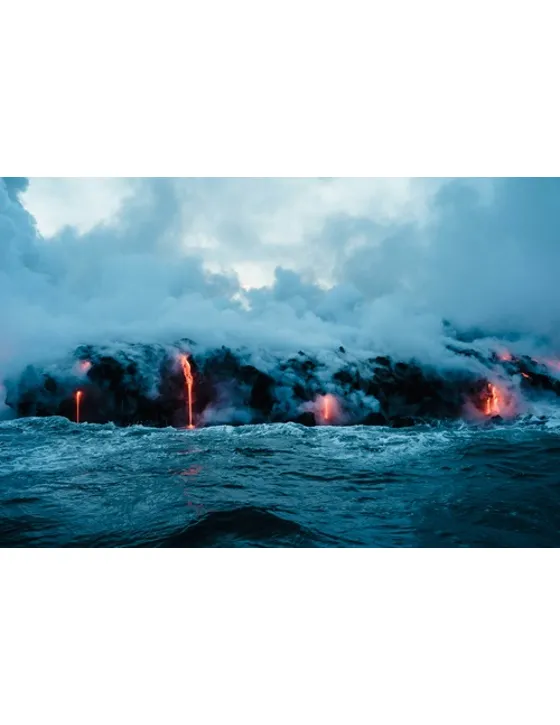
 Geosciences
Textbook
Physical Geology (Sierra College Edition)
Not rated yetRate this bookStudy twenty-two physical-geology chapters linking Earth history, rocks, tectonics, water, climate and resources. Original tasks emphasize evidence, process relationships and the edition’s regional contexts.
Read on the publisher’s website. Opens in a new tab.
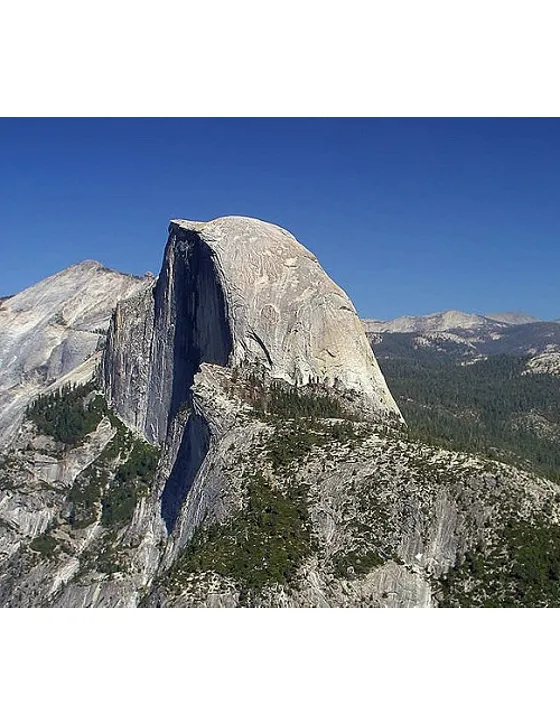 Free
About this book
Physical Geology (Sierra College Edition), associated with Allison Jones’s course collection, organizes Earth science into twenty-two chapters. Origins, interior structure and tectonics lead into minerals and the rock cycle. The sequence distinguishes igneous rocks from volcanism and weathering from sedimentary-rock formation, before turning to time, earthquakes, structures, water, coasts, climate, ice and resources.
The expanded structure provides opportunities to compare a material with its history and a landscape with the processes acting upon it. This guide adds original tasks for tracing those relationships, organizing evidence and identifying limits to an interpretation. Chapter overviews draw on selected substantive opening sections and verified contents; they do not validate every numerical statement, image or inherited cross-reference in the remix. Regional examples include Canada alongside U.S. and California material, so readers should retain each example’s place and period rather than assume every section describes the same setting.
AI-assisted book summary
Reading guide
Read origins, interior structure and tectonics before the materials sequence. Use the rock cycle as a connecting map. Revisit time and scale when studying surface systems and Earth-system change.
Chapter and section guide
1: Introduction to Geology
The opening broadens geology beyond the study of rocks to Earth’s history, systems and processes. Geological time and scientific inquiry establish the frame. Ask what question a geologist is investigating before deciding which evidence matters.
Study task: Turn a familiar landscape observation into a geological research question.
2: The Origin of Earth and the Solar System
Earth’s origins are placed within the development of the universe and solar system. The sequence connects materials with planetary formation. Keep different timescales and evidence sources visible rather than compress the account into one undifferentiated event.
Study task: Build a qualitative timeline separating cosmic, solar-system and early-Earth questions.
3: Earth’s Interior
Interior structure is described through crust, mantle and core, with evidence and heat-related questions. Compositional layers and mechanical behavior are related ways of describing Earth. A simplified cutaway should not be mistaken for a direct photograph.
Study task: Compare a compositional-layer description with a question about physical behavior.
4: Plate Tectonics
Tectonic theory is developed through Wegener’s arguments and subsequent evidence. Observations can support a pattern before a satisfactory mechanism is established. Trace the changing explanatory framework rather than memorize a historical name alone.
Study task: Pair an observation with the tectonic claim it supports and a question it leaves open.
5: Minerals
Mineral learning connects atoms, bonding and crystal structure with identification. Chemical and physical descriptions operate at different scales. A property is useful when its evidential role is made explicit.
Study task: Explain how two property observations could narrow a hypothetical mineral identification.
6: The Rock Cycle
The rock cycle distinguishes minerals from rocks and links transformations among materials. A rock can contain several components. The cycle is a framework of possible pathways rather than a requirement that every specimen follows one fixed route.
Study task: Draw two possible transformation paths for the same starting material.
7: Igneous Rocks
Igneous rocks connect magma composition, crystallization and texture. A description of ingredients is different from a cooling-history explanation. Combine the two when interpreting a specimen’s formation.
Study task: Compare a compositional question with a textural question for a fictional igneous rock.
8: Volcanism
Volcanism concerns the arrival of magma at the surface and the variety of resulting materials and structures. Not every eruption comes from a conical mountain. Describe the process before using a familiar shape as a shortcut.
Study task: Compare a fissure setting with a central volcanic structure using conceptual diagrams.
9: Weathering, Sediment, and Soil
Weathering begins when rocks encounter surface conditions different from those of formation. Physical change, chemical alteration and sediment production interact. An exposed surface records processes that need not operate at the same rate.
Study task: Separate physical breakdown and chemical alteration in a fictional outcrop account.
10: Sedimentary Rocks
Sedimentary rocks are introduced through the conversion of loose material into solid rock. Compaction and cementation play different roles. Use structures and context to develop a history beyond a rock-type label.
Study task: Explain two distinct steps in lithification and the evidence each could leave.
11: Metamorphism and Metamorphic Rocks
Metamorphic processes depend on parent material and changed conditions sustained through time. Texture and mineral stability connect those conditions with the resulting rock. No single variable should be assumed to explain every change.
Study task: Compare two hypothetical metamorphic outcomes while changing one condition at a time.
12: Measuring Geological Time
Geological time connects present processes, relative sequence and age evidence. The source also notes limits to simple analogies with the present. A useful reconstruction needs both order and an account of uncertainty.
Study task: Separate a relative-age conclusion from the evidence needed for a numerical estimate.
13: Earthquakes
Earthquake shaking is linked with rock deformation and release of stored energy. Fault movement and seismic waves are different parts of the explanation. Educational descriptions do not yield a precise prediction for a real location.
Study task: Draw a conceptual sequence linking deformation, rupture and wave propagation.
14: Geological Structures and Mountain Building
Structures and mountain building relate stress, strain and tectonic setting. The area over which a force acts matters. A folded or fractured pattern needs interpretation within the conditions under which it formed.
Study task: Compare force, stress and strain as distinct terms in a fictional structural sketch.
15: Mass Wasting
Mass wasting examines why slopes become unstable and what conditions influence movement. Geometry and material behavior work together. A classroom model leaves out information required for a real hazard assessment.
Study task: List the assumptions and omitted evidence in a simple slope-stability explanation.
16: Streams and Floods
Streams are placed within the water cycle before channel processes and floods. A drainage basin links local flow with a larger system. A short observation does not establish the full pattern of flood behavior.
Study task: Draw a basin boundary and distinguish water inputs, storage and outputs.
17: Groundwater
Groundwater occupies spaces in rock and sediment and moves under particular conditions. Storage capacity and ease of flow are different properties. A visible surface feature alone may not reveal the subsurface pathway.
Study task: Compare porosity and permeability questions using two hypothetical materials.
18: Shorelines
Shorelines are shaped through waves, transport, erosion and deposition. The chapter also considers sea-level change and human interventions. Distinguish an observed coastal form from a conclusion about its future behavior.
Study task: Trace a conceptual sediment pathway and identify a missing measurement.
19: Geology of the Oceans
Ocean geology revisits seafloor topography, crust and sediments. A bathymetric map supplies spatial evidence at a particular scale. Interpret depth patterns alongside geological processes rather than treat the map as a complete history.
Study task: Connect one mapped seafloor feature with a process question and additional evidence needs.
20: Earth-System Change
Earth-system change connects atmosphere, water, life and the rocky Earth through cycles. A process in one component can affect others. Define the boundary and timescale before evaluating a change.
Study task: Map three cross-system links and state what is transferred in each.
21: Glaciation
Glaciation compares continental and alpine ice and the landforms they produce. Climate and topography influence their distribution. A landform can preserve evidence of past ice without specifying every detail of the former glacier.
Study task: Separate a glacial observation from a reconstruction of past extent.
22: Geological Resources
Resources connect formation, location and use of energy, metals and nonmetallic materials. The chapter includes regional extraction contexts. Geological availability does not alone establish economic viability or acceptable environmental effects.
Study task: Compare geological, economic and environmental questions about a fictional resource occurrence.
How to study this book
Keep a concept map linking material, process, setting and evidence. Compare observations with alternative explanations before settling on a history. Check the actual section heading when a reused figure or cross-reference has different numbering.
Reflection questions
- How does the observation constrain the explanation?
- Which timescale is relevant?
- What context comes from the example’s location and source?
Sources and coverage
Original source and online reader. This original guide is based on the verified source structure and the selected material described below. Study tasks are original additions, not exercises or answers attributed to the source.
Verified contents and selected opening sections were reviewed, not every subsection, figure, calculation or reused cross-reference. Canadian, U.S. and California examples retain their source contexts; no site-specific hazard or resource assessment is supplied.
About access & copyright
This page provides book information and study material. Full-text access is provided by the original publisher or authorised source; a listing does not grant permission to republish the book.
Read our Library Access & Copyright policyFramework
Tectonics and the rock cycle connect many chapters.
Interpretation
Material properties can constrain formation histories.
Context
Regional examples and inherited numbering need attention.
Reader ratings & reviews
Share your thoughts
Your review helps other students choose the right resources.
KEEP LEARNING
Your next great read
Geosciences Geosciences
Introduction to Oceanography (Sierra College Edition)
View Introduction to Oceanography (Sierra College Edition) — book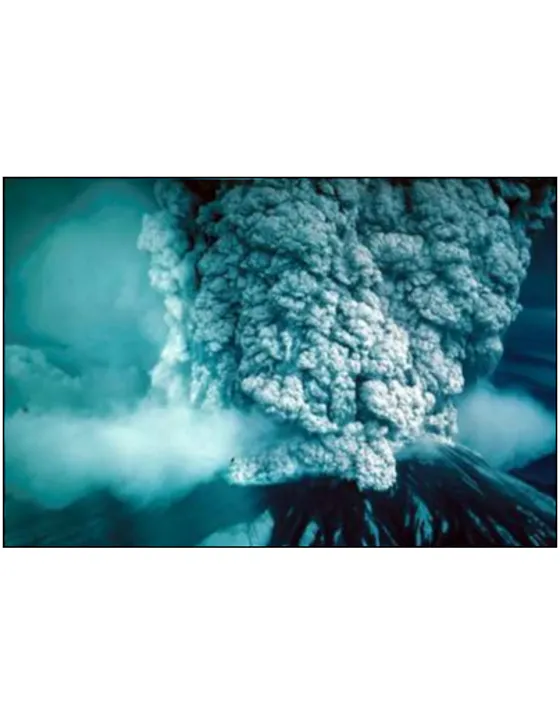 Geosciences
Physical Geography: our Beautiful World
View Physical Geography: our Beautiful World — bookIntroduction to Earth and Space Sciences
Introduction to Earth and Space Sciences
View Introduction to Earth and Space Sciences — bookSedimentary Geology: Rocks, Environments and Stratigraphy
Sedimentary Geology: Rocks, Environments and Stratigraphy
View Sedimentary Geology: Rocks, Environments and Stratigraphy — bookGEL 109: Sediments and Strata
GEL 109: Sediments and Strata
View GEL 109: Sediments and Strata — bookAn Introduction to Geology (Johnson, Affolter, Inkenbrandt, and Mosher)
An Introduction to Geology (Johnson, Affolter, Inkenbrandt, and Mosher)
View An Introduction to Geology (Johnson, Affolter, Inkenbrandt, and Mosher) — bookInvestigations in Weather and Climate
Investigations in Weather and Climate
View Investigations in Weather and Climate — bookOCEAN-101: Fundamentals of Oceanography
OCEAN-101: Fundamentals of Oceanography
View OCEAN-101: Fundamentals of Oceanography — bookAn Introduction to Weather and Climate



