
Introduction to Consumer Behaviour
AccountingTextbook
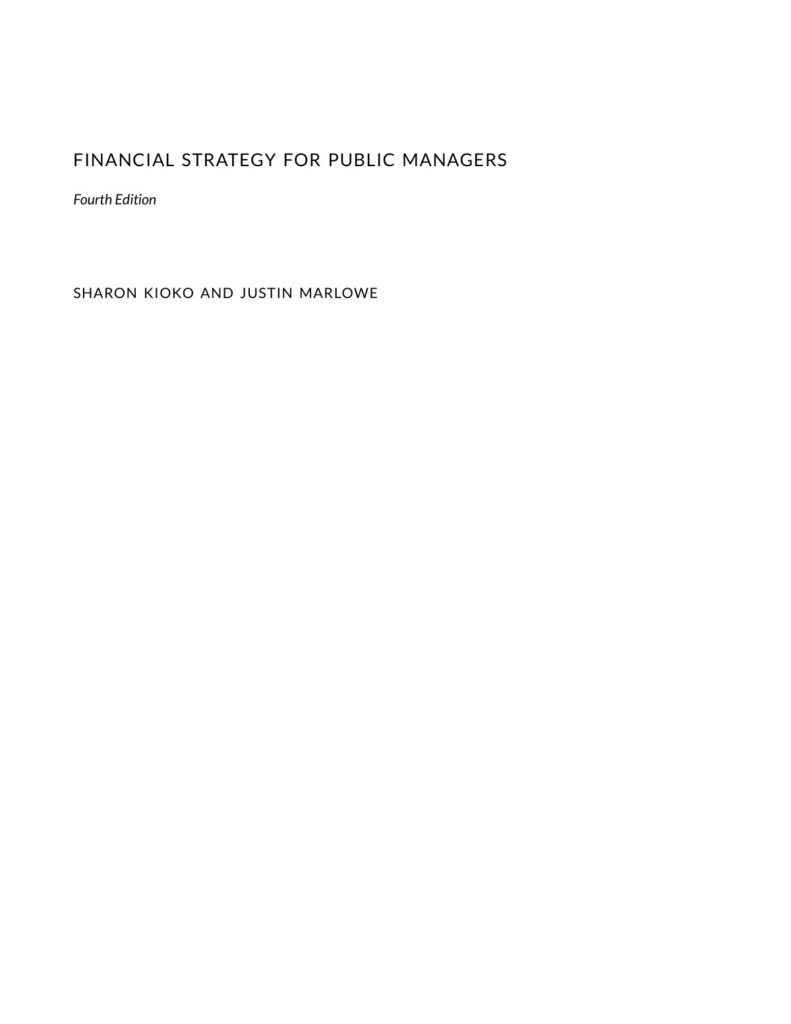
Financial Strategy for Public Managers
Not rated yetRate this bookFinancial Strategy for Public Managers connects financial techniques with organisational goals. Sharon Kioko and Justin Marlowe explain how public managers can use statements, accounting, cost analysis and budgets to inform decisions. The hosted text is the 2023 fourth edition.
 Free
About this book
The introduction treats public finance as a part of management rather than a specialist activity isolated from programme goals. Its audience includes people working with governments, nonprofits and organisations pursuing public purposes. The book links technical tools with the questions managers need to ask about resources, constraints and results. Six substantive chapters develop the financial context, statements and their analysis, accrual accounting, costs and budgets. The authors also identify limits to their scope, including areas of healthcare finance and organisational change. The work’s United States context and edition date remain relevant to its institutional examples.
The attached edition contains 254 PDF pages, including front matter. Cover: source edition title page rendered from the PDF. The textbook and its original notices are retained; Academic Master’s study material is separate from the source text.
Book summary
Study overview of the reviewed opening
The introduction connects financial strategy with an organisation’s ability to accomplish its mission. Resources, legal authority and internal expertise differ between organisations, so a policy ambition must be considered alongside the financial setting that can support it. Strategy can involve adjusting a programme or seeking a different arrangement of resources and partners.
The authors’ organising principle is that technique supports strategy. Financial statements, transaction analysis, cost information and budgets are useful because they inform decisions. A calculation is not treated as an end in itself: its value depends on the question a manager is trying to answer. The introduction encourages managers to recognise gaps in their knowledge and seek appropriate expertise.
The chapter roadmap begins with public-sector funding, then develops financial reporting, statement analysis, accounting, cost behaviour and budgeting. The discussion considers governments and nonprofits together while acknowledging differences where needed. It also separates the book’s coverage from topics given limited attention. This overview summarises the introduction, not a current financial recommendation or a complete account of each analytical procedure.
Book contents
- Foreword
- Introduction
- How We Pay for the Public Sector
- The Basic Financial Statements
- Financial Statement Analysis
- Accrual Accounting
- Cost Analysis
- Budget Strategy
- Glossary of Terms
- About the Authors
Questions for study
The following prompts are Academic Master’s editorial material.
- Which financial constraint could change a programme’s design?
- How should a technique connect with an actual management question?
- What information would you need before comparing two organisations?
Sources and coverage
Introduction read in full (PDF pages 7–14); fourth-edition copyright, identifiers and contents checked.
About access & copyright
Check this edition’s source and licence before reusing its files or content. A library listing does not grant additional rights.
Read our Library Access & Copyright policyMission and resources
Relate financial strategy to organisational objectives.
Decision-focused technique
Ask what a calculation helps a manager decide.
Financial context
Recognise differences in authority, revenue and expertise.
Scope awareness
Interpret institutional examples within the edition.
Reader ratings & reviews
Share your thoughts
Your review helps other students choose the right resources.
KEEP LEARNING
Your next great read
Business
Accounting Analytics: An Integrated Approach
Accounting Analytics: An Integrated Approach
View Accounting Analytics: An Integrated Approach — book Business
Mastering Strategic Management
View Mastering Strategic Management — book Business
Project Management: Navigating the Complexity with a Systematic Approach
View Project Management: Navigating the Complexity with a Systematic Approach — bookBusiness Law, Ethics, and Sustainability
Business Law, Ethics, and Sustainability
View Business Law, Ethics, and Sustainability — book Business
Sustainable Property Management
View Sustainable Property Management — book Business
 Calculus with Excel
View Business Calculus with Excel — book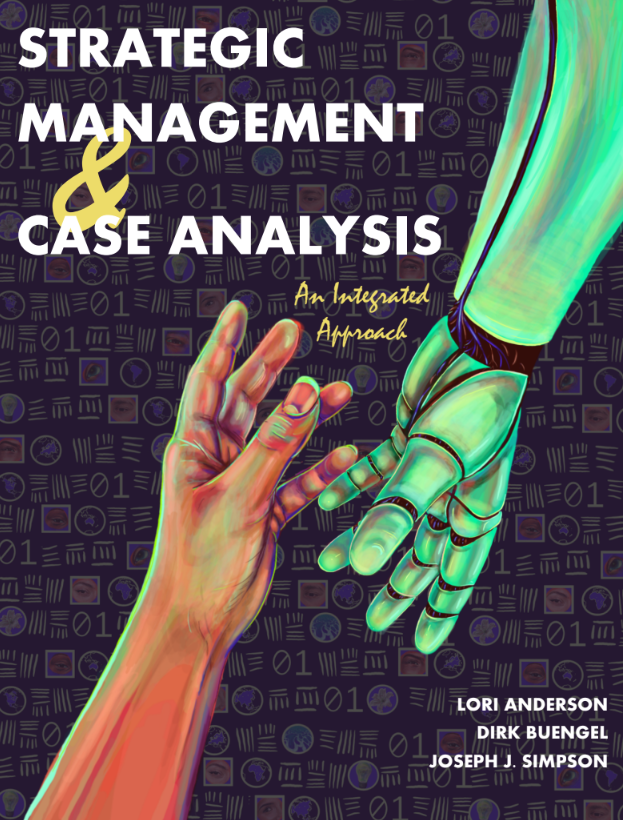 Management
Strategic Management and Case Analysis: An Integrated Approach
View Strategic Management and Case Analysis: An Integrated Approach — book Business
Fashion and Apparel Consumer Behavior
View Fashion and Apparel Consumer Behavior — book Business



