
 Business
ManagementTextbook
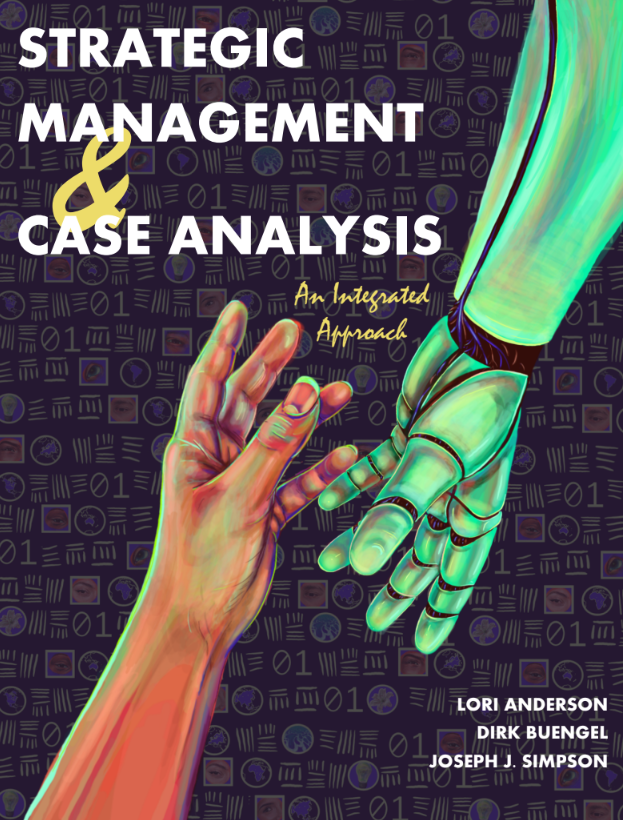
Strategic Management and Case Analysis: An Integrated Approach
Not rated yetRate this bookA strategic management textbook that joins conceptual study with evidence-based case analysis and the practical work of evaluating organisational choices.
Free reading is available at the official source. Opens in a new tab.
 Free
About this book
About this book
A strategic management textbook that joins conceptual study with evidence-based case analysis and the practical work of evaluating organisational choices.
This page introduces the source edition and offers a focused reading route. Use the linked original resource for the complete text, references, activities, and the author’s full explanation. The overview below is limited to the sections identified in the coverage note.
Contents and further reading
Consult the official book or repository page for the resource’s contents and publication information. Open the source PDF to read the complete available edition.
Sources and coverage
This original overview is based on publisher overview and the introduction’s explanation of learning features and the AFI framework (PDF sheets 2 and 16–17), with publication details checked. It is not a whole-book review. The verified source PDF contains 447 PDF sheets, including preliminary or repository pages; this may differ from its printed pagination. The source retains its own authorship, rights notices, and any separately credited third-party material.
Book summary
Study overview
The reviewed introduction explains how students move between learning strategic management concepts and applying them to a case. Analysis, formulation, and implementation provide the organising framework. The text uses analysis instruments to support interpretation and evaluation, rather than treating a named framework as a substitute for reasoning. Its introductory design also distinguishes the perspective of a strategic leader from that of a student examining a case. Colour is used to indicate the framework’s stages, while accompanying text preserves their meaning for readers who cannot rely on colour. The publisher’s overview identifies business and corporate strategy, innovation, sustainability, ethics, technology, and international settings as areas of wider coverage. This orientation describes the book’s approach without claiming to assess every chapter or case.
How to study this book
Before applying a framework, state the decision the organisation faces and the evidence available in the case. Keep observations separate from interpretations and recommendations. For each proposed action, show how it follows from the analysis and what assumption could change the conclusion. Consider implementation early: identify a responsible actor, a resource requirement, and a useful measure of progress. When working in a group, compare the evidence behind competing interpretations before voting on a preferred recommendation. Finish with a short statement of limitations and information you would request before making a real decision.
These study suggestions and the questions below are independent Academic Master editorial guidance.
Questions for reflection
- Which case detail most strongly supports your recommendation?
- Where does analysis end and an assumption begin?
- How would you judge whether implementation is progressing?
About access & copyright
This page provides book information and study material. Full-text access is provided by the original publisher or authorised source; a listing does not grant permission to republish the book.
Read our Library Access & Copyright policyAFI framework
Connect analysis, formulation, and implementation.
Case evidence
Support interpretations with identifiable case information.
Analytical tools
Use frameworks to organise reasoning rather than replace it.
Implementation
Relate recommendations to action and evaluation.
Reader ratings & reviews
Share your thoughts
Your review helps other students choose the right resources.
KEEP LEARNING
Your next great read
Business Business
Sustainable Property Management
View Sustainable Property Management — book Accounting
Financial Strategy for Public Managers
View Financial Strategy for Public Managers — book Business
Electronic Commerce: The Strategic Perspective
View Electronic Commerce: The Strategic Perspective — book Business
Management: Financial, Social, and Ecological Well-Being
View Management: Financial, Social, and Ecological Well-Being — bookFundamentals and Principles of Chemistry
Fundamentals and Principles of Chemistry
View Fundamentals and Principles of Chemistry — bookPlant Molecular Genetics and Bioengineering
Plant Molecular Genetics and Bioengineering
View Plant Molecular Genetics and Bioengineering — bookIntroduction to Consumer Behaviour
Introduction to Consumer Behaviour
View Introduction to Consumer Behaviour — bookIntroduction to Drafting and AutoCAD 2D
Introduction to Drafting and AutoCAD 2D
View Introduction to Drafting and AutoCAD 2D — bookIntroduction to Drafting and AutoCAD 3D



