
 cardiac resynchronization therapy, quality of life, atrial fibrillation, sudden cardiac death, hyper
AnatomyTextbook
Douglas College Human Anatomy & Physiology II (2nd ed.)
Not rated yetRate this bookDouglas College Human Anatomy & Physiology II, second edition, develops physiology through eleven units on endocrine control, body maintenance, reproduction, and inheritance. This guide follows the 2019 edition’s own organization, including its combined cardiovascular unit and separate nutrition unit.
Free reading is available at the official source. Opens in a new tab.
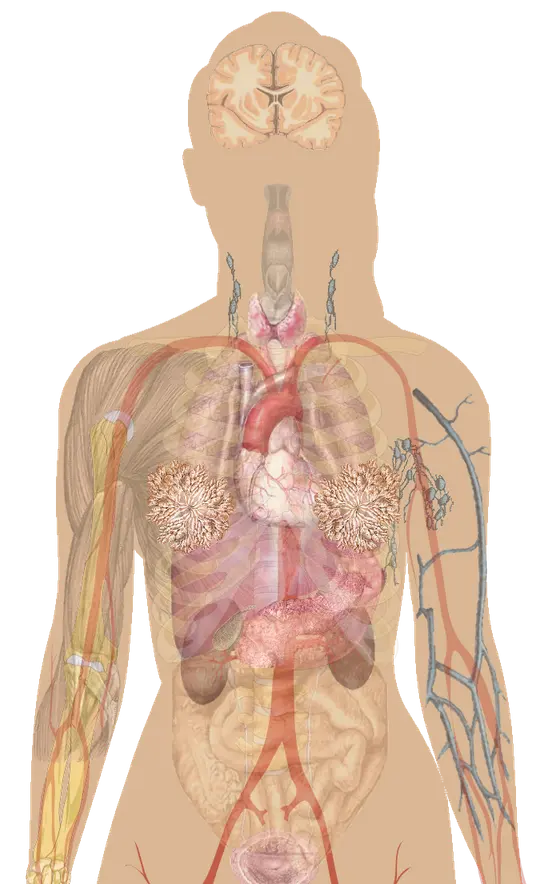 Free
About this book
Douglas College Human Anatomy & Physiology II, second edition, develops physiology through eleven units on endocrine control, body maintenance, reproduction, and inheritance. This guide follows the 2019 edition’s own organization, including its combined cardiovascular unit and separate nutrition unit.
How to study this book
Read the unit objectives before the explanations, then answer the guiding questions without notes. Use labelled diagrams, flow paths, comparison tables, and feedback-loop sketches. Keep the second edition’s unit numbers when cross-referencing; the later fourth edition rearranges several topics. These activities support physiology study rather than diagnosis or treatment.
Chapter-wise explanations and study tasks
Unit 1. The Endocrine System
Hormone categories, receptors, secretion stimuli, and major endocrine organs connect chemical signals with regulation. Compare endocrine and nervous communication while distinguishing the production of a signal from the response of its target.
Study task: Construct a gland–hormone–target table for one regulatory axis and explain its negative-feedback pathway.
Unit 2. The Cardiovascular System
This edition groups cardiac function, blood, vessels, and circulation within a broad cardiovascular unit. Integrate the pumping sequence with transport, pressure, resistance, and exchange rather than studying each as an unrelated list.
Study task: Draw a complete circulation route and explain how cardiac output, vessel resistance, and capillary exchange contribute different parts of tissue supply.
Unit 3. Lymphatic System, Resistance and Immunity
The lymphatic system returns fluid and supports immune surveillance, while innate and adaptive mechanisms address threats in different ways. Follow the sequence from recognition to response and distinguish immune memory from immediate defence.
Study task: Compare an initial and a later fictional antigen exposure, identifying the contributions of innate responses, lymphocytes, antibodies, and memory.
Unit 4. The Respiratory System
Respiratory structures and mechanics connect ventilation with gas exchange, transport, and control. Pressure-driven air movement differs from diffusion across a membrane, and neither alone explains delivery to tissues.
Study task: Explain an inhalation using pressure changes, then trace the separate gradients that move oxygen from alveoli toward tissues.
Unit 5. The Digestive System
Digestion combines mechanical processing, secretions, enzyme action, movement, and absorption. Follow nutrients through anatomical regions and distinguish food breakdown from the transport of the resulting molecules.
Study task: Trace a carbohydrate and a lipid through digestion and absorption, highlighting differences in processing and transport routes.
Unit 6. Nutrition
The dedicated nutrition unit connects nutrient functions and energy concepts with the body’s requirements. Essentiality, food sources, and physiological roles are different properties, while general reference concepts do not establish an individual’s needs.
Study task: Prepare a comparison of macronutrients and micronutrients by function, energy contribution, and one consequence of confusing amount with nutritional role.
Unit 7. Cellular Respiration and Energy Metabolism
Cellular pathways explain how nutrient-derived molecules contribute to ATP generation and storage. Track carbon, electron carriers, and energy transfers while distinguishing aerobic pathway dependence from the location of each reaction.
Study task: Map the principal stages of glucose oxidation and explain where carbon dioxide, reduced carriers, and most ATP production enter the account.
Unit 8. The Urinary System
The kidney processes plasma through filtration and selective tubular movement, helping regulate composition as well as excrete wastes. A nephron diagram becomes more useful when each region is associated with a transport process.
Study task: Explain how filtration, reabsorption, and secretion together determine the final excretion of a hypothetical solute.
Unit 9. Fluids and Electrolytes
Compartmental water balance, solutes, and acid–base mechanisms integrate renal, respiratory, and endocrine functions. Distinguish changing a solute’s total amount from changing its concentration through water movement.
Study task: Use a fictional fluid-shift diagram to explain osmosis, then identify how renal and respiratory mechanisms contribute on different timescales.
Unit 10. Reproduction and Development
Reproductive anatomy, gametogenesis, hormonal coordination, and developmental events connect body systems with the formation of a new organism. Keep anatomical location, cellular stage, and hormonal timing explicit.
Study task: Create an annotated sequence from gamete production through fertilization and early development, identifying where endocrine regulation is involved.
Unit 11. Human Genetics
Cell division and inheritance connect chromosome behaviour with trait transmission and variation. Mendelian patterns, mutations, and chromosome changes are different explanatory levels and should not be collapsed into a single genetic label.
Study task: Compare a single-gene cross with a chromosome-number change and explain why they require different diagrams and reasoning.
Applied assignment
Prepare a physiological integration map using at least four units. Trace a substance such as oxygen, water, or a nutrient through transport, exchange, cellular use, and regulation, then add a short comparison showing how this edition’s unit organization differs from the fourth edition.
Suggested reading plan
Study unit 1 first, then the broad cardiovascular unit 2. Pair 3–4, 5–7, 8–9, and 10–11 for linked review. After each block, answer source guiding questions and redraw one process without using the model image.
Questions for reflection
- Which observation is explained by transport and which by regulation?
- Where would changing a membrane’s properties alter the whole pathway?
- Are you using the correct unit number for this edition?
Edition and source notes
Based on the Douglas College second edition, copyright 2019, with eleven units. The source identifies a newer edition for current course use. This guide preserves the second edition’s combined cardiovascular unit, nutrition unit, and later ordering of urinary and fluid topics; it does not replace the source with the fourth-edition sequence.
About access & copyright
This page provides book information and study material. Full-text access is provided by the original publisher or authorised source; a listing does not grant permission to republish the book.
Read our Library Access & Copyright policyExplore the contents
Check the chapters covered in this edition.
Visit the official source
See reading, preview or purchase options.
Save for later
Keep this textbook in your saved collection.
Reader ratings & reviews
Share your thoughts
Your review helps other students choose the right resources.
KEEP LEARNING
Your next great read
cardiac resynchronization therapy, quality of life, atrial fibrillation, sudden cardiac death, hyper Anatomy
Douglas College Human Anatomy & Physiology II (4th ed.)
View Douglas College Human Anatomy & Physiology II (4th ed.) — book Anatomy
 and Physiology II at Cambrian College
View Anatomy and Physiology II at Cambrian College — book Anatomy
 and Physiology I MSK at Cambrian College
View Anatomy and Physiology I MSK at Cambrian College — book Anatomy
 and Physiology II at Cambrian College
View Anatomy and Physiology II at Cambrian College — book Geosciences
An Introduction To Geology
View An Introduction To Geology — book Geosciences
Physical Geology (Sierra College Edition)
View Physical Geology (Sierra College Edition) — book Geosciences
Introduction to Oceanography (Sierra College Edition)
View Introduction to Oceanography (Sierra College Edition) — book Geosciences
Physical Geography: our Beautiful World
View Physical Geography: our Beautiful World — book Communication



