
 Arts
MusicTextbook
Music Theory
Not rated yetRate this bookBuild music-theory foundations through three units on rhythm, pitch and scales. Original tasks connect notation with defined relationships, while distinguishing written study from listening and performance practice.
Read on the publisher’s website. Opens in a new tab.
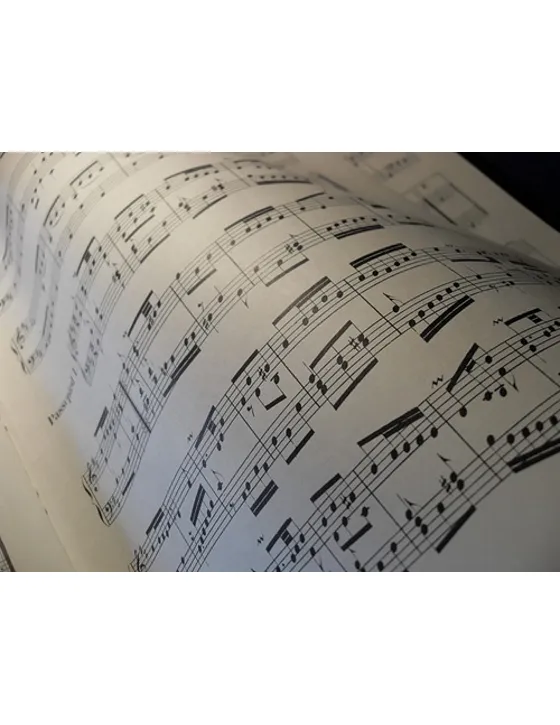 Free
About this book
Music Theory, in this LibreTexts collection, is a compact foundation organized into three units rather than a complete survey of harmony and composition. The units connect rhythm with symbols and time, pitch with notation and tone, and scales with ordered pitch relationships. The contents include duration, pulse, tempo, meter, clefs, accidentals, register, scale steps and related topics.
This guide adds original tasks for comparing definitions, annotating simple examples and connecting notation with a clear question. It does not claim to summarize later harmony units that are absent from this export. Overviews reflect selected opening explanations and learning objectives, while the complete source supplies notation examples and summaries. Musical symbols do not always survive plain-text extraction, so learners should check the rendered figures rather than infer a missing mark. No audio was reviewed in preparing this guide, and a written identification task should not be treated as an assessment of listening or performance skill.
AI-assisted book summary
Reading guide
Establish duration and pulse concepts before pitch notation. Then compare ordered pitch patterns and scale steps. Check each term against a rendered example and revisit the source summary after an independent attempt.
Unit-by-unit guide
Unit 1: The Elements of Rhythm- Sound, Symbol, and Time
Rhythm learning begins with symbols representing duration and their proportional relationships. Pulse, tempo and meter add different ways of organizing musical time. A symbol’s appearance should be connected to its function in context.
Study task: Compare duration, pulse and tempo in words, then annotate a simple rendered source example.
Unit 2: The Elements of Pitch-Sound, Symbol, and Tone
Pitch learning distinguishes pitch from pitch class and introduces staff, clef and register concepts. Similar names can refer to different levels of description. Check the notation convention before identifying a written tone.
Study task: Explain the distinction between pitch and pitch class using a rendered source example.
Unit 3: The Foundations Scale-Steps and Scales
Scale learning organizes pitches through ordered patterns and scale-step relationships. Major, minor and other source topics need their actual notation and definitions. This overview does not provide a complete account of every scale tradition.
Study task: Compare two source scale patterns by the relationships between adjacent steps rather than names alone.
How to study this book
Use a notation notebook with symbol, definition, relationship and example. Compare one feature at a time and check the source figures for missing notation. Seek suitable audio or instructor feedback for skills beyond the written material.
Reflection questions
- What relationship does the symbol represent?
- How do pitch and pitch class differ?
- Which feature of a scale pattern is being compared?
Sources and coverage
Source: Music Theory — LibreTexts.
Original reader guide based on the verified contents and selected substantive chapter or section openings, introductions and learning objectives in the linked source PDF. It is not a full review of every subsection, exercise, figure, procedure, story or linked media item. Study tasks are original additions, not exercises or solutions attributed to the source.
The reviewed export has three units only. Selected opening explanations and objectives were reviewed, not every notation figure or broader musical claim. Plain-text extraction can omit symbols; consult the rendered examples. No audio or performance was assessed.
About access & copyright
This page provides book information and study material. Full-text access is provided by the original publisher or authorised source; a listing does not grant permission to republish the book.
Read our Library Access & Copyright policyRhythm
Duration, pulse, tempo and meter are distinct concepts.
Pitch
Notation represents pitch through defined conventions.
Scope
This export contains three foundation units.
Reader ratings & reviews
Share your thoughts
Your review helps other students choose the right resources.
KEEP LEARNING
Your next great read
Arts Music
Original Études for the Developing Conductor
View Original Études for the Developing Conductor — book Humanities
Music Copyright, Creativity, and Culture
View Music Copyright, Creativity, and Culture — bookIntellectual Property Licensing and Transactions
Intellectual Property Licensing and Transactions
View Intellectual Property Licensing and Transactions — bookRecent Improvements of Power Plants Management and Technology
Recent Improvements of Power Plants Management and Technology
View Recent Improvements of Power Plants Management and Technology — book Corrections
Criminal Law
View Criminal Law — book Water Systems Technology
Irrigation Systems Management (AET 021)
View Irrigation Systems Management (AET 021) — book Manufacturing
 Processes 4-5
View Manufacturing Processes 4-5 — book Corrections
Criminal Investigations
View Criminal Investigations — book Languages



