
 Earth Sciences
Engineering & TechnologyTextbook
Building with Nature & Beyond: Principles for designing nature based engineering solutions
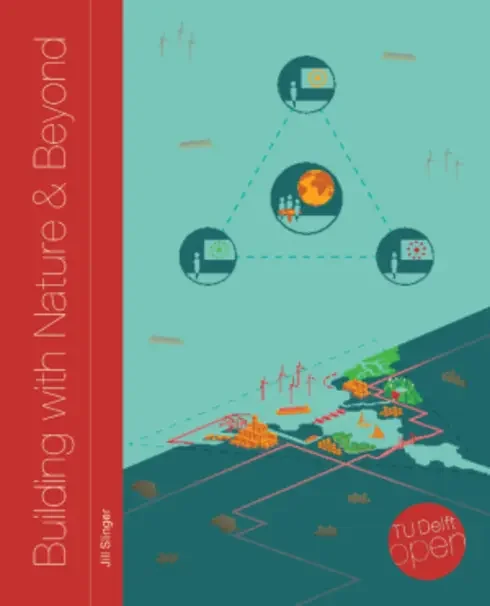
Not rated yetRate this bookBuilding with Nature & Beyond combines hydraulic engineering, ecological processes, and the social work needed to develop workable nature-based solutions. Jill H. Slinger’s textbook follows two linked courses: engineering with nature and moving beyond engineering toward stakeholder cooperation and coalition building. The ten chapters show why a technically attractive design can fail if ecological conditions, institutional relationships, or competing interests are ignored. This guide follows the full interactive textbook. The imported seven-page exercise-answer sheet has been replaced by the actual 428-page book, while supporting answers remain available through the publisher’s source record.
Read on the publisher’s website. Opens in a new tab.
 Free
About this book
Overview
Building with Nature & Beyond combines hydraulic engineering, ecological processes, and the social work needed to develop workable nature-based solutions. Jill H. Slinger’s textbook follows two linked courses: engineering with nature and moving beyond engineering toward stakeholder cooperation and coalition building. The ten chapters show why a technically attractive design can fail if ecological conditions, institutional relationships, or competing interests are ignored. This guide follows the full interactive textbook. The imported seven-page exercise-answer sheet has been replaced by the actual 428-page book, while supporting answers remain available through the publisher’s source record.
How to study this book
Carry a single conceptual coastal or water-management problem through all ten chapters. Begin with objectives and system boundaries, then develop engineering, ecological, and social criteria separately before integrating them. Record assumptions about natural processes and stakeholder interests rather than treating them as established facts. Use the interactive exercises where supported by your PDF reader; consult the publisher’s ancillary answers only after attempting the tasks. Revisit an early design after stakeholder mapping and explain what changes. Judge a proposal by its mechanism, feasibility, ecological fit, distribution of consequences, and capacity to adapt.
Chapter and section study guide
Chapter 1 — Building with Nature: An Issue of Trade-offs
Building with Nature uses natural materials and processes to help achieve infrastructure functions while considering ecological and social outcomes. The opening chapter introduces several professional perspectives and shows that they do not automatically define success in the same way. A solution can improve one objective while reducing another. The relevant question is therefore which trade-offs are being made, for whom, and under what assumptions. Begin with the problem and its setting rather than selecting a fashionable intervention before understanding the system.
Study application: Compare engineering, ecological, and community definitions of success for one hypothetical shoreline project.
Chapter 2 — Engineering Design Principles
Engineering design translates a problem into requirements, alternatives, evaluation, and a defensible choice. Functional goals, boundary conditions, loads, reliability, feasibility, and failure mechanisms guide the process. Decisions occur at several levels, from overall strategy to system, element, and detail. The chapter emphasizes reasoning about performance rather than reproducing a familiar structure. A design should state how it delivers the required function and which conditions might prevent it. Nature-based components still require explicit engineering analysis; using natural processes does not remove constraints or uncertainty.
Study application: Create a requirement tree and two concept alternatives, identifying a failure mechanism that each must address.
Chapter 3 — Ecological Design Principles
Ecological design begins with habitats, processes, species relationships, and the conditions sustaining them. A site is not an empty surface on which a technical object is placed. Connectivity, disturbance, gradients, succession, and time scales can determine whether an intervention creates or damages ecological functions. The chapter asks how engineering choices can work with ecological dynamics rather than merely adding decorative greenery. Translate ecological objectives into observable conditions and recognize uncertainty in system response. A desirable habitat outcome must be connected to a plausible process and suitable environmental context.
Study application: Explain the environmental conditions a proposed habitat-supporting measure requires and identify evidence that those conditions exist.
Chapter 4 — Integrated BwN Design
Integration connects engineering functions and ecological opportunities in a common design process. It requires revisiting assumptions and developing alternatives that respond to both sets of requirements, rather than checking ecology only after a technical solution is fixed. Interactions and feedbacks can create benefits or conflicts over time. The chapter encourages system thinking and iteration, including attention to natural materials and forces. A convincing integrated concept explains how its components work together and where trade-offs remain. Integration is demonstrated through mechanisms and performance, not simply through a broad sustainability claim.
Study application: Revise an engineering concept to incorporate an ecological process and explain the changed function, benefit, and possible new risk.
Chapter 5 — Assessing BwN Designs
Assessment compares designs against stated objectives and criteria while accounting for uncertainty and different kinds of value. Engineering performance, ecological consequences, feasibility, and social effects may not share one simple unit. A transparent comparison makes assumptions and trade-offs visible instead of hiding them inside a single score. The chapter links design evaluation with learning and possible adjustment. Distinguish predictions made before implementation from monitoring evidence afterward. A design’s attractiveness depends on its context and comparison alternatives, so assessment should explain why a conclusion follows rather than merely rank options.
Study application: Build a multicriteria comparison for two concepts and test whether changing one important assumption alters the preferred alternative.
Chapter 6 — Why Beyond Engineering?
Technical and ecological knowledge are necessary but insufficient when decisions depend on multiple actors with different interests and authority. This chapter introduces the social dimensions that can block or enable an apparently sound proposal. People disagree about problem definitions, acceptable risk, fairness, and the distribution of benefits and costs. Participation is therefore part of understanding the problem, not only a final communication exercise. Going beyond engineering means examining institutions, relationships, and cooperation while retaining technical rigor. A feasible design must fit the conditions under which collective action can occur.
Study application: Identify why a technically effective intervention might lack support, separating interests, authority, trust, and problem definitions.
Chapter 7 — Stakeholder Analysis and Mapping
Stakeholder analysis identifies actors, their interests, resources, relationships, and capacity to influence or experience a project. A map helps reveal interdependence, but it is a provisional analytical representation rather than a complete account of people. Formal authority does not capture every source of influence, and vulnerable groups can be affected without being powerful. The chapter links stakeholder understanding with design choices and engagement. Check assumptions through appropriate evidence and remain alert to changes over time. Use the analysis to improve problem framing, not to label opponents as obstacles.
Study application: Map affected and influential actors separately, then identify whose perspective is missing from the initial design brief.
Chapter 8 — Cooperative Game Theory
Cooperative game theory provides a way to examine whether actors can gain through working together and how gains might be allocated. A coalition must offer participants reasons to cooperate relative to their alternatives. Total benefits and their distribution are distinct questions: a large collective gain can coexist with an unacceptable allocation. The chapter introduces structured reasoning about cooperation rather than assuming shared environmental aims guarantee agreement. Model results depend on how options and values are defined. Use them to clarify incentives and negotiation questions, not to replace stakeholder judgment.
Study application: Compare a cooperative option with separate action for three actors and explain why an unequal allocation could undermine the coalition.
Chapter 9 — Social Design Principles
Social design considers the conditions under which people can participate, learn, negotiate, and build support for an intervention. Trust, information, inclusion, procedural arrangements, and shared learning influence outcomes alongside technical content. The chapter connects stakeholder differences with practical design processes rather than expecting consensus to emerge spontaneously. Participation should have a meaningful relationship with decisions and acknowledge unequal resources. A process can be procedurally attractive yet fail to address substantive concerns. Explain how a chosen arrangement improves the quality or legitimacy of the collective decision.
Study application: Design a stakeholder workshop with a clear decision purpose, accessible information, and a method for recording unresolved disagreements.
Chapter 10 — Towards Coalition Building
Coalition building brings the book’s engineering, ecological, and social reasoning together around a workable joint undertaking. Participants need a sufficiently shared direction while retaining different interests and responsibilities. Agreements must connect benefits, commitments, resources, and implementation rather than remaining general statements of support. The chapter emphasizes the practical challenge of sustaining cooperation through uncertainty and change. A coalition is stronger when it can explain how disagreements will be addressed and how learning will affect action. Revisit the design itself as relationships and knowledge develop.
Study application: Write a preliminary coalition agreement covering shared objectives, actor contributions, monitoring, decision rules, and a process for revising commitments.
Reflection and review
- What trade-off would remain even if your design met every technical requirement?
- How could stakeholder analysis change the definition of the problem rather than only the communication plan?
- Which monitoring result should trigger reconsideration of the design or agreement?
Source and edition notes
2021 interactive textbook; two parts, ten chapters, 428 PDF pages. The full interactive textbook is linked. Its quiz-answer supplement is not described as the book. Some interactive functions depend on reader software; the publisher also provides supporting exercise files.
Book summary
Overview
Building with Nature & Beyond combines hydraulic engineering, ecological processes, and the social work needed to develop workable nature-based solutions. Jill H. Slinger’s textbook follows two linked courses: engineering with nature and moving beyond engineering toward stakeholder cooperation and coalition building. The ten chapters show why a technically attractive design can fail if ecological conditions, institutional relationships, or competing interests are ignored. This guide follows the full interactive textbook. The imported seven-page exercise-answer sheet has been replaced by the actual 428-page book, while supporting answers remain available through the publisher’s source record.
How to study this book
Carry a single conceptual coastal or water-management problem through all ten chapters. Begin with objectives and system boundaries, then develop engineering, ecological, and social criteria separately before integrating them. Record assumptions about natural processes and stakeholder interests rather than treating them as established facts. Use the interactive exercises where supported by your PDF reader; consult the publisher’s ancillary answers only after attempting the tasks. Revisit an early design after stakeholder mapping and explain what changes. Judge a proposal by its mechanism, feasibility, ecological fit, distribution of consequences, and capacity to adapt.
Chapter and section study guide
Chapter 1 — Building with Nature: An Issue of Trade-offs
Building with Nature uses natural materials and processes to help achieve infrastructure functions while considering ecological and social outcomes. The opening chapter introduces several professional perspectives and shows that they do not automatically define success in the same way. A solution can improve one objective while reducing another. The relevant question is therefore which trade-offs are being made, for whom, and under what assumptions. Begin with the problem and its setting rather than selecting a fashionable intervention before understanding the system.
Study application: Compare engineering, ecological, and community definitions of success for one hypothetical shoreline project.
Chapter 2 — Engineering Design Principles
Engineering design translates a problem into requirements, alternatives, evaluation, and a defensible choice. Functional goals, boundary conditions, loads, reliability, feasibility, and failure mechanisms guide the process. Decisions occur at several levels, from overall strategy to system, element, and detail. The chapter emphasizes reasoning about performance rather than reproducing a familiar structure. A design should state how it delivers the required function and which conditions might prevent it. Nature-based components still require explicit engineering analysis; using natural processes does not remove constraints or uncertainty.
Study application: Create a requirement tree and two concept alternatives, identifying a failure mechanism that each must address.
Chapter 3 — Ecological Design Principles
Ecological design begins with habitats, processes, species relationships, and the conditions sustaining them. A site is not an empty surface on which a technical object is placed. Connectivity, disturbance, gradients, succession, and time scales can determine whether an intervention creates or damages ecological functions. The chapter asks how engineering choices can work with ecological dynamics rather than merely adding decorative greenery. Translate ecological objectives into observable conditions and recognize uncertainty in system response. A desirable habitat outcome must be connected to a plausible process and suitable environmental context.
Study application: Explain the environmental conditions a proposed habitat-supporting measure requires and identify evidence that those conditions exist.
Chapter 4 — Integrated BwN Design
Integration connects engineering functions and ecological opportunities in a common design process. It requires revisiting assumptions and developing alternatives that respond to both sets of requirements, rather than checking ecology only after a technical solution is fixed. Interactions and feedbacks can create benefits or conflicts over time. The chapter encourages system thinking and iteration, including attention to natural materials and forces. A convincing integrated concept explains how its components work together and where trade-offs remain. Integration is demonstrated through mechanisms and performance, not simply through a broad sustainability claim.
Study application: Revise an engineering concept to incorporate an ecological process and explain the changed function, benefit, and possible new risk.
Chapter 5 — Assessing BwN Designs
Assessment compares designs against stated objectives and criteria while accounting for uncertainty and different kinds of value. Engineering performance, ecological consequences, feasibility, and social effects may not share one simple unit. A transparent comparison makes assumptions and trade-offs visible instead of hiding them inside a single score. The chapter links design evaluation with learning and possible adjustment. Distinguish predictions made before implementation from monitoring evidence afterward. A design’s attractiveness depends on its context and comparison alternatives, so assessment should explain why a conclusion follows rather than merely rank options.
Study application: Build a multicriteria comparison for two concepts and test whether changing one important assumption alters the preferred alternative.
Chapter 6 — Why Beyond Engineering?
Technical and ecological knowledge are necessary but insufficient when decisions depend on multiple actors with different interests and authority. This chapter introduces the social dimensions that can block or enable an apparently sound proposal. People disagree about problem definitions, acceptable risk, fairness, and the distribution of benefits and costs. Participation is therefore part of understanding the problem, not only a final communication exercise. Going beyond engineering means examining institutions, relationships, and cooperation while retaining technical rigor. A feasible design must fit the conditions under which collective action can occur.
Study application: Identify why a technically effective intervention might lack support, separating interests, authority, trust, and problem definitions.
Chapter 7 — Stakeholder Analysis and Mapping
Stakeholder analysis identifies actors, their interests, resources, relationships, and capacity to influence or experience a project. A map helps reveal interdependence, but it is a provisional analytical representation rather than a complete account of people. Formal authority does not capture every source of influence, and vulnerable groups can be affected without being powerful. The chapter links stakeholder understanding with design choices and engagement. Check assumptions through appropriate evidence and remain alert to changes over time. Use the analysis to improve problem framing, not to label opponents as obstacles.
Study application: Map affected and influential actors separately, then identify whose perspective is missing from the initial design brief.
Chapter 8 — Cooperative Game Theory
Cooperative game theory provides a way to examine whether actors can gain through working together and how gains might be allocated. A coalition must offer participants reasons to cooperate relative to their alternatives. Total benefits and their distribution are distinct questions: a large collective gain can coexist with an unacceptable allocation. The chapter introduces structured reasoning about cooperation rather than assuming shared environmental aims guarantee agreement. Model results depend on how options and values are defined. Use them to clarify incentives and negotiation questions, not to replace stakeholder judgment.
Study application: Compare a cooperative option with separate action for three actors and explain why an unequal allocation could undermine the coalition.
Chapter 9 — Social Design Principles
Social design considers the conditions under which people can participate, learn, negotiate, and build support for an intervention. Trust, information, inclusion, procedural arrangements, and shared learning influence outcomes alongside technical content. The chapter connects stakeholder differences with practical design processes rather than expecting consensus to emerge spontaneously. Participation should have a meaningful relationship with decisions and acknowledge unequal resources. A process can be procedurally attractive yet fail to address substantive concerns. Explain how a chosen arrangement improves the quality or legitimacy of the collective decision.
Study application: Design a stakeholder workshop with a clear decision purpose, accessible information, and a method for recording unresolved disagreements.
Chapter 10 — Towards Coalition Building
Coalition building brings the book’s engineering, ecological, and social reasoning together around a workable joint undertaking. Participants need a sufficiently shared direction while retaining different interests and responsibilities. Agreements must connect benefits, commitments, resources, and implementation rather than remaining general statements of support. The chapter emphasizes the practical challenge of sustaining cooperation through uncertainty and change. A coalition is stronger when it can explain how disagreements will be addressed and how learning will affect action. Revisit the design itself as relationships and knowledge develop.
Study application: Write a preliminary coalition agreement covering shared objectives, actor contributions, monitoring, decision rules, and a process for revising commitments.
Reflection and review
- What trade-off would remain even if your design met every technical requirement?
- How could stakeholder analysis change the definition of the problem rather than only the communication plan?
- Which monitoring result should trigger reconsideration of the design or agreement?
Source and edition notes
2021 interactive textbook; two parts, ten chapters, 428 PDF pages. The full interactive textbook is linked. Its quiz-answer supplement is not described as the book. Some interactive functions depend on reader software; the publisher also provides supporting exercise files.
About access & copyright
This page provides book information and study material. Full-text access is provided by the original publisher or authorised source; a listing does not grant permission to republish the book.
Read our Library Access & Copyright policyExplore the contents
Check the chapters covered in this edition.
Visit the official source
See reading, preview or purchase options.
Save for later
Keep this textbook in your saved collection.
Reader ratings & reviews
Share your thoughts
Your review helps other students choose the right resources.
KEEP LEARNING
Your next great read
Earth Sciences Civil Engineering
Traffic Flow Theory: An introduction with exercises
View Traffic Flow Theory: An introduction with exercises — book Civil Engineering
Ports and Waterways: Navigating the changing world
View Ports and Waterways: Navigating the changing world — book Applied
Introduction to Probability
View Introduction to Probability — book Chemistry
The Basics of General, Organic, and Biological Chemistry
View The Basics of General, Organic, and Biological Chemistry — book Civil Engineering
Basics of Fluid Mechanics
View Basics of Fluid Mechanics — book Natural Sciences
The Adventure of Physics - Vol. I: Fall, Flow, and Heat
View The Adventure of Physics - Vol. I: Fall, Flow, and Heat — book Business
Developing New Products and Services
View Developing New Products and Services — book Natural Sciences
The Adventure of Physics - Vol. VI: The Strand Model - A Speculation on Unification
View The Adventure of Physics - Vol. VI: The Strand Model - A Speculation on Unification — book Natural Sciences



