
Abstract
This study aims to examine the physical properties of polyurethane/polyacrylate composite water-based ink materials, focusing on their preparation, viscosity, surface tension, and colour density properties. These ink products are in high demand in various industries including printing, packaging and coatings due to their environmental benefits and versatility. A water-borne polyurethane/polyacrylate emulsion was prepared by emulsion polymerization between aqueous polyurethane and hydroxyethyl methacrylate. The acrylic monomer is used to improve heat resistance, water resistance and viscosity, and a binder resin was used for dispersion in water. Research attempts to understand the complex relationships between the composition of these inks and their physical properties, shedding light on how different formulation variables affect ink quality. By examining and optimizing the manufacturing process, controlling viscosity and surface tension, and standardizing colour density, this research will improve the applicability of these composite ink products for a wide range of applications, ultimately contributing to improved print quality and other applications. Analysis of variance (ANOVA) and Response Surface Methodology (RSM) were used for parameter optimization of this experiment.
Keywords: Polyurethane, Polyacrylate, Water-based ink materials, Viscosity, Surface tension, Colour density, ANOVA analysis.
Introduction
Polyurethane is an important polymer material widely used in coatings, adhesives and elastomers. Carbamate (urethane) linkages bind organic units in its main chain. It is commonly prepared by combining a polyisocyanate with a polyol containing two or more functional groups per molecule, in the presence of a catalyst or following UV light initiation [1]. Polyurethane is increasingly used in the trenchless rehabilitation of foundations, underground pipes and other structures because of its expansion, resistance to permeability, strength, rapid setting and environmental compatibility [2].
Polyacrylate refers to synthetic resins made by polymerization of acrylic esters. Due to its excellent colour retention and light stability, low cost, and widespread application in water-based goods, polyacrylate latex is one of the most popular film-forming resins (or binders). Typically, polyacrylate latexes are created using the emulsifiers are conventional non-reactive emulsifiers, and particularly crucial for the emulsion polymerization process and the characteristics of latex. The emulsifiers in latex are physical agents that are absorbed on the latex particles’ surface. can be easily desorbed from the surface due to force, causing the latex to have low calcium ion resistance stability, which has an impact on the practical performance of surface coatings, inks, paints, textiles and other goods [3].
Waterborne Polyurethane (WPU) has been usually employed as environmentally friendly coatings or adhesives for a variety of substrates because of its superior chemical resistance, scratch resistance, and other qualities. WPU does have some inherent limitations, including poor resistance to high temperatures and solvents, and so on. These could restrict the use of WPU in functional coatings. Consequently, it is crucial to improve performance by altering polyurethane (PU) dispersions [4]. Due to its advantages of being ecologically friendly, having a high solid content and gloss, having low viscosity, etc., water-based ink has been regarded as the printing ink with the greatest promise for sustainability. Colourant, vehicle or binder, additives, and water are the four different categories of materials that make it up [5]. Ink made of water has long been used in the printing and packaging sectors as an environmentally friendly ink
Despite providing great colloidal stability, the hydrophilic groups have a negative impact on the surface characteristics, water resistance, and long-term appearance of WPU-based materials. To get over these drawbacks, a number of techniques can be used, such as mixing, cross-linking, heterophasic, splicing hydrophobic monomers, or adding nanofillers to WPU. The cross-linking method emerged as the most promising of these strategies since it is based on adding acrylic double bonds to WPU. The existence of crosslinks gives thermoset coatings good scratch resistance, acid-alkali, solvent, tensile capabilities and water resistance as well as high chemical stability and cure that is selectively restricted to the contamination area [6,7]. The polymer crosslinking typically reduces polymer crystallinity and affects the polymer’s attraction to the solvent for gelation, it would not only improve dimensional stability but also change ionic conductivity [8].
Given environmental concerns, solvent-based ink is rapidly being replaced by water-borne ink in the printing and packaging industries because coating composition releases a significant amount of volatile organic compounds (VOCs). High-performance water-borne ink is required to perform well in printing and coating. Ink transfer and wetting parameters including viscosity, particle size, and surface tension are related to printability, and mechanical properties, hardness, and ageing resistance are related to coating performance [9]. The technique used to improve the thermal stability of PU is the so-called sol-gel process, which creates inorganic-organic hybrids. Three processes are involved in the sol-gel reaction for the synthesis of three-dimensional networks, gel formation by solvent evaporation from the sol, aging, and drying of the gel. The gel should be free of the trapped solvent in the bulk in the last phase [10].
The transport and reaction of the material are impacted by the high viscosity of the polyurethane slurry and extracts themselves, and it is challenging to deposit the material into microcracks or nanopores during construction. By inserting a low-viscosity diluent, the viscosity of the mortar material can be efficiently lowered; nevertheless, this has a substantial negative impact on the material’s strength and poses a thoughtful protection risk in the construction industry [11]. The greater viscosity of Asphalt can improve the cohesiveness and solidity of porous concrete under high moisture circumstances, and a binder with high elasticity can hasten the asphalt concrete’s ability to mend from deformation. High viscosity and elasticity asphalt (HVEA), which is characterized by high viscosity and elasticity, is recognized as an integral element in future porous asphalt concretes in order to achieve high cohesion and deformation healing [12].
The core-shell polyurethane polyacrylate resin has minor particles and a more even dispersion when compared to polyurethane acrylate resin with a crosslinked structure. Additionally, it has increased tensile strength, extension at disruption, and greater stickiness [13]. Dynamic light scattering (DLS), transmission electron microscopy (TEM), Fourier-transform infrared spectroscopy (FTIR), contacting angle testing, mechanical tests, and dynamic mechanical analysis (DMA) are used to examine the assets of WPUA (water-borne polyurethane acrylate) latexes and films; the results may be useful as an orientation for damping layer claims [14]. By using the Response Surface Methodology (RSM), the parameters are optimized to increase the system’s thermal conductivity. The method can reduce the number of experiments by enhancing the experiment settings founded on a mathematical matrix. As a result, running the trials will be less expensive and time-consuming [15]. The aim is to find the viscosity and surface tension of the polyurethane/polyacrylate with composition water based ink with the help of ANOVA software.
The major contribution of this research work is:
To Prepare PUA (polyurethane-acrylic emulsion): Acrylic-polyurethane hybrid emulsions were prepared by converting amphiphilic acrylic-polyurethane graft copolymers previously synthesized in nonaqueous media by grafting vinyl monomers to partially vinyl-end blocked polyurethanes to aqueous emulsions
To prepare the PUA water-based ink: The water-based ink is prepared by using epoxy resin-modified water-based polyurethane emulsion and organic acrylic emulsion as base materials and using deionized water and alcohol as solvents.
To find the property: The sample was taken to the test by checking the viscosity rate, surface tension and colour density of the sample.
To find the viscosity: A Brookfield viscometer was used to test the viscosity of these polyurethane/polyacrylate composite water-based inks. A suitable viscometer spindle was selected based on the expected viscosity range of the sample and attached to the viscometer to measure viscosity using a Brookfield viscometer.
To optimize: ANOVA software is used to optimize the exact parameters of the experiment
Literature Review
Kemona et al.2020 [16] has proposed that the most recent advancements in the field of Polyurethane (PU) removal, reprocessing, and retrieval are covered in this paper. Processing of Polyurethane waste can be advantageous economically and environmentally, according to a number of techniques that have been tried and tested recently. The two most significant ones at the instant are mechanical reprocessing and glycolysis. The biological breakdown of polyurethanes is very promising for both post-consumer and post-creation excess. It may also be used in the bioremediation of polyurethane-filthy water and soil. The manufacture of PU materials susceptible to biological degradation is another option for biological techniques.
Drawback
The most common method for getting rid of polyurethane trash right now is to put it in a landfill, however this method has many negative environmental, land-use, and economic consequences. Recycling by means of machines is another common technique. Although it is reasonably priced, it has a number of drawbacks. Additionally, it produces goods that are far more affordable than the original polyurethane product. High temperatures and harsh reagents are necessary for chemical and feedstock recycling, although only one of those procedures is now used on a wider scale.
Magnin, A et al 2020 [17]. says that the identification and characterisation of enzymes and microbes that can break down Polyurethane chains is a topic covered in a growing number of studies in this area. Rising attention is being shown in the creation of PU materials with limited life spans that are susceptible to biological deterioration. Depending on the structure of the material and the biological units, a wide series of analytical methods can be used to measure PU degradation. The mechanisms underlying PU biodegradation are now thoroughly understood thanks to recent advancements in these analytical methods.
Drawback
The tris (1,3 -dichloro – 2 -propyl) phosphate (TDCPP) containing foam was discovered to be less susceptible to biodegradation, emphasizing the necessity of carefully taking the occurrence of spices into attention when evaluating the biological ruin of actual PU. Landfilling, which produces pollution, will no longer be a viable option for waste management. Recycling should lead to the highly desired and anticipated result of limiting the pollutants associated with PU waste.
Paraskar, P.M et al.2021. [18] has detailed that many chemical alterations employed to transform these bio-based ancestors into the necessary polyols and isocyanates are covered in this review. This review also goes into detail about how various PU coatings are created and the potential uses for them in the future. The idea of environmentally friendly technologies, such as UV-curable, low- or no-solvent, waterborne, hyperbranched, and high-artifacts glazes, has already been introduced to the coatings industry. These technologies are supplemented by the use of reusable feedstock in the synthesis of monomers. The review analyzes the future challenges that prevent the use of these materials in a variety of applications, and it shows technology that assist prospective solutions. It also names important figures in the coating sectors who are leading the way in carrying about these innovative developments.
Drawback
It is difficult to achieve significant connection between the polymer matrix and nanomaterial through outward change of nanofiller. An whole new category of polyurethane coatings that be isocyanate-free has been established in response to growing concerns from academia and manufacturing surrounding the procedure of isocyanates. These Non-isocyanate polyurethan (NIPU) layers are a potential substitute for traditional PU layers and can meet present manufacturing standards. Due of inadequacies in areas like traditional drying agents, modernizers, curative agents, and diluents, PU research has not yet reached its pinnacle.
Skleničková, K et.al 2022[19]. have said that this paper provides a general summary of how polyurethane foams affect the environment, with a focus on their biodegradation and ecotoxicity. The following is how the paper is set up: Short introductions to polyurethane foams and their recycling options are provided, as well as information on cutting-edge methods for creating bio-based and decomposable polyurethane foams, potential environmental degradations of polyurethane foams, in-depth discussions of polyurethane foam biodegradation aspects, and finally, information on the ecotoxicity of polyurethane foams.
Drawback
For Polyurethane Foam ( PUF) goods with a high danger of being released into the environment, biodegradability appears to be a desirable quality. Newly created “bio” foams and the compounds that come from their biodegradation have not yet undergone adequate testing for their ecotoxicity. Ecotoxicological assessment of PUF at various abiotic and biotic degradation stages is a difficult task that should be carried out not only on conventional aquamarine test organisms in water leachates but also on bacteria in soil.
Megalingam, A et al 2022 [20] have explained In-depth appraisals of single point and multi-point viscometry for Semi Solid Metal Processing (SSMP) are provided in this study. Then, various viscometers for SSMP applications are examined for features, points in common, and disadvantages. Additionally highlighted is the impact of manipulating factors on the viscidness behaviour of SSMP. The significance of the non-dendritic globular microstructure is discussed, as well as the explanation for the sudden drip in viscosity brought on by the sprinkling of solid units during SSMP. The study is anticipated to help the researcher choose the most effective technique for gauging viscosity during SSMP.
Drawback
In this paper the solid metal processing has been explained viscometer and viscous behaviour have been find out with the viscosity but the liquid based material have not taken and its viscosity has not being explained
Abdullah, M et al. 2023[21] have cleared the objective of this work is to conduct investigational dimensions to ascertain how density and energy debauchery affect the viscous characteristics of polyurethane foam. Three different varieties of polyurethane foams with soft, medium, and hard densities underwent experimental extents. The mechanical characteristics of these samples were assessed by compression tests conducted at room temperature. Scanning electron microscopy (SEM) was also used to describe the sample structures. The acceptable strength at 90% compression and the density of PU foam were found to be related. This study evaluates polyurethane’s ability to efficiently control interfacial pressure below the crucial level of 32 mm of mercury, which carries a high risk of developing pressure sores.
Drawback
Energy debauchery was evaluated by the foam’s dissipation coefficient (DE), which suggested using stronger foams for heavier body components and medium or soft foam for ignitor affiliates. The softening behavior and strain-dependent behaviors were revealed by the observation of cyclic softening and relaxation durations. The damping effect was impacted by the correlation between foam density and viscoelastic characteristics. Supports are useful, but they cannot take the place of rigorous monitoring of high-risk locations and conventional protective actions.
Hormaiztegui, M.E.V et al. 2020 [22] has explained that to enable dip-coating of aluminium plates employed as substrates, the viscosities of the mixed solutions were modified. Using macroscopic methods including knife and tape tests and contact angle, the coatings were put to the test. Nanoindentation, nano scrape, and nano attire were all used as microscopic techniques. The outcomes demonstrated that these nanocomposite WBPUs might be used as coatings and the usefulness of microscopic methods in characterizing the produced surfaces.
Drawback
By varying the total compact innards of the interruptions, the viscosity of the nanocomposite suspensions may be modified. The WBPU surfaces demonstrated more non-polar solvents’ ability to moisten surfaces. According to macroscopic tests, the WBPU-TA (waterborne polyurethane-tartaric acid) sequence results in harder films. Using nanoindentation methods, which permitted for the acquisition of more measurable replies, similar results were attained. The finishes based on the Waterborne Polyurethane-Tartaric Acid-Polycaprolactone (WBPU-TA-PCL) were more adaptable than those based on due to the addition of PCL to the preparation, on WBPU-TA, in compliance with earlier research on the mechanical characteristics of self-standing films.
Fang, C et al. [23]. Have said that in this review the Waterborne Polyurethane Dispersions (PUD) acid numbers were examined for usage as an ink binder. The hard-/soft-segment molar ratio was determined to be the key factor that caused the acid number to alter with the solid content. Transmission Electron Microscope (TEM), differential scanning, proton Nuclear Magnetic Resonance (1H NMR), Fourier Transform Infrared (FTIR) spectroscopy, and X-ray Diffractometer (XRD), Thermo- Gravimetric (TG), polarizing optical microscopy, and calorimetry (DSC) The bulk structures and thermal characteristics of PUDs were described using (POM) measurements. The findings demonstrate that mixed nanoscale waterborne polyurethane dispersions Processes that are ideal for using water-based ink binders have strong thermal stability and weak crystallinity. When the hard-/soft-segment molar ratio is 4 or 5, the performance of PUDs can be maximized for use as an ink binder.
Drawback
It performs well when the hard-to-soft segment molar ratio is 4 or 5. The solid content, viscosity, acid number, electrolytic stability, and storage stability all roughly increase as the ratio rises. By using FTIR, DSC, XRD, and POM, respectively, it has been possible to identify H-bonding and crystallinity, which have an impact on phase separation and thermal characteristics. The best stabilities (i.e., thermal and storage stability), relative high solid content, low viscosity, acceptable acid number and crystallinity, and strong water resistance are found in the PU4 particles with the narrowest size distribution and diameters of 77 nm. This result suggests that the PUDs we used in these tests may have a place in water-based ink binder.
Bertinetto, C et al.2020 [24]. has said One of the most popular techniques for include this data in the numerical investigation of multivariate facts, particularly when the number of variables is considerable, is ANOVA-Simultaneous Component Analysis (ASCA). With straightforward mathematical and visual explanations, this tutorial review aims to clearly explain how ASCA operates and how to properly evaluate its results. The first example, a imitation chemical reaction, demonstrates the ASCA procedures, and the second example, the understanding of results from a honest chemical ecosystem data set, is provided. To provide a comprehensive picture of the possibilities available for creating multivariate models that take investigational design into consideration, an overview of approaches closely similar to ASCA is also provided, highlighting their differences and breadth.
Drawback
When evaluating complicated designs /or high-dimensional data, for which not all ANOVA-related approaches are appropriate, these benefits become even more clear. The proper interpretation of results was given particular emphasis, and numerous graphical aids were provided to help with this process in the most natural way possible. They are intended to serve as a outline from which the reader is stimulated to generate additional viewpoints that are tailored to the subject being studied, rather than as the sole method that could be taken. Additionally, this paper gives a brief summary of alternatives to ASCA and describes when such alternatives might be more appropriate.
Megalingam et al. [25] ANOVA and RSM methods have been used to optimize theprocessing parameters. Extensively investigated the effects of various additive parameters using a limited number of experiments and successfully identified the optimum parameters. However, RSM requires a specific mathematical model to describe the relationship between variables, and it leads to suboptimal results. Collecting enough data points for modelling may require multiple experiments.
Drawback
By using the ANOVA and RSM method the various parameters of this experimental material has not been found out and the parameters has not have the exact value.
Problem Statement and Study Objective
There is a lack of standardized preparation methods for polyurethane/polyacrylate composite water-based inks, leading to inconsistencies in ink properties and performance in various applications and industries. Achieving and maintaining the desired viscosity in these composite inks is a significant challenge, as it depends on complex interactions between the polyurethane and polyacrylate components, making it difficult to control and optimize ink viscosity for specific printing processes. Furthermore, the surface tension properties of polyurethane/polyacrylate composite water-based ink materials are not well understood, leading to challenges in achieving consistent surface tension values critical for proper ink adhesion and print quality. These composite inks lack control and standardization in achieving the desired colour density characteristics, resulting in colour inconsistencies and variations in printed materials. Variations in ink production techniques result in discrepancies in print quality, adhesion and durability, requiring optimization of parameters. The objective of the study was to investigate and understand in detail the preparation methods, viscosity, surface tension, and colour density properties of polyurethane/polyacrylate composite water-based ink products.
Materials and Methods
Materials
Polyurethane, Polyacrylate Resins, diisocyanate dicylo hexyl methane, Hydroxyethyl Methacrylate, polyvinyl alcohol, Butyl acrylate, levelling agent RM 2020, sodium salt of alkyl aryl polyglycol ether sulphate, cellulose (HEC) derivatives, water-based alkyd resin, dibutyltin dilaurate Humectants, and pigments. All chemicals are purchased from Mitsui Chemicals & Skc Polyurethane, South Korea.
Sample Preparation
All water-based polyurethane emulsions, such as polyurethane and polyacrylate resins, pigments, additives, and solvents, were mixed with one-quarter acrylic monomer, one-half emulsifier, and deionized water, in a flask. These solutions were stirred at 60 ℃ with a mechanical stirrer for about half an hour. The remaining acrylic monomer, 5% emulsifier, and 1% initiator are added to the flask and deionized water is added until uniform pressure is reached, and the core-shell same ratio was used. The temperature is then raised to 80 ℃ and kept at the same temperature for 2 hours. The reaction is carried out at a constant temperature. This process continues until a blue-ray emulsion appears. Test samples are prepared in the ranges of 10% aqueous Polyurethane PU, core-shell ratio 1:1, 1:2, and 1:3, 0% to 1% initiator, and 5 to 10% emulsifier. The following stepwise procedures were followed to prepare the ink. Measured pigment, water-based Polyurethane/Polyacrylate (PUA) emulsion, wetting agent and deionized water were taken in the flask and stirred for half an hour with a mechanical stirrer. Then, the mixture was filtered through a membrane with a fine pore size and the ink was prepared.
Design of the Experiment
A three-factor, three-level experimental design was chosen for this viscosity and surface tension test. Three factors were identified that could affect the viscosity of polyurethane/polyacrylate composite water-based ink. Factors PU content, alkyd-PUA ratio, and Levelling agent and dispersant were determined as A, B, and C respectively (Table 1). Design Of Experiment -13 software was used for these experiments. It guided 15 runs to the experiment (Table 2).
Table 1 Factors and levels for viscosity and surface tension test.
Factors | Level -I | Level -II | Level -III |
Pigment-binder ratio (%) | 5 | 10 | 15 |
Alkyd-PUA ratio | 1:1 | 1:2 | 1:3 |
Levelling agent & Dispersant (%) | 0 | 0.05 | 0.10 |
Table 2 DOE-guided runs for viscosity, surface tension, and colour density test.
Runs | Pigment-binder ratio (%) | Alkyd-PUA ratio | Levelling agent & Dispersant (%) |
1 | 5 | 1:1 | 0 |
2 | 15 | 1:1 | 0 |
3 | 5 | 1:3 | 0 |
4 | 15 | 1:3 | 0 |
5 | 5 | 1:1 | 0.10 |
6 | 15 | 1:1 | 0.10 |
7 | 5 | 1:3 | 0.10 |
8 | 5 | 1:3 | 0.10 |
9 | 5 | 1:2 | 0.5 |
10 | 15 | 1:2 | 0.5 |
11 | 10 | 1:2 | 0.5 |
12 | 10 | 1:1 | 0.5 |
13 | 10 | 1:2 | 0 |
14 | 10 | 1:2 | 0.10 |
15 | 10 | 1:3 | 0.5 |
Viscosity Measurement
Viscosity measurement and surface tension are essential in sample preparation for polyurethane/polyacrylate composite water-based ink products. A Brookfield viscometer was used to test the viscosity of these polyurethane/polyacrylate composite water-based inks. A suitable viscometer spindle was selected based on the expected viscosity range of the sample and attached to the viscometer to measure viscosity using a Brookfield viscometer. After zeroing the viscometer, the vortex is immersed in the sample and the viscometer is started. Rotation of the tool at a certain speed creates shear forces within the fluid, and the resulting torque was measured, allowing the viscosity calculated.
Surface Tension Measurement
A capillary tube method was used to measure the surface tension of polyurethane/polyacrylate composite water-based ink materials. The height to which the liquid rises (or falls) within the tube due to capillary action is measured when a small-diameter capillary tube is partially submerged in the liquid. Surface tension is determined using Jur’s law, which relates the height of the liquid column, the capillary radius, and the contact angle of the liquid with the tube wall. Measurements were made in triplicate at different capillary tube diameters to ensure accuracy.
Colour Density Measurement
Polyurethane/polyacrylate composite water-based ink products were tested for colour density and viscosity properties. This aims to ensure the quality and consistency of the ink. To conduct this test, prepared ink samples are mixed with determined weights of polyurethane and polyacrylate components along with other additives. Once the ink is prepared, the colour density is tested by applying a specified amount of ink to a standardized substrate, usually paper. The ink is allowed to dry under controlled conditions. After drying, a colour density measurement is taken using a spectrophotometer, which measures the colour intensity of the ink and whether it meets the desired specifications.
Results and Discussions
Viscosity, Surface Tension, and Colour Density Analysis
The results of the studies tested at DOE-recommended parameters are presented in Table 3.
Table 3 Results of viscosity, surface tension, and colour density tests polyurethane/Polyacrylate blend water-based inks.
Runs | Pigment-binder ratio (%) | Alkyd-PUA ratio | Levelling agent & Dispersant (%) | Viscosity (m pa.s) | Surface Tension (mN/m) | Colour Density |
1 | 5 | 1:1 | 0 | 80 | 28.3 | 1.57 |
2 | 15 | 1:1 | 0 | 220 | 21.5 | 1.91 |
3 | 5 | 1:3 | 0 | 95 | 27.2 | 1.60 |
4 | 15 | 1:3 | 0 | 210 | 23.1 | 1.87 |
5 | 5 | 1:1 | 0.20 | 70 | 29.0 | 1.55 |
6 | 15 | 1:1 | 0.20 | 235 | 20.3 | 1.69 |
7 | 5 | 1:3 | 0.20 | 105 | 26.2 | 1.65 |
8 | 5 | 1:3 | 0.20 | 205 | 23.5 | 1.83 |
9 | 5 | 1:2 | 0.10 | 90 | 26.5 | 1.59 |
10 | 15 | 1:2 | 0.10 | 215 | 22.2 | 1.89 |
11 | 10 | 1:2 | 0.10 | 110 | 25.1 | 1.62 |
12 | 10 | 1:1 | 0.10 | 145 | 23.0 | 1.68 |
13 | 10 | 1:2 | 0 | 175 | 23.9 | 1.79 |
14 | 10 | 1:2 | 0.10 | 160 | 24.5 | 1.71 |
15 | 10 | 1:3 | 0.10 | 180 | 23.5 | 1.83 |
From these test results, it was observed that viscosity is lower and surface tension is higher at a lower pigment-binder ratio. It is not suitable for processes such as printing. Meanwhile, a higher pigment-binder ratio results in higher viscosity and lower surface tension. It is not suitable for colour mixing and can have a large effect on colour over time. We concluded that a pigment binder ratio of 10%, an alkyd-PUA ratio of 1:2, and a dispersing and levelling agent amount of 0.10% is the best formulation because the viscosity and surface tension are consistent. These parameters are consistent with previous study results [26,27]. It will follow the basics of recommended water-based PUA ink formulations. It is essential for adding colour and printing.
ANOVA Analysis
Analysis of variance (ANOVA) was used for parameter optimization of this experiment. ANOVA analysis of viscosity, surface tension, and colour density properties in the preparation of polyurethane/polyacrylate blend water-based ink products was conducted to investigate whether the mixing ratios had statistically significant differences. The ANOVA analysis results for the physical properties of these polyurethane/polyacrylate composite water-based inks are presented in Table 4.
Table 4 ANOVA analysis for viscosity, surface tension, and density of these polyurethane/polyacrylate composite water-based inks.
No | Description | Viscosity Analysis | Surface Tension Analysis | Density Analysis |
1 | Model | Linear | Linear | Linear |
2 | Standard Deviation | 1.69 | 0.52 | 0.13 |
3 | Mean | 158.7 | 24.35 | 1.73 |
4 | Coefficient of variance (%) | 10.7 | 2.16 | 0.078 |
5 | R2 Value | 0.9256 | 0.9471 | 0.8963 |
6 | Adjusted R2 | 0.9173 | 0.9326 | 0.8854 |
7 | Adequate Precision | 0.86 | 19.4 | 19.6 |
8 | R2 Difference | 0.2 | 0.2 | 0.2 |
9 | F Value | 48.44 | 54.35 | 52.73 |
10 | P value | 0.0001 | 0.0001 | 0.0001 |
The coefficient of determination R2 value represents a statistical measure that approaches 0 indicating that no variance is explained. The R2 values of viscosity, surface tension, and colour intensity were 0.9256, 0.9471, and 0.8963, with a difference level of 0.2 %. It explains all the variance and measures the goodness of fit of the regression model. The standard deviation calculated the average amount by which individual data points deviated from the mean, and the standard deviation for all three responses was low (standard deviation of viscosity is 1.69, surface tension is 0.52, colour density is 0.13), indicating that the model had low variance. F-value and p-value are necessary to evaluate significant differences in means of two or more parameters. A small p-value of less than 0.05 is desirable. The p-value of these tests was 0.0001, indicating a significant fit of the model. The results of this ANOVA study support the previous ANOVA tests [28]. The normal probability plot for the standardized residual distribution for viscosity analysis in polyurethane/polyacrylate composite water-based ink is presented in Figure 1.
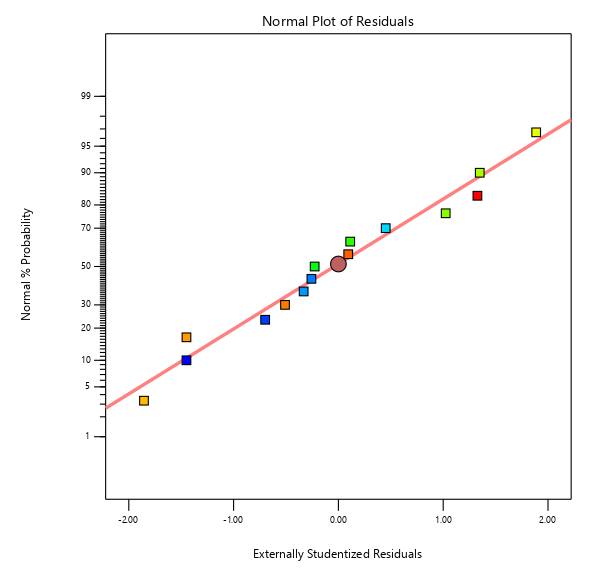
Figure 1 The normal probability plot for the standardized residual distribution for viscosity analysis in polyurethane/polyacrylate composite water-based ink
PU content, alkyd-PUA ratio, and levelling agent and dispersant statistical models served as a tool to assess the assumption of normality in the context of analysis of variance (ANOVA) of viscosity. This graphical representation provides a visual way to assess whether the differences between predicted values follow a normal distribution. In a normal plot of residuals, data points are plotted against their expected values under the assumption of normality. When the points align closely on a straight line off the 45-degree diagonal, the residuals show a normal distribution, confirming the assumption. Deviations from this line, such as outliers, indicate a lack of normality in the data, but none of the deviations, and outliers, were obtained from these experimental results and did not require further investigation or possible model adjustment. Consequently, the reliability of statistical inferences derived from ANOVA and related analyses was confirmed. Furthermore, the results of this ANOVA study support the previous ANOVA tests [29]. The Dffits versus Run for the viscosity analysis in polyurethane/polyacrylate composite water-based ink is presented in Figure 2.
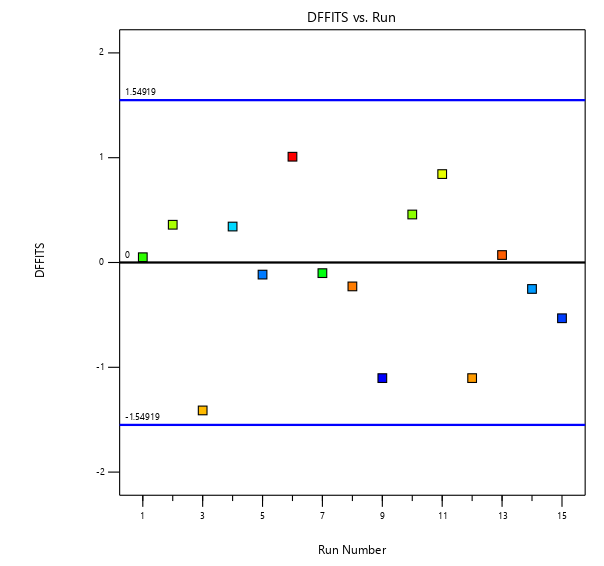
Figure 2 The Dffits versus Run for the viscosity analysis in polyurethane/polyacrylate composite water-based ink.
Diffits and Runs are valuable tools in ANOVA, used to discover nuances of group differences and the underlying structure of their data. In viscosity variation analysis, the concepts of “Diffits” and “Runs” compare patterns of differences in experimental data. These comparisons are used to identify samples that differ significantly, and then necessary changes in trends or means are identified and corrected. The predicted versus actual runs for the surface tension analysis in polyurethane/polyacrylate composite water-based ink are presented in Figure 3.
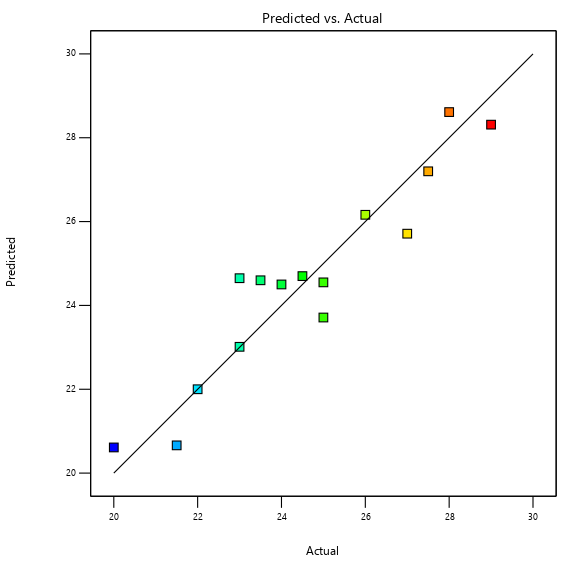
Figure 3 The predicted versus actual runs for the surface tension analysis in polyurethane/polyacrylate composite water-based ink
Comparing the predicted and actual values from the results of the surface tension study was a fundamental step in evaluating the performance and validity of a statistical model. The predicted values based on the relationships and parameters estimated during the surface tension analysis were generated by the ANOVA model. These predicted values represent what the model expects for each observation or group, based on the independent variables and model assumptions. Conversely, true values refer to observed data points obtained from an experiment or study. Figure 3 shows good agreement between predicted and actual values. Another sign is that the ANOVA model fits the real-world data well. The model is a good fit for the data as the predicted and actual values match closely. It also declares that the assumptions of the model such as normality and homoscedasticity are reasonable. The studentized residual plots for the linear model adequacy for the polyurethane/polyacrylate composite water-based ink is presented in Figure 4.
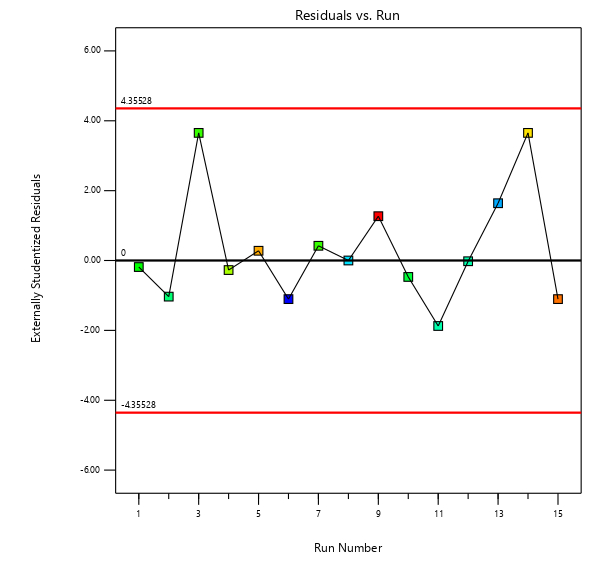
Figure 4 The studentized residual plots for the linear model adequacy for the polyurethane/polyacrylate composite water-based ink
Comparisons between residues and runs were made by ANOVA. Residuals, representing the differences between observed data points and predicted values from the ANOVA model, calculated the goodness of fit of the model to the observed variance. Within levels of the categorical independent variable. By examining the relationship between residuals and runs, it is possible to identify cases where the model fails to capture systematic patterns or significant unexplained variation. Examination of residuals and runs gives a sense of the statistical model’s effectiveness in explaining experimental data and underlying patterns of variation.
RSM Analysis
The dominance of viscosity properties of water-based inks prepared with polyurethane/polyacrylate was investigated. Favourable values such as low viscosity, low surface tension and high colour density were investigated by Response Surface Methodology (RSM). RSM recommendation for the development of polyurethane/polyacrylate composite water-based ink is presented in Figure 5.
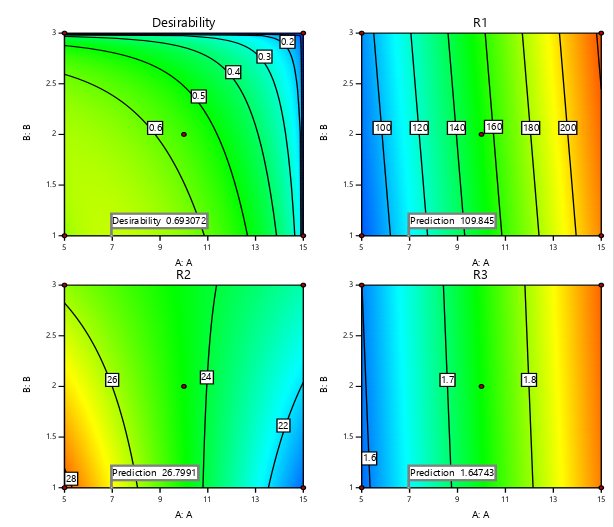
Figure 5 RSM recommendation for the development of polyurethane/polyacrylate composite water-based ink.
RSM predicts a viscosity of 109.84mPas, surface tension of 26.7 mN/m and colour density of 1.64. This is in good agreement with the 11th sample tested values. A viscosity value of 110 mPa.s, a surface tension of 25.1 mN/M, and a colour density of 1.62 was produced in sample 11 using a pigment binder ratio of 10%, an alkyd-PUA ratio of 1:2, and a dispersing and levelling agent amount of 0.10%.
Conclusions
This study provided a detailed description of the preparation of polyurethane/polyacrylate composite water-based inks, leading to a better understanding of their composition and behaviour. Also, it allows for the optimization of ink formulations. A 3-factor 3-level experimental design method was used in this experiment to facilitate parameter development and effective testing. The results of this study determined that polyurethane/polyacrylate composite water-based inks with a pigment binder ratio of 10%, an alkyd-PUA ratio of 1:2 and a 0.10% dispersing and levelling agent level were the best combination. The viscosity value was 110 mPa.s, the surface tension was 25.1 mN/M, and the colour density was 1.62. The water-based ink prepared at these parameters had suitable viscosity and good colour. Desirable results of RSM predicted viscosity of 109.84mPas, surface tension of 26.7 mN/m and colour density of 1.64. Ink materials are consistent over time and subject to undesirable changes in viscosity, surface tension and colour density providing an understanding of the importance of the product.
Acknowledgement
The authors would like to thank the………………………………………………….
References
[1] Liu, Y., Jia, Q., Ding, Y. and Chen, Y., 2020. Synthesis of Polyacrylate‐Based Polyurethane by Organocatalyzed Group Transfer Polymerization and Polyaddition. Macromolecular Chemistry and Physics, 221(18), p.2000217.
[2] Li, M., Du, M., Wang, F., Xue, B., Zhang, C. and Fang, H., 2020. Study on the mechanical properties of polyurethane (PU) grouting material of different geometric sizes under uniaxial compression. Construction and Building Materials, 259, p.119797.
[3] Chen, Y., Li, X. and Wang, H., 2021. Effect of Polymerizable Emulsifiers on the Properties of Polyacrylate Latexes and the Relative Waterborne Inks. Journal of Imaging Science and Technology.
[4] Zhang, Y. and Zhou, X., 2021. Facile preparation of homogenous waterborne poly (urethane/acrylate) composites and the correlation between microstructure and improved properties. Journal of Applied Polymer Science, 138(13), p.50111.
[5] Zhou, X., Li, Y., Fang, C., Li, S., Cheng, Y., Lei, W. and Meng, X., 2015. Recent advances in synthesis of waterborne polyurethane and their application in water-based ink: a review. Journal of Materials Science & Technology, 31(7), pp.708-722.
[6] Agnol, L.D., Dias, F.T.G., Ornaghi Jr, H.L., Sangermano, M. and Bianchi, O., 2021. UV-curable waterborne polyurethane coatings: A state-of-the-art and recent advances review. Progress in Organic Coatings, 154, p.106156.
[7] Wang, X., Cui, Y., Wang, Y., Ban, T., Zhang, Y., Zhang, J. and Zhu, X., 2021. Preparation and characteristics of crosslinked fluorinated acrylate modified waterborne polyurethane for metal protection coating. Progress in Organic Coatings, 158, p.106371.
[8] Kim, H.N., Kim, K.G., Jeong, Y.U. and Kim, S.Y., 2020. Double-crosslinked polyurethane acrylate for highly conductive and stable polymer electrolyte. Polymers, 12(11), p.2557.
[9] Wang, X., Wu, J., Chu, F. and Feng, Y., 2022. Preparation of polyurethane/acrylate composite emulsion for inkjet printing. Coatings, 12(8), p.1081.
[10] Behnam, R., Roghani‐Mamaqani, H., Salami‐Kalajahi, M. and Mardani, H., 2020. Effect of aliphatic and aromatic chain extenders on thermal stability of graphene oxide/polyurethane hybrid composites prepared by sol‐gel method. ChemistrySelect, 5(3), pp.962-967.
[11] Wang, J., Fan, K., Du, J., Xu, J., Dong, X., Li, X. and Ding, Y., 2023. Effect of organosilicon modified epoxy resin on slurry viscosity and mechanical properties of polyurethane grouting materials. Construction and Building Materials, 387, p.131585.
[12] Tian, Z., Zhang, Z., Zhang, K., Huang, S. and Luo, Y., 2020. Preparation and properties of high viscosity and elasticity asphalt by styrene–butadiene–styrene/polyurethane prepolymer composite modification. Journal of Applied Polymer Science, 137(38), p.49123.
[13] Liu, Q., Liao, B., Pang, H., Lu, M. and Meng, Y., 2020. Preparation and characterization of a self-matting coating based on waterborne polyurethane-polyacrylate hybrid dispersions. Progress in Organic Coatings, 143, p.105551.
[14] Deng, Y.J., Zhou, C., Zhang, M.Y. and Zhang, H.X., 2018. Effects of the reagent ratio on the properties of waterborne polyurethanes-acrylate for application in damping coating. Progress in Organic Coatings, 122, pp.239-247.
[15] Peng, Y., Khaled, U., Al-Rashed, A.A., Meer, R., Goodarzi, M. and Sarafraz, M.M., 2020. Potential application of Response Surface Methodology (RSM) for the prediction and optimization of thermal conductivity of aqueous CuO (II) nanofluid: A statistical approach and experimental validation. Physica A: Statistical Mechanics and its Applications, 554, p.124353.
[16] Kemona, A. and Piotrowska, M., 2020. Polyurethane recycling and disposal: Methods and prospects. Polymers, 12(8), p.1752.
[17] Magnin, A., Pollet, E., Phalip, V. and Avérous, L., 2020. Evaluation of biological degradation of polyurethanes. Biotechnology Advances, 39, p.107457.
[18] Paraskar, P.M., Prabhudesai, M.S., Hatkar, V.M. and Kulkarni, R.D., 2021. Vegetable oil based polyurethane coatings–A sustainable approach: A review. Progress in Organic Coatings, 156, p.106267.
[19] Skleničková, K., Abbrent, S., Halecký, M., Kočí, V. and Beneš, H., 2022. Biodegradability and ecotoxicity of polyurethane foams: A review. Critical Reviews in Environmental Science and Technology, 52(2), pp.157-202.
[20] Megalingam, A., Ahmad, A.H.B., Maarof, M.R.B. and Sudhakar, K., 2022. Viscosity measurements in semi-solid metal processing: current status and recent developments. The International Journal of Advanced Manufacturing Technology, 119(3-4), pp.1435-1459.
[21] Abdullah, M., Ramtani, S. and Yagoubi, N., 2023. Mechanical properties of polyurethane foam for potential application in the prevention and treatment of pressure ulcers. Results in Engineering, 19, p.101237.
[22] Hormaiztegui, M.E.V., Daga, B., Aranguren, M.I. and Mucci, V., 2020. Bio-based waterborne polyurethanes reinforced with cellulose nanocrystals as coating films. Progress in Organic Coatings, 144, p.105649.
[23] Fang, C., Zhou, X., Yu, Q., Liu, S., Guo, D., Yu, R. and Hu, J., 2014. Synthesis and characterization of low crystalline waterborne polyurethane for potential application in water-based ink binder. Progress in Organic Coatings, 77(1), pp.61-71.
[24] Bertinetto, C., Engel, J. and Jansen, J., 2020. ANOVA simultaneous component analysis: A tutorial review. Analytica Chimica Acta: X, 6, p.100061.
[25] Megalingam, A., Ahmad, A.H., Alang, N.A., Alias, J. and Razak, N.A., 2023. Application of Response Surface Methodology for Parameter Optimization of Aluminum 7075 Thixoforming Feedstock Billet Production. Journal of Materials Engineering and Performance, 32(13), pp.5919-5931.
[26] Tai, J.L., Chen, G.X., Chen, Q.F. and Tang, B.L., 2012. Study on polyurethane-acrylic hybrid emulsion applying to water-based ink. Applied Mechanics and Materials, 182, pp.3-7.
[27] Wang, X., Wu, J., Chu, F. and Feng, Y., 2022. Preparation of polyurethane/acrylate composite emulsion for inkjet printing. Coatings, 12(8), p.1081.
[28] Kim, H.Y., 2014. Analysis of variance (ANOVA) comparing means of more than two groups. Restorative dentistry & endodontics, 39(1), pp.74-77.
[29] Connelly, L.M., 2021. Introduction to analysis of variance (ANOVA). Medsurg Nursing, 30(3), pp.218-158.
Cite This Work
To export a reference to this article please select a referencing stye below:

Academic Master Education Team is a group of academic editors and subject specialists responsible for producing structured, research-backed essays across multiple disciplines. Each article is developed following Academic Master’s Editorial Policy and supported by credible academic references. The team ensures clarity, citation accuracy, and adherence to ethical academic writing standards
Content reviewed under Academic Master Editorial Policy.





