
 differential equations
Medicine and NursingTextbook
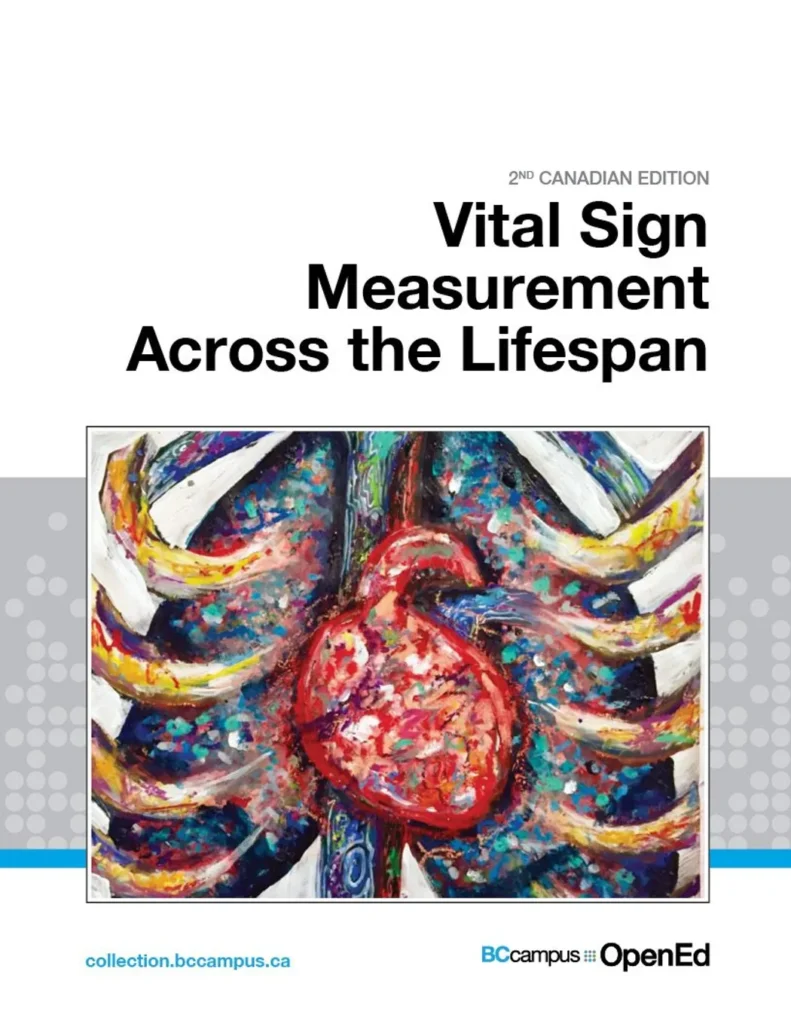
Vital Sign Measurement Across the Lifespan - 2nd Canadian Edition
Not rated yetRate this bookVital Sign Measurement Across the Lifespan - 2nd Canadian Edition connects measurement technique with communication, developmental context, documentation, and clinical reasoning. Seven chapters cover introductory principles, temperature, pulse and respiration, oxygen saturation, blood pressure, integration cases, and a concluding review. This guide is designed for structured learning alongside the source’s demonstrations and supervised practice, emphasizing why a reading must be checked and interpreted in context.
Free reading is available at the official source. Opens in a new tab.
 Free
About this book
Vital Sign Measurement Across the Lifespan - 2nd Canadian Edition connects measurement technique with communication, developmental context, documentation, and clinical reasoning. Seven chapters cover introductory principles, temperature, pulse and respiration, oxygen saturation, blood pressure, integration cases, and a concluding review. This guide is designed for structured learning alongside the source’s demonstrations and supervised practice, emphasizing why a reading must be checked and interpreted in context.
Chapter-wise summaries and study tasks
Chapter 1: Introduction
The introduction places measurement within a therapeutic encounter. Explaining the procedure, seeking informed participation, protecting privacy, and preparing the environment affect both the person’s experience and the quality of the information obtained. Vital signs are observations within an assessment, not isolated numbers that establish a diagnosis by themselves. Readers should consider baseline, age, current condition, recent activity, and the method used. Clear documentation preserves the circumstances needed to interpret change. The chapter establishes professional habits before device-specific technique, making communication and preparation part of competence rather than optional additions. A learner should know when a finding requires confirmation and communication through the appropriate clinical process.
Study task. Prepare a simulation checklist covering introduction, consent, privacy, preparation, relevant context, and documentation. Identify what information a number alone would leave out and how you would communicate uncertainty to a supervisor.
Chapter 2: Temperature
Temperature measurement connects physiology with site, device, technique, and interpretation. The chapter compares oral, tympanic, axillary, and rectal approaches and includes demonstrations, error recognition, and practice activities. Readings from different sites are not automatically interchangeable. Selection depends on the person and circumstances as well as the device’s intended use and local policy. Recent exposures, positioning, equipment, and other factors can affect the result. Readers should compare methods through their limitations rather than memorize one value as universally normal. The learning aim is to understand how a trustworthy observation is produced and documented, with current reference guidance used for actual decisions.
Study task. Compare two temperature methods using the source’s demonstrations, noting suitability, potential error, and documentation requirements. In a fictional case, explain why a site change could complicate comparison with an earlier reading.
Chapter 3: Pulse and Respiration
Pulse and respiration provide related but distinct information about cardiovascular and breathing activity. The chapter examines pulse qualities and sites, including radial, carotid, brachial, and apical approaches, alongside observation of respiration. Rate alone does not capture rhythm, quality, effort, or the circumstances of measurement. Method selection and interpretation vary with the learner’s clinical context and the person’s age or condition. Readers should distinguish a pressure-wave observation from simply counting any movement and avoid treating a brief or irregular sample as automatically representative. The source’s error and practice activities encourage attention to technique as well as arithmetic. Changes should be considered with the wider assessment and documented consistently.
Study task. Use an instructor-approved simulation to compare what is recorded for pulse and respiration. Identify a fictional irregular or changing observation that would require a different check or communication rather than a simple numerical comparison.
Chapter 4: Oxygen Saturation
Oxygen saturation introduces a device-based estimate related to oxygenated hemoglobin. The chapter connects the purpose of measurement with equipment, technique, limitations, and interpretation. A displayed value is not a direct measurement of every aspect of ventilation or oxygen delivery. Signal conditions, motion, circulation, and device performance can affect confidence. Readings also need to be considered alongside symptoms and other findings. Readers should distinguish an estimated saturation from a complete respiratory assessment and avoid allowing a plausible display to override concerning context. The source’s demonstrations support learning, while current device instructions and relevant clinical guidance remain necessary in practice.
Study task. Review a simulated pulse-oximetry display and list conditions that could undermine confidence. Explain what further observation or supervisor-directed check is needed rather than making a treatment decision from one value.
Chapter 5: Blood Pressure
Blood-pressure measurement relates circulation to a method that can introduce systematic error if poorly performed. The chapter examines influences, measurement approaches, manual technique, provider considerations, and interpretation of low or high readings. Preparation, positioning, cuff selection, device suitability, and documentation help determine whether results can be compared meaningfully. A single measurement and a diagnosis are different conclusions. Readers should distinguish systolic and diastolic information and identify procedural problems before attributing a change solely to physiology. Lifespan and situational context matter. The source’s one- and two-step activities are learning resources to use within instruction and current local procedures, not a substitute for assessed clinical competence.
Study task. Audit a fictional measurement record for missing preparation, cuff, position, method, and repeat-check information. Explain how a technique issue could create an apparent trend and what an instructor would need to verify.
Chapter 6: Knowledge Integration
Knowledge Integration asks learners to combine findings across measurements and circumstances. Pediatric, adolescent, pregnant-adult, adult, older-adult, and dental-context cases show why the same isolated value can raise different questions. The relevant comparison includes baseline, trends, symptoms, method, and the person’s situation. Readers should distinguish observation, interpretation, and action and identify where information is insufficient. A case discussion should not become a shortcut that assigns a diagnosis from age and a number. The chapter develops reasoning through linked evidence and encourages learners to recognize when confirmation or communication is needed. Integration means using several sources of information without concealing uncertainty.
Study task. Choose a fictional lifespan case from your learning setting and organize findings, context, missing information, and questions for a supervisor. Explain which change is meaningful and which comparison may be unreliable because the method differed.
Chapter 7: Conclusion
The conclusion brings measurement, communication, interpretation, and practice together. A complete adult vital-sign sequence is demonstrated, with additional review material and references. Performing several tasks smoothly is not the same as checking that each observation is valid or recognizing when a routine approach is unsuitable. Readers should use a structured review to identify missed preparation, weak documentation, and uncertain interpretation. Feedback from supervised practice can distinguish knowledge of a sequence from competent performance. The source’s online demonstrations and interactive elements should be consulted directly because a static PDF cannot reproduce their full functionality. Continued proficiency depends on reflection and current context-specific instruction.
Study task. Use a simulated complete assessment to review preparation, observations, documentation, and handover. Ask an instructor to identify one technical and one reasoning improvement, then plan a focused reassessment.
How to study this book
- Read each chapter before its demonstration, predict likely error sources, and use the interactive questions after an independent attempt. Access multimedia through the online source.
- Practice only within your course and authorized setting, with current device instructions, infection-prevention requirements, local procedures, and appropriate supervision.
- Record method, site, circumstances, and relevant context when interpreting fictional cases. For device literacy, the FDA overview of pulse-oximeter limitations is an additional reference; it does not replace Canadian or local clinical guidance.
Questions for reflection
- What could make a precise-looking measurement unreliable?
- Which context is needed before comparing readings across the lifespan?
- When does uncertainty require confirmation or communication rather than a stronger conclusion?
Source edition and coverage
This guide follows all seven main chapters of the second Canadian edition by Jennifer L. Lapum and colleagues. It provides original educational summaries and simulation-oriented prompts, not patient-specific interpretation or replacement clinical protocols. Numerical thresholds and actions must follow current applicable guidance. This guide provides original explanations and learning tasks. Read the complete book at the publisher’s official source.
About access & copyright
This page provides book information and study material. Full-text access is provided by the original publisher or authorised source; a listing does not grant permission to republish the book.
Read our Library Access & Copyright policyExplore the contents
Check the chapters covered in this edition.
Visit the official source
See reading, preview or purchase options.
Save for later
Keep this textbook in your saved collection.
Reader ratings & reviews
Share your thoughts
Your review helps other students choose the right resources.
KEEP LEARNING
Your next great read
differential equations connected networks
Network quality control
View Network quality control — book Psychology
Introduction to Psychology
View Introduction to Psychology — book citizen science
Library Infrastructures & Citizen Science: A Guide
View Library Infrastructures & Citizen Science: A Guide — book Data Driven Innovation
Legal challenges in Data Driven Innovation
View Legal challenges in Data Driven Innovation — book circuit-QED
Lecture Notes on Quantum Electrical Circuits
View Lecture Notes on Quantum Electrical Circuits — book Humanities
Writing Guide with Handbook
View Writing Guide with Handbook — book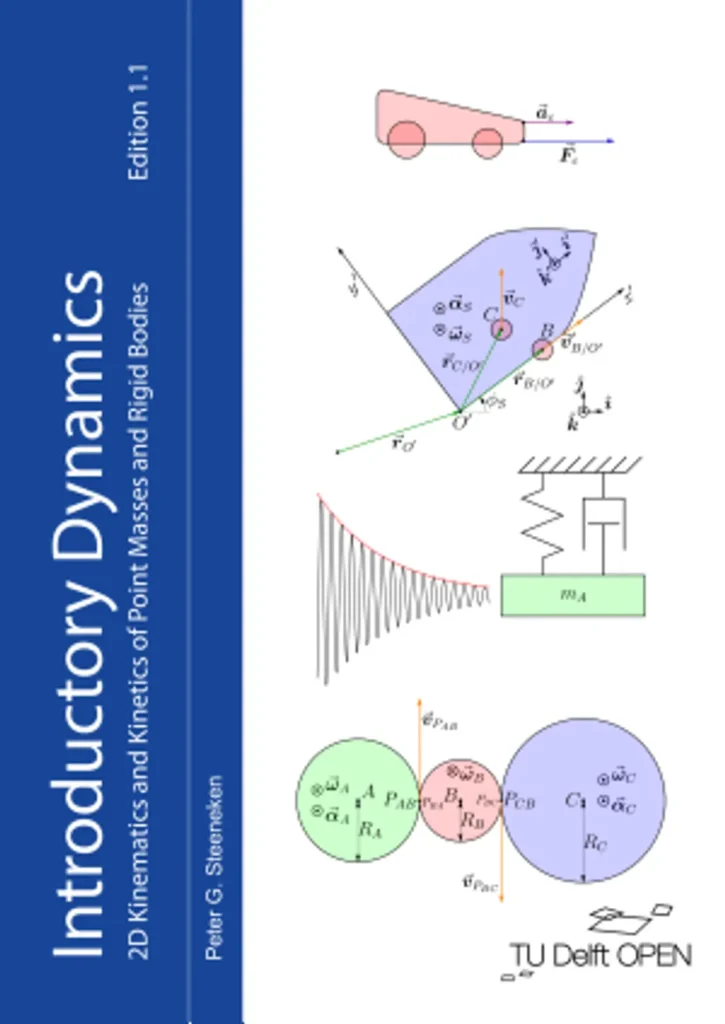 Dynamics
Introductory Dynamics: 2D Kinematics and Kinetics of Point Masses and Rigid Bodies, Edition 1.1
View Introductory Dynamics: 2D Kinematics and Kinetics of Point Masses and Rigid Bodies, Edition 1.1 — book Humanities
World History, Volume 2: from 1400
View World History, Volume 2: from 1400 — book Business



