
Trauma-Informed School Practices: Building Expertise To Transform Schools
Cultural & Ethnic StudiesTextbook
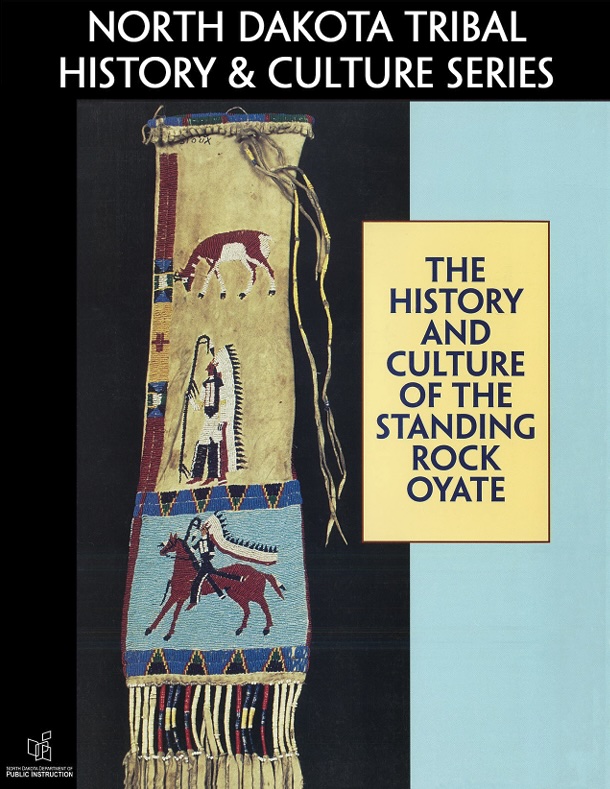
The History and Culture of the Standing Rock Oyate
Not rated yetRate this bookA North Dakota tribal curriculum resource on the Standing Rock Oyate, developed with Standing Rock Community College and the North Dakota Department of Public Instruction.
Free reading is available at the official source. Opens in a new tab.
 Free
About this book
About this book
A North Dakota tribal curriculum resource on the Standing Rock Oyate, developed with Standing Rock Community College and the North Dakota Department of Public Instruction.
This page introduces the source edition and offers a focused reading route. Use the linked original resource for the complete text, references, activities, and the author’s full explanation. The overview below is limited to the sections identified in the coverage note.
Contents and further reading
Consult the official book or repository page for the resource’s contents and publication information. Open the source PDF to read the complete available edition.
Sources and coverage
This original overview is based on the opening Tribal Historical Overview (PDF sheets 5–6), with repository attribution and copyright information checked. It is not a whole-book review. The verified source PDF contains 106 PDF sheets, including preliminary or repository pages; this may differ from its printed pagination. The source retains its own authorship, rights notices, and any separately credited third-party material.
Book summary
Study overview
The reviewed opening introduces Standing Rock as a community with distinct Dakota and Lakota histories and affiliations. It stresses that names commonly grouped together can conceal important linguistic, cultural, territorial, and political differences. The introductory historical framework connects migration, treaties, reservation history, and federal policy, while the narrative begins by locating particular communities and explaining their relationships. This approach asks readers to understand historical events through the people and places concerned rather than assume one uniform Indigenous history. The source is the 1995 curriculum edition, preserved in UND Scholarly Commons. It should be read as a dated educational resource with community contributions, not as a current statement of all Standing Rock institutions or demographics.
How to study this book
Begin with a map and a glossary of the community names used in the source. Record the date of an event separately from the publication date of the account describing it. Build a timeline that leaves room for community perspectives and federal actions without treating them as equivalent viewpoints. When a treaty is discussed, identify its parties and consult the actual document for an assignment requiring detailed interpretation. Use current official tribal sources for present-day institutions and self-description. Approach cultural narratives with attention to the context and permission in which they are shared.
These study suggestions and the questions below are independent Academic Master editorial guidance.
Questions for reflection
- Which distinctions among communities does the opening ask you to preserve?
- How does the source connect place with historical experience?
- Which question requires a current tribal source rather than this historical edition?
About access & copyright
This page provides book information and study material. Full-text access is provided by the original publisher or authorised source; a listing does not grant permission to republish the book.
Read our Library Access & Copyright policySpecificity
Preserve Dakota and Lakota distinctions in the source.
Historical context
Connect events with dates, places, and people.
Community contribution
Recognise the curriculum’s institutional and community authorship.
Source limits
Distinguish a 1995 educational account from current information.
Reader ratings & reviews
Share your thoughts
Your review helps other students choose the right resources.
KEEP LEARNING
Your next great read
Education
Explorations: An Open Invitation To Biological Anthropology
Explorations: An Open Invitation To Biological Anthropology
View Explorations: An Open Invitation To Biological Anthropology — bookDigging into Archaeology: A Brief OER Introduction to Archaeology with Activities
Digging into Archaeology: A Brief OER Introduction to Archaeology with Activities
View Digging into Archaeology: A Brief OER Introduction to Archaeology with Activities — bookPrinciples of Social Psychology
Principles of Social Psychology
View Principles of Social Psychology — bookClimate Lessons: Environmental, Social, Local
Climate Lessons: Environmental, Social, Local
View Climate Lessons: Environmental, Social, Local — bookKnowing Home: Braiding Indigenous Science with Western Science
Knowing Home: Braiding Indigenous Science with Western Science
View Knowing Home: Braiding Indigenous Science with Western Science — bookIntroduction to Sustainability
Introduction to Sustainability
View Introduction to Sustainability — book Humanities
Reading Social Science Methods
View Reading Social Science Methods — book Engineering & Technology
Ethics in Technology
View Ethics in Technology — book Curriculum & Instruction



