
 Physics
Textbook
Introductory Physics : Building Models to Describe Our World
Not rated yetRate this bookIntroductory Physics: Building Models to Describe Our World develops physics through models, predictions, measurement, and comparison with evidence. This guide follows its 24 chapters and four appendices, covering mechanics, waves, fluids, electricity, magnetism, induction, and special relativity.
Free reading is available at the official source. Opens in a new tab.
 Free
About this book
Introductory Physics: Building Models to Describe Our World develops physics through models, predictions, measurement, and comparison with evidence. This guide follows its 24 chapters and four appendices, covering mechanics, waves, fluids, electricity, magnetism, induction, and special relativity.
How to study this book
Begin every problem with a diagram, system choice, assumptions, and relevant principles. Derive a relationship before substituting values, check dimensions and limiting cases, and interpret the result. Connect calculated predictions with uncertainty when experimental data are involved. Use the mathematical and laboratory appendices as working references.
Chapter-wise explanations and study tasks
1. Scientific Method and Physics
Physics develops models that explain and predict observations within a stated domain. The scientific method involves testing and revision rather than establishing certainty through one successful example. Identify what a model includes and neglects.
Study task: Describe a simple physical model and propose an observation that could reveal its limitation.
2. Comparing Model and Experiment
Orders of magnitude, units, uncertainty, graphs, and reporting help determine whether a prediction agrees meaningfully with measurement. More digits do not necessarily mean more information. Distinguish random variation from a systematic effect.
Study task: Compare a fictional prediction and measurement with uncertainties and explain what can be concluded.
3. Motion in One Dimension
Position, displacement, velocity, and acceleration describe different aspects of motion. Graphs and equations must use a consistent coordinate system and assumptions. Constant-acceleration relationships do not apply automatically to every motion.
Study task: Translate a motion description into position and velocity graphs and justify the sign conventions.
4. Motion in Multiple Dimensions
Vector components allow motion to be analysed along chosen axes. Components can be related without confusing a path with an individual coordinate graph. Identify which assumptions allow separate equations to be solved together.
Study task: Model a simple projectile and explain which quantities connect its horizontal and vertical descriptions.
5. Newton’s Laws
Forces describe interactions and net force relates to acceleration. A free-body diagram concerns one chosen system, while interaction pairs act on different bodies. Separate mass, weight, and apparent support effects.
Study task: Draw free-body diagrams for two interacting objects and identify the third-law pairs correctly.
6. Applying Newton’s Laws
Applying the laws requires translating a situation into forces, constraints, and equations. Friction and other force models have assumptions and regimes. Check the inferred direction or state rather than forcing the answer to match the initial guess.
Study task: Set up a constrained-motion example and verify that the solution is consistent with the assumed friction or motion condition.
7. Work and Energy
Work connects force and displacement with energy change. The work–energy approach can simplify a problem when detailed time evolution is unnecessary. Distinguish the sign of work from the sign of an arbitrary coordinate.
Study task: Solve a motion problem using work and explain the contribution of each force.
8. Potential Energy and Conservation
Potential energy depends on interactions and a reference choice. Conservation statements require a clearly defined system and accounting for relevant transfers. Mechanical energy need not remain constant when other processes matter.
Study task: Compare an energy-accounting diagram with and without a dissipative interaction.
9. Gravity
Gravity provides a force model that connects near-surface motion with wider-scale phenomena. Recognize approximations and distinguish field, force, and potential concepts. A useful solution must fit the spatial scale being considered.
Study task: Compare a near-surface approximation with a distance-dependent gravitational model and state when each is appropriate.
10. Momentum and Centre of Mass
Momentum depends on the reference frame and changes through external impulse. System selection determines when conservation is useful. Centre-of-mass reasoning separates overall motion from internal motion.
Study task: Analyse a fictional collision with a defined system and explain why momentum and kinetic energy have different conservation conditions.
11. Rotational Dynamics
Torque connects force geometry with changes in rotational motion. The axis and moment of inertia matter, so force magnitude alone does not determine the response. Relate angular variables to the physical arrangement.
Study task: Compare two force applications to a rotating object and explain their different torques.
12. Rotational Energy and Momentum
Rotational kinetic energy and angular momentum depend on mass distribution and motion. Conservation requires the relevant external interactions to be considered. Distinguish changing rotation speed from changing rotational energy under all conditions.
Study task: Explain a change in rotation using angular-momentum accounting and identify where work may enter.
13. Simple Harmonic Motion
Oscillatory models connect restoring behaviour with time-dependent motion and energy exchange. A sinusoidal expression is meaningful only when its assumptions fit the system. Identify equilibrium, amplitude, frequency, and phase distinctly.
Study task: Relate a source oscillator’s motion graph to its force and energy descriptions.
14. Waves
Waves connect local oscillation with propagation and energy transfer. Wave speed, frequency, and wavelength have different roles. Interference and boundary behaviour require superposition or other assumptions to be stated.
Study task: Sketch two overlapping waves and explain how the resulting displacement differs from the movement of the medium.
15. Fluid Mechanics
Pressure, buoyancy, flow, and fluid models address different questions. Distinguish pressure from force and identify whether a static or flowing description is appropriate. Idealizations such as steady flow require justification.
Study task: Choose a source fluid problem and state the assumptions behind its governing relationship.
16. Electric Charges and Fields
Electric forces and fields allow interactions to be represented without confusing the source with a test charge. Superposition combines vector contributions. Field direction does not depend on the sign of the charge later placed there.
Study task: Draw the field contributions of two source charges and predict forces on opposite test charges.
17. Gauss’ Law
Gauss’ law connects electric flux with enclosed charge. Its usefulness for determining a field depends on symmetry, not merely on drawing a closed surface. Distinguish flux through the surface from field magnitude at a point.
Study task: Select a symmetric charge distribution and explain why a particular Gaussian surface simplifies the calculation.
18. Electric Potential
Potential is related to potential energy per charge and is a scalar quantity. A potential difference has different consequences for charges of different signs. Connect the potential description with work and energy.
Study task: Compare two opposite charges moving through the same potential difference and explain their energy changes.
19. Electric Current
Current describes charge flow, while material and geometrical properties influence resistance and response. Microscopic motion and macroscopic current should not be conflated. Check the assumptions of the relation used.
Study task: Relate current, potential difference, resistance, and power in a simple fictional conductor example.
20. Electric Circuits
Circuit models connect component relations with conservation at junctions and around loops. Series and parallel descriptions depend on connectivity rather than the appearance of a drawing. Distinguish an ideal source from real limitations.
Study task: Redraw a small circuit to reveal its connections and justify the equations used to analyse it.
21. Magnetic Force
Magnetic force depends on motion and direction as well as field magnitude. Vector reasoning determines the response. Distinguish deflection from work on a charged particle when the force is perpendicular to its velocity.
Study task: Predict the force direction for a moving charge and explain what happens to speed under magnetic force alone.
22. Sources of Magnetic Field
Currents produce magnetic fields with geometries determined by their arrangement. Superposition and symmetry aid analysis. A directional rule should be connected with the defined current and coordinate orientation.
Study task: Sketch fields for two current arrangements and explain how geometry changes their spatial pattern.
23. Electromagnetic Induction
Changing magnetic flux connects with induced electromotive force and the direction of response. Flux can change through several mechanisms. Distinguish a change in field from a change in orientation or area.
Study task: Compare two ways to change flux through a loop and explain the induced response using the source’s sign convention.
24. Special Relativity
Relativity connects measurements made in different inertial frames through consistent principles. Simultaneity, time intervals, and lengths require clearly specified events and observers. Avoid treating frame-dependent measurements as contradictory accounts of one undefined quantity.
Study task: Describe two events and specify which observer measures each interval before applying a source relationship.
Appendix A. Vectors
Coordinate systems, vector operations, and products support both mechanics and electromagnetism. Different products produce different kinds of result. Use components while retaining the geometrical meaning.
Study task: Represent the same vector in two coordinate descriptions and distinguish a scalar from a vector product.
Appendix B. Calculus
Rates of change and accumulation connect physical quantities throughout the book. Differentiation and integration are meaningful only when the variables and units are clear. Relate a mathematical operation to the physical question.
Study task: Explain a derivative and an integral in a motion example, including their units.
Appendix C. Laboratory Activities
Experimental proposals and reports communicate a question, method, uncertainty, and reasoning. A research-style laboratory activity requires decisions rather than only following a recipe. Peer review should examine evidence and interpretation.
Study task: Outline an instructor-approved experiment with a prediction, uncertainty plan, and criteria for comparing model and measurement.
Appendix D. Python
Programming can support calculations, visualization, and model exploration. A numerical output requires checking against units, simple cases, and expected behaviour. Distinguish a computational result from evidence that the physical assumptions are correct.
Study task: Plan a simple source-related numerical calculation and specify an analytical or limiting-case check.
Applied assignment
Create a model-and-evidence portfolio with one mechanics problem, one electrical or magnetic problem, and a proposed supervised experiment. Include diagrams, assumptions, derivations, units, checks, uncertainty, and a discussion of model limits.
Suggested reading plan
Study chapters 1–2 before quantitative work, 3–6 for motion and forces, 7–12 for conservation and rotation, 13–15 for oscillations, waves, and fluids, and 16–23 for electromagnetism. Finish with 24 and consult appendices A–D throughout. Allow additional practice sessions for integrated problems.
Questions for reflection
- What system and assumptions make the conservation statement valid?
- Does the result behave sensibly in a limiting case?
- What does agreement with measurement establish about the model?
Edition and source notes
Based on the linked compilation dated August 24, 2019, associated with Ryan Martin, Emma Neary, Joshua Rinaldo, and Olivia Woodman. It contains 24 chapters and four appendices. These original exercises support learning and supervised experimental planning; use current course instructions for equipment and software.
About access & copyright
This page provides book information and study material. Full-text access is provided by the original publisher or authorised source; a listing does not grant permission to republish the book.
Read our Library Access & Copyright policyExplore the contents
Check the chapters covered in this edition.
Visit the official source
See reading, preview or purchase options.
Save for later
Keep this textbook in your saved collection.
Reader ratings & reviews
Share your thoughts
Your review helps other students choose the right resources.
KEEP LEARNING
Your next great read
Physics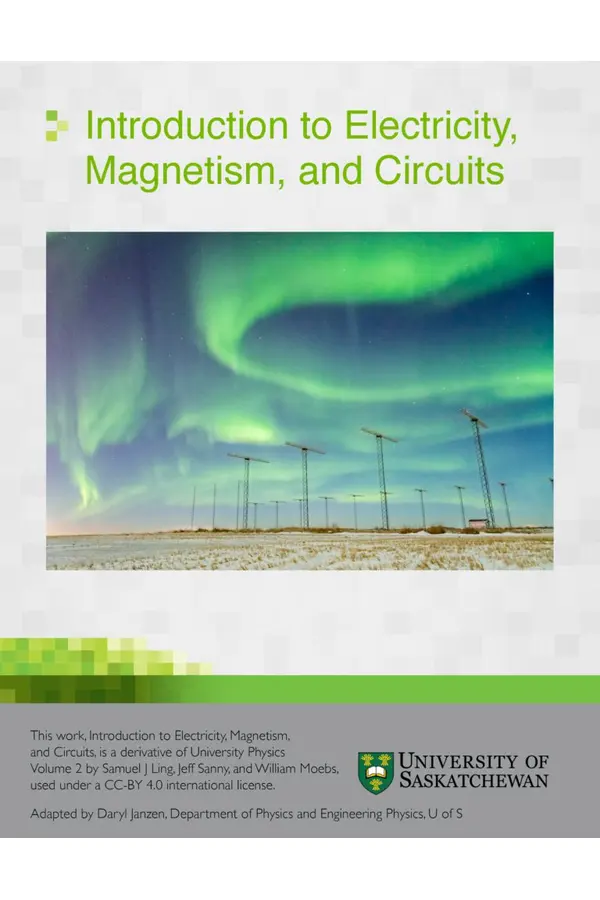 Engineering
Introduction to Electricity, Magnetism, and Circuits
View Introduction to Electricity, Magnetism, and Circuits — book Calculus
-Based Physics II
View Calculus-Based Physics II — book Calculus
-Based Physics I
View Calculus-Based Physics I — bookUniversity Physics, Volume 3 (OpenStax)
University Physics, Volume 3 (OpenStax)
View University Physics, Volume 3 (OpenStax) — bookUniversity Physics, Volume 2 (OpenStax)
University Physics, Volume 2 (OpenStax)
View University Physics, Volume 2 (OpenStax) — bookUniversity Physics, Volume 1 (OpenStax)
University Physics, Volume 1 (OpenStax)
View University Physics, Volume 1 (OpenStax) — book Classical mechanics
Principles of Mechanics
View Principles of Mechanics — book accelerators
Detectors in Particle Physics
View Detectors in Particle Physics — book Natural Sciences



