
A Career in Sociology
SociologyTextbook
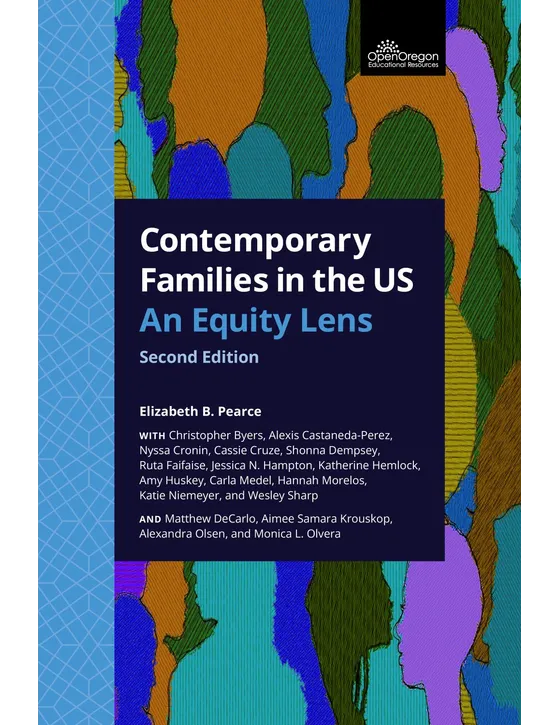
Contemporary Families in the US: An Equity Lens 2e
Not rated yetRate this bookExplore U.S. family life through fourteen teaching chapters and supporting appendices. Original tasks connect relationships, caregiving, resources, institutions and meaning through the source’s equity lens.
Read on the publisher’s website. Opens in a new tab.
 Free
About this book
Contemporary Families in the US: An Equity Lens 2e by Elizabeth B. Pearce examines family life through relationships, social constructions and access to resources. Fourteen teaching chapters connect ways of studying families with partnering, caregiving, culture and representation. Health, housing, safety, food, justice, visual culture, education, employment and meaning extend the discussion across institutions and everyday life.
A fifteenth chapter contains supporting appendices rather than another substantive social topic. This guide follows the second-edition sequence and adds original tasks that connect individual experience with social context. Fictional examples let readers practice analysis without disclosing private family information. Overviews reflect the source’s chapter reading guides and verified contents, not every case, student essay or activity. The book’s equity lens is described as its analytical approach, while particular claims still require evidence. U.S. policy examples and statistical statements remain in their source period and should not be treated as newly verified current information.
AI-assisted book summary
Reading guide
Begin with constructions, methods and theories before relationship and caregiving topics. Reuse those concepts when examining resources and institutions. Compare individual experience with system-level questions without treating either as a complete explanation alone.
Chapter-by-chapter guide
Chapter 1: Social Constructions
Social constructions introduce concepts for understanding how families are defined and represented. A familiar arrangement is not automatically universal. Compare definitions with their social and historical setting.
Study task: Compare two fictional family definitions and identify what each includes or excludes.
Chapter 2: Studying Families
Studying families introduces methods, theories and learning about diversity. An observation, an interpretation and a theoretical claim have different evidential roles. State the question before selecting a method.
Study task: Formulate a family-studies question and identify suitable evidence.
Chapter 3: Connection, Community, Love, and Partnering
Connection and partnering examine relationships, community, love and union formation or dissolution. Personal decisions occur within social contexts. A theory can organize questions without explaining every relationship.
Study task: Compare an individual-level and a social-context question about fictional partnering.
Chapter 4: Nurturance, Parenting, and Caregiving
Caregiving learning separates family form from function and connects nurturance with policy and social structures. Who provides care and what care accomplishes are different questions. Avoid assuming function from a label.
Study task: Map caregiving roles in a fictional family without inferring them from its form.
Chapter 5: Routines, Traditions, and Culture
Routines, traditions and culture connect repeated practices with meaning and belonging. A practical routine and a symbolic ritual may overlap without being identical. Ask how participants understand the practice.
Study task: Compare a fictional routine and ritual by purpose and meaning.
Chapter 6: Representation and Belonging in Social Systems
Representation and belonging consider participation in formal and informal decisions. Being present and having influence are different. Identify whose needs and perspectives are represented.
Study task: Map a fictional decision process and identify missing voices.
Chapter 7: Health and Health Care
Health and care are examined through social construction, stigma, access and equity. This is a social-analysis topic rather than a clinical guide. Source policy and insurance examples require current checks for practical use.
Study task: Separate an access question from an individual medical question.
Chapter 8: Housing
Housing connects living arrangements with power, history and resource access. A family’s circumstances should not be explained by assumptions about personal choice alone. Compare proposed explanations with evidence.
Study task: Identify individual and structural questions in a fictional housing account.
Chapter 9: Safety and Stability
Safety and stability connect childhood experiences, protection, violence and social structures. A framework does not diagnose a person or determine their future. Keep evidence and individual context visible.
Study task: Map protective-context questions for a fictional case without predicting outcomes.
Chapter 10: Food and Water
Food and water concern access, social arrangements and childhood habits. Resource availability and a personal preference are different matters. A proposed response needs a clear question and evidence.
Study task: Compare access and preference questions in a fictional food-related example.
Chapter 11: Justice
Justice includes student-authored essays and perspectives within a family-studies frame. Each contribution has its own question and standpoint. Distinguish testimony, argument and generalization.
Study task: Identify one source essay’s question and the evidence needed to assess its broader claim.
Chapter 12: Visual Culture
Visual culture examines how art and representation can affect family experience. A chosen image and the wider images encountered socially may have different roles. Support an interpretation with specific evidence.
Study task: Compare two fictional representations by the assumptions they communicate.
Chapter 13: Education and Employment
Education and employment connect care work, institutions and family decisions. Opportunities and constraints may intersect. A program example in the source is not a current eligibility determination.
Study task: Map a fictional decision’s care, education and employment information needs.
Chapter 14: Meaning and Purpose
Meaning and purpose return to kinship, resilience and differing ways of understanding life. An individual’s meaning cannot be inferred from a theory alone. Questions should invite rather than prescribe an account.
Study task: Draft respectful questions about meaning for a fictional classroom discussion.
Chapter 15: Appendices
The appendices provide theory and comparison resources and historical background. They support the teaching chapters rather than form a new empirical topic. Use the relevant entry to clarify a defined question.
Study task: Select an appendix resource and explain the limited role it plays in a chapter comparison.
How to study this book
Use fictional or public examples and distinguish family form, function, experience and institutional context. Identify the evidence behind a claim. Avoid turning a group pattern into an assumption about an individual family.
Reflection questions
- Which level of analysis does the claim concern?
- How do institutions shape available choices?
- What evidence supports the interpretation?
Sources and coverage
Source: Contemporary Families in the US: An Equity Lens 2e — LibreTexts.
Original reader guide based on the verified contents and selected substantive chapter or section openings, introductions, reading guides and learning objectives in the linked source PDF. It is not a full review of every subsection, exercise, figure, derivation or linked media item. Study tasks are original additions, not exercises or solutions attributed to the source.
The guide uses chapter reading guides and contents for fourteen teaching chapters plus appendices. Not every case, student essay, self-check or linked resource was reviewed. U.S. law, policy and statistical examples are source-period material.
About access & copyright
This page provides book information and study material. Full-text access is provided by the original publisher or authorised source; a listing does not grant permission to republish the book.
Read our Library Access & Copyright policyContext
Family experiences connect with social institutions.
Diversity
Forms and functions should not be conflated.
Equity lens
Resource access and representation organize the source’s inquiry.
Reader ratings & reviews
Share your thoughts
Your review helps other students choose the right resources.
KEEP LEARNING
Your next great read
Sociology
 Law, Economics and Social Sciences
Research Methods: Exploring the Social World in Canadian Context
View Research Methods: Exploring the Social World in Canadian Context — book Built Environment
Introduction to Space Syntax in Urban Studies
View Introduction to Space Syntax in Urban Studies — book Analysing multimedia data
Doing Qualitative Data Analysis with NVivo
View Doing Qualitative Data Analysis with NVivo — book Political Science
Social Problems - Continuity and Change
View Social Problems - Continuity and Change — book Social Sciences
Introduction to Sociology: Understanding and Changing the Social World
View Introduction to Sociology: Understanding and Changing the Social World — book Religion
Applied Developmental Systems Science: Everything You Always Wanted to Know About Theories, Meta-Theories, Methods, and Interventions but Didn't Realize You Needed to Ask. An Advanced Textbook
View Applied Developmental Systems Science: Everything You Always Wanted to Know About Theories, Meta-Theories, Methods, and Interventions but Didn't Realize You Needed to Ask. An Advanced Textbook — book Cultural & Ethnic Studies
Beyond Race: Cultural Influences on Human Social Life
View Beyond Race: Cultural Influences on Human Social Life — book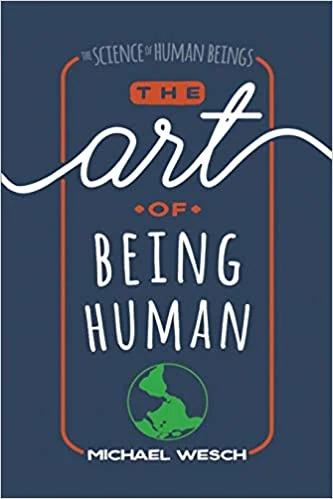 Anthropology
The Art of Being Human: A Textbook for Cultural Anthropology
View The Art of Being Human: A Textbook for Cultural Anthropology — book Political Science



