
Research Methods in Psychology, 1st edition
PsychologyTextbook
Case Studies in Community Psychology Practice: A Global Lens
Not rated yetRate this bookCase Studies in Community Psychology Practice: A Global Lens connects community psychology with accounts of applied work. Edited by Geraldine Palmer, Todd Rogers, Judah Viola and Maronica Engel, it foregrounds participation, equity, evaluation and collaboration across settings.
 Free
About this book
The collection uses practitioner accounts to connect community psychology concepts with work carried out alongside communities. Its reviewed preface argues for active learning and attention to lessons learned, including difficulties and missteps. The introduction distinguishes community-focused inquiry from approaches concerned mainly with individual intervention. The verified contents organise the cases into community building, global perspectives, evaluation research, community and public health, and work across disciplines. The copyright page records 2021; later version information should be distinguished from that original date. Cases are situated accounts for study rather than universal prescriptions for every community.
The attached edition contains 424 PDF pages, including front matter. Cover: source edition title page rendered from the PDF. The textbook and its original notices are retained; Academic Master’s study material is separate from the source text.
Book summary
This collection edited by Geraldine Palmer, Todd Rogers, Judah Viola, and Maronica Engel presents community psychology through situated accounts of practice. The linked publisher PDF contains twenty cases in five parts, including newer contributions beyond the original copyright year. The guide follows that complete twenty-case version. Its recurring questions concern who defines a problem, whose knowledge guides action, how power is shared, and what evidence supports claims of community benefit.
Chapter-by-chapter summaries
Chapter 1: Cultural development and citizen participation
The opening case connects Chicago’s Black arts institutions with empowerment and participation. Cultural work can create belonging, leadership opportunities, and a means of defining a community in its own terms. Analyze artists and residents as contributors to collective capacity rather than passive recipients of a service. The practical question is how a cultural institution distributes opportunities to participate and influence its direction.
Chapter 2: Dare2Dialogue
Storytelling and facilitated dialogue are used to challenge the invisibility and misunderstanding experienced by people with disabilities. Personal accounts can complicate stereotypes, but inclusion also depends on access and the conditions under which people speak and listen. Examine how the program creates space for experience to become shared knowledge. Distinguish attendance, changed understanding, and changed institutional practice when evaluating its reach.
Chapter 3: A Somali gardener’s journey in Minnesota
Community gardening connects food access with collaboration, autonomy, and belonging. The case centers a Somali gardener’s work in the Twin Cities, illustrating how practical resources and community relationships develop together. A garden is both a physical setting and an opportunity for shared activity. Ask who controls the space, whose knowledge shapes its use, and whether participants gain lasting capacity beyond a single growing season.
Chapter 4: Juvenile Justice Community Activation Project
A university research team and juvenile justice stakeholders seek community explanations for racial and ethnic disparities. The case highlights the difficulty of connecting institutional authority with residents’ accounts of how the system operates. Identify who was consulted, how input was gathered, and how findings could influence decisions. Consultation becomes consequential only when an organization can explain what changes follow from the knowledge collected.
Chapter 5: Better Together in Lebanon
Alternative settings bring young people together in a context shaped by conflict and displacement. The chapter distinguishes immediate humanitarian responses from longer-term development while showing how local circumstances connect them. Study the conditions that make constructive contact possible and the resources needed to sustain it. A program design should explain how participation might change relationships rather than assuming that physical proximity alone reduces conflict.
Chapter 6: Community-driven support for girls in Senegal
The Grandmother Project builds on existing family and cultural resources to support girls’ development. Older women are approached as knowledgeable participants in change rather than treated simply as obstacles to an externally designed intervention. Trace how intergenerational relationships influence legitimacy and participation. The case raises a broader question: how can practitioners challenge harmful practices while respecting local agency and avoiding assumptions that outside expertise should control the process?
Chapter 7: Proclaiming Our Roots
Afro-Indigenous storytelling addresses erasure, exclusion, identity, and collective healing. Community-led arts-based work allows participants to shape how experiences are represented and which forms of knowledge count. Examine ownership of stories as well as their content. The chapter connects cultural continuity with empowerment and critical consciousness, inviting readers to consider whether research arrangements reproduce the exclusions they claim to investigate.
Chapter 8: Equity-focused participatory needs assessment
A North Texas HIV/AIDS needs assessment exposes the gap between identifying structural barriers and responding mainly through individual-level services. The case asks how participation and equity should influence both methods and interpretation. Separate a list of unmet needs from an explanation of why those needs persist. Evaluate whether the proposed actions address the scale of the problem and whether affected people can influence priorities.
Chapter 9: Program evaluation
Evaluation is presented as part of planning and implementation rather than an activity added after a project ends. A clear account of intended change helps practitioners decide what evidence to collect and how to use feedback. Distinguish whether a program was delivered as planned from whether it achieved its goals. The chapter connects methodological judgment with community psychology values, including empowerment and meaningful stakeholder involvement.
Chapter 10: Participatory evaluation of Housing First
This case examines research partnerships through intersectionality and colonial history. Lived experience, resourcefulness, and long-term relationships become important sources of insight in evaluating housing support. Participation requires more than adding diverse individuals to a conventional research structure. Ask how partners influence questions, interpretation, and advocacy, and consider how the historical relationship between institutions and communities affects trust in the evaluation itself.
Chapter 11: A Plan for Prevention
The prevention case places equity at the beginning of measurement and program design. Aggregate improvement can conceal persistent differences in access or outcomes, so the choice of indicators matters. Consider which groups are represented, what baseline is used, and whether a measure can reveal unequal benefit. The chapter links health inequities with social context and invites evaluation that examines distribution as well as overall activity.
Chapter 12: Working with survivors of gender-based violence
A collaboration with Fort Bend Women’s Center reveals the importance of communication, trust, organizational capacity, and staff burnout. Researchers’ expectations may conflict with frontline work and survivors’ circumstances. Examine how the partnership negotiates priorities without making service access dependent on research participation. The practical lesson concerns the conditions of collaboration: a technically sound study can still fail if it misunderstands the organization and people involved.
Chapter 13: Trauma-informed healing with Black mothers
The chapter situates pregnant and parenting Black mothers’ experiences within migration, employment, housing, and discrimination. Healing practices are considered in relation to these wider conditions rather than isolated from them. Analyze how a supportive setting responds to lived experience and how it can be sustained. Avoid reducing the case to an individual resilience story when its explanatory framework also concerns institutions and community resources.
Chapter 14: Community Engaged Learning Opportunity
CELO links medical education with community engagement and social determinants of health. Learning extends beyond describing inequity to developing relationships and examining how professional training responds to local knowledge. Distinguish educational outcomes for students from benefits to community partners. A responsible analysis asks who sets the learning agenda, what reciprocity means in practice, and how partnerships continue beyond a course assignment.
Chapter 15: S.U.P.P.O.R.T. for unhoused people
This South Los Angeles case examines substance use in the context of homelessness and service systems. The relevant barriers extend beyond individual behavior to access, coordination, and the circumstances in which assistance is offered. Follow how community knowledge informs the proposed response. Differentiate an assessment or proposal from a demonstrated intervention outcome, and identify the evidence needed before claiming that a model improves housing or health.
Chapter 16: Nutrition and hypertension in South Los Angeles
The chapter connects dietary practices, cultural context, and access to resources in an examination of hypertension. Its community perspective asks how an intervention can respect local experience while addressing constraints on healthier choices. Read the proposed response as a case study of community practice, not an individualized treatment plan. Evaluate what the project establishes about needs and what would require further implementation and outcome research.
Chapter 17: Beyond Birth
Postpartum depression is examined through the experiences of mothers and the systems shaping care in Service Planning Area 6. Perspectives from patients, professionals, and public stakeholders help identify barriers beyond the delivery event. Map proposed changes at the patient, organizational, and broader policy levels. The chapter’s educational value lies in connecting maternal experiences with service design, while keeping proposed improvements distinct from tested effects.
Chapter 18: Food insecurity and mental health
A biopsychosocial approach brings food environments and psychological experience into the same analysis. The authors consider biological pathways while also examining poverty, racism, and neighborhood access. Avoid allowing an interesting biological mechanism to displace the social conditions emphasized in the case. Ask what interviews can illuminate and what they cannot establish causally. A strong reading connects the evidence gathered with the scale and limits of each conclusion.
Chapter 19: Pediatric asthma and community action
Environmental exposures, healthcare access, and historical disinvestment frame the discussion of childhood asthma in South Los Angeles. The case connects families’ experiences with conditions that cannot be changed through individual instructions alone. Identify potential partners and distinguish household, service-system, and environmental interventions. When assessing the proposed community response, explain how each activity addresses a documented barrier and what would count as evidence of progress.
Chapter 20: Childhood obesity and community-centered solutions
The final case examines childhood obesity alongside socioeconomic and environmental constraints. It asks how community institutions and residents can contribute to changes in opportunity rather than treating behavior as independent of context. Compare the proposed strategy with earlier food, mental health, and pediatric cases to identify shared structural concerns. Finish by assessing whether the response is feasible, locally accountable, and capable of evaluation without overstating what a preliminary project demonstrates.
Study instructions
- For every case, record context, community partners, decision-making power, methods, proposed or observed outcomes, and limitations.
- Separate the authors’ observations, participants’ accounts, and your own interpretation in reading notes.
- Compare two cases using the same concept, such as empowerment, and explain how local conditions change its application.
- Draw a pathway connecting activities to intended outcomes, then identify evidence needed at each step.
- Develop a hypothetical local project with community governance, reciprocal benefits, and an evaluation plan; do not copy a program without adapting its assumptions.
Questions for reflection
- When does consultation become shared decision-making?
- How can a project report activity without demonstrating benefit?
- Which structural barriers recur across cases, and which require locally specific responses?
Sources and coverage
This original study guide follows the complete linked source edition and all of its substantive chapters or named teaching sections. It condenses their main ideas and relationships; the study tasks are guidance for reading alongside the complete resource. It does not reproduce the source exercises or answer key. Book source; Complete source PDF.
About access & copyright
Check this edition’s source and licence before reusing its files or content. A library listing does not grant additional rights.
Read our Library Access & Copyright policyCommunity context
Recognise geographical and identity-based communities.
Theory and practice
Explain the editors’ purpose for case-based learning.
Participation
Relate research to collaborative action and evaluation.
Situated interpretation
Distinguish a particular case from a universal intervention rule.
Reader ratings & reviews
Share your thoughts
Your review helps other students choose the right resources.
KEEP LEARNING
Your next great read
Psychology
Research Methods in Psychology, 2nd Canadian edition
Research Methods in Psychology, 2nd Canadian edition
View Research Methods in Psychology, 2nd Canadian edition — book Law, Economics and Social Sciences
Principles of Social Psychology - 1st International Edition
View Principles of Social Psychology - 1st International Edition — book Cognitive studies
Cognitive Science as String Manipulation
View Cognitive Science as String Manipulation — book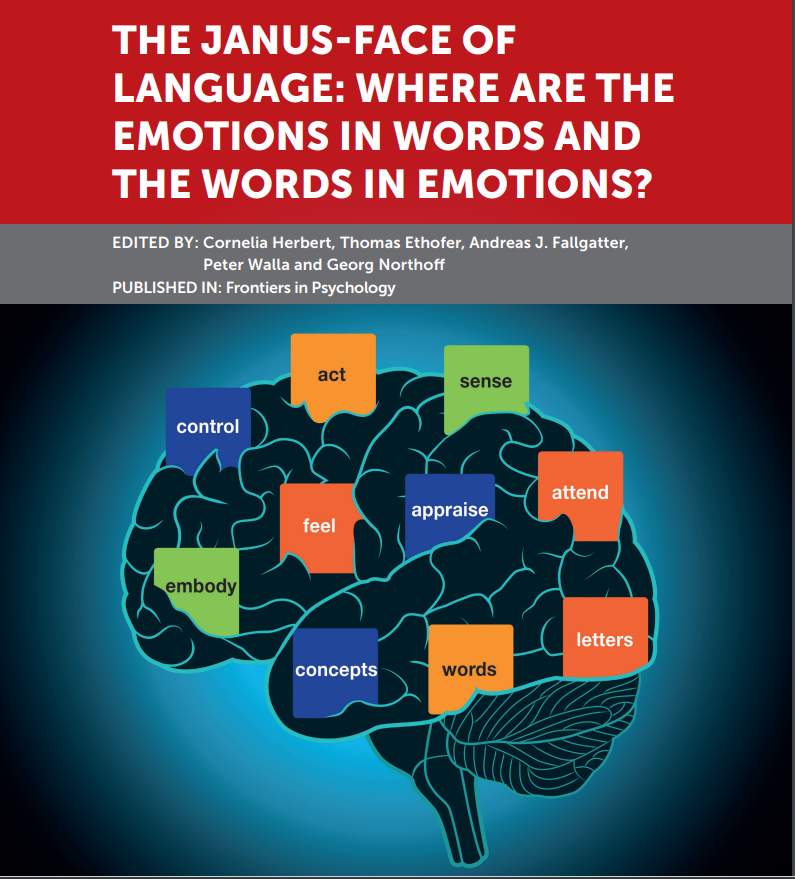 embodiment
The Janus-Face of Language: Where Are the Emotions in Words and the Words in Emotions?
View The Janus-Face of Language: Where Are the Emotions in Words and the Words in Emotions? — book Psychology
Introduction to Psychology
View Introduction to Psychology — book Cognitive studies
Interdisciplinary Explorations of Neuroscience: An Active-Learning Course Companion
View Interdisciplinary Explorations of Neuroscience: An Active-Learning Course Companion — book Social Sciences
Psychology 2e
View Psychology 2e — book Business
Principles of Microeconomics 3e
View Principles of Microeconomics 3e — book Business



