
Trademark Law: An Open-Source Casebook
LawTextbook
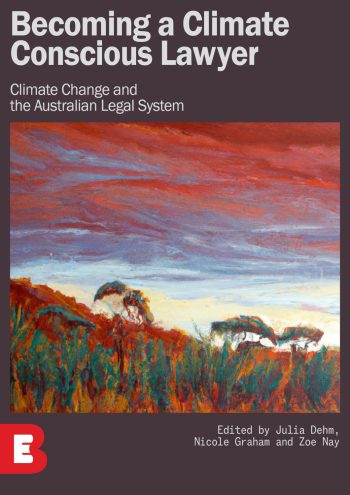
Becoming a Climate Conscious Lawyer: Climate and the Australian Legal System
Not rated yetRate this bookAn edited Australian legal education resource that explores how climate change intersects with legal doctrine, professional practice, and the preparation of future lawyers.
Read on the publisher’s website. Opens in a new tab.
 Free
About this book
About this book
An edited Australian legal education resource that explores how climate change intersects with legal doctrine, professional practice, and the preparation of future lawyers.
This page introduces the source edition and offers a focused reading route. Use the linked original resource for the complete text, references, activities, and the author’s full explanation. The overview below is limited to the sections identified in the coverage note.
Contents and further reading
Consult the official book or repository page for the resource’s contents and publication information. Open the source PDF to read the complete available edition.
Sources and coverage
This original overview is based on the opening of Legal Education in a Changing Climate (PDF sheets 43–44), with the publisher’s version statement and publication details checked; the linked PDF identifies version 1.3 as published in 2026, following the original 2024 publication. It is not a whole-book review. The verified source PDF contains 972 PDF sheets, including preliminary or repository pages; this may differ from its printed pagination. The source retains its own authorship, rights notices, and any separately credited third-party material.
Book summary
Study overview
The reviewed introduction argues that climate-related questions extend throughout legal study rather than belonging only to a specialised environmental law subject. It points to areas such as corporate obligations, property, tort, public law, procedure, evidence, and professional responsibilities as parts of this broader conversation. The editors connect legal education with the need to understand changing conditions and the unequal distribution of impacts. Their collection brings contributors together across core and elective law subjects, seeking to make climate considerations part of ordinary legal learning. This overview describes that introductory educational purpose rather than the detailed doctrinal conclusions of every chapter. The source is the publisher’s version 1.3, identified as a 2026 update to the resource first published in 2024.
How to study this book
Choose one legal subject you already study and identify a climate-related question that changes the facts, risks, or interests involved. Separate existing legal authority from an argument for future reform. For a case or statute, record the jurisdiction, date, issue, and current status before using it in analysis. Compare the perspectives of affected parties and explain whose experience is absent from your selected evidence. Use the complete assigned chapter and current primary legal sources to investigate the question. Treat this page as a reading orientation rather than advice on a particular legal matter.
These study suggestions and the questions below are independent Academic Master editorial guidance.
Questions for reflection
- How does the climate-related issue connect with an ordinary legal doctrine?
- Which part of the discussion describes current law and which proposes change?
- What additional perspective or authority would strengthen your analysis?
About access & copyright
This page provides book information and study material. Full-text access is provided by the original publisher or authorised source; a listing does not grant permission to republish the book.
Read our Library Access & Copyright policyAcross the curriculum
Investigate climate questions within multiple legal subjects.
Legal method
Distinguish authority, interpretation, and proposed reform.
Context and perspective
Consider affected parties and uneven impacts.
Version awareness
The linked resource is the publisher’s 2026 version 1.3.
Reader ratings & reviews
Share your thoughts
Your review helps other students choose the right resources.
KEEP LEARNING
Your next great read
Law
Global Corruption: Its Regulation under International Conventions, US, UK, and Canadian Law and Practice
Global Corruption: Its Regulation under International Conventions, US, UK, and Canadian Law and Practice
View Global Corruption: Its Regulation under International Conventions, US, UK, and Canadian Law and Practice — book Contract Law
Construction Contracting: Business and Legal Principles, Second Edition
View Construction Contracting: Business and Legal Principles, Second Edition — bookBusiness Law, Ethics, and Sustainability
Business Law, Ethics, and Sustainability
View Business Law, Ethics, and Sustainability — book Education
A Guide to Writing in Law School
View A Guide to Writing in Law School — book Law
Introduction to Criminal Justice: Operations, Obstacles, and Outcomes
View Introduction to Criminal Justice: Operations, Obstacles, and Outcomes — book Law
Essential Legal Research Skills in Aotearoa New Zealand
View Essential Legal Research Skills in Aotearoa New Zealand — book Constitutional Law
 with a Twist: Less Is More
View Constitutional Law with a Twist: Less Is More — book Law
The Office of the Presidency: Powers and Responsibilities
View The Office of the Presidency: Powers and Responsibilities — book Law



