
 Law
Contract LawTextbook
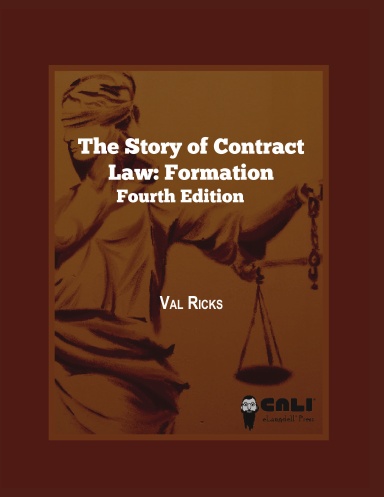
The Story of Contract Law: Formation
Not rated yetRate this bookThe Story of Contract Law: Formation is Val Ricks’s case-based investigation of why some promises become legally enforceable. The fourth edition develops consideration, reliance, assent, offers, acceptance, definiteness and warranties through judicial opinions, statutory extracts and problems. This chapter-wise study guide helps readers reconstruct legal reasoning, compare competing rules and apply them carefully to new facts.
Free reading is available at the official source. Opens in a new tab.
 Free
About this book
The Story of Contract Law: Formation is Val Ricks’s case-based investigation of why some promises become legally enforceable. The fourth edition develops consideration, reliance, assent, offers, acceptance, definiteness and warranties through judicial opinions, statutory extracts and problems. This chapter-wise study guide helps readers reconstruct legal reasoning, compare competing rules and apply them carefully to new facts.
Chapter-wise summaries and study tasks
Chapter 1 Consideration: Contract & Bargain
Consideration supplies the opening framework for distinguishing enforceable bargains from other promises. The chapter develops benefit, detriment, exchange and mutual promises through historical materials and modern cases. Moral obligation appears as a difficult boundary: a promise can seem deserving of enforcement without fitting an exchange-based account. Settlement and conditional or discretionary promises further test what has actually been bargained for. Read the cases for their reasoning rather than extracting a definition from the outcome alone. The introductory notes on assent and remedies also show that formation rules operate within a larger legal process.
Study task. Brief one historical and one modern consideration case. Identify the alleged exchange, the timing of the acts and one changed fact that would weaken the court’s reasoning.
Chapter 2 Assent-Based Niches of Promise Enforcement: Modification and Waiver
Modification and waiver reveal circumstances in which an existing relationship changes the analysis of enforcement. The materials compare alterations of judgment debts and contractual duties, including pressure for additional compensation, changed circumstances and sales governed by the UCC. Waiver concerns the relinquishment of a contractual requirement and raises separate questions about reliance and retraction. Do not assume that every change must satisfy the same consideration rule or that waiver permanently rewrites the entire agreement. Identify the governing legal framework and the conduct supporting the claimed change before choosing a rule.
Study task. Create a timeline for a disputed modification. Compare the result under the relevant common-law reasoning and the chapter’s UCC provisions, then analyse waiver separately.
Chapter 3 Alternate Theories of Recovery: Promissory Estoppel & Unjust Enrichment
Promissory estoppel and unjust enrichment offer alternative routes to recovery when an ordinary bargain analysis is inadequate. Promissory estoppel directs attention to a promise, induced reliance and the reasons enforcement may be necessary. Unjust enrichment asks whether a benefit was conferred and whether retaining it without compensation is unjust. These theories protect different interests and need not produce the same remedy. The chapter’s cases and historical notes invite comparison rather than treating the alternatives as universal substitutes for consideration. Identify the particular promise or benefit before arguing that fairness requires recovery.
Study task. Analyse a promised job followed by relocation expenses, then compare emergency services supplied without a request. State the appropriate theory and remedy question for each.
Chapter 4 Limits on Bargains: Defenses
Formation does not end the inquiry if a bargain is vulnerable to a defence. The chapter examines duress, mutual and unilateral mistake, misrepresentation and unconscionability, placing arguments about fairness alongside the law’s willingness to enforce uneven exchanges. Distinguish inadequate consideration from the absence of a bargain, and a bad prediction from a legally relevant mistake. The cases require close attention to what the parties knew, which risks they assumed and how consent was obtained. Organise the inquiry around the specific defence and its elements rather than using a broad assertion that the outcome seems unfair.
Study task. Take a mistake case and list the shared assumption, allocation of risk and requested remedy. Change one fact to convert the dispute into an ordinary risk of the bargain.
Chapter 5 The Push Toward Assent
The movement toward assent begins with seals and writings, nominal or recited consideration, implied inducement and the Statute of Frauds before asking when a contract forms and what assent means. Objective manifestations, contextual evidence and the difference between outward communication and private intention become central. The writing requirement raises an additional issue: proof or enforceability of a covered agreement must not be confused with whether the parties communicated assent. This chapter connects the historical emphasis on enforceable exchanges with a more developed account of agreement. Reading an opinion requires identifying whose perspective matters and what a reasonable recipient could understand in the circumstances. Do not confuse agreement to a transaction with agreement about every legal consequence. The analysis also prepares for the more specific offer-and-acceptance rules that follow.
Study task. Write two accounts of a disputed conversation: one based on each speaker’s private intention and one based on communicated words and conduct. Explain which facts the legal analysis treats as decisive.
Chapter 6 Offers
Offers are communications that can give another person the power to form a contract through acceptance. The chapter tests the boundary between a definite commitment and preliminary negotiation, advertising or an invitation to make an offer. Context, language, subject matter and the contemplated response all matter. Also track whether the power of acceptance remains available: timing and later communications may change the position. A useful case brief separates the existence of an offer from the question of its termination; otherwise a correct rule may be applied to the wrong stage of the transaction.
Study task. Draft one advertisement, one negotiation message and one offer involving the same goods. Identify the wording that changes the recipient’s legal power.
Chapter 7 Acceptances
Acceptance examines how a response becomes effective and whether it matches the offer’s requirements. The chapter moves through problems of words, conduct, timing and competing forms, requiring attention to the governing common-law or sales framework. A response may accept, propose a different bargain or merely continue discussion. Performance and silence must be evaluated in context rather than treated as automatic assent. The sections on web contracts extend these questions to online presentation and user conduct. Follow the communications chronologically, identifying what each party could know and when. Distinguish the existence of an agreement from disputes over which terms become part of it.
Study task. Build a communication timeline with an offer, posted response, revocation and receipt. Analyse effectiveness under the relevant rule before changing one message into a counteroffer.
Chapter 8 Definiteness
Definiteness asks whether the agreement supplies a sufficient basis for identifying obligations and giving a remedy. Open terms, future negotiations and incomplete expressions challenge the assumption that apparent assent always creates an enforceable contract. Courts may interpret language or supply terms in some circumstances, but doing so differs from inventing an agreement the parties never made. The chapter encourages attention to the transaction, the governing doctrine and evidence of intended commitment. Separate uncertainty about performance details from uncertainty about whether the parties intended to be bound at all.
Study task. Compare two agreements with an omitted price or quantity term. Explain which contextual or statutory information might resolve the omission and which essential issue remains unsettled.
Chapter 9 Limits on the Reach of Contract Law
Limits on the reach of contract law examine why some apparent undertakings remain beyond ordinary contractual enforcement. The chapter’s sections address public policy, plea bargains, employment at will and covenants not to compete. These settings test whether ordinary bargain reasoning is sufficient or whether other legal rules and institutional interests alter enforcement. Read these boundary materials with earlier chapters in mind: consideration, assent and definiteness provide analytical tools, yet institutional and policy concerns can still matter. Identify whether the court finds no contract, recognises a defence or limits the available remedy. Those explanations are not interchangeable even when the claimant receives nothing.
Study task. Choose a boundary case from the chapter and write the strongest argument for enforcement and the strongest institutional objection. Identify the doctrinal route used in the opinion.
Chapter 10 Warranties
Warranties complete the casebook by examining assurances about the subject matter of a transaction. A warranty dispute requires determining what was represented, whether the relevant assurance became part of the bargain and how legal rules allocate responsibility for quality or fitness. Distinguish an actionable undertaking from sales language or opinion, and analyse express and implied protections separately. A limitation or disclaimer raises its own interpretation and effectiveness questions. Connect this material to formation: the content of an agreement can include legally significant obligations even when the parties never negotiate each one expressly.
Study task. Create a sales scenario with an express claim, an implied quality issue and a disclaimer. Analyse each source of obligation separately and identify the additional facts needed.
How to study this book
- Read the introductory explanation of how to use a casebook. For each opinion record facts, procedural posture, issue, holding and reasoning.
- Keep common-law rules, Restatement extracts and UCC provisions in separate columns. Identify which governs each hypothetical.
- Answer the numbered problems before reading on, then revise your reasoning using the next case rather than merely changing the result.
- Use a formation checklist: governing law, bargain or alternative theory, assent, terms, defences and remedy. Preserve arguments for both parties.
Questions for reflection
- Why can reliance support recovery without proving a bargained-for exchange?
- What is gained and lost by judging assent objectively?
- When does supplying an omitted term interpret a bargain, and when does it create one?
Source edition and coverage
This guide follows the ten chapters of the fourth edition, revised June 2021. It is an educational reading aid to the casebook’s US legal materials, not an update on the law of every jurisdiction. These are original study explanations and learning tasks. Read the complete book at the official source.
About access & copyright
This page provides book information and study material. Full-text access is provided by the original publisher or authorised source; a listing does not grant permission to republish the book.
Read our Library Access & Copyright policyExplore the contents
Check the chapters covered in this edition.
Visit the official source
See reading, preview or purchase options.
Save for later
Keep this textbook in your saved collection.
Reader ratings & reviews
Share your thoughts
Your review helps other students choose the right resources.
KEEP LEARNING
Your next great read
Law Law
Evidence: Best Evidence Rule
View Evidence: Best Evidence Rule — book Law
Federal Rules of Appellate Procedure
View Federal Rules of Appellate Procedure — book Law
Land Use
View Land Use — book Business
Contract Doctrine, Theory & Practice, Volume 1
View Contract Doctrine, Theory & Practice, Volume 1 — book Law
The Ethics of Tax Lawyering
View The Ethics of Tax Lawyering — book Law
Federal Rules of Bankruptcy Procedure
View Federal Rules of Bankruptcy Procedure — book Civil Law
Computer-Aided Exercises in Civil Procedure
View Computer-Aided Exercises in Civil Procedure — book Law
Evidence: Jury Impeachment
View Evidence: Jury Impeachment — book Civil Law



