
Introduction
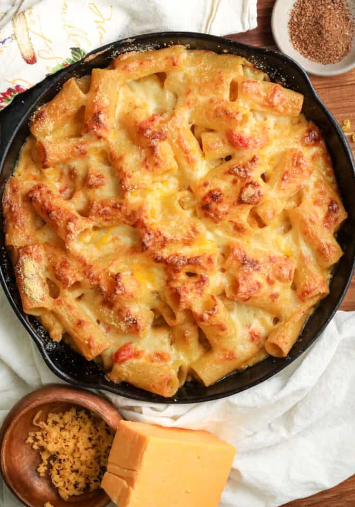
Figure 1. Haitian macaroni au gratin.
Haitian macaroni au gratin, often written makawoni au gratin or makawoni o graten, is a baked pasta dish commonly served at family gatherings, holidays, Sunday meals, birthdays, and other celebrations. It is sometimes described simply as Haitian macaroni and cheese, but the dish usually has a more distinctive structure because it may combine evaporated milk, aromatics, seasoning, firm cheeses, and optional meat before baking to a browned top. Recipes vary widely between households and diaspora communities, so authenticity should not be reduced to one fixed ingredient list. Mirlene’s Savory Thoughts version, for example, uses rigatoni, a roux, evaporated milk, cheddar, mozzarella, Parmesan, onions, bell pepper, and Haitian seasoning blends (Mirlene, 2023). The method below follows the photographed preparation sequence while explaining the cooking logic and food-safety requirements clearly. The goal is a casserole with tender pasta, a smooth sauce that coats rather than floods the noodles, balanced seasoning, and a golden surface that remains moist underneath.
Cultural Background
The dish’s name reflects Haiti’s historical contact with French culinary language, but Haitian macaroni au gratin should not be treated as a simple French recipe transplanted unchanged. Caribbean foodways developed through exchanges among Indigenous American, European, African, and later Asian peoples, ingredients, and techniques, with local cooks adapting those influences into distinct island cuisines (Pilcher, 2000). Haitian families likewise prepare baked pasta with different cheeses, canned or evaporated milk, peppers, onions, epis and other seasonings, and meats such as ham or sausage when desired. That history helps explain why two Haitian households may prepare recognizably related dishes with different pasta shapes, cheeses, seasoning intensity, or additions. The dish’s cultural meaning also comes from when and how it is served. A rich baked pasta is practical for celebrations because it can be prepared in a large pan, portioned easily, and served beside meats, legumes, plantains, pikliz, salad, or vegetables. Respecting the dish therefore means recognizing both its historical influences and the legitimate variation created by family practice rather than declaring one modern online recipe universally definitive.
Ingredients and Equipment
For a pan serving roughly ten to twelve people as a side dish, begin with about one pound of ridged short pasta, a medium onion, bell pepper, garlic if desired, butter, flour, one can of evaporated milk, additional milk as needed, and approximately three to four cups of grated cheese. Gouda, Edam, cheddar, mozzarella, Parmesan, or another firm melting cheese can be combined according to preference and availability. Optional additions include fully cooked ham, cooked sausage, shredded cooked chicken, epis, mustard, hot sauce, mayonnaise, scallion, thyme, parsley, or seasoned salt. The most important equipment is a large pot, colander, whisk or sturdy spoon, saucepan, greased baking dish, and a food thermometer when meat is included or leftovers are reheated. Freshly grated cheese generally melts more smoothly than pre-shredded cheese containing anti-caking starch. Ridged pasta such as rigatoni or penne is useful because its shape holds sauce, while a wide baking dish encourages more surface browning and a deep dish produces a softer interior.
Preparing the Pasta and Aromatics
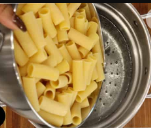
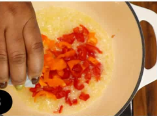
Cook the pasta in well-boiled salted water until it is tender but still holds its shape, remembering that it will continue to soften during baking. Mirlene’s version recommends rigatoni cooked to a light al dente stage before it is combined with sauce (Mirlene, 2023). Drain the pasta and reserve it while preparing the aromatics. In butter or neutral oil over medium heat, soften the chopped onion and bell pepper for several minutes; add garlic or epis near the end so delicate flavors do not burn. If using ham, sausage, or chicken, the meat should already be safely cooked before it is folded into the casserole. Season cautiously because cheese, cured meat, and prepared seasoning blends can all contribute substantial salt. The pasta should not sit at room temperature longer than necessary while the remaining components are prepared. Organizing the vegetables, grated cheese, milk, and baking dish before boiling the pasta makes the process smoother and reduces the chance that one component overcooks while another is still being measured.
Building the Cheese Sauce
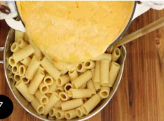
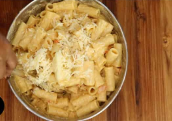
A roux-based cheese sauce gives the casserole body and helps the cheese remain distributed through the pasta. Melt butter over medium-low heat, whisk in an approximately equal amount of flour, and cook briefly to remove the raw-flour taste without deeply browning the mixture. Add evaporated milk gradually while whisking, followed by ordinary milk or reserved pasta water as needed until the sauce is smooth and thick enough to coat a spoon. Lower the heat before adding most of the grated cheese in several portions. Excessive heat can make cheese separate into fat and protein, producing a greasy or grainy sauce. After the cheese melts, season with black pepper, mustard, hot sauce, epis, or other preferred flavors, then fold the sauce through the drained pasta and aromatics until every piece is coated. The mixture should appear slightly looser than the desired finished casserole because the pasta will absorb moisture in the oven. If it already looks dry before baking, add a modest amount of milk rather than relying on extra cheese alone.
Baking, Serving, and Food Safety

Transfer the coated pasta to a lightly greased baking dish without compressing it excessively, then distribute the remaining cheese across the top. Parmesan can promote a firmer browned surface, while cheddar, mozzarella, Gouda, or Edam create a softer melted layer. Bake in a preheated oven until the edges bubble, the center is thoroughly hot, and the top is golden; the exact time depends on oven temperature, pan depth, and whether the assembled casserole began warm or refrigerated. A broad range of roughly thirty to forty-five minutes at about 350–375°F is more useful than treating one fixed time as universal. If the surface browns too quickly, cover it loosely with foil while the center finishes heating. USDA guidance lists 165°F as the safe reheating temperature for casseroles and leftovers, and the same benchmark is useful when a meat-containing assembled dish has been chilled before baking (USDA Food Safety and Inspection Service, n.d.). Rest the finished casserole for ten to fifteen minutes before cutting so the sauce settles and servings hold their shape.
Haitian macaroni au gratin is rich enough to serve as a main component, but it is frequently used as a side dish with griot, chicken, turkey, fish, beans, plantains, pikliz, salad, or cooked vegetables. Food safety becomes especially important when the casserole is served at a buffet or celebration. USDA advises refrigerating perishable leftovers within two hours, or within one hour when the surrounding temperature is above 90°F, and using most cooked leftovers within three to four days (USDA Food Safety and Inspection Service, n.d.). Reheat leftovers to 165°F throughout; covering a portion and adding a small spoonful of milk can help restore moisture. Common quality problems usually have straightforward causes. Dry macaroni may result from too little sauce, overbaking, or a very shallow pan, while a grainy sauce often comes from excessive heat during cheese melting. A greasy top can result from too much butter, fatty meat, or cheese separation. Balanced aromatics and seasoning improve flavor more effectively than simply increasing the amount of cheese.
Conclusion
Haitian macaroni au gratin succeeds when cultural flexibility is matched with sound technique. The dish does not require one universal cheese, pasta shape, or optional meat to remain recognizably Haitian; family tradition, regional availability, and diaspora adaptation legitimately produce different versions. What matters technically is that the pasta remains structured enough for baking, the aromatics are cooked without burning, the roux is smooth, the cheese is melted over moderate heat, and the casserole is baked only until the center is hot and the surface is attractively browned. The photographed stages show the transformation from drained pasta and sautéed vegetables to sauce-coated noodles and the finished gratin. Mirlene’s recipe demonstrates one contemporary Haitian approach using rigatoni, roux, evaporated milk, and multiple cheeses, while USDA guidance provides the safety principles for holding and reheating the finished food (Mirlene, 2023; USDA Food Safety and Inspection Service, n.d.). The best final version is therefore one that is well seasoned, safely handled, texturally balanced, and meaningful to the people sharing it.
Works Cited
Mirlene. (2023). “Haitian Macaroni Au Gratin.” Savory Thoughts. https://www.savorythoughts.com/haitian-macaroni-au-gratin/
Pilcher, J. (2000). “The Caribbean from 1492 to the Present.” In K. F. Kiple & K. C. Ornelas (Eds.), The Cambridge World History of Food (pp. 1278–1288). Cambridge University Press. https://doi.org/10.1017/CHOL9780521402156.019
USDA Food Safety and Inspection Service. (n.d.). Leftovers and food safety. https://www.fsis.usda.gov/food-safety/safe-food-handling-and-preparation/food-safety-basics/leftovers-and-food-safety
Cite This Work
To export a reference to this article please select a referencing stye below:

Academic Master Education Team is a group of academic editors and subject specialists responsible for producing structured, research-backed essays across multiple disciplines. Each article is developed following Academic Master’s Editorial Policy and supported by credible academic references. The team ensures clarity, citation accuracy, and adherence to ethical academic writing standards
Content reviewed under Academic Master Editorial Policy.





