
Executive Summary
This consultancy report assesses opportunities for Gowling WLG to expand into Indonesia and Morocco while developing suitable human resource management strategies. Its analysis of the firm and the two countries suggests that Gowling WLG has resources and capabilities that could support expansion. The report evaluates cultural differences and recommends Indonesia as the preferred market.
Secondary research informs the analysis and the proposed strategies for the selected location. The project manager and head of human resources would oversee consideration and implementation of the recommendations, working with internal and external stakeholders. These stakeholders include:
Internal – Marketing Head, Innovations Head, Human Resource Manager, Legal Team, IT Director, Senior Partners, Finance Head.
External – Country Manager, Consulting Firms, Governmental Agencies, Professional Employer Organisations.
Introduction
This 2023 consultancy study evaluates proposed expansion options and HRM strategies using the sources and planning assumptions available at that time.
Expanding into countries with different market structures, cultures and skills can be challenging. This report examines potential expansion by Gowling WLG into Morocco in North Africa and Indonesia in Southeast Asia, with particular attention to human resource management strategies. It considers the international legal practice and its existing resources as the basis for a proposed expansion.
The consultancy report draws on secondary data from online repositories and the company’s website.
The report examines the company’s position in the UK legal market, its skills and employment requirements, and its suitability for international expansion. It compares cultural dimensions in the two potential markets, evaluates existing human resource management practices and proposes new strategies. It also sets out an implementation plan, timetable and estimated project costs.
Objectives of the Project
The following are the objectives to be achieved at the end of this project.
To identify opportunities for Gowling WLG in Indonesia and Morocco.
To analyse the cultures of both countries and inform the development of an appropriate HRM strategy.
To evaluate potential markets from a human resource perspective and develop implementation plans consistent with the company’s available resources.
To recommend a suitable country for expansion and the HRM strategies to be implemented.
Gowling WLG’s Audit in the UK
Europe’s largest market for legal services is in the United Kingdom. According to estimates, the legal industry was valued at more than £36.8 billion in 2019 and contributed 1.7% of the UK’s GDP. The total revenue from legal operations increased by 45% from 2010 to 2020, and net exports of legal services nearly quadrupled from £3.4 billion in 2009 to £6.6 billion in 2018. The consumers who acquire legal services are diverse, ranging from skilled, frequent consumers (such as big enterprises and corporations) to sporadic consumers who may never have sought legal counsel before (Decker, 2021).
According to Decker (2021), Gowling WLG was established as a global legal firm due to numerous mergers. The business’s original name was Wragge & Co., established in Birmingham in 1834. In 2014, it declared a merger with the London-based legal firm Lawrence Graham, changing its name to WLG (Wragge Lawrence Graham). Then, in 2017, a second merger with the Canadian law firm Gowling formed the Company Gowling WLG. Members of the English business limited by guarantee known as Gowling WLG International Limited are the two limited liability partnerships Gowling WLG (Canada) LLP and Gowling WLG (UK) LLP. The business provides services in a variety of industries, including automation, building and engineering, corporate, M&A, capital, energy, environmental, social, and governance, financial institutions, infrastructure, life sciences, intellectual property, real estate, natural resources, technology, litigation, and dispute resolution.
Gowling WLG is renowned for providing guidance and solutions considering clients’ opportunities, challenges, and commercial obstacles. WLG is renowned for its top-notch client services and extensive industry knowledge. The business gives customers more contacts, knowledge, and coverage internationally. Gowling WLG values each team member’s unique perspectives and experiences and is committed to diversity, equity, and inclusion. The business prioritises sustainability and corporate social responsibility to positively impact the communities in which it operates (Gowling WLG, 2023).
Modern law firms such as Gowling WLG invest in facilities and technology to help lawyers work and communicate effectively on and off site. The report describes offices in major commercial centres, including Toronto, London, Paris, Moscow and Beijing, with meeting rooms and shared spaces for staff and clients. Its knowledge management systems enable lawyers to access and share information efficiently and support the delivery of legal advice.
Gowling WLG takes seriously its responsibility to protect the privacy of its clients’ personal information. The company has implemented efficient systems and procedures to protect against internet threats and data breaches. The company is committed to sustainability and has made several efforts to reduce its negative influence on the environment. These include encouraging staff to bike or take public transport to work and recycling rubbish, lights, and equipment (Gowling WLG, 2023).
Gowling WLG received recognition in the Legal 500 UK 2023 rankings for its commercial and legal expertise. Its ranked services span corporate and commercial work, technology, real estate, construction, energy and natural resources, pensions, finance, and dispute resolution. The firm reported 65 practice-area rankings across London and the West Midlands, including 15 Tier 1 rankings (Gowling WLG, 2022).
The company’s 2021 gross sales of $700,588,000 earned it 86th among the Global 200 companies. Gowling WLG, which has 1321 solicitors, came in at 17 on the 2021 UK 100 list (ALM Law, 2023).
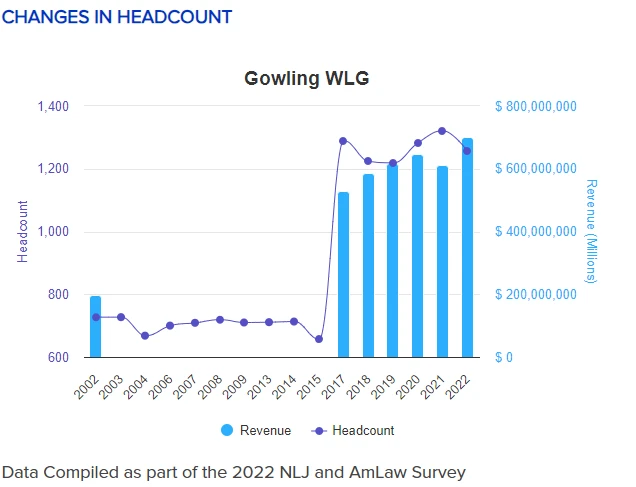
Figure 1: Revenue and Headcount of Gowling WLG (ALM Intelligence, 2023)
According to JUVE (2023), Gowling WLG’s London office maintained a consistent presence in the UK patent market, including high-profile cases involving InterDigital and Lenovo. The firm was recognised for its patent practice.
Skills and Employment Requirements
According to Gowling WLG (2023), the company ensures training and development programmes for workers at different levels. Fees are covered by the company, such as Diploma courses at any University of Law branches and maintenance grants.
Employees must have the following skills to work efficiently: legal expertise, analytical and research skills, communication abilities, problem-solving abilities, time management and organisation skills, client service, ethical considerations, teamwork, adaptability, technical competence, and ongoing learning.
Relevant qualifications include a law degree, admission to the appropriate professional body for the role and jurisdiction, and any additional qualifications required for specialised legal work.
Certain requirements may change depending on the practice area, amount of seniority, and position within the business. Like any respected law company, Gowling WLG looks for knowledgeable candidates with a strong sense of morality, integrity, and dedication to providing top-notch legal services. It is advised to check the company’s official website or job postings for complete information on job descriptions and requirements.
SWOT Analysis
Strengths
Reputation and Experience: Gowling WLG UK is a reputable law firm that provides various legal services in various industries.
Global Presence: The Company has offices throughout several nations, allowing it to service clients globally.
Diverse Practice Areas: Gowling WLG UK’s competence in various practice areas, including corporate law, intellectual property, litigation, and more, enables it to offer comprehensive services.
Talented Professionals: The business is home to accomplished solicitors and other legal experts renowned for their knowledge and dedication to providing clients with high-quality legal solutions.
Pay and Rewards: Employee accounts describe competitive pay and recognition for work performed.
Growing Use of Technology and Innovative Solutions.
Weaknesses
Competition: The legal sector is extremely competitive, and Gowling WLG UK is up against long-standing players and recent arrivals.
Complexity: Operating in several nations with various legal systems can be difficult and complex, requiring ongoing compliance and adaptability.
Resource management: Managing resources over a global network can be time- and resource-consuming, which may make it difficult to supply services consistently.
Opportunities
Globalisation: As the world becomes more interconnected, there will be more opportunities for cross-border legal work, which will be advantageous for multinational companies like Gowling WLG UK.
Technology Integration: Using technology for communication, automation, and legal research can improve productivity and client services.
Sectoral Growth: Harnessing the potential of expanding industries like technology, renewable energy, and the health sciences may result in higher customer demand.
Trust and Collaborations: The company’s established relationships can create opportunities for collaboration with other organisations.
Threats
Regulatory Changes: The company’s activities may be impacted by regulatory changes in several nations, necessitating ongoing adaptation.
Economic Uncertainty: Client spending on legal services may decrease during economic downturns, impacting demand.
Cybersecurity Risks: Industry dependence on technology exposes the company to cybersecurity risks that could jeopardise private client data.
Comparison and Evaluation of the Cultural Identities of Indonesia and Morocco using Hofstede
As Novianti (2018) notes, culture influences human behaviour. Its implications depend on organisational goals and context. Hofstede’s (2011) model examines shared cultural patterns that distinguish groups and can inform comparisons between national settings. Communication practices are part of this context. Intercultural communication can improve when people recognise differences in communication norms and traditions (Sattorovich, 2020).
Indonesia
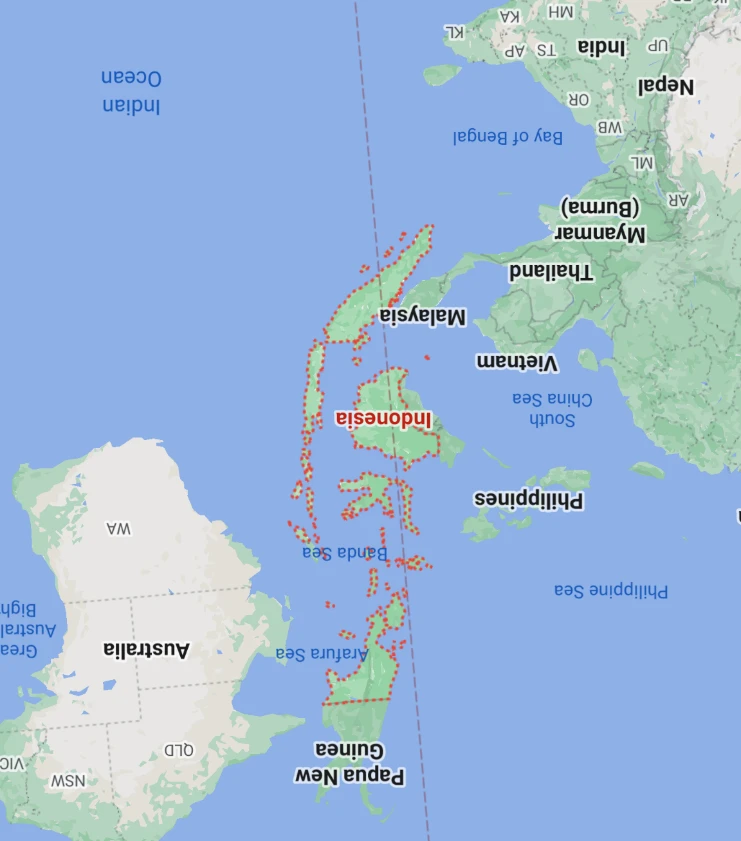
Indonesia comprises more than 17,000 islands near the equator, including Java, Sumatra and Sulawesi, as well as parts of Kalimantan and Papua. The report cites a population of 277,869,748 in 2023 (Worldometer, 2023). Novianti (2018) describes the complexity of Indonesia’s cultural setting and its relationship with geography, history, economics and politics. These considerations should inform HRM policy rather than be treated as uniform descriptions of every Indonesian employee.
Morocco
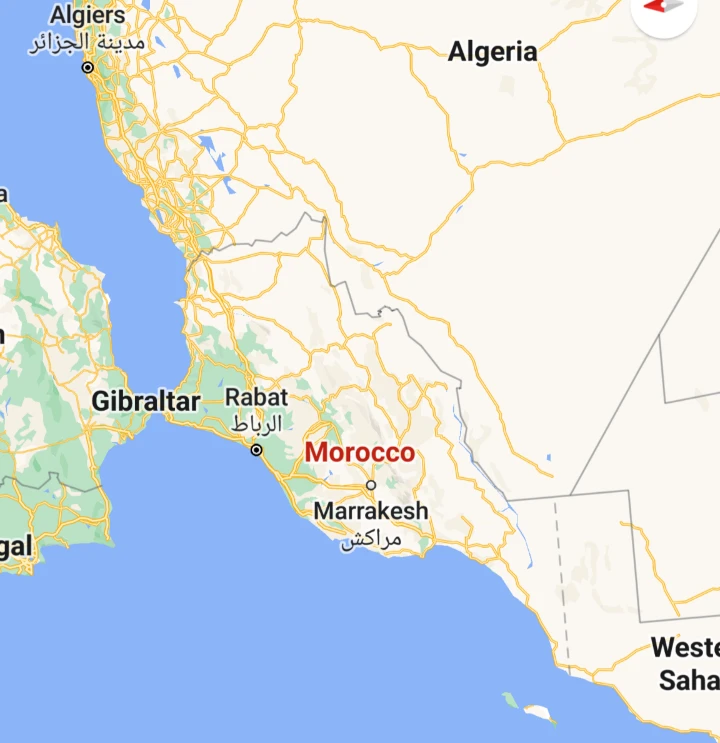
Morocco is a North African constitutional monarchy with an elected parliament. The report’s account of its population and administrative structure draws on Desai and Garozzo (2011), who discuss the country’s institutional and cultural context.
Hofstede Model for Cultural Dimensions
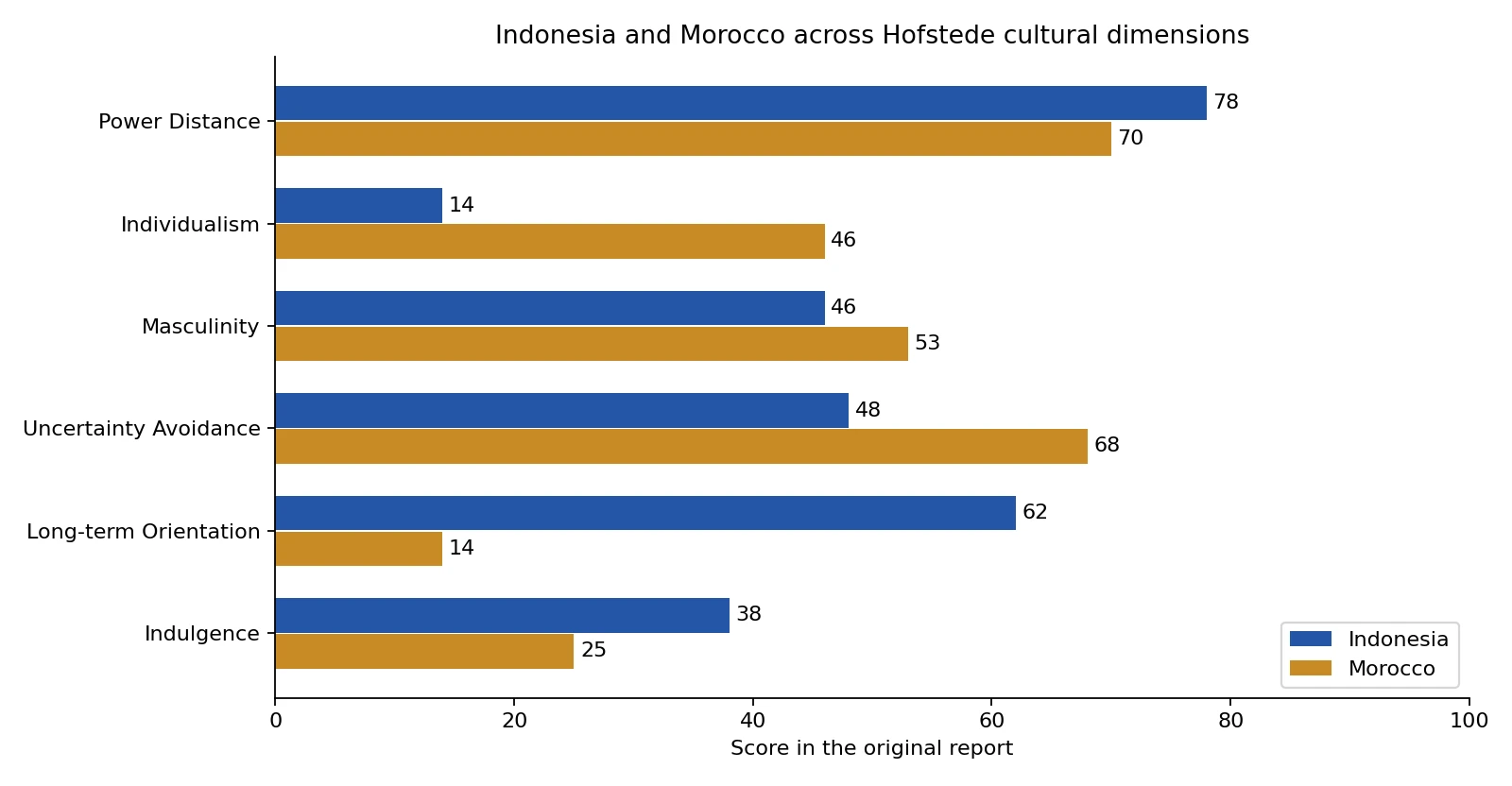
Figure 2: Indonesia and Morocco‘s Cultural Dimensions with Hofstede.
Power Distance (high vs. low) – This dimension reflects how our culture sees these distinctions and deals with the notion that not everyone in society is created equally. Hofstede (2011) defined power distance as the acceptance and expectation of unequal power distribution among the less powerful members of organisations and institutions (such as the family). The high score Indonesia received for this criterion (78) suggests that the following characteristics best describe the Indonesian style: dependence on hierarchy, unequal rights for those in power and those who are not, inability to approach superiors, presence of directive leaders, management in charge, and delegation. Managers rely on the submission of their team members, and employees expect to be told what to do and when. Negative feedback is sent covertly and indirectly. Additionally, given the high-power distance, Indonesian coworkers would anticipate receiving clear instructions from the boss or manager (Novianti, 2018).
On the other hand, Moroccan management has a score of 70 on the power distance index. This result demonstrates the strong hierarchical linkages that underpin Moroccan society and the acceptance of status and power disparities. In organisations, centralised systems, confirmed subordination connections, and authoritarian manager profiles all manifest this reality (Assoud, 2019).
Individualism (Collectivist versus Individualist) – According to Hofstede (2011), collectivism is a societal, not an individual, characteristic that refers to individualism and its antithesis, the degree to which community members are incorporated into organisations. Some societies value individualism, where there are weaker social ties, and everyone is expected to care for themselves and their immediate families. Indonesia is a collectivist culture with a low individuality score of (14). This reveals a strong preference for a social order in which members are expected to uphold the norms of their communities and in-groups (Novianti, 2018). With 46 points, Moroccan society is rated as being averagely individualistic. Assoud (2019) contends that devotion and allegiance to the organisation, family, or community dictate actions and behaviours. The employer-employee connection would be viewed as a moral bond within organisations. This perspective probably governs traditional methods of team motivation, conflict resolution, or change management.
Masculinity versus Femininity: In Hofstede’s framework, this dimension concerns the relative emphasis on competition and achievement compared with cooperation and quality of life (Hofstede, 2011; Novianti, 2018). The report records scores of 46 for Indonesia and 53 for Morocco. Assoud (2019) relates this dimension to organisational behaviour, including corporate social responsibility and the management of workplace stress and conflict. These national-level comparisons do not determine individual preferences or behaviour.
Uncertainty Avoidance: This dimension concerns tolerance of ambiguity rather than the avoidance of every risk (Hofstede, 2011). The report records a score of 48 for Indonesia and 68 for Morocco. Novianti (2018) discusses the importance of harmony and indirect expressions of disagreement in Indonesian workplaces. Assoud (2019) relates Morocco’s score to expectations for preparation, agreements and workplace routines. Managers should consider these reported patterns alongside the actual practices of their teams.
Long-Term versus Short-Term Orientation: The report records scores of 62 for Indonesia and 14 for Morocco. Hofstede (2011) associates a longer-term orientation with pragmatic adaptation, perseverance, saving and investment, and a shorter-term orientation with normative expectations, tradition and social obligations. Desai and Garozzo (2011) discuss the relevance of these cultural expectations in Morocco. In management, the comparison can inform discussions about immediate returns, continuity and longer-term development.
Indulgence versus Restraint: Hofstede (2011) distinguishes societies that permit relatively free satisfaction of desires associated with enjoyment from those that regulate such desires through social norms. The report records scores of 38 for Indonesia and 25 for Morocco, placing both towards the restraint end of this comparison (Desai and Garozzo, 2011).
Why Indonesia?
The level of gender egalitarianism among Indonesians, according to Novianti (2018), is on par with the global average. Indonesia has made significant progress towards the emancipation of women. Friendliness, tranquillity, and openness are also frequently used to define Indonesians. The equal levels of education for men and women in Indonesia allow women to play a decision-making role in local affairs, just like men, and some positions of responsibility are reserved for women.
Recruitment and Selection
In Indonesia, family dominance, family ties, and background have historically been heavily utilised by local private organisations as a recruiting tool (representing significant power distance and collectivism). However, since the 1990s, references regarding a candidate’s qualifications from family and close friends have changed recruitment practices (Novianti, 2018). The CAT (Computer Assisted Test) technique, supported by computer technology to prevent doubt and transparently allow for direct participant control, has been used by most private and public companies that use electronic recruitment.
According to Novianti (2018), recruitment practices often emphasise team-related capabilities alongside individual competencies, reflecting the importance of group relationships. The review also discusses gender equality and employment legislation as influences on recruitment.
Training and Development Practices
Novianti (2018) discusses compulsory education and government-supported vocational and workplace training in Indonesia. The review describes changes in training investment and initiatives through which businesses develop employees’ skills. It also notes that training can be directed towards immediate organisational needs, making longer-term capability development an important consideration.
Compensation and Reward System Practices
The report identifies transparency in compensation as an area for improvement. Novianti (2018) discusses the comparatively limited role of performance-related pay, regional minimum wages and the importance of social relationships in remuneration. The review also addresses maternity benefits and employment protections. These observations describe the source literature used for the 2023 proposal and should be distinguished from current employment requirements.
Performance Appraisals Practices
Management by objectives, performance-based assessment, upward feedback and 360-degree feedback are among the appraisal approaches discussed in the Indonesian context. Novianti (2018) considers how preferences for managerial direction may affect the use of these methods. Their suitability should therefore be assessed in relation to organisational culture and working practices.
Industrial Relations Practices
As given by Novianti (2018), the obstacles Indonesian employees face now, internally and externally, are very different from those that existed before the crisis in 1997–1998. They claim that internal problems with organising and organisational capacity inside the unions and the growth of new sorts of exclusivity within the unions have contributed to greater internal division, inter-union conflict, and fragmentation. Sometimes, this internal disintegration results from cultural differences among union members. Other difficulties have been brought about by the external factors of a less able government in terms of political and economic involvement and the deeper penetration of globalisation.
New Human Resource Management Strategy to be Implemented in Indonesia
Planning, organising, motivating, and supervising people within an organisation are the fundamental responsibilities of human resource management (HRM). It includes all aspects of finding, choosing, evaluating, training, educating, rewarding, and motivating employees, as well as concerns about incentives, the quality of work and working conditions, work restructuring, equal opportunity, health and safety, skill development, teamwork, flexibility, establishing corporate culture, and managing change (Sampe, 2019)
Businesses that have the flexibility to adapt to both internal and external opportunities and threats will be able to react swiftly to environmental demands, giving them a sustained competitive advantage. As a result, HR flexibility is regarded as a dynamic capability that aids organisations in responding to unpredictable external changes (Thorat, 2013).
According to Thorat (2013), personnel managers are now HR managers; personnel departments are referred to as HR departments. More companies are embracing strategic HR by highlighting the role of HR departments in their annual reports. Some organisations have established HR committees at the governance level by good corporate governance norms. These changes show that Indonesians are becoming more aware of the significance of HRM today.
When developing an HR strategy, legal considerations must be made. Since the Indonesian government has strict regulations governing many aspects of human resource management, including the minimum salary, insurance, occupational health and safety, and equal employment opportunities, the strategy should remain consistent with these regulations (Sampe, 2019).
According to Sampe (2019), Employee behaviour at work is influenced by various factors, including physiological makeup, professional experience, aspirations, and the cultural influences of family, peers, race, and education. Large Indonesian businesses often use HRM procedures comparable to the US or the UK. However, Indonesian firms employ the functions informally. Family culture dominates decision-making when HRM functions are applied, and management is informal and unstructured. For instance, organisations frequently turn to their relatives and friends for new staff. The organisational culture impacts performance, and there is a positive and significant association between organisational culture and performance (Rajaa & Lin, 2018).
The ILO’s (2021) Performance Management Framework emphasises individual accountability, leadership, talent management and a supportive working environment. Dialogue and consistent feedback can strengthen workforce engagement. These elements could inform the HRM strategies proposed for Gowling WLG in Indonesia.
The ILO (2021) identifies several priorities for effective human resource management: building a diverse workforce with relevant skills, encouraging involvement and inclusion, creating a respectful and empowering workplace, strengthening ethical leadership and accountability, and using innovation and digitalisation to improve HR services.
Capacity-building should be given priority due to the focus on lifelong learning, assistance with job changes, and the revolutionary goal for gender equality and more diversity. Innovative approaches to job definition and organisational design are required in light of the rising level of digitisation and the possibility of more flexible work arrangements that go along with it. Furthermore, creating tools to more proactively map the present and future skills needs and introducing more capable tools for workforce planning is necessary.
A well-written job description is the first step in a successful hiring process and the basis for future-focused delivery. Managers are crucial in allowing high-quality performance by the individuals and teams they supervise. This is in addition to their responsibility for timely fulfilling office priorities in a manner that respects operational commitments, laws and regulations, and the needs of their staff. Managers must be given structured responsibilities and explicit authority delegation to make decisions, establish responsibility, and improve performance management (Wright, 2008). According to ILO (2021), utilising technology to enable innovative and more efficient working ways will play a vital role in implementing the HR Strategy and achieving the set goals and results. The office will be able to address the following important areas as a result of the continuing development of technology and the increased digitalisation of HR functions:
Improve decision-making and information-sharing processes to help teams respond swiftly, connect with others, communicate more clearly, and work together more successfully.
As part of the proposed HRM strategy, managers and employees should have access to relevant staff regulations, governance guidelines, HR manuals, statutory forms and learning opportunities, wherever they work. Employee information should be protected through appropriate access controls. Digitalising HR operations and automating administrative work can also improve the efficiency and quality of services (Wright, 2008).
Training and Development (T&D)
According to Alemu (2017), businesses presently operate in rapidly changing contexts regarding new technologies, competitiveness, and employee needs. Identifying needs, allocating resources, and taking personal responsibility for motivating staff to engage in activities and supporting the transfer of acquired skills are all important roles that managers with the appropriate responsibilities can play in the training and development of their staff.
Knowledge Transfer: In Alemu’s (2017) survey, most respondents reported limited knowledge transfer within their organisation. Barriers included the selection of employees for training and restrictions on sharing learning afterwards. Other respondents identified some transfer, observing improvements in employees’ knowledge, skills and attitudes following training.
Alemu (2017) argues that a dedicated function and senior management commitment are important for integrating training and development into strategic planning. Other challenges include measuring outcomes, securing sufficient resources and aligning training responsibilities with organisational structure.
Training and development should be systematic and connected to organisational strategy, plans and policies rather than fragmented activities responding only to immediate needs. Internal programmes can meet specialised requirements, develop distinctive capabilities and address employees’ roles more closely than standard external courses. A sustained internal approach may also help protect capabilities from imitation by competitors using the same external providers (Alemu, 2017).
Performance Management Systems
Employee productivity and effectiveness are now major issues. Developing and implementing a strong PMS will go a long way towards ensuring that the business achieves its objectives. Therefore, each employee’s overall performance is essential to any institution’s success. Any organisation that motivates workers to understand the broad institutional objectives can function at its best given the proper assistance and resources (Thusi, 2023).
A well-implemented PMS encourages employee performance while aiding the organisation in achieving its goals and adjusting to change. In this transition, goal-setting, performance evaluation, and staff development must be combined into a single process while ensuring that performance satisfies the organisation’s strategic goals. According to Thusi (2023), it was contended that before creating an employee performance evaluation system, management must understand its significance as a key element of human resource management. According to the standards, performance must be monitored year-round. If performance is not adequately controlled, it may quickly become a paper exercise, impeding the system from achieving its goals. Monitoring and analysing the procedure regularly is essential since compliance levels must be continuously promoted and maintained appropriately. If PMS is viewed as a mechanism for the manager and the employee to communicate the goals that must be realised, how they will be fulfilled, and how work will advance to achieve the planned results, a level would be reached where PMS involves both the supervisor and the supervisee (Kaupa & Atiku, 2020).
According to Thusi (2023), inadequate communication is one of the difficulties in implementing performance management systems (PMS). On the other hand, a lack of communication affects the performance management procedure because the employer must inform the staff about the organisation’s objectives and goals for them to understand the expectations. Since the system is driven by constant performance feedback to employees, effective communication is crucial throughout the performance management process. Since performance management systems involve numerous segments that must be applied by the supervisor in partnership with the subordinates under their supervision, effective communication is crucial for the system’s effectiveness.
Unfairness during the appraisal process causes a bad emotional state in the employee, whereas fairness would result in a positive emotional state. Public institutions should prioritise encouraging and rewarding top-notch employees rather than discouraging them. Therefore, they should ensure that the performance review process is efficient and fair. According to Kaupa & Atiku (2020), the effectiveness of performance evaluation has exposed significant implementation defects, including several types of accuracy issues, biases and rating inaccuracies. To manipulate the results, those in charge of evaluating employee performance were more concerned with whether their ratings would help maintain good relationships and other non-performance-related goals.
Thusi (2023) identifies insufficient training as a barrier to effective performance management. Managers, supervisors and employees need to understand the system and the criteria used to assess performance. Communicating those criteria in advance supports participation and transparency. A well-implemented performance management system can improve employee performance and organisational productivity, provided that its components are explained clearly and staff understand the process from the outset.
Implementation Plan
Budget Breakdown
S/N | Expenses | Cost($) | Cost(Brit.P) | Cost(Ind.R) |
OFFICE–RELATED EXPENSES | ||||
1 | Office rental | 3000000 | 2370000 | 45900600000 |
2 | Ongoing fees and taxes | 500000 | 395000 | 7650100000 |
3 | Equipment (Computers, Software) | 1000000 | 790000 | 15300200000 |
4 | Communications services/phones | 500000 | 395000 | 7650100000 |
5 | Supplies | 200000 | 158000 | 3060040000 |
6 | Health and safety inspections | 50000 | 39500 | 765010000 |
7 | Building security | 100000 | 79000 | 1530020000 |
8 | Utilities | 800000 | 632000 | 12240160000 |
9 | Licenses and permits | 300000 | 237000 | 4590060000 |
10 | Maintenance and repairs | 400000 | 316000 | 6120080000 |
11 | Waste removal | 100000 | 79000 | 1530020000 |
OTHER EXPENSES | ||||
1 | Foreign exchange and transaction rates | 300000 | 237000 | 4590060000 |
2 | Inflation rates of target country | 200000 | 158000 | 3060040000 |
3 | Interest rates of target country | 150000 | 118500 | 2295030000 |
4 | Ongoing regulatory expertise | 500000 | 395000 | 7650100000 |
5 | Data protection compliance | 250000 | 197500 | 3825050000 |
6 | Winding down operations | 100000 | 79000 | 1530020000 |
SALES AND MANAGEMENT EXPENSES | ||||
1 | New sales and marketing materials | 300000 | 237000 | 4590060000 |
2 | Advertising, PR and lead generation | 1500000 | 1185000 | 22950300000 |
3 | Website translation | 200000 | 158000 | 3060040000 |
SETUP EXPENSES | ||||
1 | Legal and tax consulting fees | 1000000 | 790000 | 15300200000 |
2 | Legal entity establishment | 500000 | 395000 | 7650100000 |
3 | Filings | 100000 | 79000 | 1530020000 |
4 | Bank account establishment | 150000 | 118500 | 2295030000 |
5 | Accounting/audit | 400000 | 316000 | 6120080000 |
TAX–RELATED EXPENSES | ||||
1 | Corporate taxes | 5000000 | 3950000 | 76501000000 |
2 | Indirect taxes, including all VAT | 2000000 | 1580000 | 30600400000 |
3 | Import/export obligations | 1000000 | 790000 | 15300200000 |
4 | Accounting and auditing | 800000 | 632000 | 12240160000 |
5 | Converting accounting to US GAAP | 300000 | 237000 | 4590060000 |
6 | Transfer pricing reports/documentation | 400000 | 316000 | 6120080000 |
STAFF RELATED EXPENSES | ||||
1 | Recruitment | 1500000 | 1185000 | 22950300000 |
2 | Employment contracts and translation | 200000 | 158000 | 3060040000 |
3 | Salaries | 12000000 | 9480000 | 1.83602E+11 |
4 | Mandatory salary increases | 1000000 | 790000 | 15300200000 |
5 | Mandatory bonuses | 800000 | 632000 | 12240160000 |
6 | Pension funds | 1500000 | 1185000 | 22950300000 |
7 | Profit sharing | 500000 | 395000 | 7650100000 |
8 | Social security | 1000000 | 790000 | 15300200000 |
9 | Unemployment insurance | 300000 | 237000 | 4590060000 |
10 | Health insurance | 1200000 | 948000 | 18360240000 |
11 | Vacation, sick time, other leave | 800000 | 632000 | 12240160000 |
12 | Payroll services | 300000 | 237000 | 4590060000 |
13 | Meal allowances | 100000 | 79000 | 1530020000 |
14 | Tracking employee travel | 150000 | 118500 | 2295030000 |
15 | Expat expenses | 1000000 | 790000 | 15300200000 |
16 | Tax equalisation/protection | 500000 | 395000 | 7650100000 |
17 | Immigration (visas, work permits) | 250000 | 197500 | 3825050000 |
18 | Employee handbook and translation | 100000 | 79000 | 1530020000 |
19 | Mandatory employee training | 400000 | 316000 | 6120080000 |
20 | Cultural training | 150000 | 118500 | 2295030000 |
21 | Anti-corruption training | 100000 | 79000 | 1530020000 |
22 | Security services | 300000 | 237000 | 4590060000 |
23 | Non-compete obligations | 200000 | 158000 | 3060040000 |
24 | Travel expenses, including site visits | 600000 | 474000 | 9180120000 |
25 | Employee termination obligations | 500000 | 395000 | 7650100000 |
1 dollar = 0.97 British pounds = 15300.20 Indonesian rupiah | ||||
Time Line for the Project
Task No. | Task Description | Start Date | End Date | Duration (Days) |
1 | Management Planning & Onboarding of Project Personnel such as Consultants, Project Managers … | 01/09/23 | 01/10/23 | 30 |
2 | Company’s Audit (Highlighting company’s position, skills and resources for international expansion) | 02/10/23 | 01/12/23 | 60 |
3 | Research and Analysis | 02/12/23 | 01/03/24 | 90 |
4 | Market Entry & Establishment | 02/03/24 | 02/09/24 | 180 |
5 | Recruiting and Sourcing Staffs | 03/09/24 | 03/12/24 | 90 |
6 | Introducing new HRM strategies | 04/12/24 | 04/06/25 | 180 |
7 | Implementation of HRM Strategies | 05/06/25 | Continuous | |
8 | Marketing & Promotion (Communication strategies and publicity) | 05/06/25 | Continuous | |
9 | Business Developments, Evaluation & Adjustments | 05/06/25 | Continuous |

Figure 3: Gantt Chart illustrating Timeline for Gowling WLG Expansion Project
Communications Strategy
For an organisation to succeed, effective communication is crucial. To be successful, a company must have an effective communication system at all levels. Due to the recent adoption of technology like artificial intelligence, cloud computing, or the Internet of Things, as well as the constantly evolving methods of communication, organisations in the modern era need to understand and adapt to the various consequences of using communication (Chirwa & Boikanyo, 2022). Communication—the system that supports human relations and social life—creates an environment that can result in successful solutions for employees by ensuring that the organisational structure operates smoothly (Zorlu & Korkmaz, 2021).
According to Chirwa & Boikanyo (2022), the speed at which information is transmitted from its source to its intended recipient should be considered. Since technology has advanced, it is now possible to send information to the entire organisation using formal and informal communication channels like e-mails and instant messaging platforms. It was discovered that real-time information may be used inside the company considerably more quickly. Additionally, using real-time information facilitates employee job performance and enhances strategy implementation.
Zorlu & Korkmaz (2021) stated that formal and informal communication styles are separated when analysing organisational communication. Regardless of the personality attributes of the organisation’s members, formal communication is a style of interaction between statuses that occurs inside the confines of organisational regulations. Conversely, informal communication is inter-personnel communication that occurs within informal groupings of coworkers.
Vertical communication connects management and employees across hierarchical levels. Horizontal communication connects colleagues at similar levels, while cross-functional communication links different departments and responsibilities (Zorlu and Korkmaz, 2021). Gowling WLG should select communication technologies that support information sharing and reduce departmental barriers. Verbal, written and audiovisual communication can each contribute to this process.
According to Zorlu & Korkmaz (2021), leaders who can conduct in-depth perception analysis and situation assessment make crucial contributions to effective organisational communication by influencing and directing employees through strategies like developing empathy, monitoring the result, using simpler language, correctly organising information flow, activating communication channels, and more. The effective management of the organisational communication process results in increased employee motivation, job satisfaction, organisational commitment, and job performance, making it simpler to achieve organisational goals and objectives and giving the company a competitive edge.
Recommendations
Gowling WLG should implement these HRM strategies in Indonesia considering cultural dimensions. Traditions must be emphasised in cultures that strongly emphasise the past and present to determine how internal organisational relationships will support essential change (Sattorovich, 2020). Collaborations should be made with existing firms to ensure a smooth entry and running process. Gowling WLG should put effective performance management systems, change management systems, customer relationship management systems and other technology initiatives in place while training every staff member to get familiar with these tools.
Conclusions
Novianti (2018) describes Indonesian culture as the product of interacting geographical, historical, ethnic, religious, economic, political and administrative influences. The report identifies developments in HRM such as electronic recruitment, computer-assisted testing, collaboration with universities and government, training investment and more transparent compensation. It also discusses appraisal approaches that extend beyond management by objectives to performance-based, upward and 360-degree feedback. These findings support the report’s recommendation that Gowling WLG consider Indonesia, adapting its HR practices to local conditions while developing a lasting organisational presence.
References
Ahmed M. (2007) ‘The IMF’s Communication Strategy’, INTERNATIONAL MONETARY FUND, pp. 7 – 28. Available at: https://www.imf.org/external/np/pp/2007/eng/052907.pdf
Alemu G. (2017) ‘Problems and challenges of Training and Development practices: Descriptive study’, International Journal of Research in IT & Management (IJRIM), 7 (3), pp. 209 – 220. Available online at: http://euroasiapub.org
ALM Law (2023) ‘Gowling WLG‘, ALM Intelligence Verdict Search. Available at: https://www.law.com/law-firm-profile/?id=124&name=Gowling-WLG&slreturn=20230718043843
Alqarni A. M. (2022) ‘Hofstede’s cultural dimensions in relation to learning behaviours and learning styles: A critical analysis of studies under different cultural and language learning environments’, Journal of Language and Linguistic Studies, 18 (1), pp. 721-739.
Assoud M. (2019) ‘MANAGEMENT IN MOROCCO THROUGH HOFSTEDE MODEL‘, LinkedIn Online Post. Available at: https://www.linkedin.com/pulse/management-morocco-trough-hofstede-model-mohamed-assoud-/
Chirwa M. & Boikanyo D. H. (2022) ‘The role of effective communication in successful strategy implementation’, Acta Commercii, 22 (1), pp. 2 – 13. Available at: https://doi.org/10.4102/ac.v22i1.1020
Decker C. (2021) ‘Reform and ‘modernisation’ of legal services in England and Wales: motivations, impacts and insights for the OECD PMR Indicators’, OECD, pp. 3 – 19. Available at: https://www.oecd.org/regreform/reform/Reform-and-modernisation-of%20legal-services-in-England-and-Wales.pdf
Desai D. & Garozzo F. (2011) ‘Intercultural Management: Morocco and India’, Business Administration, Bachelor Thesis Atlantis Program, Linkoping University, pp. 35 – 52. Available at: https://www.diva-portal.org/smash/get/diva2:438771/fulltext01.pdf
Dr. Thorat P. (2013) ‘HRM IN INDONESIA’, International Journal of Enterprise and Innovation Management Studies (IJEIMS), 4 (1), pp. 1 – 9.
Gowling WLG (2022) ‘GOWLING WLG NAMED TOP TIER FIRM IN THE LEGAL 500 UK 2023 RANKINGS‘. Available at: https://gowlingwlg.com/en/news/awards-recognition/2022/gowling-wlg-named-top-tier-in-legal-500-uk-2023/
Hofstede G. (2011) ‘Dimensionalizing Cultures: The Hofstede Model in Context’, Online Readings in Psychology and Culture, 2 (1), pp. Available at: https://doi.org/10.9707/2307-0919.1014
International Labour Organisation (2021) ‘Human Resources Strategy for 2022–25’, Programme, Financial and Administrative Section, 343rd Session, Geneva, pp. 4 – 17.
JUVE (2023) ‘Gowling WLG – UK 2023‘, JUVE Patent Newsletter. Available at: https://www.juve-patent.com/firm-rankings/rankings-uk-2023/gowling-wlg-uk-2023/
Kaupa S. & Atiku S. O. (2020) ‘Challenges in the Implementation of Performance Management System in Namibian Public Sector’, International Journal of Innovation and Economic Development, 6 (2), pp. 25 – 34. Available at: http://dx.doi.org/10.18775/ijied.1849-7551-7020.2015.62.2003
Novianti K. R. (2018)’ CULTURAL DIMENSION ISSUES IN INDONESIA HUMAN RESOURCE MANAGEMENT PRACTICES: A STRUCTURED LITERATURE REVIEW’, Management and Economics Journal (MEC-J), 2 (3), pp. 245 – 256.
Sampe F. (2019) ‘Cultural Relationship and HRM Practices in Indonesian SMEs’, International Journal of Research and Innovation in Social Science (IJRISS), 3 (7), pp. 637 – 643. Available at: www.rsisinternational.org
Sattorovich J. U. (2020) ‘Intercultural Difference Parameters: Hofstede and Trompenaars Theories’, European Journal of Research and Reflection in Educational Sciences, 8 (11), pp. 115 – 125. Available at: www.idpublications.org
Thusi X. (2023) ‘Performance Management Systems (PMS): Challenges and Opportunities in the Public Sector’, International Journal of Social Science Research and Review, 6 (6), pp. 19 – 31.
Wright P. M (2008) ‘Human Resource Strategy: Adapting to the Age of Globalization‘, SHRM Foundation, pp. 3 – 20. Available at: https://www.shrm.org/hr-today/trends-and-forecasting/special-reports-and-expert-views/documents/hr-strategy-globalization.pdf
Vistra (2020) ‘Budgeting for International Expansion’, Vistra, pp. 3 – 13. Available at: https://www.vistra.com/insights/budgeting-international-expansion-playbook#:~:text=One%20of%20the%20biggest%20mistakes,quirks%20of%20their%20target%20countries.
Zorlu K. & Korkmaz F. (2021) ‘Organisational Communication as an Effective Communication Strategy in Organizations and the Role of the Leader‘, Management Strategies to Survive in a Competitive Environment (Springer), pp. 305 – 320. DOI – 10.1007/978-3-030-72288-3_21
Appendix Maps of the Proposed Markets
Map of Indonesia
Map of Morocco
EDUCATION | |||||
MASTER OF SCIENCE: ULSTER UNIVERSITY , London PROFESSIONAL DIPLOMA: CHARTERED INSTITUTE OF PERSONNEL MANAGEMENT L.LB: LAW UNIVERSITY OF ILORIN, ILORIN, KWARA | , LAGOS , Nigeria | 2024 2016 2004 | |||
INTERNATIONAL BUSINESS WITH HUMAN RESOURCE MANAGEMENT HUMAN RESOURCE MANAGEMENT , NIGERIA | |||||
REFERENCES | |||||
REFEREES: Provided On Request | |||||
AFFILIATIONS | |||||
Cite This Work
To export a reference to this article please select a referencing stye below:

Academic Master Education Team is a group of academic editors and subject specialists responsible for producing structured, research-backed essays across multiple disciplines. Each article is developed following Academic Master’s Editorial Policy and supported by credible academic references. The team ensures clarity, citation accuracy, and adherence to ethical academic writing standards
Content reviewed under Academic Master Editorial Policy.



