
Introduction
Comparative photography offers a useful way to examine how gender, power, modernism, and visual authority are constructed rather than merely recorded. The selected works span nineteenth-century domestic photography, modernist experimentation, staged contemporary portraiture, landscape rephotography, industrial material, and darkroom montage. Across these different contexts, viewers are repeatedly invited to interpret women through beauty, pose, privacy, and the gaze, while men are more often associated with intellect, technology, ownership, or public authority. Those meanings should not be treated as evidence of natural differences between women and men. Photography produces meaning through framing, lighting, costume, setting, gesture, sequencing, institutional display, and the assumptions viewers bring to the image. Black-and-white photography also carries different functions across the pairings: it can intensify the theatrical atmosphere of a Victorian interior, abstract a body into modernist light and shadow, or connect a contemporary landscape to an archival photographic tradition. The comparison is therefore strongest when it asks who controls representation, how subjects participate or resist, and why particular gendered interpretations seem visually familiar.
Hawarden and the Staged Victorian Interior
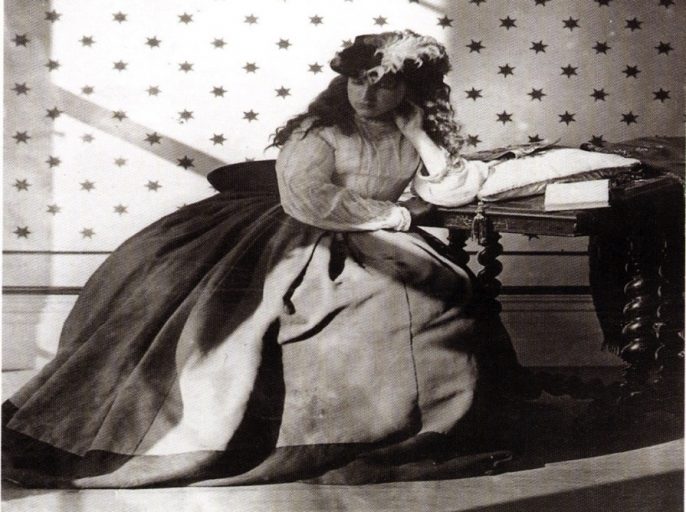
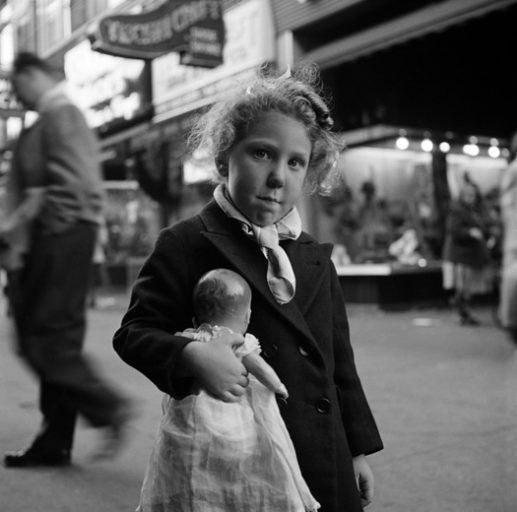
Lady Clementina Hawarden photographed members of her family, especially her daughters, in the domestic interiors of her South Kensington home during the 1850s and 1860s. The Victoria and Albert Museum notes that her surviving work frequently uses natural light, mirrors, windows, elaborate clothing, and staged tableaux, creating images that are simultaneously intimate and theatrical (Victoria and Albert Museum, n.d.). These features complicate any reading of the women as passive objects. The subjects participate in a family photographic practice in which pose, costume, reflection, and domestic architecture turn femininity into something performed and examined. The contemporary gallery image paired with Hawarden similarly presents a young woman through controlled pose and setting, but it appears after more than a century of advertising, fashion photography, feminist criticism, and debate about the gaze. A lowered eye, partially hidden body, or uncertain expression should not automatically be read as weakness or seduction. Such gestures can also withhold emotional access from the viewer. The pairing therefore reveals continuity in the visual staging of femininity while showing how the meaning of the pose changes across historical contexts.
Bruguière, Essaydi, and the Politics of Looking
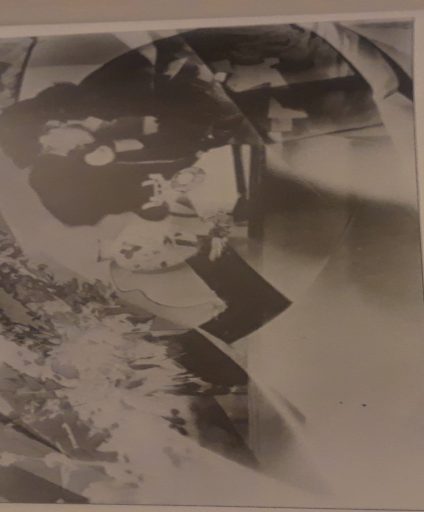
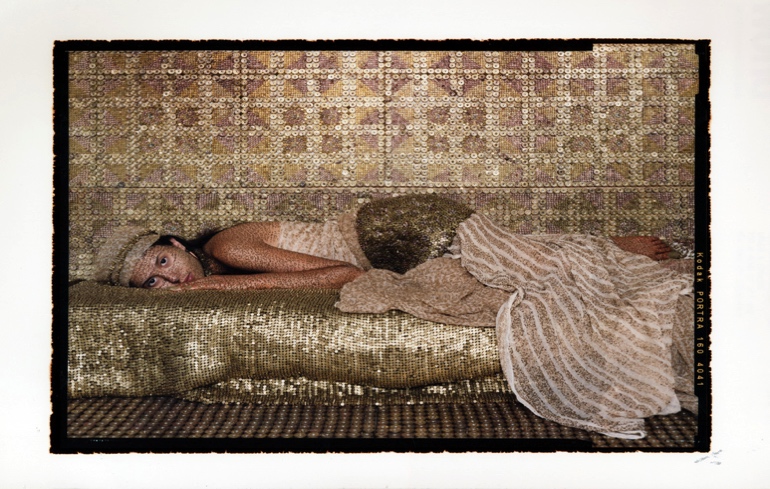
Francis Joseph Bruguière’s Woman on Phone turns an everyday act of communication into a modernist study of body, technology, and tonal contrast. The telephone connects the female subject with a world beyond the room, suggesting mobility, intimacy, work, or social independence, while the photograph’s lighting and framing still invite the viewer to scrutinize her appearance. Describing her gesture as naturally manipulative or seductive would place responsibility for the viewer’s desire on the woman rather than on the image’s construction. Lalla Essaydi’s staged photography offers a more explicit challenge to this tradition. Her works frequently place women in patterned interiors and cover bodies, garments, or walls with Arabic calligraphy written in henna, appropriating a form historically associated with male authority (National Museum of Women in the Arts, n.d.). Essaydi responds to Orientalist representations that imagined North African and Middle Eastern women as silent, exotic, and sexually available. Her subjects often confront or calmly withhold themselves from the viewer. Paired together, the photographs show how visual beauty can both participate in and criticize systems that organize women as objects of observation.
Castle Rock, Rephotography, and Industrial Modernity
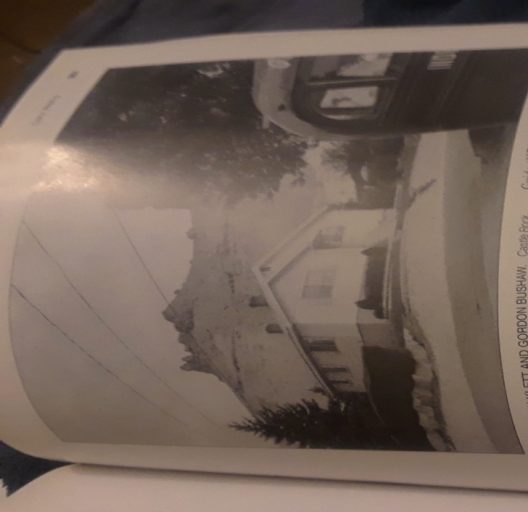
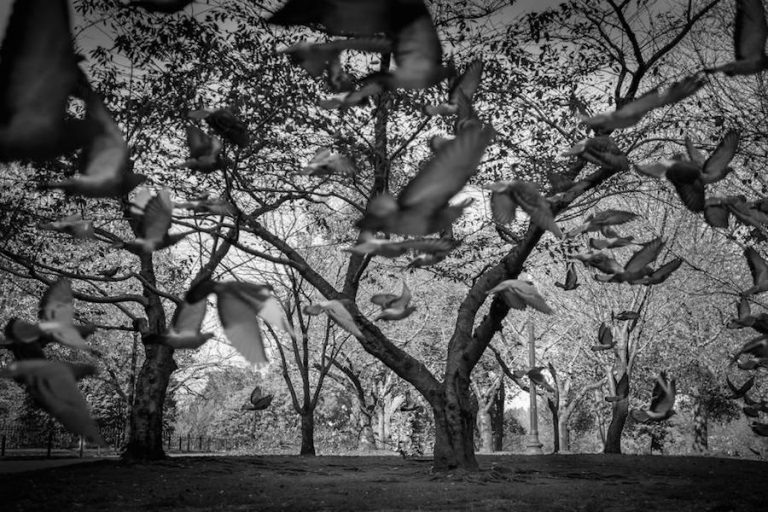
The pairing of Castle Rock by Mark Klett and Gordon Bushaw with the Sowa artwork shifts the discussion from gendered portraiture toward landscape, industrial material, and historical modernity. Klett’s rephotographic practice is associated with returning to locations documented by earlier western survey photographers so that viewers can compare historical and contemporary views of the same land. Such images make change visible through roads, erosion, development, vegetation, tourism, or other traces of human activity. They also complicate the older idea of the American West as empty territory awaiting possession, because photography itself participated in survey, expansion, and national mythmaking. The Sowa work, described in the assignment as incorporating surplus polyolefin, places manufactured material beside the apparently natural landscape. This contrast does not produce a simple nature-versus-industry opposition. The photographed land is already embedded in histories of measurement, infrastructure, settlement, and representation, while industrial surplus can be transformed into an aesthetic object that makes waste and production visible. Both works therefore reveal how modernism reorganizes space, material, and the viewer’s sense of historical time.
Uelsmann, Combe, and Constructed Masculine Authority
Jerry Uelsmann’s photography demonstrates that the medium does not have to represent one continuous event in front of the camera. Through darkroom combination of multiple negatives, he produced dreamlike spaces in which landscapes, interiors, bodies, and objects merge into symbolic environments. This technique turns photographic realism into a constructed psychological world and makes questions of identity, memory, and authority visible through montage. The Peter Combe image paired with Uelsmann similarly invites attention to the way male identity is assembled through visual codes. A man positioned at a desk, surrounded by tools, architecture, repeated fragments, or signs of intellectual labor may be interpreted as thoughtful or powerful because Western portrait traditions have repeatedly associated masculinity with action, possession, knowledge, and public work. Those meanings are no more biologically natural than the elegant or vulnerable femininity assigned to women in other photographs. The comparison demonstrates that masculine authority is also performed through setting, posture, objects, and photographic technique. Modernist experimentation can reinforce those codes, but it can also expose their artificiality by making construction itself impossible to ignore.
The Viewer, Gender Power, and Modernist Visual Language
Power in photography is distributed among photographer, subject, institution, and viewer. The photographer selects framing, exposure, timing, and the final image; the subject may cooperate, perform, resist, or withhold; museums and galleries shape captions, sequence, and cultural value; and viewers interpret what they see through assumptions about gender, race, class, beauty, authority, and history. Berger’s observation that Western visual culture often positions men as actors and women as appearances helps explain why similar gestures can be interpreted differently depending on the subject’s gender (Berger, 1972). Mulvey’s theory of the gaze further clarifies how visual systems can align spectatorship with masculine desire, even though her original argument focused on cinema (Mulvey, 1975). Modernism across these photographs is not one uniform style. It appears through tonal abstraction, technological objects, staged bodies, montage, rephotography, industrial materials, and disrupted perspective. Contemporary artists can reuse those visual languages while questioning who historically possessed the authority to create, look, speak, or define beauty. Comparative analysis therefore turns familiar visual conventions into objects of criticism rather than accepting them as neutral descriptions.
Conclusion
The four photographic pairings demonstrate that gender power and modernism are created through visual conventions, historical context, and the position assigned to the viewer. Hawarden’s domestic tableaux and the contemporary gallery image show femininity as staged through interior space, clothing, gesture, and self-presentation rather than as a natural essence. Bruguière’s Woman on Phone and Essaydi’s staged work connect women with modern communication, language, and competing forms of spectatorship, with Essaydi directly challenging Orientalist traditions that rendered women silent and available. Klett and Bushaw’s Castle Rock and the Sowa artwork reveal how landscape and industrial material both carry histories of modernization, possession, waste, and representation. Uelsmann and Combe show that masculine intellect and authority are also visually constructed through montage, setting, objects, and pose. The comparison therefore should not conclude that women are naturally seductive while men are naturally rational or powerful. Photography helps produce those categories. Its critical potential lies in making the construction visible and allowing subjects, artists, and viewers to question who controls meaning.
References
Berger, J. (1972). Ways of seeing. BBC and Penguin.
Butler, J. (1990). Gender trouble: Feminism and the subversion of identity. Routledge.
Fineman, M. (2021). The new woman behind the camera. National Gallery of Art and Metropolitan Museum of Art.
Mulvey, L. (1975). Visual pleasure and narrative cinema. Screen, 16(3), 6–18.
National Museum of Women in the Arts. (n.d.). Lalla Essaydi.
Solomon-Godeau, A. (1991). Photography at the dock. University of Minnesota Press.
Victoria and Albert Museum. (n.d.). Lady Clementina Hawarden.
Cite This Work
To export a reference to this article please select a referencing stye below:

Academic Master Education Team is a group of academic editors and subject specialists responsible for producing structured, research-backed essays across multiple disciplines. Each article is developed following Academic Master’s Editorial Policy and supported by credible academic references. The team ensures clarity, citation accuracy, and adherence to ethical academic writing standards
Content reviewed under Academic Master Editorial Policy.





