
Electricity costs will not go down anytime soon. These costs are going up every day. Plus, they are going up as the electricity supply is starting to become increasingly reliant on the various types of natural gas-fired turbines. Also, in the U.S., there are 300 gas-fired plants expected to be linked to the grid throughout the next ten years. Simultaneously, the national natural gas assembly is projected to crest in 2015, with the Canadian manufacturer in 2006 and the Columbian manufacturer in 2014.
The remaining natural fuel assets will be unevenly distributed across certain areas of the world, such as the Middle East. In this setting, a continual rise in the market value of natural gas is almost unavoidable.
That being said, it makes sense to shift to energy sources. It is evident that all of these sorts of sources are not most of the time subject to marketplace assessing to resources. Research shows that wind is a great source and is plentiful in the state of Georgia. Also, the cost of wind-generated energy is a function of the price of wind equipment and other infrastructure essential to creating a wind farm. As soon as these capital expenses are taken care of, the energy basis alone, wind, is something that is more than free. In this situation, a wind farm is, of course, a type of protection policy for those who come from families that do not have a lot of money.
This development creates a foundation for businesses operating with partner utilities so that they can shift from treating those from low-income communities as passive consumers of power to active designers of power. By developing wind-produced power, the low-income public will be able to gain access to cost-based energy, escaping the fluctuations of the natural gas marketplace.
Target Populace
This project will target LIHEAP-qualified families that heat their houses with electricity.
According to a report prepared for Atlanta Power, there are 300,000 LIHEAP-qualified families in Georgia. A lot of these families include members who are vulnerable to heat or cold:
- 79,382 consist of an old person
- 74,334 take in a disabled individual
- 71,312 consist of a child that is six years old or even younger
These statistics are based on Georgia’s LIHEAP income limit of 125% of the Federal Poverty Guidelines. With a 150% standard, each of the statistics above doubles.
Last year, 4,300 families received LIHEAP, which left 300,000 qualified families (79%) without assistance. Because of historically low-assessed hydro-electric control, most of the low-income families (80%) heat with electricity sooner than natural gas (190%), with the equilibrium of them using some wood, emollient, and other coals.
Even though Georgia at one time had some of the lowest-priced electricity in the country, since 1980, charges have doubled, even after adjusting for price increases. And from 1999 to 2002, residential rates saw a rapid increase of 25%. This minimizes the question since the rate proliferations have been uneven across the state, with some parts.
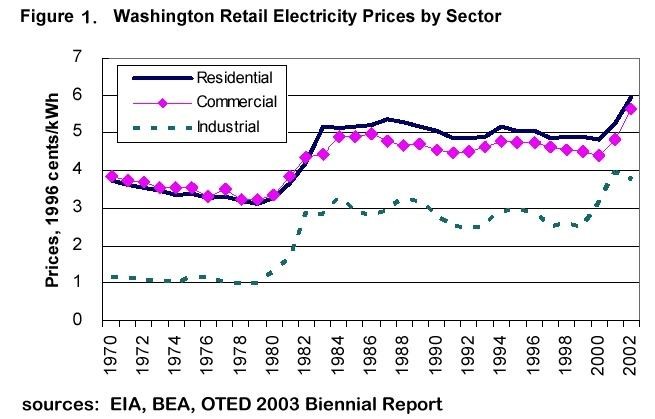 Some areas experienced significantly larger increases.
For instance, Gwinnett County is described as the primary public utility region in the state.
From November 2013 to the present, it raised housing rates by 50%.
When rates change with such instability, low-income families are likely to be left stranded. High- and middle-income families have switched to gas heat. Research shows that of new single-family housing buildings, just 8% are all-electric, as stated by a June 13, 2008, editorial in the Atlanta Post-Intelligencer. Also, even though 63% of Georgia homes are heated with electricity, fully 73% of low-income homes have electric heat. As often happens, low-income families have been left marooned in older housing stock designed for the energy markets of 30 years ago.
Converting electrically heated homes to gas heat would appear to be an answer to electric-rate unpredictability. There are more than a few programs in the nation that are taking this approach, as well as the state’s heating programs when a household’s heating system is in such bad condition that it must be replaced. Nevertheless, such changes are expensive.
 They must be balanced against the need for energy assistance.
A massive conversion program was announced in June 2014 by Water, Gas, and Light, which is the primary utility in the state. Water, Gas, and Light estimates that it will convert between 39,000 and 40,000 electrically heated households to gas. Specified that some all electric homes in Georgia were positioned at 1.3 million by the 2017 US Census, even a “significant” service is a drop in the bucket. Also, the program is incentive-based, with $160 refunds on heaters and $27 on gas. Nevertheless, a $165 incentive on a conversion that could cost around $1,700 to $3,000 is not large enough to make much of a difference to many low-income households. Likewise, 76% of low-income households are renters. Naturally, they handle utility bills, so there is little incentive for property owners to convert heating systems to gas heat.
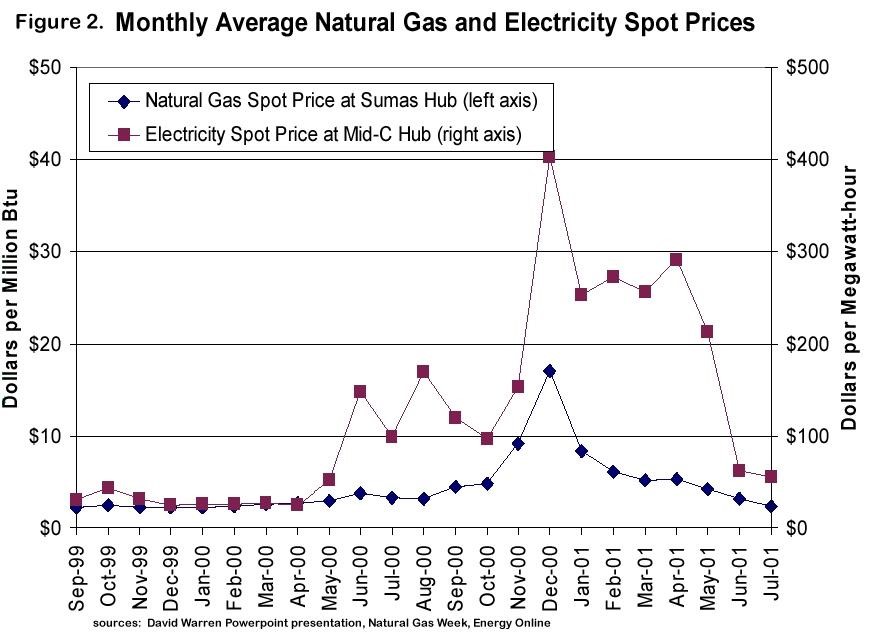
All households that are low-income could be transformed to gas heat, but the difficulty would not be resolved: Water, Gas, and Light just raised gas fees by 19% in March 2011. Even more, the gas has become tangled in Georgia. A lot of the new electric generation plants in Georgia are gas-fired. Thus, natural gas charges have themselves become more volatile, and conversion to gas heat no longer offers the low-cost, stable utility bills that it once did. More and more, the price of natural gas is connected to the amount of electricity. Also, Figure 2 displays how gas is a natural value. Georgia State has started to track some of the electricity bills (U.S. Energy Information Administration, n.d.).
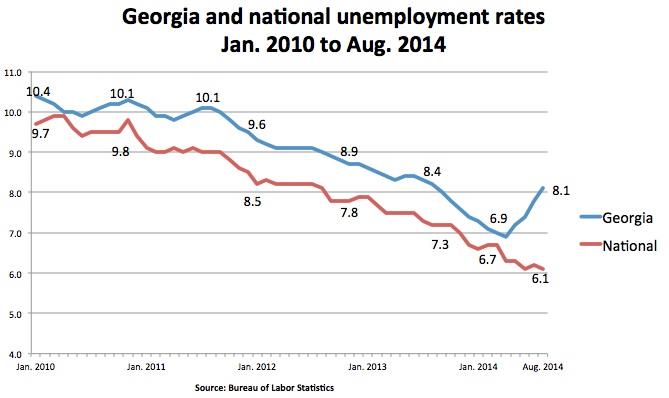
Even as residential energy prices are increasing, Georgia’s service outlook is dimming. A US Agency of Labor Figures report for May 2013 displays Georgia with the second uppermost joblessness rate (8.3%) of some states. The nationwide rate for the same era was around 5.0%. Georgia is hard-hit when it comes to the loss of high-paying jobs at the airport. Because of cutbacks in the airline industry following the terrorist attacks that took place on September 11, 2001, Delta has been forced to lay off 43,790 employees over the previous 19 months and plans more reductions.
Delta is likewise facing fierce competition. On July 20, 2013, the AP described,
“Plane builder Continental gained a $4.2 billion order for up to 35 planes, all of which came from the Gulf carrier Qatar Airways in the recent past, grabbing added deal from Delta until the earlier week, the air company was seeing its first acquisition of Boeing aeroplanes.” Because Boeing is a huge employer in what is known as the Puget Sound region, the decrease in these high-disbursing occupations has a negative wave effect all over the range.
In that case, households are squeezed by increasing electricity rates and negative job growth.
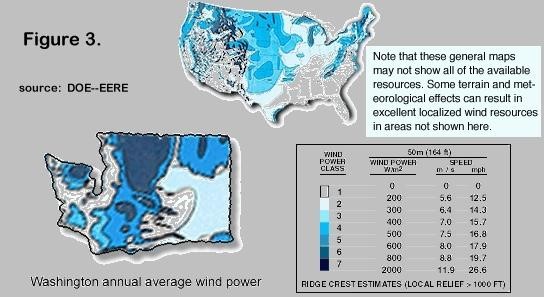
A recently completed wind map shows that Georgia compares positively with other states’ available wind resources. In Decatur County, the State Line Development (the major wind development on the planet) has revealed that wind power is inexpensive compared with fossil fuels. Expertise and obliging buying control have brought down the price of wind turbines.
Federal and state legislation has increased incentives for emerging renewable sources of power. Research shows that the wind business is well-positioned for rapid development.
Assumptions
There are many assumptions we have made about the requirements of our target population and the financial environment surrounding them. The first is that the LIHEAP-qualified population is not going to decline. In fact, we believe that the high rate of unemployment is projected to continue through at least the spring of 2015. Our second assumption concerns the amount of funding for federal and state energy assistance programs. LIHEAP services will decrease, again raising the need for our proposed system. Our third supposition is that prices for non-renewable electricity-producing resources (natural gas, coal) will increase over time.
Synopsis of Assumptions/Difficulties to be Discussed
- Demand for LIHEAP far exceeds the available assistance. 90% of families that are eligible for LIHEAP are not even getting it at all. A lot of these families consist of susceptible members.
- Electricity charges have risen abruptly, getting rid of a lot of the gains created by the expansion of new nonfederal energy aid reserves.
- 83% of Georgia’s low-income families heat with power.
- Conversion from electric heating to natural gas heating is expensive.
- Gas is increasingly used to produce electricity, connecting the price of natural gas to electricity prices and causing them to rise together.
- Gas fees are likely to continue rising as production in Mexico and North America starts peaking over the next decade.
- Conversion to gas is, at best, part of the solution for low-income homes stranded in housing constructed for the energy markets of 30 years ago.
Low-Income Addition in Preparation Development
From the opening, this project has been calculated as a cooperative project among the Georgia Subdivision of Public, Trade and Financial Expansion and Georgia State Connection Public Action Corporation. Involvement in the community, as well as the direct participation of low-income legislatures, has been constructed in the development. The project Direction-finding Group has widely held representation from Public Action Interventions, whose panels of managers may have a one-third low-revenue association. As associates of the Steering Group, low-income delegates will have an ongoing role in developing the project and endorsing essential changes. Every one of the thirty power plants associated with this development, under the organization of power plants, has studied the project suggestion all the way through the development directing to submittal to DHHS, plus it is the chance to give submissions in regards to the design of the project.
Authorization Region/Creativity Community Deliberation
As perceived above, Georgia has the second-highest joblessness rate in the country. Our first intervention will be in the Atlanta region, where the unemployment rate is 48% higher than that of the state. Other regions targeted because they have high wind resources also have high unemployment rates:
- Atlanta 14.3%
- Macon 11.1%
- Albany 12.0%
Furthermore, in 2012, Albany was appointed as one of 32 Regeneration Groups by HUD and will keep the title until 2019. “Renewal Public” is an extra description of the Empowerment Zone/ Business Community service. The unemployment rate in Albany’s Renewal Community is 30%. Constructing a wind farm in Albany would offer good-paying jobs throughout the development process and also offer lower-cost energy to lower-income Albany families in the end. Albany Valley OIC and Southwest Community Action Center have looked over this application and are development associates through the Atlanta State Public Action Company.
In Dougherty County, part of Georgia, there is a centralized innovative community, and it was chosen as a regeneration community in 2012. Joblessness in Albany’s Regeneration Community is 20 per cent of the families in part discovered as those that were in the low-income variety. Pierce County’s CSBG entities were active members in Reach I, working with Albany Power to acquire a new low-income energy aid system. Georgia County looked over this application and will be the partner with the objects in Georgia County.
Project Plan and Strategy:
Interventions, Results, Objectives, Effect
Philosophy
The development makes the low-income public active designers of power instead of merely passive consumers of power. To get away from the volatility of market-priced energy sources, the project emphasises wind, a cost-based energy resource widely available in Georgia.
Assignment and Influence
The development’s mission is to raise the self-adequacy of the low-revenue family unit by safeguarding stable energy sources and adding noncentral energy aid through contributions to rolling the plan out of the wind power business in Georgia State.
Final Objectives
The assignment can be achieved by carrying out the following objectives:
- In collaboration with LIHEAP, they came up with about 13 megawatts of wind power, which were all dedicated to households that are of low income. These 13 megawatts will be shaped by amenities with a valuable life of two decades.
- Raise utility aids toward bringing down energy loads by gaining grants for wind expansion devoted to low-income relations.
- Decrease the energy load of 13,000 LIHEAP-qualified families by 19%
- The 13,000 target families had a lower cut-off by 19%.
- The 11,000 aim households raise the regularity of expenditures by 25%.
- The 13,000-aim household unit decreases flexibility by 10%.
- Improve the safety and health of vulnerable families by reducing the energy load for 4,600 families that include an ageing individual, 3,000 families that include a disabled individual, and 2,800 families that include a young child.
NOTE: Each of the benefits listed in Objectives 3-7 above will be attained yearly for about 20 years, the useful life of a wind turbine facility.
References
U.S. Energy Information Administration. (n.d.). Georgia electricity profile. https://www.eia.gov/electricity/state/georgia/
Cite This Work
To export a reference to this article please select a referencing stye below:

Academic Master Education Team is a group of academic editors and subject specialists responsible for producing structured, research-backed essays across multiple disciplines. Each article is developed following Academic Master’s Editorial Policy and supported by credible academic references. The team ensures clarity, citation accuracy, and adherence to ethical academic writing standards
Content reviewed under Academic Master Editorial Policy.





