
Introduction
If one talks about number theory, Fermat’s Last Theorem, which is at times also known as Fermat’s conjecture, states that there are no positive integers (Krantz and Parks, 2014) that can make sure that a, b, and c satisfy the equation an + bn = c, especially when the value of the integer is greater than 2 (Cornell et al. 2013). The cases where n = 1 or n = 2 do seem to have many solutions that pertain to the overall antiquity of the equation (Cornell et al., 2013). Fermat’s Last Theorem was first conjectured by Pierre de Fermat during the early 17th century and was written in the margin of a copy of the Arithmetica (Cornell et al. 2013). In this conjecture, the proof was said to be too large to fit into the margin (Cornell et al., 2013). The first successful proof of the conjecture was released in 1994 and was done by Andrew Wiles. It took about 358 years of effort by mathematics experts (de Fermat et al. 2001). This paper will examine the relevance of Fermat’s Last Theorem, the background of Fermat, and why solving this theorem is considered one of the major breakthroughs in mathematics (Cornell et al. 2013).
Background of Pierre de Fermat
Fermat was born during the early 17th century. He was originally from Gascony, where his father was a well-known leather merchant (Cornell et al. 2013). On the other hand, his mother’s name was Claire de Long. Pierre had one brother and a couple of sisters, and as far as the evidence of his earlier education is concerned, even though not much is known, there are certain sources that point out that he received his early education at the College de Navarre (de Fermat et al. 2001).
Fermat’s Refusal to Publish his Work
There was something unusual about Fermat that stopped him from publishing his work (de Fermat et al. 2001). As a matter of fact, some of his friends feared that all of his contributions and work were going to be forgotten soon if nothing was done about it (Cornell et al. 2013). It was his son Samuel who took on the task of making sure that he collected all the work that was carried out by Fermat (Cornell et al. 2013). His son made a gigantic effort to collect all the work done by Fermat, including all the mathematical papers (Cornell et al. 2013). There were numerous comments that were written as notes in the books (Cornell et al. 2013). Samuel made sure that he published all the work that was done by his father. It was during this effort that the infamous last theorem emerged and was published. The way it was found is also interesting, as Samuel wrote about the whole thing in the form of a note in the copy of his father’s manuscript (Stewart and Tall, 2001).
Subsequent Development and Efforts about the Solution of the Theorem
The special case where n = 4 was proved by Fermat himself. What it does is that it just about suffices the whole point of the theorem for exponents of. n that are prime numbers (Cornell et al. 2013). It has to be noted that this direction is at times considered trivial to prove completely at each and every level. During the course of the next two centuries, the conjecture was proven for only a few prime numbers, including 3, 5, and 7. It has to be noted that Sophie Germain innovated and provided an approach when it came to the relevant classes of primes and narratives (de Fermat et al. 2001). In the middle of the 19th century, there was an extension of the premises of the theorem when Ernst Kummer extended the whole premises of the theorem to all regular primes considered during the given time period (Cornell et al. 2013). The idea given by Ernst Kummer was to make sure that all irregular primes were left out and that the exercise was carried out at the individual level (Cornell et al. 2013). Further building on the work done by Kummer, as well as making use of computational studies, other mathematics experts were able to make sure that all the prime exponents up to four million were covered (de Fermat et al. 2001). The problem with this approach, though, was that more or less all the exponents were inaccessible to proof (Brown and Freedman, 1990). Inaccessible proof in mathematics means that mathematicians deem the proof to be impossible (Brown and Freedman, 1990).
Pierre de Fermat
Pierre de Fermat was a French lawyer and mathematician. One of the earliest proofs of his greatness is the fact that he is given a lot of credit for the early development of infinitesimal calculus (Cornell et al., 2013). The other technique that was used by him was adequality, which later played a major part in the advancement of mathematics as a subject (Cornell et al., 2013). But the thing for which he is generally regarded and well known is the discovery and the method of finding the largest and smallest ordinates of curved lines (Brown and Freedman, 1990). These lines are analogous to the way differential calculus is carried out. Later on, this research was witnessed in some of the other number theories (Jones et al., 1998). Not only that, but he is also credited for the introduction of Fermat’s principle, which was used for light propagation for a long period of time (Brown and Freedman, 1990).
Overview of the Theorem
If one looks at the overview and overall history of the theorem, one has to actually have an understanding of its Pythagorean origins (de Fermat et al. 2001). The equation goes something like this:
x2 + y2 = z2,
This equation has a number of positive integer solutions for all the corresponding variables. These solutions are well known as the Pythagorean triples (de Fermat et al. 2001). Now, in 1637, Fermat wrote in the margin of the book about the more general version of the equation, which was:
an + bn = cn
This equation had no positive integer solutions if the value of n as an integer was greater than 2. He claimed that he knew the proof for this general conjecture (Cornell et al. 2013). The key aspect that needs to be noted here is that there was no proof for this conjecture. As a matter of fact, there are large numbers of people who claim that no proof of this whole equation was ever found (Cornell et al. 2013). The interesting part is that his claim was discovered about three decades after his death (Brown and Freedman, 1990). This was the claim that was later known as Fermat’s Last Theorem, and it was three and a half centuries before the eventual solution to this claim was reached. The claim became one of the most well-known unsolved problems in mathematics (GROOS et al. 2016). There were many attempts that was carried out to make sure that a prompt solution to the theorem could be found (Cornell et al. 2013). There were many attempts carried out to ensure the substantial development of the theory (Cornell et al. 2013); the claim and theorem became well known as one of the basic problems whenever there was a discussion about number theory (Brown and Freedman, 1990).
Pythagoras and the Diaphanous
If one looks at ancient times, it can be seen that the Pythagorean theorem was the one that could be closely related to this theorem (Brown and Freedman, 1990). The idea is that a triangle whose sides were supposedly arranged in the ratio 3:4:5 is likely to have a right angle as one of its angles (Cornell et al. 2013). It was used mainly in construction, and its usage was also seen in geometry. In ancient times, there was another discovery that pointed out that there is one example and rule: any triangle where the squares of the lengths of two sides are added together (32 + 42 = 9 + 16 = 25) is going to be equal to the square of the third side. It is also going to be shaped in the form of a right-angled triangle (Cornell et al. 2013). Fermat’s Last Theorem looked at this equation in the sense that, for powers other than 2, there was a strong likelihood that many triples would be used in solving the equation (Brown and Freedman, 1990). The equation is going to be solved for n > 2. In this case, there is no solution other than the trivial solution x = y = z = 0 that exists when the exponent of two is replaced by any larger integer, to say the least (Brown and Freedman, 1990).
Statements that Equate the Theorem
If one talks about the range of alternatives that are going to stand in terms of the development of the equation, the key thing that needs to be noted here is how the mathematical equivalent is going to be there for the original statement of the problem (Brown and Freedman, 1990). To make sure that they are stated in the correct manner, mathematical notation is used (Brown and Freedman, 1990). Now, let N be the set of natural numbers such as 1, 2, 3, and let Z be the set of integers such as 0, ±1, ±2. Let Q be the set of rational numbers (Brown and Freedman, 1990), a/b where a and b are in Z with b≠0. The subsequent solution that is going to be followed in this case is going to be written in the form of. xn + yn = zn. The key thing that needs to be noted here is how x, y, and Z are going to be zero or trivial solutions (Darmon et al. 1995). To make sure that the comparison is being carried out in the right manner, it would be a good idea to start with the original formulation (Cornell et al., 2013). The original statement related to the theorem is based on the fact that, with n, x, y, z ∈ N, all the sets of positive numbers are going to be followed into the whole number (Cornell et al. 2013). In these cases, n > 2 and the equation xn + yn = z is not going to have any solution, to say the least. In the same context, the equivalent statement is going to be written in the format. xn + yn = zn, where the integer is either going to be three or equal to 3, and there are not going to be any nontrivial solutions for. x, y, z ∈ Z.
Wile’s Proof of Fermat’s Last Theorem
Now, coming toward the subsequent solution and proof of the last theorem, the proof of this theorem is credited to Andrew Wiles (Cornell et al. 2013). It is about the special case of the modularity theorem that is related to elliptic curves (Darmon and Merel, 1997). When looked at together with the theorem that was given to Ribet, the solution is going to provide proof regarding Fermat’s Last Theorem (Brown and Freedman, 1990). Looking at the way the theorem works, the idea is how the modularity theorem is going to work out and how, at times, it is universally considered inaccessible to proof by all the major mathematics experts (Cornell et al. 2013). The solution and proof of the theorem are considered a major achievement in mathematics history due to the fact that it was considered almost impossible to prove the theorem with the existing knowledge, to say the least (Brown and Freedman, 1990).
Techniques Used by Wile While Proving Theorem
There were many techniques used by Wiles during the course of proving this whole theorem (Brown and Freedman, 1990). The techniques related to algebraic geometry and number theory were the ones that were extensively used, along with some other ramifications related to the branch of mathematics (Cornell et al. 2013). Not only that, but it also uses the standard constructions related to the way modern algebraic theory is going to work out (GROOS et al. 2016). The category of schemes and Iwasawa theory was also witnessed during the whole time period (Brown and Freedman, 1990). The manuscript of the proof is about 129 pages long (Cornell et al. 2013). The construction of the proof took about seven years for Wiles, and he had to dedicate considerable research time during the course of the whole event (Adleman and Heath-Brown, 1985). As soon as the proof was done, it was regarded as one of the major achievements in number theory (Adleman and Heath-Brown, 1985). The path that was taken by Wiles to prove the theorem was based on how the modularity theorem was being taken care of. There was a special case of the semistable elliptic curve being formulated (Adleman and Heath-Brown, 1985). At the same time, the proof also made use of modularity lifting techniques as well as opened entirely new approaches related to a host of other problems that were witnessed in the same time period (GROOS et al. 2016). For solving Fermat’s Last Theorem, he was knighted (GROOS et al. 2016).
Mathematical Detail of the Proof Provided by Wile
While proving the theorem, an attempt was made by Wiles to make sure that the elliptic curves were used so that the countable set of modular forms could be used (Cornell et al. 2013). He was able to determine that the direct approach was not going to work in the case of this theorem (GROOS et al. 2016). Wiles denoted the more specific ring homomorphism, which was denoted as something like this (Brown and Freedman, 1990).
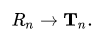
Wiles had decent insight into the fact that, in most cases regarding ring homomorphism, there is a likelihood of ring isomorphism (Cornell et al. 2013). There was also a realization on his part that the map that exists between R and T is an isomorphism (GROOS et al. 2016). This phenomenon is called a numerical criterion (Brown and Freedman, 1990). When this result was given, the whole premise of the Last Theorem was reduced to the statement that the two groups were going to have the same order (Cornell et al. 2013). Wiles was able to define four cases with flat deformation, and each of the cases required more effort and time on the part of the user to prove how they were treated in the separate article that is witnessed in the same volume for the entitlement of the ring-theoretic properties that are witnessed in the Hecke algebras (Brown and Freedman, 1990).
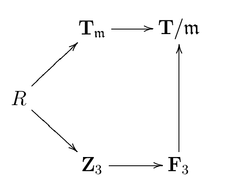
General Approach and Strategy
Given an elliptic curve that exists over the E field over the Q of the rational numbers E(Q) for every prime power.
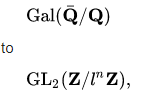
In this case, it can be seen how the invertible elements are linked with two-by-two matrices whose entries are integers that exist in the line of the.  . This is witnessed due to the fact that the subsequent points related to the integer E (Q), which seem to point to the E cover Q, form the abelian group. This is exactly where the premises of the.
  are supposed to act.

The main idea that needs to be noted here is that this is the Galois group and how it acts first on the basis of the modular curve, which is the basis on which the modular form is going to be defined (Darmon and Merel, 1997). Hence, this is how the interpretation of the Jacobian variety is going to be witnessed (Darmon and Merel, 1997). The final thing that needs to be noted is how.  is the power order that is witnessed in the Jacobian (Adleman and Heath-Brown, 1985). The resulting representation, in this case, is not going to be two-dimensional (Adleman and Heath-Brown, 1985). The main idea that is involved is how the interplay between mod 2 and mod 5 is represented (Adleman and Heath-Brown, 1985).
Conclusion
Pierre de Fermat is known as one of the most influential mathematicians. Though he did a wealth of work in the field of law, the thing for which he is most well known is the Last Theorem (Adleman and Heath-Brown, 1985). The surprising thing about him is that during the course of his life, he published only one paper. The theorem was one of the greatest challenges for ancient and contemporary mathematicians. It was not until 350 years after the theorem was presented that its subsequent solution and proof were carried out by Wiles (Adleman and Heath-Brown, 1985).
Works Cited
Adleman, L. M., and D. R. Heath-Brown. “The first case of Fermat’s last theorem.” Inventiones mathematicae 79.2 (1985): 409-416.
Brown, Tom C., and Allen R. Freedman. “The uniform density of sets of integers and Fermat’s Last Theorem.” CR Math. Rep. Acad. Sci. Canada 12 (1990): 1-6.
Cornell, Gary, Joseph H. Silverman, and Glenn Stevens, eds. Modular forms and Fermat’s last theorem. Springer Science & Business Media, 2013.
Darmon, Henri, and Loıc Merel. “Winding quotients and some variants of Fermat’s last theorem.” Journal fur die Reine und Angewandte Mathematik (1997): 81-100.
Darmon, Henri, Fred Diamond, and Richard Taylor. “Fermat’s last theorem.” Current developments in mathematics 1.1 (1995): 157.
dDeFermat, Pierre. “Fermat’s Last Theorem.” 2001
GROOS, DYLAN, NATALIE SCHUDROWITZ, And KENNETH BERGLUND. “FERMAT’S LAST THEOREM.” (2016).
Jones, Gareth A., and J. Mary Jones. “Fermat’s Last Theorem.” Elementary Number Theory. Springer, London, 1998. 217-237.
Krantz, Steven G., and Harold R. Parks. “Fermat’s Last Theorem.” A Mathematical Odyssey. Springer, Boston, MA, 2014. 309-338.
Stewart, Ian, and David Tall. Algebraic number theory and Fermat’s last theorem. AK Peters/CRC Press, 2001.
Cite This Work
To export a reference to this article please select a referencing stye below:

Academic Master Education Team is a group of academic editors and subject specialists responsible for producing structured, research-backed essays across multiple disciplines. Each article is developed following Academic Master’s Editorial Policy and supported by credible academic references. The team ensures clarity, citation accuracy, and adherence to ethical academic writing standards
Content reviewed under Academic Master Editorial Policy.





