
Introduction
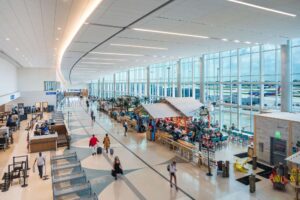
My trip to Fort Lauderdale began at Fort Lauderdale-Hollywood International Airport, where the practical details of arriving in an unfamiliar place immediately became part of the travel experience. Before leaving the terminal, I checked the airport layout rather than relying on memory or an old travel page. FLL has four numbered passenger terminals, not Terminals A through D: Terminal 1 serves Concourses A, B, and C; Terminal 2 serves Concourse D; Terminal 3 serves Concourses E and F; and Terminal 4 serves Concourse G. The Terminals map Fort Lauderdale Airport helped me understand how gates, baggage claim, parking, and ground transportation fit together, although travelers should always verify their airline because assignments can change. That small act of preparation made the beginning of the trip calmer. After collecting my luggage and stepping outside, the warm, humid air and bright South Florida light made the transition from airport routine to vacation feel immediate. The palms, traffic, and coastal atmosphere signaled that I had reached a place whose identity would be shaped by water throughout the trip.
The Beach Set the Pace of the Trip
My hotel near Fort Lauderdale Beach gave me a first view of the Atlantic that was more memorable than any map or travel description. From the room, the coastline stretched beyond the immediate buildings, and the movement of waves created a contrast with the steady flow of traffic, pedestrians, cyclists, hotels, and restaurants along the beachfront. I spent much of my first day swimming, walking near the shoreline, and resting under an umbrella rather than trying to fill every hour with scheduled attractions. That slower pace was important because the purpose of the vacation was not simply to collect destinations. The beach also reminded me that recreation requires attention to conditions. Warning flags, lifeguard instructions, weather, currents, and heat can change what is safe from one day to another, so I stayed near supervised areas and treated the ocean as an environment rather than as a controlled swimming pool. The mix of activity and calm—people exercising, playing, reading, talking, or simply watching the water—made the beach feel like a shared public space rather than an isolated resort amenity.
Fort Lauderdale Changed After Sunset
In the evening, I explored the social side of the city through restaurants, live music, and a rooftop bar. The view after dark transformed the landscape I had seen during the day: the ocean receded visually while streets, buildings, restaurant terraces, and moving lights became more prominent. I enjoyed a cocktail, listened to live music, and watched visitors and local residents share the same entertainment space without needing a formal event. What made the evening memorable was not simply nightlife but the change in atmosphere. During the day, my attention had been directed outward toward water, sky, and beach. At night, sound, lighting, conversation, and hospitality became central. I also became more aware of the practical side of tourism. Bars and restaurants are workplaces, nearby districts include residents as well as visitors, and transportation needs to be planned responsibly when alcohol is involved. Arranging a safe ride and keeping the evening relaxed made the experience enjoyable without turning entertainment into unnecessary risk. The city felt energetic, but it did not require excess to be interesting.
Seeing the City From the Water
The Intracoastal Waterway boat tour changed my understanding of Fort Lauderdale more than any single road journey could have done. From the water, the city appeared as a network of canals, bridges, docks, marinas, waterfront homes, restaurants, commercial vessels, and recreational boats. Large houses and yachts were visually striking, but the tour became more interesting when I considered the infrastructure that makes that waterfront lifestyle possible. Navigable channels, seawalls, bridge operations, emergency services, marinas, boat repair, drainage, and water-quality management are working systems rather than scenery. The guide’s commentary helped connect individual buildings to geography and local history, turning otherwise anonymous properties into parts of a larger marine identity. A stop near a sandbar added a social, informal moment where visitors swam in shallow water and arrived on different boats. It also showed why responsible boating matters: fuel, waste, anchors, wake, and noise can affect water quality and habitat. Fort Lauderdale’s waterways support tourism and recreation, but they also carry environmental responsibilities that visitors can easily overlook when viewing them only as picturesque canals.
Bonnet House Added History and Art
A visit to Bonnet House Museum and Gardens introduced a quieter and more historical dimension to the trip. The property, associated with artist Frederic Clay Bartlett and his family, combines a distinctive house, studio spaces, courtyards, gardens, collections, and preserved coastal land. After the commercial energy of the beach and waterfront, walking through the site felt like entering a layered record of art, architecture, personal history, and preservation. I was especially interested in the studio because it made creative work feel like a process rather than a finished product displayed at a distance. Materials, working spaces, and artistic choices suggested experimentation and revision. The surrounding gardens were equally important because they showed how built and natural environments can coexist within a rapidly developed coastal region. Preservation also became part of the story. Historic places remain available only because people make legal, financial, and institutional decisions to protect them. The visit encouraged me to think beyond the twentieth-century house itself and to remember that South Florida has a much longer Indigenous and environmental history than the surviving estate can represent on its own.
A Wider Broward County Vacation
My final shopping trip to Sawgrass Mills, located in Sunrise rather than within Fort Lauderdale city limits, reminded me that vacations are often organized around a metropolitan region rather than one municipal boundary. The mall was completely different from the beach, canals, and historic house: it was an enormous commercial environment filled with outlet stores, restaurants, and visitors from many countries. I enjoyed looking for clothing, accessories, and souvenirs, but the scale of the center also made it easy to confuse a discount with a reason to buy something unnecessary. Choosing a few items deliberately made the visit more enjoyable than treating every sale as an obligation. Restaurants and hospitality workers throughout the trip also shaped my impression of the region. South Florida’s food scene reflects Caribbean, Latin American, Southern, seafood, and other influences, and trying unfamiliar local options added cultural context that chain restaurants could not provide. Hotel staff, drivers, servers, guides, performers, and shop employees were part of the travel experience too. Their work reminded me that tourism depends on everyday labor as much as on beaches, attractions, and architecture.
Conclusion
The trip taught me that Fort Lauderdale is most interesting when it is experienced through several relationships with place rather than reduced to a single image of sun and beach. The Atlantic provided the relaxation I expected, while the Intracoastal Waterway revealed a working marine city shaped by canals, boating, infrastructure, and environmental risk. Nightlife showed a more social and urban character, Bonnet House added artistic and historical depth, and Sawgrass Mills demonstrated how visitors move across the wider Broward County region during a vacation. Even the airport contributed a useful lesson: accurate travel information matters because a simple terminal mistake can create unnecessary confusion at the beginning of a journey. I would return with more time for Riverwalk, Las Olas Boulevard, local museums, and natural areas, but I would keep the same balance between planning and unstructured time. What made this vacation memorable was not racing through a checklist. It was the gradual discovery that water, history, tourism, hospitality, and everyday infrastructure all contribute to the character of Fort Lauderdale and shape how a visitor experiences South Florida.
References
Bonnet House Museum & Gardens. (n.d.). History of Bonnet House.
Broward County Aviation Department. (2025–2026). Fort Lauderdale-Hollywood International Airport terminal information.
City of Fort Lauderdale. (n.d.). About Fort Lauderdale.
Cite This Work
To export a reference to this article please select a referencing stye below:

Academic Master Education Team is a group of academic editors and subject specialists responsible for producing structured, research-backed essays across multiple disciplines. Each article is developed following Academic Master’s Editorial Policy and supported by credible academic references. The team ensures clarity, citation accuracy, and adherence to ethical academic writing standards
Content reviewed under Academic Master Editorial Policy.





