
Fucus And Ascophyllum
Ascophyllum is found at sites with low, moderate, and high waves, but it is predominantly found in mid to upper tidal heights. It grows upward, maximizing the absorption of sunlight for photosynthesis. It grows year-round; there is no resting period. Fucus is typically found in the upper mid-intertidal zone and is one of the most dominant species of algae. It is tolerant of a wide range of salinity levels. Some of their common characteristics are as follows:
- Ascophyllum grows upward by anchoring to hard substrates.
- Ascophyllum has ‘gas/air bladders’ called pneumatocysts that help with keeping afloat in the water.
- Fucus forms dense canopies that reach the upper intertidal zone. They become smaller and less dense the higher up they are. They also have gas/air bladders.
Intertidal Zone:
The intertidal zones of rocky shores are separated into four zones based on environmental factors and water levels at low and high tides, as well as the standard sea level (Tidal Zones). Splash Zone: Extends from the upper reach of sea spray and storm waves to the highest point of the average high tide. Organisms found in this zone: small barnacles, periwinkles, and ribbed limpets. Upper Intertidal Zone: Extends from the highest point of the average high tide to just below the standard sea level. Organisms found in this zone include acorn barnacles, hermit crabs, shore crabs, and black turban snails (Foster, 1982).
Splash Zone:
Few organisms can live in this zone due to the risk of desiccation and the threat of avian and mammalian predators. Mid Intertidal Zone: Extends from just below the standard sea level to the upper limit of the average low tide. Organisms found in this zone: various mussel species, giant green anemones, black leather chitons, sea palms, gooseneck barnacles, and coralline algae.
Low Intertidal Zone:
It extends below the upper limit of the average low tide. Organisms in this zone: kelp crabs, gumboot chitons, ochre sea stars, blue top snails, purple sea urchins, and various species of sponges.
Mid Intertidal Zone: The most biodiverse intertidal zone, with a high percentage of algae cover; algae beds serve as food and shelter to many organisms.
Low Intertidal Zone:
The organisms in this zone only emerge during unusually low tides.
Tide Pools:
Tide pools within the intertidal zones also serve as habitats for many organisms, including algae species, though different challenges are present due to the characteristics of the microenvironments within a tide pool. They are not wholly emerged at low tides. Daily fluctuations in temperature can be up to a 15°C change throughout the day. Salinity can stratify under certain circumstances. Organisms Commonly Found in Tide Pools: marine diatoms, vascular plants, bryophytes, invertebrates, and fish. The fucoids F. vestculosus and Ascophyllum nodosum are also commonly found in tide pools (Lubchenco, 1980).
Daily Fluctuations: can stratify
Temperature: affected by sunlight intensity, the volume of the pool, wave exposure, shade coverage, and height of the pool. Salinity Stratification: can be caused by splashing, rainfall, evaporation in the summer, or freezing in the winter. Normal biological processes also play a role in fluctuations in oxygen saturation, alkalinity, and pH.
Research Question:
How does the percent algae cover differ throughout the intertidal zone, and what factors affect it?
Hypothesis And Rationale:
Hypothesis: The percent algae cover of the brown algae Ascophyllum and Fucus will increase as the distance from the waterline decreases, with the highest percent algae cover in the mid-intertidal zone.
Rationale: The lower intertidal zones have more resources and protection for algae present in those zones compared to those higher up the shore. The mid-intertidal zone will contain a higher percentage of algae cover since the low intertidal zone commonly has a standing water depth deeper than what most algae are tolerant of.
Null Hypothesis: The percent algae cover of the brown algae Ascophyllum and Fucus is not the highest in the mid-intertidal zone; the distribution of brown algae is equal across all intertidal zones, or the percent cover of brown algae does not increase as the distance from the waterline decreases.
Location:
Odiorne Point, Odiorne Point State Park, Rye, New Hampshire, USA. Sampling Dates: March 21, 2018-March 25, 2018. Data samples included in this study were taken at the West Protected Cove Site.
Protocol/Methods
Groups of four students chose a shoreline direction, either north, south, or west, and collected data at either exposed or protected sites. A 40-meter transect was set up perpendicular to the shoreline, and data were collected in quadrats every 5 meters. Data included percent brown algae cover, percent red algae cover, and percent green algae cover. The first substrate was recorded, as well as the percent live barnacle coverage. Lastly, the numbers of green crabs and Asian crabs were also collected, and they were categorized by size: juvenile, small, medium, large, and extra-large. Other data were also recorded if present in the transect. For this study, only the data about the percent brown algae coverage found in the west protected cove site were relevant to the results. Ascophyllum and Fucus were the two brown algae studied in this experiment.
Data Analysis
- Variables:
- Dependent: Ascophyllum percent coverage, Fucus percent coverage
- Independent: Distance from the waterline
Raw data were interpreted by the use of logical operators with an if statement in Excel. Once the proper data were selected, they were inserted into a sorted table. The table was then compiled into the table shown below. ANOVAs were performed, and if they proved to be significant, a post hoc Tukey Test was performed.
- Data were graphed
Results And Data
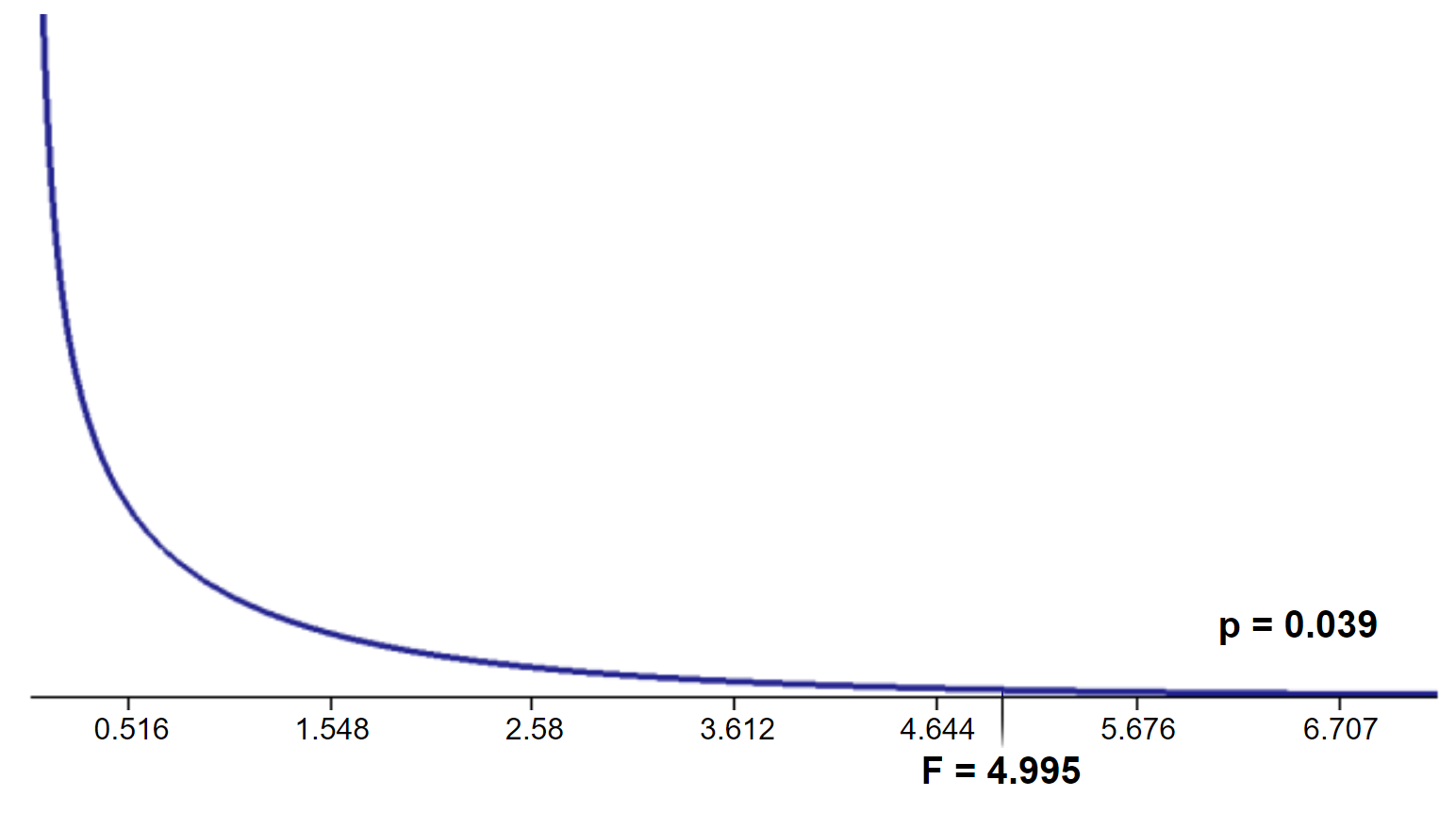
Fucus data:
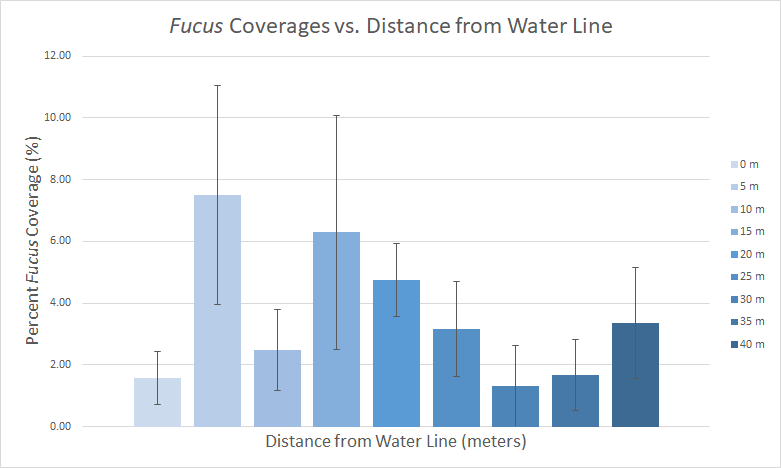
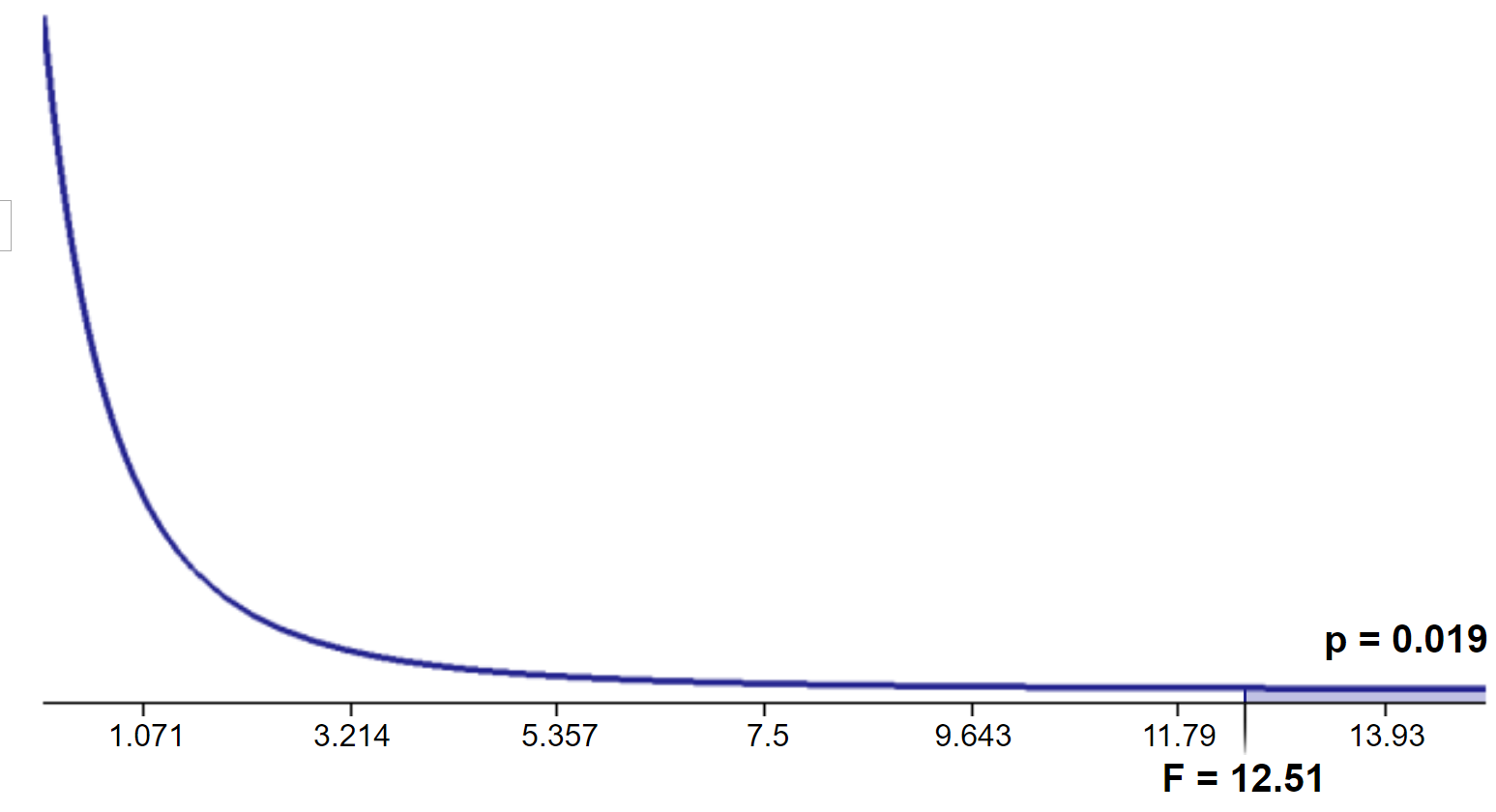
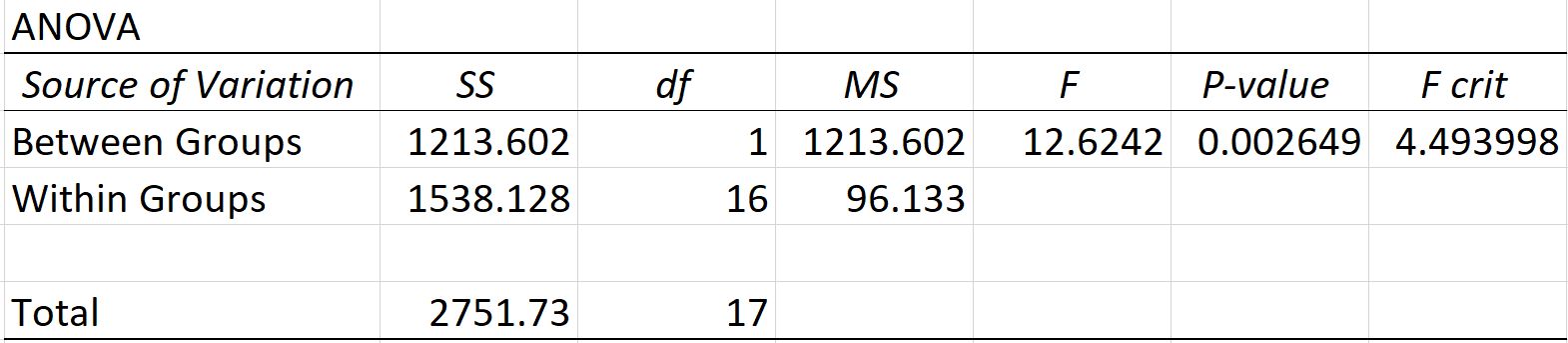
- F-Crit = 4.493
- P > α
- F-Calc > F-Crit
- Null Hypothesis is rejected
- Alternative Hypothesis is supported
- α = 0.05
- One Way ANOVA test

Asco data.
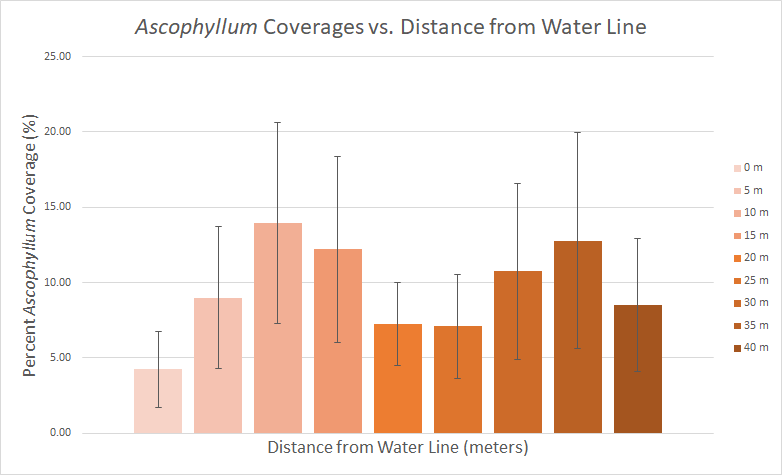
- F-Crit = 4.493
- P < α
- F-Calc > F-Crit
- Null Hypothesis is rejected
- The alternative Hypothesis is supported by the ANOVA
- Comparison of alpha and P
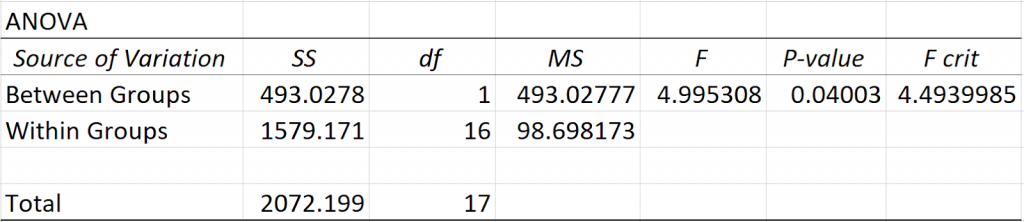
- α = 0.05
- One Way ANOVA test
Significance Of Results
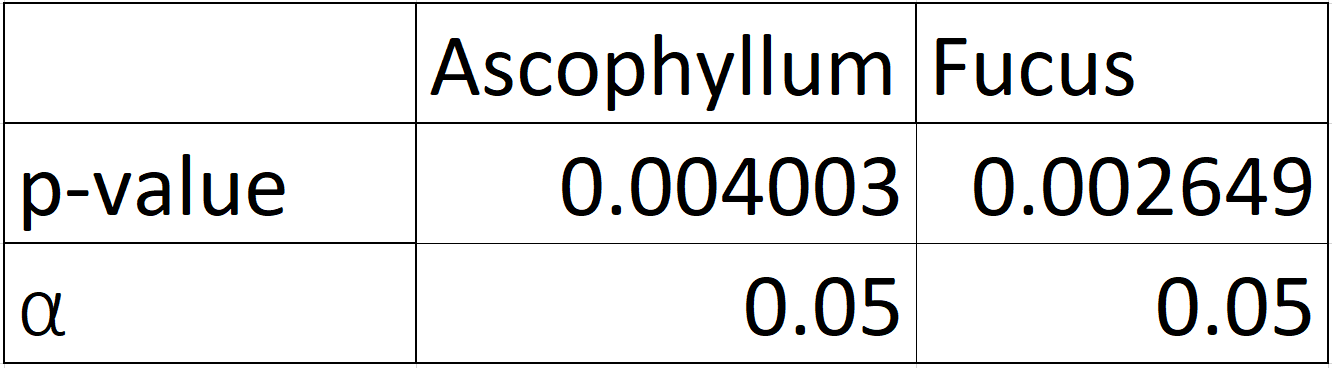
The rejected null hypothesis is further backed by results of the Tukey Test HSD, which for both Ascophyllum and Fucus yielded a significant difference. The rejection of the null hypothesis does not specifically mean the support of our original hypothesis, but it does mean the support of our alternative hypothesis. Comparison of p-values and alpha.
A comparison to a peer study has been made, and it was found that there is no direct replication of the experiment described in this presentation. Welch et al. discovered the relationship between the percent coverage of algae and the biomass of substrate. They found results similar to those in our study.
Research Question And Hypothesis Recap:
Our largest error in this study was in the factors that we based our hypothesis on, mainly in the intertidal zones we included. We hypothesized that the percent algae cover of Ascophyllum and Fucus would be the highest in the mid-intertidal zone, among other hypothesized findings. This estimation was inaccurate since the intertidal zones cannot be measured quantifiably as they vary with each coastal region. Future studies regarding the percent cover of algae species could focus more on the variation of percent cover across smaller distances that are easy to quantify, such as those used in the data collection for this study.
Conclusion
Our largest error in this study was in the factors that we based our hypothesis on, mainly in the intertidal zones we included. We hypothesized that the percent algae cover of Ascophyllum and Fucus would be the highest in the mid-intertidal zone, among other hypothesized findings. This estimation was inaccurate since the intertidal zones cannot be measured quantifiably as they vary with each coastal region. Future studies regarding the percent cover of algae species could focus more on the variation of percent cover across smaller distances that are easy to quantify, such as those used in the data collection for this study.
Errors And What To Do Differently
Our largest error in this study was in the factors that we based our hypothesis on, mainly in the intertidal zones we included. We hypothesized that the percent algae cover of Ascophyllum and Fucus would be the highest in the mid-intertidal zone, among other hypothesized findings. This estimation was inaccurate because the intertidal zones cannot be quantified consistently, as they vary among coastal regions. Future studies regarding the percent cover of algae species could focus more on the variation of percent cover across smaller distances that are easy to quantify, such as those used in the data collection for this study.
Real World Application
Analyzing the correlation between the percent algae cover and the distance from the waterline can potentially show the overall health of an intertidal environment since many algae species serve critical roles in the intertidal zones, especially if a study is done over a large range of distance within the intertidal zones. With the knowledge that different algae species are concentrated in different intertidal zones, the percent cover of any given algae can indicate the health of populations at higher trophic levels than algae, such as animals that graze on algae for food. If it is seen that the percent algae cover increases or decreases over time in its respective intertidal zone, then perhaps the populations of animals and other organisms that control algae populations are either increasing, in the case of a decrease in percent cover, or decreasing, in the case of an increase in percent cover.
Bibliography:
Foster, Michael S. January 1982. Factors Controlling the Intertidal Zonation of Iridaea Flaccida (Rhodophyta). J. Physiol. 18: 285-294.
Lubchenco, Jane. April 1980. Algal Zonation in the New England Rocky Intertidal Community: An Experimental Analysis. Ecology. 61.2: 333-334.
Metaxas, Anna, Robert E. Schilling. 1993. Community Structure and Organization of Tidepools. Marine Ecology Progress Series. 98: 187-198.
Tidal Zones. Tidal Zones | Oregon Tide Pools. [accessed 2018 Mar 26].
https://oregontidepools.org/tidalzones
Lobban, Christopher S., Paul J. Harrison, Mary Jo Duncan. 1985. The Physiology of Seaweeds.
Cambridge University Press. Cambridgeshire.
Fucus (Northern Rockweed). Fucus | MARINe. [accessed 2018, Mar 28]. https://www.eeb.ucsc.edu/pacificrockyintertidal/target/target-species-fucus.html
Welch EB, Jacoby JM, Horner RR, Seeley MR. 1988. Nuisance biomass levels of periphytic algae in streams. Hydrobiologia 157:161–168.
Cite This Work
To export a reference to this article please select a referencing stye below:

Academic Master Education Team is a group of academic editors and subject specialists responsible for producing structured, research-backed essays across multiple disciplines. Each article is developed following Academic Master’s Editorial Policy and supported by credible academic references. The team ensures clarity, citation accuracy, and adherence to ethical academic writing standards
Content reviewed under Academic Master Editorial Policy.





