
River Island is a useful business for examining private ownership, stakeholder relationships, consumer behavior, and core microeconomic concepts because it combines a long-established family-controlled fashion retailer with the pressures facing modern high-street businesses. River Island Clothing Co. Limited remains a private limited company registered in England, with retail clothing as its principal business activity. Its private structure offers concentrated control and the possibility of longer-term decision-making, while also limiting access to public equity markets. The company’s experience also illustrates how ownership structure interacts with changing consumer demand, rent costs, digital competition, inventory risk, and relationships with employees, landlords, suppliers, lenders, and customers.
Private Ownership and Business Structure
A private limited company has several important advantages. Limited liability separates the company’s obligations from the personal assets of shareholders within the normal boundaries of corporate law. The business also continues as a legal entity even when directors or ownership arrangements change. Because shares are not publicly traded, ownership can remain concentrated and management can pursue strategic decisions without responding directly to daily movements in a public share price.
Concentrated ownership may support a longer planning horizon. Investments in brand development, digital systems, store redesign, supply-chain improvement, or restructuring can be evaluated against the long-term position of the company rather than only the expectations of public-market investors. At the same time, private ownership can create financing constraints. The firm cannot raise equity from public markets in the same way as a listed company and may depend more heavily on retained earnings, borrowing, private capital, or shareholder support.
River Island’s recent restructuring demonstrates why financial flexibility matters. The company has had to respond to changing high-street conditions, online competition, rent pressure, and cost increases by reviewing store viability and negotiating with important stakeholders. These pressures do not mean that private ownership is inherently better or worse than public ownership. They show that every structure creates a different combination of control, access to capital, accountability, and strategic freedom.
Stakeholders and Competing Interests
A stakeholder is any individual or group that can affect an organization or is materially affected by it. For River Island, internal stakeholders include owners, directors, managers, and employees. Owners are concerned with long-term business value and financial stability, while employees depend on the company for income, working conditions, career development, and job security. During restructuring, these interests can conflict because cost reduction that supports business survival may also lead to store closures or job losses.
Connected stakeholders include customers, suppliers, landlords, lenders, logistics providers, and commercial partners. Customers influence product demand, brand reputation, price tolerance, and channel choice. Suppliers depend on predictable orders and payment, while River Island depends on them for quality, cost, delivery, and ethical sourcing. Landlords become especially influential when physical stores face weaker traffic or high occupancy costs, while lenders gain importance when borrowing or refinancing is required.
External stakeholders include regulators, local communities, environmental organizations, and wider society. Government sets rules on employment, consumer protection, privacy, company reporting, trade, and product safety. Communities may benefit from employment and retail activity but can also be affected by closures. Environmental concerns include textile waste, packaging, transport, chemical use, and supply-chain impacts. This makes corporate social responsibility relevant even though the industry differs, because the same underlying question applies: how should a company account for impacts beyond the immediate sale?
Stakeholder power is not fixed. Customers may dominate attention when sales are strong, while lenders and landlords become more influential during restructuring. Employees gain importance when retention and operational knowledge are critical, and regulators become central when new reporting, labor, or environmental requirements take effect. Management therefore needs a dynamic stakeholder map rather than a one-time list of groups.
Diminishing Marginal Utility and Fashion Consumption
The law of diminishing marginal utility describes the tendency for the additional satisfaction gained from consuming one more unit of a good to decline as more units are consumed, assuming other relevant conditions remain unchanged. A hungry person may gain substantial satisfaction from the first unit of food, less additional satisfaction from the second, and progressively smaller increases from later units. Total utility can continue to rise even while marginal utility falls.
The same idea can help explain some fashion purchases. A first winter coat may satisfy an important functional need. A second may provide additional convenience or variety, while the benefit from a fifth similar coat may be considerably smaller. Fashion companies respond by differentiating products through color, design, season, fit, collaboration, and brand identity. Novelty can alter the perceived utility of another purchase even when the customer already owns products serving the same practical purpose.
The concept should not be applied mechanically. Utility is subjective and cannot be measured directly in objective units. Collectibles, complementary goods, status products, and changing preferences may not follow a simple short-term pattern. Diminishing marginal utility is therefore a framework for thinking about consumer choice rather than a precise prediction of every purchase.
Demand, Price, and Market Conditions
Economic demand combines desire with willingness and ability to pay. A consumer may want a River Island product without creating effective demand if the purchase is unaffordable or less important than competing uses of income. The law of demand states that, other things equal, quantity demanded usually falls when price rises and increases when price falls. The phrase “other things equal” is essential because fashion demand also depends on income, weather, consumer confidence, competing brands, trends, expectations, and season.
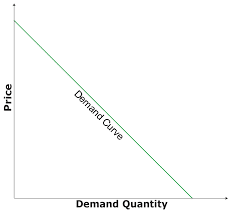
A movement along a demand curve occurs when the product’s own price changes while other determinants remain stable. A shift in the whole curve occurs when another factor changes, such as income, preferences, competitor pricing, or expectations. For a fashion retailer, this distinction matters because a fall in sales may reflect more than price. A change in style preference, weaker consumer confidence, unusually warm weather, or stronger competition can reduce demand even when listed prices remain the same.
Pricing decisions therefore need to balance volume, margin, and brand positioning. Discounting may increase the quantity sold but reduce gross margin or train customers to wait for promotions. Online comparison also makes prices more transparent, increasing pressure in categories where products are easy to substitute. Brand identity, design, delivery, returns, fit, and store experience can reduce pure price competition by giving consumers reasons to prefer one retailer over another.
Inventory, Forecasting, and Omnichannel Retail
Fashion retail is especially exposed to forecasting risk because demand is seasonal and styles can change quickly. If River Island overestimates demand, unsold stock may require markdowns that reduce profit. If it underestimates demand, popular products may sell out and customers may move to competitors. Historical sales, online behavior, weather, promotional plans, and trend information can improve forecasts, but uncertainty cannot be eliminated.
The growth of online shopping also changes the economics of the store network. Physical stores can generate sales, provide fitting and returns, support brand visibility, and complement digital channels, but they carry rent, staffing, and operating costs. Online channels offer wider geographic reach but create expenses involving fulfillment, delivery, returns, technology, and digital marketing. A modern retailer therefore evaluates stores and online activity as parts of one system rather than treating them as entirely separate businesses.
Omnichannel strategy also changes how inventory is valued. Stock held in a store may serve walk-in customers, online orders, click-and-collect demand, or returns. Better integration can improve stock availability and reduce unnecessary duplication, but it requires accurate real-time data and coordinated logistics. Investment in digital systems therefore affects both customer experience and working capital.
Business Implications
River Island demonstrates how business structure and microeconomics interact. Private ownership affects financing and strategic control. Stakeholders influence which decisions are feasible and socially acceptable. Marginal utility helps explain why the value of additional purchases can decline, while demand theory explains how price and non-price factors affect sales. Inventory and channel decisions connect these concepts directly with daily management.
The company’s need to adapt also shows why historical success does not guarantee that an existing store model will remain efficient. Consumer behavior, digital competition, wages, rent, supply-chain conditions, and macroeconomic pressures can change the economics of individual locations. Management must decide where capital should be allocated, how quickly digital capability should grow, and how restructuring affects employees, landlords, lenders, customers, and owners.
Conclusion
River Island is academically useful because it combines the advantages and limitations of a privately controlled retailer with clear examples of stakeholder management and consumer economics. Private ownership can support concentrated control and longer-term strategic decisions, but it also creates financing constraints and places significant responsibility on owners and management during periods of pressure. Stakeholder analysis shows why business survival, employment, supplier relationships, customer expectations, and community effects cannot be separated easily. Diminishing marginal utility and demand theory help explain customer behavior, while inventory and omnichannel decisions translate those concepts into operational choices. The company therefore provides a practical example of how ownership, finance, consumer preference, and market structure come together in retail strategy.
References
Companies House. (2026). River Island Clothing Co. Limited: Company Overview and Filing History.
Butler, S. (2025). Reporting on River Island restructuring and store closures. The Guardian.
Freeman, R. E. (1984). Strategic Management: A Stakeholder Approach. Pitman.
Savage, G. T., Nix, T. W., Whitehead, C. J., & Blair, J. D. (1991). Strategies for assessing and managing organizational stakeholders. Academy of Management Executive, 5(2), 61–75.
Varian, H. R. (2014). Intermediate Microeconomics: A Modern Approach (9th ed.). W. W. Norton.
Pindyck, R. S., & Rubinfeld, D. L. (2018). Microeconomics (9th ed.). Pearson.
Cite This Work
To export a reference to this article please select a referencing stye below:

Academic Master Education Team is a group of academic editors and subject specialists responsible for producing structured, research-backed essays across multiple disciplines. Each article is developed following Academic Master’s Editorial Policy and supported by credible academic references. The team ensures clarity, citation accuracy, and adherence to ethical academic writing standards
Content reviewed under Academic Master Editorial Policy.





