
 Corrections
Textbook
Criminal Law
Not rated yetRate this bookExplore fourteen criminal-law chapters through definitions, intent and source offense categories. Original conceptual tasks identify jurisdiction, evidence and interpretive questions without offering case-specific legal advice.
Read on the publisher’s website. Opens in a new tab.
 Free
About this book
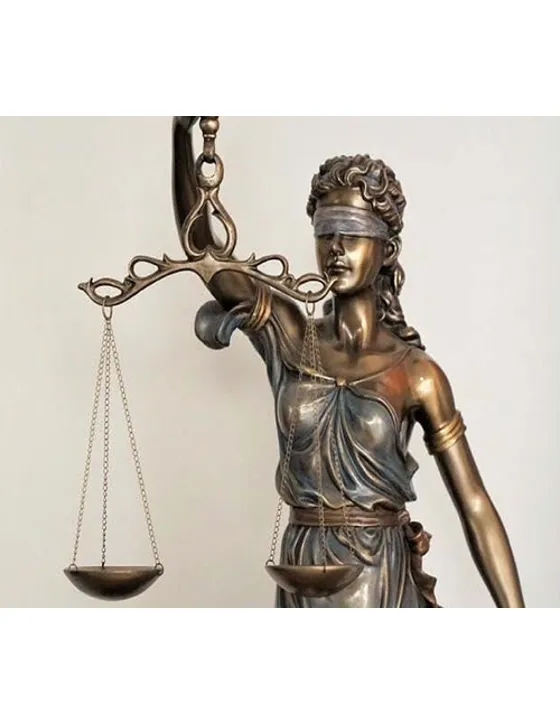
Criminal Law by George Cartwright introduces criminal-law vocabulary and categories through a text with a substantial California and United States focus. Fourteen chapters begin with definitions, intent, participation, attempts and the relationship between government authority and rights. The sequence then examines categories involving harm to persons, property, public institutions and regulated activities.
The source reproduces statutes and discusses cases, but their presence in a textbook does not establish that the wording remains current or applies elsewhere. This guide treats those materials as the source’s educational examples. Original tasks compare concepts, distinguish a stated rule from facts and identify what a legal question would require before a conclusion could be assessed. They do not determine liability, explain how to exploit a rule or advise someone facing a real case. Overviews reflect selected chapter openings and the verified contents, not an independent legal audit. Readers should consult the full source for its arguments and check current authoritative law separately when practical application matters.
AI-assisted book summary
Reading guide
Read definitions, intent and the institutional framework before the offense-category chapters. Keep source jurisdiction and date beside every rule. Compare concepts without assuming that a familiar label resolves a real case.
Chapter-by-chapter guide
1: Defining Terms
Definitions distinguish crime from broader departures from social norms. The source begins with California statutory material. A descriptive label and a legal classification require different grounds.
Study task: Compare a fictional social-norm statement with a question requiring a specified legal source.
2: Criminal Intent, Parties to Criminal Acts, and Attempts to Commit Crimes
Intent, motive, participation and attempts raise related but different questions about responsibility. The source notes jurisdictional variation. Do not treat an inferred motive as proof of a particular legal element.
Study task: Sort fictional classroom statements into conduct, intent, motive and unresolved questions.
3: The Social Contract, Bill of Rights, Laws of Arrest, and Rights After Arrest
The institutional chapter connects social-contract ideas with rights and arrest-related topics. A philosophical justification and an applicable legal rule are different kinds of claim. Current practical rules are not verified here.
Study task: Separate a philosophical argument from a legal-source question in a fictional passage.
4: Homicide, Proximate Cause, and Larissa Shuster
Homicide learning introduces classifications and questions about intent, causation and harm. The guide does not decide a case or reproduce the source’s rules as current law. Focus on the categories of information involved.
Study task: Map a fictional classroom claim by classification, causation question and missing evidence.
5: Conspiracy, Robbery, Carjacking, and Extortion
The chapter groups conspiracy with robbery, carjacking and extortion. Its opening distinguishes a planning-related category from completed conduct. Shared chapter placement does not make the categories interchangeable.
Study task: Compare two source category headings by the conceptual questions they raise, without applying them to a person.
6: Kidnapping, False Imprisonment, and Child Abduction
Liberty-related categories connect movement, confinement and different legal contexts. Source statutory examples require jurisdiction and date. A general description alone cannot establish a classification.
Study task: Identify what must be clarified before comparing fictional confinement-related descriptions.
7: Mayhem, Torture, Types of Battery Crimes, and Assault with a Deadly Weapon
The chapter groups serious-harm and assault-related categories. Its opening illustrates why intent and the nature of harm are distinct. Study the source terminology without turning a sensational example into a general rule.
Study task: Compare the roles of conduct, claimed intent and described harm in a non-graphic fictional account.
8: Sex Crimes
The source presents sexual-offense categories through statutory examples. These are not reproduced as present-day definitions in this guide. Study requires attention to rights, evidence and respectful non-graphic language.
Study task: Identify jurisdiction, date and evidence questions needed to evaluate a textbook classification claim.
9: Weapons Law
Weapons law is presented through possession-related source provisions. A textbook description is not permission or a current compliance assessment. Practical questions require current authoritative law for the location and circumstances.
Study task: List the source details needed to verify a legal claim without evaluating possession or use.
10: Perjury, Bribes, Witness Intimidation, Criminal Threats, Hate Crimes, Terrorism Through Symbols, and Harassing Phone Calls
This chapter groups public-integrity, testimony, threat and related categories. Its opening uses bribery as an example of how a rule is stated. Separate the wording, alleged facts and interpretive step.
Study task: Annotate a fictional rule-and-facts passage without reaching a liability conclusion.
11: Crimes Against Officers, Crimes Against Peace, and False Reporting of a Crime
Offenses concerning officers and public order are discussed through source statutory categories. A role description and a legal duty are different propositions. Avoid transferring a rule across jurisdictions without verification.
Study task: Compare an institutional-role statement with the separate legal questions it raises.
12: Disturbing the Peace, Disorderly Conduct, Stalking Burglary, Possession of Stolen Property, and Arson
Public-order and property-related topics share a chapter but concern different categories. Similar everyday terms can conceal different legal questions. The source’s labels need their full context.
Study task: Choose two headings and formulate distinct conceptual questions for each.
13: Types of Theft, Bad Checks, Embezzlement, and Counterfeiting
Theft-related categories distinguish kinds of property and financial allegations. A loss and a legal explanation of that loss are not identical. Keep observation and classification separate.
Study task: Rewrite a fictional allegation as stated facts, assumptions and information still needed.
14: Lotteries, Bingo Games, Chain Letters and Pyramid Schemes, Gaming, Bookmaking, and Criminal Profiteering
The final chapter concerns chance-based schemes, gaming and profiteering in the source’s legal context. A colloquial label does not establish legal status. No current permission or compliance conclusion is supplied.
Study task: Identify the questions needed to investigate a source classification without designing or evaluating a scheme.
How to study this book
Use fictional classroom examples and separate source rule, stated facts, inference and missing information. Record legal claims as requiring current authoritative verification before practical reliance. Avoid inferring guilt from a brief narrative.
Reflection questions
- Which jurisdiction and source date frame the rule?
- What is stated and what is inferred?
- Which information would be needed before assessing a conclusion?
Sources and coverage
Source: Criminal Law — LibreTexts.
Original reader guide based on the verified contents and selected substantive chapter or section openings, introductions and learning objectives in the linked source PDF. It is not a full review of every subsection, exercise, figure, procedure, story or linked media item. Study tasks are original additions, not exercises or solutions attributed to the source.
Statutes, cases and penalties are source-period material, not independently verified current law. The guide provides conceptual study tasks, not legal advice, liability findings or practical rules for arrest, possession or regulated activities.
About access & copyright
This page provides book information and study material. Full-text access is provided by the original publisher or authorised source; a listing does not grant permission to republish the book.
Read our Library Access & Copyright policyContext
The source has a substantial California and U.S. focus.
Distinctions
Conduct, intent and consequences raise different questions.
Limits
A textbook example is not a current legal determination.
Reader ratings & reviews
Share your thoughts
Your review helps other students choose the right resources.
KEEP LEARNING
Your next great read
CorrectionsIntellectual Property Licensing and Transactions
Intellectual Property Licensing and Transactions
View Intellectual Property Licensing and Transactions — bookRecent Improvements of Power Plants Management and Technology
Recent Improvements of Power Plants Management and Technology
View Recent Improvements of Power Plants Management and Technology — book Water Systems Technology
Irrigation Systems Management (AET 021)
View Irrigation Systems Management (AET 021) — book Manufacturing
 Processes 4-5
View Manufacturing Processes 4-5 — book Languages
Reading for Academic Success - An OER Textbook for Reading 7
View Reading for Academic Success - An OER Textbook for Reading 7 — book Philosophy
Arguments in Context - An Introduction to Critical Thinking
View Arguments in Context - An Introduction to Critical Thinking — book History
Western Civilization I
View Western Civilization I — book Literature and Literacy
Off the Shelf: A Digital Anthology of Classic and Contemporary Short Stories
View Off the Shelf: A Digital Anthology of Classic and Contemporary Short Stories — book History



