
Abstract
Technological innovation can change healthcare delivery, but its value depends on how it is selected, introduced and managed. This secondary-research study examines the challenges and potential benefits of technological innovation management in NHS England, drawing on literature available for a dissertation completed in 2023. It uses a qualitative, thematic approach to explore funding, workforce capacity, infrastructure, implementation, privacy and patient involvement. The theory of reasoned action and perspectives on technological determinism provide lenses for discussing adoption and organisational change. The review suggests that technology requires complementary investment in skills, governance and service design. It recommends phased implementation, accessible services, appropriate safeguards for patient information, and arrangements for continuing care when systems fail. The findings are an interpretation of existing literature, not a new evaluation of current NHS performance or proof that any individual technology will improve outcomes in every setting.
Introduction
Technological innovation can help address problems across many fields, including healthcare (Coccia and Watts, 2020; Mosnaim et al., 2020). Digital systems can support communication between departments and changes to service delivery (Sust et al., 2020). Their contribution nevertheless depends on implementation and management. Funding, staff capability, infrastructure, ethical responsibilities and regulatory requirements can affect adoption (Bryce et al., 2020). Protecting patient information is a recurring concern, rather than an issue resolved simply by installing software. This study examines these organisational questions in relation to NHS England, using the literature available when the research was completed in 2023.
Previous studies have examined technology adoption, implementation, communication and service outcomes (Sust et al., 2020; Mikhailova, 2018; Larnyo et al., 2018; Alkureishi et al., 2016). Research also addresses aspects of healthcare technology management (Houngbo et al., 2017). These contributions should not be dismissed as absent or automatically outdated. The present review instead seeks to bring related findings together and consider their relevance to NHS England. Its focus is the relationship between the technical capabilities of an innovation and the organisational arrangements needed to use it effectively.
Insufficient attention to management can limit the value of a technology or introduce new risks. Digital records, for example, can improve access to information while also requiring controls against unauthorised access, loss or misuse. Attaran (2022) discusses both opportunities and challenges associated with blockchain in healthcare. Such work illustrates why a proposed technical solution needs to be assessed alongside governance, security, cost and usability. A technology’s intended purpose does not by itself establish that it has been implemented safely or successfully.
The study therefore reviews the adoption, implementation and management of healthcare technology with NHS England as its principal setting. It uses the theory of reasoned action and perspectives on technological determinism to consider behavioural acceptance and organisational change. These are analytical frameworks, not guarantees that innovation produces beneficial outcomes. Recommendations concern how services can align technology with clinical needs, staff capability and patient expectations. Examples such as digital records and remote consultations are considered in relation to these wider requirements.
Statement of the Problem
The NHS has adopted many forms of digital technology, but implementation can be affected by practical and organisational difficulties (NHS, 2023). Health information technology can also have unintended consequences, including disruption to work and information handling (Coiera et al., 2016). The problem examined here is how technological innovation can be managed to support care while addressing such risks. It includes questions about funding, skills, privacy, system integration and service design. The review does not assume that the literature contains no relevant studies; it examines how existing evidence helps explain these management challenges.
Research Aims and Objectives
To ascertain the challenges of the NHS in the management of technological innovations and how these challenges affect the delivery of healthcare and patient outcomes.
To evaluate the implementation and effects of technology innovation management on NHS in terms of providing healthcare, including any enhancements to patient care, operational efficacy, and financial viability.
Research Questions
What are the challenges of the NHS in the management of technological innovations, and how do these challenges affect the delivery of healthcare and patient outcomes?
What are the effects of technology innovation management and implementation on NHS in terms of providing healthcare, including any enhancements to patient care, operational efficacy, and financial viability?
Justification of the Study
The study is justified by the need to consider management alongside technical capability. A system that appears useful may still fail to meet its purpose if staff cannot use it, patients cannot access it, or information is not adequately protected. The discussion of blockchain by Attaran (2022), for example, identifies both possibilities and constraints. Reviewing such evidence can help clarify the questions organisations should ask before investing in, implementing or expanding a technology.
The literature describes both opportunities and difficulties in introducing healthcare technologies. This review brings those findings together to examine implications for service management. It does not claim to provide a universally applicable implementation blueprint. Rather, it considers how funding, governance, staff participation and patient needs interact, and where the evidence remains limited. This perspective can support more considered decisions about technological change in healthcare.
The review may contribute to discussion among healthcare managers, practitioners and researchers by connecting adoption with the continuing work of maintaining and evaluating systems. NHS England provides the principal context, although some supporting studies concern other settings. Their relevance must be assessed rather than assumed. The study is a literature-based analysis, not a feasibility assessment of a specific proposed NHS procurement or a direct measurement of current organisational performance.
Literature Review
Overview
Technological innovation management is essential in changing how healthcare is delivered by utilising the potential of new technology. Globally, healthcare organisations and policymakers understand how crucial it is to incorporate technological breakthroughs to improve patient outcomes and increase the effectiveness of healthcare systems (Reddy et al., 2019). The digital revolution has paved the way for innovative solutions in healthcare, ranging from artificial intelligence (AI)-enabled healthcare delivery (Reddy et al., 2019) to the application of blockchain technology (Siyal et al., 2019). These developments could lead to a revolution in healthcare by making it possible to give individualised care quickly. Mental healthcare is one area where technological innovation management has drawn much interest.
Digital interventions can create additional ways to access mental health information and support (Hollis et al., 2015). Communication tools may help clinicians and patients remain in contact when face-to-face attendance is difficult. Their usefulness depends on the purpose of the interaction, clinical appropriateness, accessibility and the support available to users. Screens, applications and online platforms should not be described as inherently therapeutic simply because they are digital. Their design and evaluation remain important parts of innovation management.
Innovative methods to encourage behaviour change and deliver evidence-based interventions are provided via digital interventions, such as mobile apps and online platforms (Michie et al., 2017). Healthcare practitioners can improve patient involvement and increase access to services by integrating this technology into mental healthcare. However, there are obstacles to overcome to utilise technology breakthroughs in healthcare. Careful consideration of finance, infrastructure, and worker capability is required to adopt and integrate new technology (Reddy et al., 2019). Ethical and regulatory issues must also be considered to protect the privacy, security, and ethical use of patient data (Siyal et al., 2019).
This literature review analyses how technological innovation management affects healthcare provision within the English National Health Service (NHS). The implementation, difficulties, and impacts of managing technological innovations on the provision of healthcare and patient outcomes are examined. It also guides the NHS’s stakeholders, policymakers, and healthcare organisations. This review, which includes a survey of contemporary literature, aims to advance knowledge of technology innovation management and its consequences for healthcare delivery.
Conceptual Framework
Technological Innovation
Technological innovation involves new or improved tools, processes and ways of addressing problems (Coccia, 2021). It can also arise through interactions between technologies and the systems in which they operate (Coccia and Watts, 2020). In healthcare, this may include changes to communication, records, analysis or service organisation. The presence of new equipment does not alone establish successful innovation: its relationship to clinical work and patient needs must also be considered.
Managing Technological Innovation
Managing technological innovation involves selecting suitable systems, planning their introduction, supporting users and evaluating how they function in practice. In healthcare, this includes the relationship between technical arrangements, organisational processes and communication between patients and clinicians. Sust et al. (2020) provide an example of digital change during COVID-19. The management question concerns how such changes can be integrated into care, rather than whether a technology is novel in isolation.
Healthcare Delivery
Healthcare delivery encompasses the organisation and provision of services intended to meet health needs. Relevant considerations include access, effectiveness, coordination and patient experience. Piña et al. (2015) offer a framework for describing healthcare delivery organisations and systems. The World Health Organization (2012) also discusses service delivery as part of a wider health system. Technology is one component of that system; staffing, resources, governance and the relationship between services are also important.
Empirical Literature
Digital Innovation in NHS England
England’s National Health Service (NHS) has adopted and integrated technological breakthroughs in healthcare more frequently. The COVID-19 pandemic has significantly changed how the NHS does remote video consultations (Bidmead & Marshall, 2020). The long-term viability of remote consultations and their potential to become an ongoing component of healthcare delivery has been questioned considering this transformation. The Department of Health’s report also highlights how the NHS may benefit from using health information technology to improve care (Wachter, 2016). These sources draw attention to the NHS’s growing acceptance and incorporation of technology developments.
Strategies for Managing Innovation
The paper by Cresswell, Williams and Sheikh (2021) examines the tactics used in managing technology advancements in NHS England. It addresses the English Global Digital Exemplar Programme, which attempts to close the digital gap across hospitals in the NHS. This programme uses competitive funding distribution and information sharing to hasten a few hospitals’ digital transformation and maturity. Utilising these techniques, the NHS can efficiently handle technological advancements. However, the Jones et al. (2016) study emphasises how crucial it is to consider the normalisation process when integrating new technologies into daily practice. While hospitals may be encouraged to adopt cutting-edge technology by the competitive distribution of funding, it is essential to ensure that these technologies are broadly embraced by healthcare workers and integrated into standard processes. Lack of sufficient consideration for the normalisation process may result in resistance to adopting new technology and failing to achieve the desired results.
Hemsley et al. (2018) also highlight the value of health literacy in the context of electronic personal health records (e-PHRs). It is crucial to make sure that the design and functioning of digital solutions are user-friendly and accessible to all patients, including those with little health literacy, as the NHS tries to develop its digital capabilities. To fully reap the rewards of technological advancements, efforts should be made to raise health literacy and give patients the support they need to use and comprehend these digital tools.
Challenges in Integrating Technology
Introducing technology into healthcare can involve substantial organisational challenges. The COVID-19 pandemic exposed pressures relating to resources, workforce capacity, infrastructure and implementation (Bryce et al., 2020). Technical compatibility, privacy, regulation and staff acceptance also affect whether a system becomes part of routine care. These issues overlap: a lack of training may be experienced as a usability problem, while insufficient funding can limit both infrastructure and support. The following sections consider these barriers separately without assuming that they operate independently.
Infrastructure and Technical Barriers
Infrastructure and technical compatibility can obstruct integration into care. Staff also need relevant digital skills. Burgin et al. (2023) examine barriers and facilitators to pharmacy workforce digital-skills development. Skills and infrastructure are related but distinct: training cannot repair an incompatible system, and new equipment cannot compensate for the absence of user support. Both need attention during planning and implementation.
Workforce Capacity and Acceptance
Incorporating technology improvements is often hampered by the willingness and capability of the healthcare workforce. Mills (2019) emphasises the significance of taking healthcare professionals’ perspectives—such as that of palliative care providers—into account when using digital health technology. To ensure the effective acceptance and integration of technological advancements, issues including resistance to change, a lack of training, and worries about the influence on patient-provider interactions must be addressed.
Funding and Resource Allocation
Introducing technology requires resources for equipment, integration, staff development and continuing support. Funding decisions should consider those commitments alongside other service needs. An initial investment may enable implementation without ensuring that a system can be maintained. The management issue is therefore not only the availability of money, but also whether its allocation supports the intended clinical and organisational purpose.
Ethical and Regulatory Considerations
Ethical and regulatory issues are significant obstacles to integrating technological advancements into healthcare delivery. The ethical issues surrounding the use of digital health technology, such as data protection and patient consent, must be considered by the NHS, according to Atherton and Majeed (2011). Compliance with regulatory frameworks and standards is crucial to ensure patient safety and build trust in the use of technological breakthroughs.
Knowledge Management and Implementation
Overcoming obstacles to integrating technological advancements into healthcare service is made possible by effective knowledge management and implementation strategies. Ejeh (2017) underlines the value of creating knowledge management systems to reduce infections linked to healthcare. This emphasises the requirement for organised knowledge transfer methods, instruction, and distribution of best practices while introducing technical advancements.
Outcomes of Innovation Management
The 100,000 Genomes Project illustrates a major NHS initiative involving technological innovation (Turnbull et al., 2018). Whole-genome sequencing creates possibilities for diagnosis and individualised care, while also requiring suitable information systems and clinical interpretation. Its inclusion here provides an example of organisational and technical change, rather than evidence that every innovation produces the same benefits.
Digital interventions have also been developed to support healthcare workers. Blake et al. (2020) describe a learning package addressing the psychological impact of COVID-19. The development of a resource should be distinguished from proof of improved patient outcomes. Michie et al. (2017) similarly emphasises the design and evaluation of digital interventions for behaviour change. These sources support examining purpose, implementation and evidence of benefit together.
Mobile health (mHealth) technology in healthcare provision has also attracted interest. In their investigation of the clinical benefits of mobile health for patients, Rowland et al. (2020) highlight the technology’s potential for remote monitoring, improved communication, and enhanced patient-provider interactions. These technological advancements could lead to more effective, patient-focused healthcare. The NHS’s innovation paths are essential to efficiently incorporating technological breakthroughs. Arora et al. (2021) underline the importance of thorough analyses and evaluations of innovation routes to identify obstacles and opportunities. This can help inform the creation of efficient plans for managing technological advancements and maximising their influence on healthcare provision. An important technical advancement in the NHS has been adopting electronic health records (EHRs).
Adoption and Implementation
Technology adoption in healthcare predates COVID-19, but the pandemic accelerated some forms of remote working and consultation (Mosnaim et al., 2020). Mikhailova (2018) discusses the importance of investment and the costs of operating and maintaining technologies. Smaller organisations may face particular resource constraints, but a large system such as the NHS is not immune to cost pressures. Scale may create opportunities for coordination while also making integration more complex. Decisions about adoption therefore require an assessment of resources and service needs rather than an assumption that organisational size guarantees affordability.
Technology can support communication between patients and clinicians, but its effects depend on how it is used (Weiner, 2012). Electronic records and communication systems may improve access to information, while also competing for attention during a consultation (Alkureishi et al., 2016; Shachak and Reis, 2009). Sust et al. (2020) describe digital changes during the pandemic. These examples suggest potential benefits, not a claim that every digital interaction is faster or better than an appropriate face-to-face alternative.
Barriers to Managing Innovation
The acquisition, operation and maintenance of healthcare technology can create substantial costs. Evidence about value should therefore consider total costs and the outcomes achieved, rather than only the purchase price. De Grood et al. (2016) discuss physician adoption and implementation challenges, while Sust et al. (2020) describe rapid digital change during COVID-19. Some applications may improve efficiency, but cost-effectiveness is specific to the intervention and setting. The findings do not justify treating all technologies as either inherently unaffordable or automatically cost-saving.
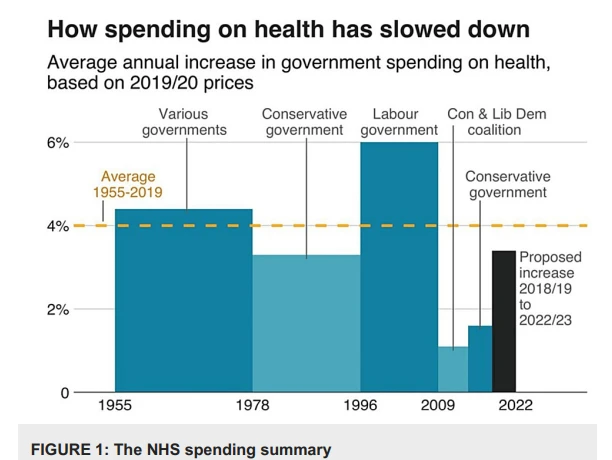
Khan, 2023. describes pressures on NHS spending and a slowdown in the rate of real spending growth after the financial crisis. Slower growth is different from a fall in total annual spending. Historical figures and proposed increases should therefore retain the period to which they refer. This review uses those figures as background to the resource constraints discussed in the 2023 manuscript; they do not describe the current NHS budget. Managing technology under resource pressure requires attention to maintenance, staffing and the opportunity costs of investment.
Financial resources are only one part of the implementation environment. Social conditions, organisational culture, policy and professional expectations also influence adoption. Mikhailova (2018) highlights the importance of relating innovation to practitioners’ needs. Effective management therefore involves coordination between developers, users and decision makers. A technically capable product may still be unsuitable if it does not fit the way a service operates or if the organisation lacks the capacity to support it over time.
Effects on Services and Patient Outcomes
Growing demand for healthcare has encouraged interest in technologies that may support service capacity and coordination (Sust et al., 2020). The manuscript cites a 2023 market forecast from Statista for 2023–2027; such forecasts are historical projections, not observed outcomes or evidence that technology necessarily improves care. Technological innovation can address practical problems, but its effects need to be evaluated in relation to specific services, patient groups and organisational arrangements (Coccia, 2021).
Sust et al. (2020) discuss opportunities for digital healthcare during the pandemic, including changes to communication and service organisation. Adoption nevertheless involves challenges for users and institutions (De Grood et al., 2016). Information systems require safeguards against unauthorised access and inappropriate use, and staff need sufficient knowledge to work with them responsibly. Attaran (2022) discusses blockchain as one possible component of healthcare information management, alongside its limitations. No single technical model resolves every issue. Policies, usable systems and continuing evaluation remain necessary.
Sust et al. (2020) describe digital transformation in Catalonia, Spain, during COVID-19. That experience offers examples for comparison with NHS England, especially in relation to communication and remote services. The fact that both settings are European does not establish that their results will be identical. Differences in governance, infrastructure, staffing and patient populations affect transferability. Mosnaim et al. (2020) similarly discusses the relevance of digital health during distancing requirements, providing context rather than a direct evaluation of every NHS service.
Theoretical Framework
Theoretical frameworks can help organise interpretation of a complex subject. This study uses the theory of reasoned action (TRA) to consider behavioural acceptance and technological determinism as a perspective on relationships between technology and organisational change. They address different questions. Neither is a substitute for evidence about a particular system or its implementation, and neither implies that all technological change is desirable.
The Technology Acceptance Model (TAM) was adapted from the theory of reasoned action, rather than the reverse (Holden and Karsh, 2010). TAM considers perceived usefulness and ease of use as important influences on acceptance; TRA concerns attitudes, social influences and behavioural intentions. Relevance to work is therefore important, but acceptance cannot be reduced to the claim that every technology has a purpose. Perspectives on technological determinism examine the influence of technology on social and organisational arrangements (Dafoe, 2015). They do not prove that change is automatically beneficial or inevitable. Applied here, the frameworks draw attention to both users’ responses and the reorganisation of care around new systems.
Gaps in the Literature
There are still knowledge gaps that call for research despite improvements in integrating technological innovation into healthcare services. It is critical to investigate best practices, provide advice, and influence decision-making processes to handle the NHS’s technological improvements (Cresswell et al., 2021). Healthcare organisations, governments, and stakeholders will better manage technology innovation and improve healthcare delivery outcomes by filling these knowledge gaps.
Infrastructure and interoperability require further study. Services need to understand whether systems can exchange information reliably and fit the clinical work they support. Wachter (2016) discusses information technology and care in England, providing a relevant framework for considering those questions. Cloud-based services may offer options, but their suitability depends on governance, security, integration and local requirements rather than their novelty.
A deeper understanding of the ethical issues and legal frameworks surrounding data protection, privacy, and consent is also necessary. This entails examining the moral ramifications of using patient data for research and innovation and ensuring all legal requirements are met (Pesapane et al., 2018). Including technological advancements in healthcare delivery can be regulated by ethical frameworks and rules, which can be suggested based on evidence from thorough research.
Patient engagement and inclusion also require attention. Research should examine how digital services affect different groups and what barriers prevent participation. Walker et al. (2020) investigate age and race disparities in use of an inpatient portal, illustrating why access and actual use need separate consideration. Patient involvement in design and evaluation can help identify problems, but no single process guarantees equal access for everyone.
Literature Review Summary
The literature connects technological innovation with communication, records, remote services and changes to clinical work. It also identifies financial, organisational and ethical requirements for implementation. Some applications may improve efficiency, while others require substantial investment before benefits can be realised. The review therefore supports examining technology together with the arrangements for funding, governance, staff development and patient access. Infrastructure and interoperability remain important issues for further study, particularly where information must move between services and systems.
Methodology
The methodology explains the study’s qualitative, literature-based approach. It covers the selection of secondary sources, the interpretation of their findings and the ethical issues associated with using published material. No new participant interviews, surveys or clinical experiments were conducted for this review. The purpose is to examine existing accounts of healthcare innovation management and assess their relevance to the research questions.
Research Design
Research design provides a framework for selecting, analysing and interpreting evidence (Akhtar, 2016). This study adopts an interpretivist orientation, recognising that experiences of technological change vary across people and organisations. A qualitative review can examine those differences through published accounts and concepts (Creswell and Creswell, 2017). The design is suited to exploring how innovation is understood and managed, but it does not guarantee causal conclusions or represent every NHS organisation. Its findings depend on the scope and quality of the selected literature.
Research Approach
An inductive approach develops interpretations from patterns in the material examined, whereas a deductive approach usually begins with propositions to be tested. The study uses an inductive orientation to identify recurring themes in the literature, while drawing on existing theories to interpret them. It does not test a new statistical hypothesis. Soiferman (2010) discusses differences between inductive and deductive approaches. Flexibility can help a researcher respond to unexpected findings, although transparent reporting is still needed to show how interpretations were reached.
The study uses a qualitative approach to examine descriptions, experiences and organisational processes. Quantitative findings in the source literature provide context where relevant, but the review does not conduct a new statistical analysis of participant data. Qualitative methods can offer detailed understanding of implementation and management issues (Tenny et al., 2022). Their usefulness depends on careful interpretation and clear reporting, rather than a claim that qualitative research is inherently more realistic than other approaches.
Primary and Secondary Data
Primary research collects new data for a research purpose, while secondary research uses material already collected or published (Hox and Boeije, 2005). This study uses secondary sources, including articles, reports and books. Re-examining such material can address questions different from those considered in the original studies, but the new interpretation must remain faithful to the original context (Elliott, 2015). The review therefore distinguishes source findings from its own synthesis and recommendations.
Secondary research was selected partly because direct access to healthcare staff and sensitive information would have required additional time, permissions and safeguards. A review of published material allows organisational questions to be examined without collecting identifiable patient data. It does not remove ethical responsibilities or provide direct knowledge of staff experiences beyond those reported by the original researchers. These constraints are considered when interpreting the findings.
Strengths and Limitations of Secondary Data
Secondary research depends on the quality and reporting of the original material. The researcher may have limited access to details about sampling, measurement or analysis and must avoid altering findings to fit a preferred argument (Martins et al., 2018). It can nevertheless support comparison across studies and make efficient use of existing evidence (Clark, 2013; Bryman, 2012). Saving time and resources is a practical advantage, not proof that the resulting synthesis is comprehensive or free from bias.
Research Methods
The study combines content analysis with desk research. Content analysis provides a structured way to examine published material, while desk research describes the use of existing sources rather than new field data. The approach considers how selected studies address the research questions and what they reveal about technological innovation management. It does not require treating every source as an equivalent form of evidence. Research design, relevance and context remain important when findings are compared (Mishra and Alok, 2022; Snyder, 2019).
Content Analysis
Content analysis involves examining information systematically to identify patterns and meanings. Here, it is applied to literature about the challenges and effects of healthcare technology management. The analysis considers how sources address funding, staff capability, implementation, information governance and service outcomes. It remains dependent on what the original authors reported and on the reviewer’s interpretive decisions. A structured process can make those decisions clearer, but it cannot eliminate every possible source of bias (Linnenluecke et al., 2020).
Desk Research
Desk research uses existing sources such as articles, books, reports and case studies (Bassot, 2022). This study focuses on written material relevant to healthcare innovation and its management. It examines concepts and findings rather than directly observing workplace behaviour. This approach can bring together knowledge from several settings, but it also limits the researcher’s control over how the evidence was produced. The relevance of each source to NHS England therefore needs to be considered explicitly.
Data Collection
The material used for analysis consisted of academic articles, books, reports and case studies relevant to the research questions. Sources were organised for comparison of their focus, methods and findings. The review sought literature about strategies, challenges and outcomes associated with managing healthcare technologies. The description of collection does not establish a fully reproducible systematic search, and Google Scholar’s result estimates should not be treated as a verified count of eligible studies. The selection process reported below describes the manuscript’s literature-based approach.
Sampling Approach
The study population is a body of literature rather than a group of newly recruited participants. Sources were selected purposively for their relevance to the research objectives (Etikan et al., 2016). The manuscript prioritised recent empirical and peer-reviewed work, particularly research concerning NHS England or potentially relevant European settings. Earlier foundational and methodological sources were also cited. This approach allows focused analysis but does not produce a statistically representative sample of all research on healthcare innovation.
Selection of Secondary Sources
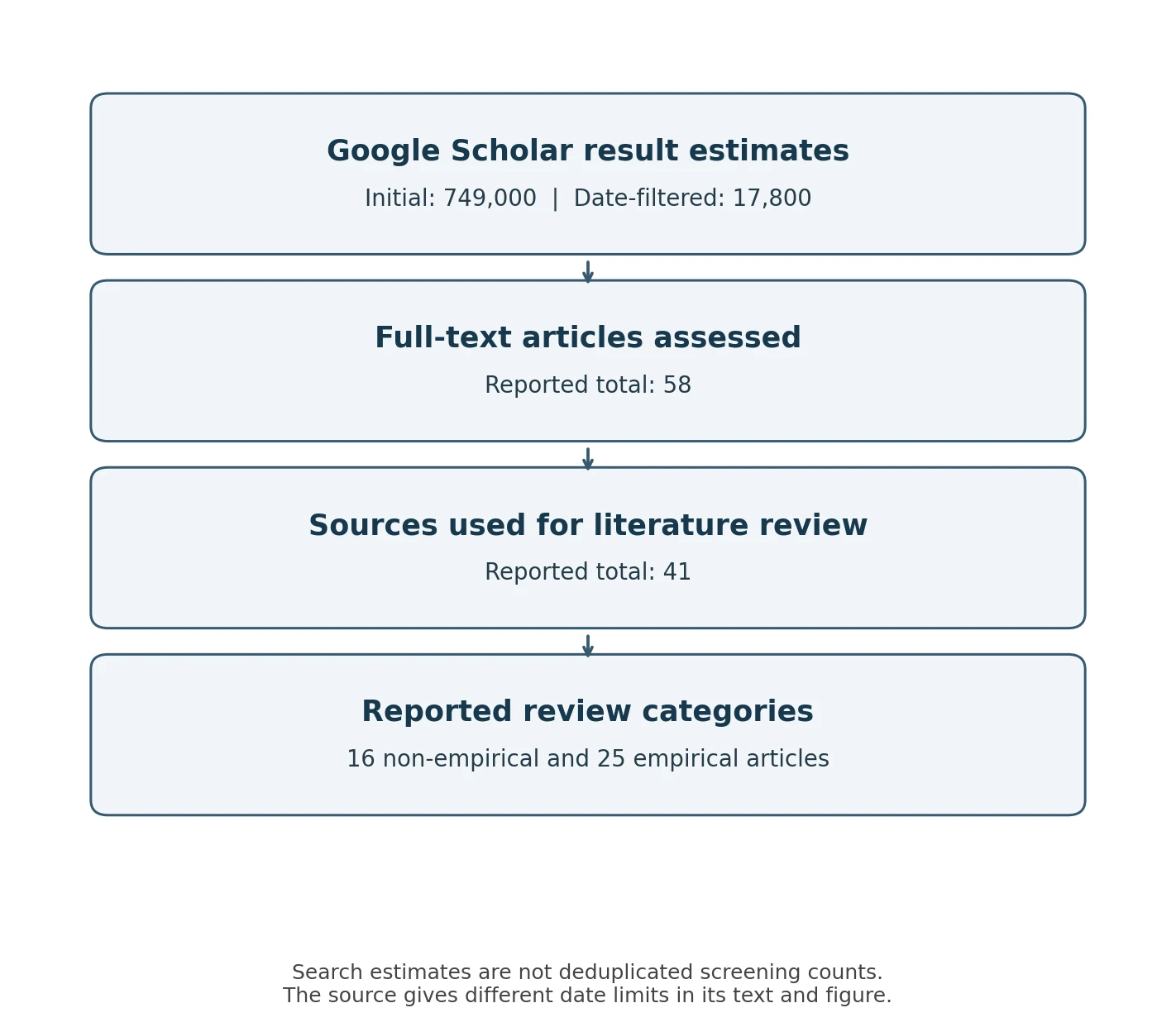
The manuscript reports an initial Google Scholar search using the phrase “healthcare delivery and the impact of digital technology”, with an estimated 749,000 results. Applying a 2015–2023 date range reportedly reduced that estimate to 17,800. Such platform-generated estimates can vary and are not equivalent to a deduplicated set of screened records. They are retained as part of the reported search description, rather than presented as independently verified counts of studies.
The manuscript reports that 58 full-text articles were assessed for relevance and that 41 informed the literature review, divided into 16 non-empirical and 25 empirical articles. Selection considered publication date, topic and relevance to NHS England or comparable European settings. Earlier references in the wider manuscript served background or methodological purposes. Because complete search strings, exclusion records and a deduplicated bibliography of the screened set are not supplied, the process should be described as a structured literature selection rather than a fully reproducible systematic review. The narrative uses a 2015–2023 range, while the original flowchart labels 2019–2023; the underlying search records are needed to resolve that discrepancy.
Figure 1. Reported literature-selection totals. The original text and figure disagree on the date range and exclusion arithmetic. This diagram retains the reported totals without inventing a reconciled screening log. Initial Google Scholar figures are search estimates, not verified counts of individually screened records.
Data Analysis
Thematic analysis was used to identify recurring ideas in the selected literature and relate them to the research questions. The approach goes beyond listing topics by interpreting how sources describe management challenges and service effects (Braun and Clarke, 2006, 2012). A reflexive orientation recognises the role of the researcher in developing themes rather than assuming that themes emerge without interpretation. The discussion considers funding, staff capability, implementation, information governance and patient access. The resulting synthesis is qualitative and should not be interpreted as a pooled estimate of effectiveness.
Ethical Considerations
Although this review does not recruit new participants, ethical issues remain relevant. Sources need to be acknowledged accurately, findings must not be misrepresented, and identifiable information should not be reproduced unnecessarily. Published material also varies in its reporting of consent and ethics procedures. The review therefore considers the provenance and nature of the evidence rather than assuming that everything retrieved online has equal credibility.
Using published findings does not automatically require obtaining fresh consent from every participant in the original study. Requirements depend on the data, permissions and intended reuse. This review uses reported findings rather than individual-level patient records, and it does not seek to identify participants. Tripathy (2013) discusses ethical issues in secondary analysis. Confidentiality, appropriate attribution and respect for the conditions under which material was made available remain important.
Other ethical concerns include conflicts of interest, selective reporting, errors in original studies and the possibility of overinterpreting results. The review aims to distinguish evidence from interpretation and to acknowledge limitations rather than claim complete objectivity. Transparent citation and careful representation of the source material support research integrity, even where the review cannot independently verify all underlying data.
Findings and Analysis
The findings address two questions: which factors make healthcare technology difficult to manage, and how management influences the contribution of technology to services. The sources are examined thematically, with NHS England as the main context. Evidence from other settings is used comparatively and is not treated as a direct observation of NHS performance. The analysis considers both potential benefits and the organisational conditions required to achieve them.
The themes below organise related findings from the reviewed literature (Braun and Clarke, 2012). The accompanying table summarises connections between sources and themes. Its entries are analytical summaries, not verbatim quotations or independently measured outcomes. Similar themes may appear in several sources, and a single source may contribute to more than one theme.
| Sources | Theme | Analytical focus |
|---|---|---|
| Piña et al. (2015); WHO (2012) | Healthcare delivery | Access, organisation and coordination of services |
| Coccia (2021); Coccia and Watts (2020) | Technology | Relationships between tools and organisational processes |
| Hollis et al. (2015); Hemsley et al. (2018) | User involvement | Clinical relevance, health literacy and usability |
| Bryce et al. (2020); Cresswell et al. (2021) | Management and resources | Capacity, funding and sharing implementation knowledge |
| Siyal et al. (2019); Pesapane et al. (2018) | Information governance | Privacy, regulation and responsible use |
| Reddy et al. (2019); Bidmead and Marshall (2020) | Digital applications | AI proposals and remote consultation |
| Walker et al. (2020) | Digital inclusion | Differences in access and use across patient groups |
Challenges in Managing Innovation
The first research question concerns barriers to using and managing technology in healthcare. These may include limited resources, difficulties learning new systems, technical incompatibility and concerns about information handling. Understanding a tool’s functions is only part of implementation; staff also need to know how it fits their responsibilities and when alternatives are appropriate. The following themes describe recurring issues in the literature rather than the prevalence of each barrier across all NHS organisations.
Funding
Funding affects the acquisition, integration, maintenance and support of healthcare technology. Khan (2023) describes historical constraints on the growth of NHS spending. These should not be characterised as a continuous fall in the total budget. Resource pressure can nevertheless make it difficult to replace infrastructure, provide training or sustain an innovation after initial implementation. Bryce et al. (2020) provide further context on organisational pressures during the pandemic.
Figure 2. Historical rates of growth in government health spending, reproduced from Khan (2023). The chart shows slower growth in some periods, rather than a continuous fall in total spending.
(Source: Khan, 2023).
Adequate resources can support implementation and maintenance, but funding alone does not guarantee better care. Organisations also need to select suitable systems, provide support and evaluate whether intended benefits occur. The relationship between spending and service outcomes therefore depends on how resources are used. Access to technology should be considered alongside staffing, clinical processes and the wider requirements of service delivery.
Investment decisions need to consider both the amount of funding and its allocation. Mikhailova (2018) discusses the role of support and resources in healthcare innovation. Cresswell et al. (2021) examine the Global Digital Exemplar Programme, including competitive funding and knowledge sharing. These approaches may encourage development, but decisions should also consider organisations with lower digital maturity. Successful allocation requires attention to need, implementation capacity and the continuing costs of operation.
Workforce
Healthcare workers translate a system’s capabilities into everyday practice. Their understanding of the technology, access to training and confidence in its use affect implementation. Professional concerns about workload, relationships with patients and changes to responsibilities also matter (Mills, 2019). Information systems create responsibilities for accurate entry, appropriate access and confidentiality. Staff development should therefore cover both practical functions and the governance requirements associated with them, rather than assuming that a short introduction to a new tool is sufficient.
Technological Change
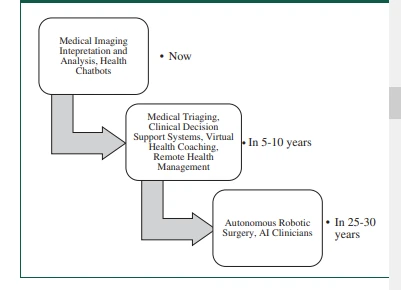
Artificial intelligence has been proposed as a way to support some healthcare tasks, including analysis and decision support (Reddy et al., 2019). It does not remove the need for trained staff, oversight or evaluation. The figure below presents a historical conceptual timeline of possible applications, not measured rates of adoption or a current forecast. The management challenge is to assess whether a particular application is appropriate, reliable and compatible with the service in which it will be used.
Figure 3. A historical conceptual timeline of possible AI applications in healthcare from Reddy et al. (2019). The time horizons are those of the original publication, not predictions issued by this review.
Source: Reddy et al. (2019).
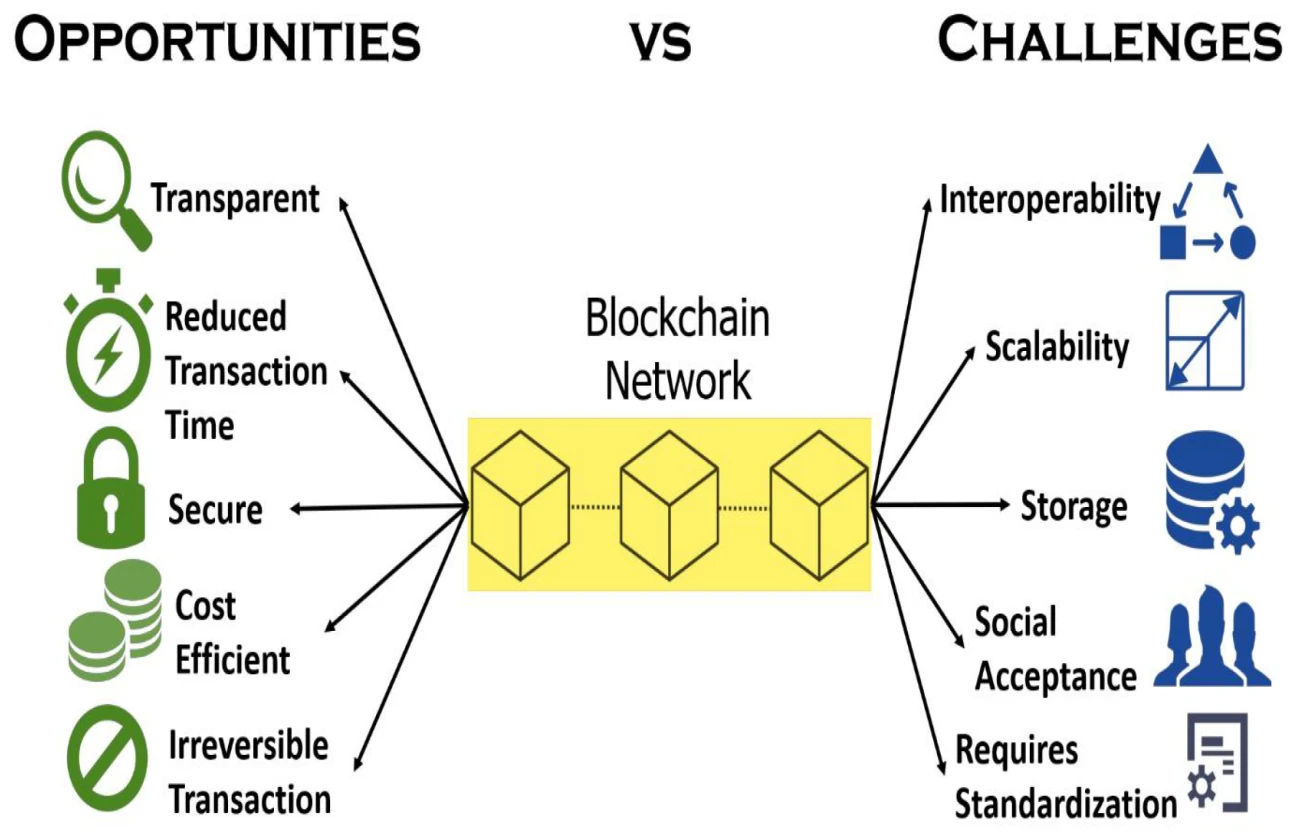
Electronic medical records require protection against unauthorised access, loss and inappropriate modification. Attaran (2022) discusses blockchain as a possible approach to aspects of healthcare information management, while Siyal et al. (2019) consider its applications and challenges. Blockchain does not automatically secure every device, user account or data transfer. Its suitability depends on architecture, governance and implementation. The management question is therefore how safeguards work together, rather than whether one technology can guarantee confidentiality on its own.
No single model resolves all implementation problems. Policies and working practices need to support the relationship between technology and care. Hemsley et al. (2018) emphasise the health-literacy demands associated with electronic personal health records. User-friendly design and appropriate assistance are important for patients as well as staff. Responsibility for usability therefore extends to developers and organisations procuring systems, not only to the people expected to use them.
Figure 4. Opportunities and challenges associated with blockchain technology, from Siyal et al. (2019). The potential benefits shown depend on implementation and do not constitute security guarantees.
(Source: Siyal et al., 2019)
Cost
Technology creates costs throughout its life cycle, including procurement, integration, maintenance, upgrades and user support. NHS organisations must consider these commitments alongside other service needs. Historical spending pressures described by Khan (2023) provide context, but the assessment of an individual system requires more specific information. A tool that cannot be maintained or supported may fail to deliver its intended value even if its initial purchase is affordable. Cost should therefore be considered together with operational capability and expected outcomes.
Mikhailova (2018) discusses how investment affects the implementation and management of healthcare technologies. Smaller providers may find some systems particularly difficult to sustain, while larger organisations face their own integration and coordination demands. These differences make it important to evaluate realistic operating costs. Investment can enable change, but it does not establish that every technology will save money or improve care in every setting.
Ethical Responsibilities
Ethical responsibilities include confidentiality, accurate information handling, appropriate consent and accountability for decisions. Digital systems can make information easier to access and share, which creates benefits as well as risks. Siyal et al. (2019) and Pesapane et al. (2018) discuss governance and ethical questions associated with emerging technologies. Access should be limited to legitimate purposes, and organisations need arrangements for detecting and responding to misuse. The existence of a technical capability does not itself justify collecting or disclosing patient data.
Changes Following Implementation
Introducing a system can change workflow, responsibilities and communication. Staff may need time to learn new processes, and services may need to reorganise tasks around the technology. Burgin et al. (2023) discuss digital skills in a healthcare workforce context. Such findings support planning for change rather than assuming that implementation ends when software becomes available. Phased introduction, feedback and evaluation can help identify where a tool creates additional workload or does not fit existing practice.
Effects on Healthcare Delivery
The second research question concerns the contribution of technological innovation management to healthcare delivery. The literature describes possible benefits for communication, access, staff support and coordination. These benefits depend on clinical appropriateness and implementation. The discussion below identifies examples from the source literature without treating every reported change as a proven improvement across the NHS.
Healthcare Worker Safety
Remote communication can reduce the need for some face-to-face contacts when distancing is necessary, as illustrated during COVID-19 (Bidmead and Marshall, 2020). This may support continuity of care and reduce some exposure opportunities, but it is not suitable for every clinical encounter. Healthcare worker safety also depends on staffing, procedures and the environment. Technology should therefore be considered as one part of a wider approach rather than as a complete solution to occupational risk.
Health Information and Communication
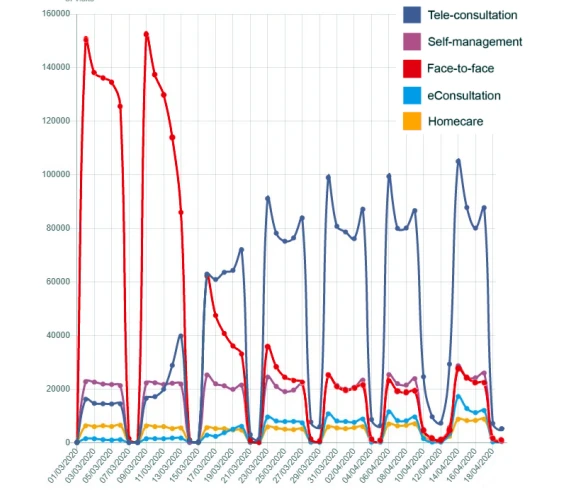
Digital systems can support information exchange and communication between patients and healthcare teams. Sust et al. (2020) describe changes to consultation patterns during COVID-19 in Catalonia. Those patterns are not NHS activity data, and a change in consultation mode is not itself proof of improved outcomes. Effective management requires reliable systems, clear responsibilities and arrangements for patients whose needs cannot be met remotely.
Figure 5. Changes in consultation modes during the early COVID-19 period in Catalonia, from Sust et al. (2020). These are not NHS England service-use figures.
(Source: Sust, et al., 2020).
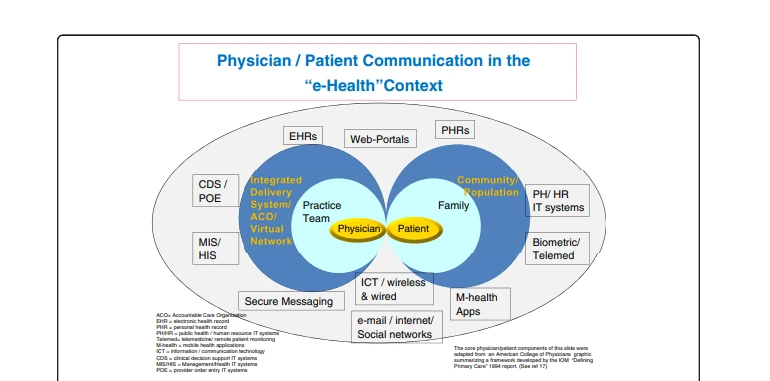
Weiner (2012) discusses communication between physicians and patients in an e-health environment. Portals, electronic records, mobile applications and messaging can create additional channels, but they also require coordination. Information must be available to the appropriate people and integrated into clinical work. The diagram below describes a communication context rather than a measured effect on patient outcomes.
Figure 6. Physician–patient communication in the e-health context, from Weiner (2012).
Source: Weiner (2012).
Evidence-Based Interventions
Digital interventions can be designed and evaluated to support health-related behaviour change (Michie et al., 2017). Evidence-based practice requires examining the quality and applicability of that evaluation. The presence of an application or an online platform is not itself evidence that a particular operation, treatment or service is needed. Management should therefore connect technology selection to credible evidence, intended users and relevant outcomes, with continued assessment after implementation.
Team-Based Care
Shared information systems can support coordination among professionals involved in a patient’s care. Their usefulness depends on appropriate access, accurate records and integration with team responsibilities. Alkureishi et al. (2016) review the relationship between electronic medical record use and patient–doctor communication. Its study-level findings should not be converted into a new participant sample or treated as direct evidence that every shared database improves teamwork. Coordination also requires agreed processes for acting on information and communicating across services.
Discussion
The discussion brings together the review’s themes to consider how technological innovation management relates to healthcare delivery. The central finding is that technical capability and organisational readiness need to be considered together. Existing studies address adoption, implementation, communication and management from different perspectives (Sust et al., 2020; Mikhailova, 2018; Alkureishi et al., 2016). The review does not establish that no relevant work exists or that older studies lack value. It considers how their findings can inform questions about resources, governance, staff involvement and patient access in NHS England.
This study discusses the findings with the following themes.
Healthcare Delivery
Healthcare delivery includes the services and organisational arrangements intended to meet people’s health needs. Piña et al. (2015) describe dimensions of delivery systems, while the World Health Organization (2012) places services within a wider health-system context. Technology should be evaluated against those purposes rather than treated as an end in itself. Patient outcomes matter, but no single outcome provides a complete assessment of service quality. Access, safety, coordination and experience also require consideration.
Technology
Technology can support tasks and communication across a healthcare organisation (Coccia, 2021). Its value depends on how it is connected to work processes and the people using it. A digital communication channel, for example, may make information easier to share, but effective coordination also requires clear responsibilities and suitable access controls. The introduction of a connection between departments should not be mistaken for proof that the wider system is functioning well.
Adoption of Healthcare Technology
Healthcare technologies include devices, equipment, software and information systems. Their adoption requires more than demonstrating a technical function. Staff and patients need to understand how a system fits the service and what support is available. Reddy et al. (2019) discuss opportunities for AI-enabled healthcare, while other implementation literature highlights the importance of professional involvement. The pace of adoption should be assessed in relation to safety, usefulness and organisational capacity, rather than assuming that faster adoption is always preferable.
Adoption can be constrained by funding, skills, infrastructure and concerns about information handling (De Grood et al., 2016; Bryce et al., 2020). Digital systems create opportunities for sharing data, but they also require safeguards against unauthorised use. Cryptography and other controls can reduce risks; they should not be dismissed as useless or described as guarantees of complete security. Governance, training, access management and monitoring remain important alongside technical protections.
Jones et al. (2016) emphasise the work needed to integrate point-of-care testing into routine practice. A system may be available without becoming a reliable part of everyday work. Normalisation involves changes in roles, habits and coordination, and may require continued support after the initial launch. This helps explain why implementation cannot be assessed solely by counting installed systems or registered users.
Cost and usefulness need to be considered together. Sust et al. (2020) describe digital developments during the pandemic, but those examples do not establish that every technology is cost-effective. TAM provides a way to consider perceived usefulness and ease of use in acceptance (Holden and Karsh, 2010). It does not state that a technology will be adopted merely because its designers intend it to solve a problem. Users’ circumstances and organisational support also matter.
Electronic personal health records can place demands on health literacy and digital skills (Hemsley et al., 2018). A system may have useful functions while remaining difficult for some patients to navigate. This is consistent with TAM’s attention to ease of use, rather than a contradiction of the model. Hollis et al. (2015) also highlights the importance of involving patients and clinicians in evaluating digital interventions. Usability and relevance should therefore be considered from the design stage.
Management
For this study, management concerns the coordination of people, resources and processes needed to use technology in care. These arrangements need to adapt as systems and services change. Perspectives on technological determinism draw attention to the influence of technologies on work patterns, but they should not be taken to mean that organisations have no choices or that every change is progress (Dafoe, 2015). Managers, professionals and patients can influence how systems are selected and used.
Funding
Cresswell et al. (2021) examine the Global Digital Exemplar Programme as an approach to accelerating digital maturity and sharing learning in the NHS. Funding can support implementation, but competitive allocation also raises questions about how organisations with different starting capabilities benefit. Management needs to consider not only which projects receive initial investment, but how knowledge, support and continuing resources are distributed across services.
Innovation in Healthcare Delivery
Digital services can reduce the need for some journeys and create additional ways to communicate, as the pandemic experience described by Sust et al. (2020) illustrate. They may also introduce technical faults, accessibility barriers or additional demands on users. The NHS’s Technology Enabled Care Services material cited in the 2023 manuscript provides a policy context for such work (NHS, 2023). Understanding a tool’s intended users and appropriate place in care is essential to implementation.
Privacy and Ethical Standards
Patient confidentiality remains a core responsibility when information is stored or shared digitally. Wider access can improve coordination while also increasing the need for appropriate permissions and oversight. Blockchain is one approach discussed in the literature, but it does not automatically provide end-to-end encryption or prevent every breach (Siyal et al., 2019; Attaran, 2022). Its potential applications, including traceability, require evaluation alongside interoperability, scalability and governance. Appropriate safeguards must address the whole information pathway, including users and devices.
Communication Between Patients and Clinicians
Digital records can support a consultation but may also divert attention from the patient. De Grood et al. (2016) discuss implementation concerns, while Shachak and Reis (2009) and Alkureishi et al. (2016) examine communication in the presence of electronic records. The management question is how systems can support rather than obstruct interaction. Screen placement, workflow and communication skills may all matter. Patients’ preferences and the purpose of the encounter should inform the choice of communication mode.
Patient Involvement
Patients participate in care through decisions, communication and self-management. Digital tools may help them view information or ask questions, but involvement should not depend entirely on their ability to use a device. Services need to explain information clearly and offer suitable support. The aim is meaningful participation rather than simply providing access to a screen. Patient feedback can help identify whether a technology improves understanding or creates additional barriers.
The Digital Divide
Access to a device does not necessarily mean that a person can use a digital service effectively. Connectivity, affordability, language, disability, health literacy and confidence can all affect participation (Walker et al., 2020). Accessibility should account for different visual, hearing, cognitive and physical needs without assuming that everyone in an age group has the same abilities. Services also need appropriate alternatives for people who cannot use the digital route. Evaluating actual use and experience is more informative than relying only on website visit totals.
Digital inclusion also concerns staff. Professionals may vary in their experience, confidence and views about a system’s relevance to clinical work. Concerns about workload or clinical judgement should not automatically be attributed to age or unwillingness to change. De Grood et al. (2016) discuss physician adoption and implementation issues. Support should address practical needs and evaluate whether the system fits the work. No technology can reasonably be promised to be completely error-free.
Unintended Consequences and System Failures
Health information technology can have unintended consequences, including errors, workflow disruption and new demands on staff (Coiera et al., 2016). System failure may delay access to information or communication, while incorrect data can affect decisions. Planning therefore needs to include incident reporting, recovery arrangements and ways to continue essential care. Staff should understand the limitations of the technology and the procedures to follow when it is unavailable. Backup arrangements reduce disruption but do not remove the need for evaluation and ongoing maintenance (Mosnaim et al., 2020).
Future Directions
Digital tools are likely to continue influencing communication and service organisation, although the form and consequences of change remain open to decisions by organisations, professionals, patients and policymakers (Weiner, 2012). Technological determinism provides one perspective on that relationship, not a prediction that every innovation will transform care in the same way (Dafoe, 2015). Future evaluation should consider how systems interact with work processes and whether their intended benefits are realised.
Collaboration between developers, healthcare professionals and patients is important when identifying needs and evaluating proposed solutions. The number of available applications or devices does not establish their quality or suitability. Theoretical models of acceptance can help examine perceived usefulness, usability and social influences (Holden and Karsh, 2010). Future work should connect these questions with evidence about safety, effectiveness, accessibility and sustained operation. This can support decisions about which innovations deserve implementation and which require further development.
Conclusions and Recommendations
Conclusion
The review suggests that technological innovation management is an organisational task as well as a technical one. Adoption can be affected by resources, staff capability, infrastructure, privacy and the fit between a system and clinical work (De Grood et al., 2016; Bryce et al., 2020). Digital records and remote services may offer benefits, but those benefits depend on implementation and appropriate use. Managing information responsibly and maintaining trust are therefore part of the work required to support technology in care.
As technologies develop, organisations need to review how they are used and whether they remain suitable. Existing routines may need to change, but change should be guided by evidence and service needs. Theoretical perspectives help frame questions about acceptance and organisational effects; they do not demonstrate that innovation is automatically beneficial. Management should connect the purpose of a system with the resources, responsibilities and evaluation needed for its use.
Funding and workforce capacity recur throughout the literature. Historical pressures on spending growth provide context, but they do not establish the budget position of every organisation or the value of a particular investment (Khan, 2023). Staff development and support are equally important. A system’s potential cannot be realised if the people expected to use it lack the time, skills or suitable working arrangements.
Implementation may alter responsibilities, communication and workflow. These effects require planning and continuing support, rather than an assumption that staff will adapt without assistance. Digital inclusion is also important for patients. Age alone does not determine ability or willingness to use technology; accessibility, experience, health and social circumstances may all contribute (Walker et al., 2020). Services should therefore assess needs directly and provide appropriate alternatives.
The reviewed literature identifies potential benefits for communication, continuity and coordination, including during COVID-19 restrictions (Sust et al., 2020; Bidmead and Marshall, 2020). Shared systems may support team-based care, while remote contacts can be appropriate for some interactions. Findings from other health systems nevertheless require careful assessment before being applied to NHS England. A technology’s contribution depends on the service context and the way it is managed.
Digital interventions should be evaluated against relevant outcomes rather than assumed to be effective because they use technology. Michie et al. (2017) discuss the development and evaluation of interventions for health-related behaviour change. Evidence needs to inform selection and implementation, with continued assessment of unintended effects and inequalities in access.
Overall, the review supports an approach that links technology with governance, staff involvement, patient needs and evaluation. Communication tools, electronic records and remote services can change how care is organised, but their value is conditional. The recommendations below concern those supporting arrangements rather than a guarantee that a particular system will improve outcomes.
Recommendations
Organisations should use proportionate safeguards for digital records, including appropriate access controls, staff responsibilities and procedures for responding to incidents. Blockchain may be considered where its properties address a clearly defined need, but it is not a mandatory solution to every information-security problem (Siyal et al., 2019; Attaran, 2022). Its benefits and limitations should be assessed alongside alternative approaches, costs and interoperability requirements.
Staff development should accompany implementation and major system changes. Training needs to cover practical use, information governance and procedures for dealing with faults or uncertain information. Coiera et al. (2016) highlight the importance of unintended consequences. Support should continue beyond the initial launch so that users can report problems and adapt their work safely.
Decision makers should establish the purpose of a proposed technology, the users it is intended to support and the outcomes by which it will be evaluated. Perceived usefulness and ease of use can inform acceptance, but they do not replace assessment of safety or effectiveness (Holden and Karsh, 2010). Procurement and implementation should therefore connect technical features with a clear service need.
Implementation should include plans for workflow changes, phased introduction where appropriate, and evaluation of emerging problems. Services also need arrangements for continuing essential activities when systems fail. Such planning recognises that no technology is perfect and that staff may need to switch to an alternative process during disruption (Mosnaim et al., 2020).
Healthcare organisations should continue involving users in the development and evaluation of technology-enabled services. The historical NHS Technology Enabled Care Services material cited by the study provides one context for this work (NHS, 2023). The practical emphasis should be on matching the technology to the service, supporting users and checking whether intended benefits occur.
Accessibility should be considered when technologies are designed, selected and introduced. Services need to account for visual, hearing, physical, cognitive and language needs without assuming that one format suits everyone (Walker et al., 2020). Non-digital alternatives and personal assistance may remain necessary. Understanding who uses a service, who does not, and why can help identify exclusions that usage totals alone conceal.
Healthcare workers, patients and developers should collaborate throughout design and implementation. Their perspectives can help identify workflow problems, usability barriers and unmet needs. Participation does not guarantee a trouble-free launch, but it can improve understanding of the context in which a system will operate. Feedback should inform revisions and continuing evaluation.
Electronic personal health records should use clear language, accessible interfaces and support suited to users’ literacy and digital skills (Hemsley et al., 2018). Where relevant, services should consider language options and appropriate visual or assistive formats. These decisions should be informed by users rather than based on assumptions about educational level. The aim is to improve participation without making digital competence a condition of receiving care.
Funding decisions should consider clinical need, implementation readiness, equity and continuing operating costs. Programmes such as the Global Digital Exemplar initiative offer lessons about investment and knowledge sharing (Cresswell et al., 2021), but their historical arrangements should not be presented as a current procurement instruction. Resources should support maintenance, training and evaluation as well as initial acquisition.
Future research should examine the social, psychological and practical factors affecting patients’ use of digital services. Older adults should be included without assuming that they are uniformly less capable or interested. Studies could investigate how support, design and service alternatives influence participation across different groups. Such evidence can inform more inclusive management decisions.
Further primary research could explore the experiences of NHS staff and patients directly. Surveys, interviews or observation could complement the present review and assess how implementation operates in particular settings. Sampling should reflect the research question and the diversity of relevant roles and users, rather than relying only on a larger sample as a guarantee of better evidence.
Comparative studies across organisations of different sizes and regions could help assess which findings transfer between settings. They should distinguish local implementation conditions from broader patterns. This would extend understanding beyond the present focus on NHS England while retaining attention to differences in governance, resources and patient populations.
Limitations
The study has limitations arising from its sources, selection process and interpretive approach. These affect the confidence and scope of its conclusions and should not be dismissed on the grounds that the research is original. The main limitations are outlined below.
The review depends on the accuracy and reporting of the original literature. It cannot independently verify every dataset or implementation account. Selection through Google Scholar does not authenticate a source or eliminate bias. The reported search totals and filtering process also lack sufficient detail for complete replication. The findings should therefore be understood as a structured narrative synthesis, rather than an exhaustive systematic assessment.
Secondary sources were produced for purposes that may differ from this review’s questions. They may omit relevant variables or provide limited information about implementation and context (Elliott, 2015). Selecting relevant material can improve focus but does not give the reviewer control over the original data collection. Some management questions may consequently remain only partly addressed.
Interpretation may be influenced by the reviewer’s expectations and theoretical perspective. Transparent reporting and comparison across sources can help readers assess that influence, but cannot guarantee complete objectivity (Martins et al., 2018). The qualitative synthesis should therefore be read alongside the cited studies and their own limitations.
Thematic analysis involves decisions about which patterns matter and how they are described. Different researchers may organise the same literature differently. Relating the themes to the research questions provides a clear structure, but it does not establish that the selected themes are the only valid interpretation. This is a limitation of the scope of the analysis rather than proof that qualitative methods lack value.
The study uses published findings rather than identifiable participant-level records. This reduces some risks associated with primary data collection but does not remove duties concerning confidentiality, attribution and appropriate reuse (Tripathy, 2013). The review also relies on the ethical reporting of the original studies. It cannot independently establish every circumstance in which their data were obtained.
The focus on technological innovation management provides a coherent scope, but healthcare delivery is affected by many factors beyond technology. The review cannot isolate the effect of management from wider differences in staffing, resources or service design. Its conclusions therefore concern relationships described in the literature rather than a measured causal effect.
NHS England is the principal context, while some supporting evidence concerns other health systems. That material provides comparison, not a basis for assuming identical outcomes. The manuscript’s literature also reflects the period up to 2023. Subsequent changes in policy, technology and services are outside its analysis, and the findings should not be presented as a current audit of NHS performance.
References
Akhtar I. 2016 Research Design Available at https://www.researchgate.net/publication/308915548_Research_Design# [accessed 10 August, 2023].
Alkureishi, M.A., Lee, W.W., Lyons, M., Press, V.G., Imam, S., Nkansah-Amankra, A., Werner, D. and Arora, V.M., 2016. Impact of electronic medical record use on the patient–doctor relationship and communication: a systematic review. Journal of general internal medicine, 31, pp.548-560.
Arora, A., Wright, A., Cheng, T.K.M., Khwaja, Z. and Seah, M., 2021. Innovation pathways in the NHS: An introductory review. Therapeutic Innovation & Regulatory Science, 55(5), pp.1045-1058.
Atherton, H., & Majeed, A. (2011). An information revolution: time for the NHS to step up to the challenge. Journal of the Royal Society of Medicine, 104, 228 – 230.
Attaran, M., 2022. Blockchain technology in healthcare: Challenges and opportunities. International Journal of Healthcare Management, 15(1), pp.70-83.
Bassot, B., 2022. Doing qualitative desk-based research: A practical guide to writing an excellent dissertation. Policy Press.
Bidmead, E. and Marshall, A., 2020. Covid-19 and the ‘new normal’: are remote video consultations here to stay? British Medical Bulletin.
Blake, H., Bermingham, F., Johnson, G. and Tabner, A., 2020. Mitigating the psychological impact of COVID-19 on healthcare workers: a digital learning package. International journal of environmental research and public health, 17(9), p.2997.
Braun, V. & Clarke, V. (2012) Thematic analysis. APA handbook of research methods in psychology, 2 pp. 57-71.
Braun, V., & Clarke, V. (2006). Using thematic analysis in psychology. Qualitative Research in Psychology, 3(2), 77-101.
Bryce, C., Ring, P., Ashby, S. and Wardman, J.K., 2020. Resilience in the face of uncertainty: Early lessons from the COVID-19 pandemic. Journal of Risk Research, 23(7-8), pp.880-887.
Bryman, A., 2012. Social research methods. 4th ed. Oxford University Press.
Burgin, A.M., Gardner, P.H., Easthall, C., & Randell, R. (2023). 503 Barriers and facilitators to the development of pharmacy workforce digital skills– a qualitative study. International Journal of Pharmacy Practice.
Choi, S. and Moon, M.J., 2023. Disruptive technologies and future societies: Perspectives and forecasts based on Q-methodology. Futures, 145, p.103059.
Clark, G., 2013. Secondary data. Methods in Human Geography, pp.57-73.
Coccia M. (2021) Technological Innovation. National Research Council of Italy, 1, 1-7.
Coccia, M. and Watts, J. (2020) A theory of the evolution of technology: technological parasitism and the implications for innovation management. Journal of Engineering and Technology Management, 55. doi:10.1016/j.jengtecman.2019.11.003.
Coiera E., Ash J. and Berg M. 2016. The Unintended Consequences of Health Information Technology Revisited Yearb Med Inform,1, 163–169.
Cresswell, K.M., Williams, R., & Sheikh, A. (2021). Bridging the growing digital divide between NHS England’s hospitals. Journal of the Royal Society of Medicine, 114, 111 – 112.
Creswell, J.W. and Creswell, J.D., 2017. Research design: Qualitative, quantitative, and mixed methods approaches. Sage publications.
Dafoe, A. (2015) On technological determinism: A typology, scope conditions, and a mechanism. Science, Technology, & Human Values, 40(6), pp.1047-1076.
De Grood, C., Raissi, A., Kwon, Y. and Santana, M.J., 2016. Adoption of e-health technology by physicians: a scoping review. Journal of multidisciplinary healthcare, pp.335-344.
Ejeh, C.J. (2017). Developing a knowledge management framework for facilities management services for the control of exogenous healthcare associated infections (HCAI) in NHS hospitals.
Elliott, D.C., 2015. Secondary data analysis. In Research in the college context. Routledge, pp.175-184
Etikan, I., Musa, S.A. and Alkassim, R.S., 2016. Comparison of convenience sampling and purposive sampling. American journal of theoretical and applied statistics, 5(1), pp.1-4.
European Health Observatory (2023) Health care delivery Available at https://eurohealthobservatory.who.int/themes/health-system-functions/health-care-delivery#:~:text=It%20concentrates%20on%20patient%20flows,maintenance%20and%20restoration%20of%20health [accessed 14 July, 2023].
Field, B., Read, J., Jones, N.L., Fegan, C., & Lanfranchi, V. (2020). Occupational therapists need to be involved in developing and evaluating technological solutions to support remote working. British Journal of Occupational Therapy, 84, 69 – 71.
Hemsley, B., Rollo, M., Georgiou, A., Balandin, S. and Hill, S., 2018. The health literacy demands of electronic personal health records (e-PHRs): An integrative review to inform future inclusive research. Patient education and counselling, 101(1), pp.2-15.
Holden, R.J. and Karsh, B.T., 2010. The technology acceptance model: its past and its future in health care. Journal of biomedical informatics, 43(1), pp.159-172.
Hollis, C., Morriss, R., Martin, J., Amani, S., Cotton, R., Denis, M. and Lewis, S., 2015. Technological innovations in mental healthcare: harnessing the digital revolution. The British Journal of Psychiatry, 206(4), pp.263-265.
Houngbo, P.T., Zweekhorst, M., Bunders, J., Coleman, H.L.S., Medenou, D., Dakpanon, L. and De Cock Buning, T., 2017. The root causes of ineffective and inefficient healthcare technology management in Benin public health sector. Health Policy and Technology, 6(4), 446–456. https://doi.org/10.1016/j.hlpt.2017.06.004.
Hox, J.J. and Boeije, H.R., 2005. Data collection, primary versus secondary. 593-599
Jones, C.H., Glogowska, M., Locock, L. and Lasserson, D.S., 2016. Embedding new technologies in practice–a normalisation process theory study of point of care testing. BMC health services research, 16(1), pp.1-10.
Khan, 2023. The Emerging Challenges and Strengths of the National Health Services: A Physician Perspective Cureus, 15(5), e38617.Cureus, 15(5), e38617.
Larnyo E., Dia B., Kusiator A., Tetteh A. E (2018) Impact of Technological Innovation Management on Health Care Service Delivery: A Systematic Review. Journal of Information Engineering and Applications 8(9), 21-34.
Linnenluecke, M.K., Marrone, M. and Singh, A.K., 2020. Conducting systematic literature reviews and bibliometric analyses. Australian Journal of Management, 45(2), pp.175-194.
Martins, F., Da Cunha, J., & Serra, F. (2018) Secondary Data in Research – Uses and Opportunities. Iberoamerican Journal of Strategic Management 17(4) 01-04.
Michie, S., Yardley, L., West, R., Patrick, K. and Greaves, F., 2017. Developing and evaluating digital interventions to promote behaviour change in health and health care: recommendations resulting from an international workshop. Journal of medical Internet research, 19(6), p.e232.
Mikhailova O. (2018) Adoption and implementation of new technologies in hospitals: a network perspective Available at https://www.researchgate.net/publication/325213313_Adoption_and_implementation_of_new_technologies_in_hospitals_a_network_perspective [accessed 14 July, 2023].
Mills, J. (2019). Digital health technology in palliative care: Friend or foe? Progress in Palliative Care, 27, 145 – 146.
Mishra, S.B. and Alok, S. (2022). Handbook of research methodology. Educreation Publishing, Dwarka, New Delhi
Mosnaim G S., Stempel H.,Van Sickle D and Stempel D. A. (2020) The Adoption and Implementation of Digital Health Care in the Post–COVID-19 Era. J Allergy Clin Immunol Pract, 8(8), 2484–2486.
NHS. 2023. Technology Enabled Care Services (TECS) Available at https://www.england.nhs.uk/tecs/ [accessed 17 July, 2023].
Pesapane, F., Volonté, C., Codari, M. and Sardanelli, F., 2018. Artificial intelligence as a medical device in radiology: ethical and regulatory issues in Europe and the United States. Insights into imaging, 9, pp.745-753.
Piña, I.L., Cohen, P.D., Larson, D.B., Marion, L.N., Sills, M.R., Solberg, L.I. and Zerzan, J., 2015. A framework for describing health care delivery organizations and systems. American Journal of Public Health, 105(4), 670–679. https://doi.org/10.2105/AJPH.2014.301926.
Reddy, S., Fox, J. and Purohit, M.P., 2019. Artificial intelligence-enabled healthcare delivery. Journal of the Royal Society of Medicine, 112(1), pp.22-28.
Rowland, S.P., Fitzgerald, J.E., Holme, T., Powell, J. and McGregor, A., 2020. What is the clinical value of mHealth for patients? NPJ digital medicine, 3(1), p.4.
Shachak, A. and Reis, S., 2009. The impact of electronic medical records on patient–doctor communication during consultation: a narrative literature review. Journal of Evaluation in clinical practice, 15(4), pp.641-649.
Siyal, A.A., Junejo, A.Z., Zawish, M., Ahmed, K., Khalil, A. and Soursou, G., 2019. Applications of blockchain technology in medicine and healthcare: Challenges and future perspectives. Cryptography, 3(1), p.3.
Snyder, H. (2019). Literature review as a research methodology: An overview and guidelines. Journal of business research, 104, pp.333-339.
Soiferman K. L. 2010. Compare and Contrast Inductive and Deductive Research Approaches. University of Manitoba, 1-23.
Statista (2023) Hospitals – Worldwide Available at https://es.statista.com/outlook/hmo/hospitals/worldwide [accessed 8 July, 2023].
Sust, P.P., Solans, O., Fajardo, J.C., Peralta, M.M., Rodenas, P., Gabaldà, J., Eroles, L.G., Comella, A., Muñoz, C.V., Ribes, J.S. and Monfa, R.R., 2020. Turning the crisis into an opportunity: digital health strategies deployed during the COVID-19 outbreak. JMIR public health and surveillance, 6(2), p.e19106.
Tenny S., Brannan J M and Brannan G. D. 2022. Qualitative Study Available at https://www.ncbi.nlm.nih.gov/books/NBK470395/ [accessed 12 July, 2023].
Tripathy, J.P., 2013. Secondary Data Analysis: Ethical Issues and Challenges. Iranian Journal of Public Health. 42(12), 1478–1479.Secondary Data Analysis: Ethical Issues and Challenges. Iran Journals of Public Health. 42(12), 1478–1479.
Turnbull, C., Scott, R.H., Thomas, E., Jones, L., Murugaesu, N., Pretty, F.B., Halai, D., Baple, E., Craig, C., Hamblin, A. and Henderson, S., 2018. The 100 000 Genomes Project: bringing whole genome sequencing to the NHS. Bmj, 361.
Wachter, R., 2016. Making IT work: harnessing the power of health information technology to improve care in England. London, UK: Department of Health, pp.1-71.
Walker, D.M., Hefner, J.L., Fareed, N., Huerta, T.R. and McAlearney, A.S., 2020. Exploring the digital divide: age and race disparities in use of an inpatient portal. Telemedicine and e-Health, 26(5), pp.603-613.
Weiner, J.P., 2012. Doctor-patient communication in the e-health era. Israel Journal of health policy research, 1(1), pp.1-7.
WHO (2018) How Do you ensure innovation in health service Available at https://apps.who.int/iris/rest/bitstreams/1280395/retrieve [accessed 15 July, 2023].
WHO. (2012) Health systems service delivery. Who. Published online Available at https://www.who.int/healthsystems/topics/delivery/en/ [accessed 11 July, 2023].
Cite This Work
To export a reference to this article please select a referencing stye below:

Academic Master Education Team is a group of academic editors and subject specialists responsible for producing structured, research-backed essays across multiple disciplines. Each article is developed following Academic Master’s Editorial Policy and supported by credible academic references. The team ensures clarity, citation accuracy, and adherence to ethical academic writing standards
Content reviewed under Academic Master Editorial Policy.