
Environmental Toxicology
Dietetics and nutritionTextbook
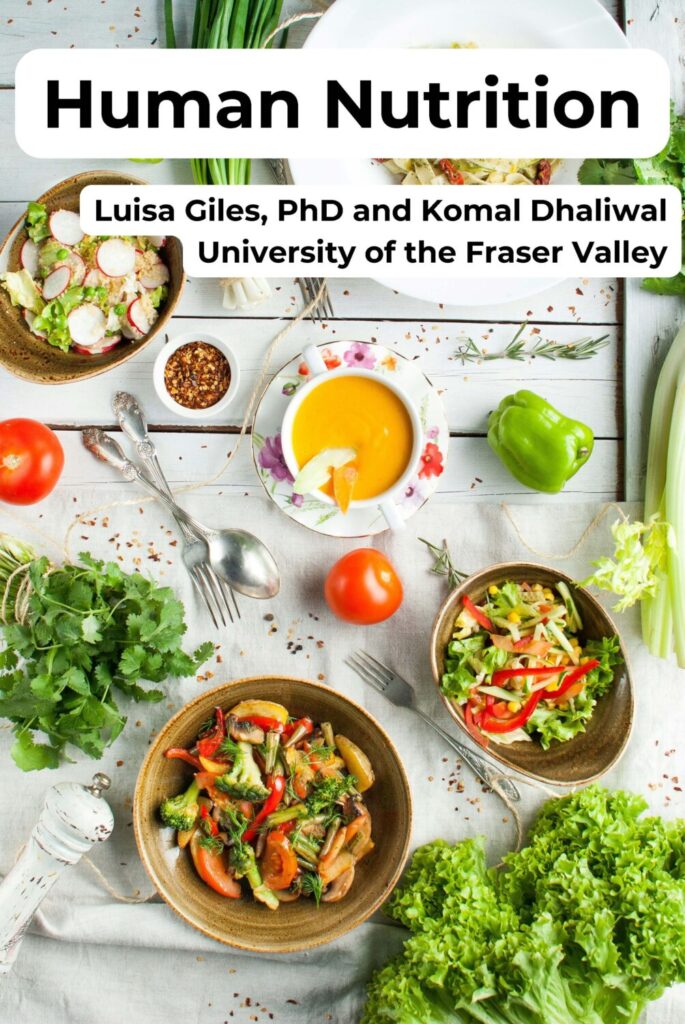
Human Nutrition
Not rated yetRate this bookHuman Nutrition is the University of the Fraser Valley adaptation reviewed and edited by Luisa Giles and Komal Dhaliwal in 2024. Fifteen chapters connect research literacy, dietary patterns, digestion, macronutrients, metabolism, micronutrients, physical activity, and Health at Every Size. This guide also explains the reference-value appendix and practice materials while preserving the source's attention to inclusion, Indigenous perspectives, and weight stigma.
Free reading is available at the official source. Opens in a new tab.
 Free
About this book
Human Nutrition is the University of the Fraser Valley adaptation reviewed and edited by Luisa Giles and Komal Dhaliwal in 2024. Fifteen chapters connect research literacy, dietary patterns, digestion, macronutrients, metabolism, micronutrients, physical activity, and Health at Every Size. This guide also explains the reference-value appendix and practice materials while preserving the source's attention to inclusion, Indigenous perspectives, and weight stigma.
Chapter-wise summaries and study tasks
Chapter 1. Introduction to Nutrition
Nutrition examines how food, nutrients, digestion, metabolism, and wider conditions relate to health. The introductory chapter distinguishes nutrient classes and the purposes of reference intake values, then connects these foundations with research literacy. A reference estimate describes a defined population and use; it is not a diagnostic result for an individual. Study designs answer different questions, and an association reported in the media should not automatically become a causal dietary claim. Finding peer-reviewed work and documenting sources support evaluation but do not remove the need to examine methods and uncertainty. This adaptation also situates learning within accessibility, inclusion, and Indigenous perspectives introduced in its front matter.
Study task. Compare a fictional media claim with the study it describes, identifying design, population, outcome, uncertainty, and any unjustified causal language. Explain which reference-intake concept would be relevant without prescribing an intake.
Chapter 2. Designing a Healthy Diet
A healthy dietary pattern involves adequacy, balance, moderation, and variety within practical and cultural circumstances. The chapter connects these principles with Canadian food guidance and interpretation of packaging. Ingredient lists, nutrition information, serving amounts, and marketing claims provide different kinds of information and should not be read interchangeably. A comparison can change when products use different serving sizes, so establish a common basis before judging quantities. Food access, affordability, preferences, and preparation conditions influence what choices are feasible. Use the source's guidance as educational context rather than reducing eating to a universal list of good and bad foods.
Study task. Compare two fictional labels on a common serving basis, distinguishing ingredients, nutrient amounts, and promotional claims. Suggest questions about cost, access, and cultural suitability before evaluating a dietary pattern.
Chapter 3. Digestion, Absorption, and Elimination
Digestion transforms food through coordinated mechanical and chemical processes, while absorption moves resulting substances into the body's transport systems. The gastrointestinal tract works with accessory organs, including the liver, pancreas, and gallbladder. Enzymes, hormones, movement, and specialized surfaces contribute different functions. Hunger and appetite also involve interacting physiological, psychological, and environmental influences rather than a simple separation between a 'real' and an illegitimate desire to eat. Trace where a process occurs and what it accomplishes instead of memorizing organ names alone. Elimination is a later function and should not be confused with the absorption or metabolism of nutrients.
Study task. Trace a fictional mixed meal through the digestive tract, naming mechanical actions, selected secretions, absorption routes, and elimination. Distinguish the roles of an enzyme, a hormone, and an organ.
Chapter 4. Carbohydrates
Carbohydrates include sugars, starches, and fibers with different structures, food sources, and physiological roles. Digestion and absorption depend on those structures and on the food context; the label 'simple' or 'complex' does not by itself determine an overall health effect. Glucose supports energy production, storage, and other functions, while fiber interacts with digestion and the intestinal environment. Glycemic index describes a particular response under defined conditions and is not a complete rating of a food. The chapter examines added sugars, whole grains, substitutions, and claims about dietary patterns. Evaluate the evidence and comparison being made rather than assigning all carbohydrate foods one effect.
Study task. Compare three fictional carbohydrate-containing foods by composition, fiber, portion, and meal context. Explain why molecular category or glycemic index alone cannot establish the best choice for a particular person.
Chapter 5. Lipids
Lipids include triglycerides, phospholipids, and sterols, each with distinct structures and roles. Fatty-acid saturation affects properties, while essential fatty acids require dietary sources. Digestion, absorption, transport, storage, and use involve processes different from simply dissolving nutrients in blood. Lipids provide energy, support membranes and signaling, and contribute to food qualities and nutrient availability. The chapter also examines lipoproteins and evidence concerning dietary fats and disease. A statement about replacing one fat source needs to identify what replaces it and in which dietary pattern. Distinguish cholesterol as a substance from the particles that transport it and avoid equating a single nutrient with a whole diet.
Study task. Create a diagram linking lipid types with digestion, transport, and functions. Audit a fictional fat-related claim for its comparator, food context, measured outcome, and strength of evidence.
Chapter 6. Proteins
Proteins are chains of amino acids whose sequence and folding influence function. Denaturation changes structure but should not be confused with the complete breakdown that occurs during digestion. Amino acids support tissue maintenance, enzymes, transport, immune functions, and many other processes, with turnover continually recycling material. Dietary quality concerns the supply and availability of amino acids within an overall pattern rather than whether one food is morally superior. The chapter compares sources and considers vegetarian patterns, older adults, athletic contexts, supplements, and inadequacy or excess. Requirements and clinical concerns depend on circumstances, so educational calculations should not become individualized prescriptions.
Study task. Compare complementary fictional protein sources within a day's pattern and trace their digestion. Explain the distinction among denaturation, digestion, and protein synthesis, then identify evidence needed to evaluate a supplement claim.
Chapter 7. Metabolism
Metabolism includes reactions that break down molecules and reactions that build or maintain them. ATP links energy-releasing processes with cellular work, while pathways involving carbohydrates, lipids, and amino acids connect through shared intermediates. A food's energy value is not the same thing as its complete nutritional quality. Hormonal regulation helps shift the use and storage of fuels with circumstances such as feeding and fasting. The chapter's overview supports a map of relationships rather than an isolated list of pathway names. Keep digestion, absorption, and cellular metabolism distinct even though they are connected in the use of food.
Study task. Draw a high-level map connecting the three macronutrients with ATP production, storage, and biosynthesis. Compare a fed and a fasting state without implying that only one fuel is used at a time.
Chapter 8. Introduction to Micronutrients
Micronutrients are needed in relatively small amounts but play essential roles in processes across the body. Vitamins and minerals differ in their chemical nature and behavior, while water- and fat-soluble vitamins have different handling and storage patterns. Bioavailability depends on the nutrient form, food matrix, interactions, and physiological context. A measured amount in a food is therefore not necessarily identical to the amount absorbed or used. Deficiency, adequacy, and toxicity must be distinguished, and a larger intake is not automatically beneficial. This overview prepares for grouping micronutrients by function while recognizing that many contribute to more than one system.
Study task. Create a comparison table for vitamins and minerals covering sources, absorption influences, roles, and possible excess. Explain why a nutrient amount on a label cannot alone establish an individual's nutritional status.
Chapter 9. Micronutrients for Energy
The energy-related micronutrients support metabolic reactions rather than supplying food energy themselves. Several B vitamins contribute to coenzymes, while iodine and other nutrients influence systems involved in regulation and metabolism. The chapter organizes functions, sources, deficiency patterns, and relevant interactions. A symptom or food record alone cannot diagnose a deficiency because several explanations may fit the same observation.
The section on residential-school nutrition experiments places scientific claims within a history of coercion, deprivation, and violations of autonomy. Ethical judgment cannot be separated from the circumstances in which knowledge was produced. Treat these accounts respectfully and distinguish learning about their consequences from reproducing the assumptions that enabled them. Nutritional science requires both sound methods and accountable relationships with the people affected by research.
Study task. Map selected B vitamins to their metabolic roles without describing them as sources of calories. Write a separate reflection identifying consent, power, and harm in the source's historical research discussion.
Chapter 10. Micronutrients Involved in Fluid and Electrolyte Balance
Water and electrolytes support fluid distribution, transport, nerve and muscle function, and other physiological processes. Osmotic relationships help explain movement across compartments, while kidneys and hormones contribute to regulation. Sodium, potassium, chloride, and phosphorus have overlapping but distinct roles. The chapter connects these foundations with consumption patterns and blood-pressure discussions. Needs and safety depend on health, activity, environment, and other circumstances, making a universal personal fluid target inappropriate. Distinguish a physiological mechanism from a dietary association or clinical intervention. Excess as well as deficiency can be harmful, and medical conditions may alter how general guidance is applied.
Study task. Draw a conceptual fluid-balance diagram with inputs, outputs, compartments, and regulatory signals. Evaluate a fictional hydration claim for missing context and explain why an electrolyte mechanism does not alone justify supplementation.
Chapter 11. Micronutrients as Antioxidants
Antioxidant systems interact with reactive molecules arising through normal metabolism and other processes. Vitamins E and C, vitamin A-related compounds, selenium, and other components participate in different ways; their roles are not interchangeable. The chapter connects mechanisms with food sources, inadequacy, excess, and research on disease outcomes. A plausible biochemical mechanism does not guarantee that a high-dose supplement improves health. Evidence about nutrient-rich foods can reflect the wider dietary pattern and cannot automatically be attributed to an isolated compound. Read study design, dose, population, and comparator before converting an antioxidant label into a broad protective claim.
Study task. Compare a mechanistic antioxidant explanation with a fictional intervention study. Identify the gap between biological plausibility and demonstrated outcome, including what differs between food exposure and a supplement.
Chapter 12. Micronutrients for Bones
Bone is living tissue that remodels through interacting cellular, hormonal, mechanical, and nutritional influences. Calcium, vitamin D, vitamin K, phosphorus, magnesium, and fluoride contribute different functions, and their presence alone does not determine bone strength. Absorption, regulation, life stage, physical activity, and other health factors matter. The chapter's discussion of osteoporosis links nutrient foundations with a broader health condition without making a single food a complete preventive or therapeutic strategy. Distinguish bone mineral measures from all aspects of fracture risk. Deficiency and excess both require careful interpretation within a qualified assessment.
Study task. Create a bone-health concept map connecting nutrients, regulation, remodeling, and mechanical loading. Explain why an association between nutrient intake and bone outcomes does not by itself establish a supplement recommendation.
Chapter 13. Nutrition and Physical Activity
Physical activity creates changing energy and nutrient demands according to duration, intensity, training, environment, and recovery. Fitness includes several components, and fuel use involves overlapping pathways rather than exclusive switches between carbohydrate and fat. Sports nutrition connects preparation, activity, and recovery with overall dietary adequacy. Fluid and electrolyte losses vary substantially, so numerical examples require clear assumptions and should not be transferred uncritically to an individual. The chapter encourages matching evidence to the type of activity. Performance claims for products need scrutiny of study quality, outcomes, and whether the comparison resembles actual use.
Study task. Compare two fictional activities with different intensity and duration, mapping likely fuel and recovery considerations. Identify the personal and environmental information needed before applying any specific intake example.
Chapter 14. Health at Every Size
The Health at Every Size chapter broadens evaluation beyond body weight alone. BMI and measures of body composition describe different features and have limitations as individual health assessments. Cardiorespiratory fitness, behavior, access to food and activity, medical context, and lived experience provide additional information. Weight bias and stigma can cause harm and affect participation in care. A respectful account does not equate body size with character, effort, or a complete clinical picture.
The source also examines structural conditions and the intergenerational effects of hunger in residential schools. Energy balance remains a physiological relationship, but the determinants of intake, expenditure, and weight are complex. Avoid turning an accounting relationship into a simplistic instruction or an explanation of personal blame. Evaluate outcomes that support well-being and function while keeping claims proportionate to the evidence.
Study task. Audit a fictional health message for weight stigma and unsupported assumptions. Propose a more informative assessment framework that includes function, context, access, preferences, and relevant clinical evidence.
Chapter 15. Other Minerals
The remaining-minerals chapter surveys iron, sulfur, copper, zinc, chromium, manganese, and molybdenum. These substances have different roles and evidence bases; grouping them in one chapter does not imply equal requirements, similar absorption, or interchangeable deficiency patterns. Nutrient interactions can affect availability, while excess may create harm even for an essential nutrient. Iron illustrates why status, regulation, food sources, and the cause of an abnormal finding require careful distinction. Use the source to organize functions and questions rather than to diagnose from a symptom list. For evolving or contested claims, verify the strength and date of the underlying evidence.
Study task. Build a source-based comparison table for selected minerals with function, food sources, absorption considerations, and evidence limits. Explain why a symptom or supplement label cannot establish deficiency or benefit.
Appendix A: Comparison of Dietary Reference Intake Values (for adult men and women) and Daily Values for Micronutrients with the Tolerable Upper Intake Levels (UL), Safe Upper Levels (SUL), and Guidance Levels
The appendix places several intake-reference concepts side by side, including dietary reference values, labeling values, and upper-level guidance. These figures serve different populations and purposes and may come from different frameworks. A daily value on a label is not necessarily an individual's recommended intake, and an upper level is not an intake goal. Units, age or sex categories, nutrient form, and the context of a limit must be preserved. The appendix is a learning aid for comparison, not a substitute for current authoritative reference tables or professional assessment when an individual decision is needed.
Study task. Choose one nutrient from the appendix and explain the purpose, units, and population of each reference shown. Identify a misleading comparison that could arise from treating the columns as equivalent.
Chapter Practice Questions and Answers
The practice section supports retrieval, explanation, and checking across the earlier chapters. Attempting questions before consulting answers reveals whether understanding can be reconstructed rather than merely recognized. A correct response should connect a term with a mechanism or appropriate interpretation. When an answer differs, investigate whether the problem is vocabulary, process knowledge, arithmetic, or an unjustified inference. The linked PDF's answer material is organized through chapter 14, so it should not be presented as a complete answer key for every topic in chapter 15. Create additional questions where coverage is absent.
Study task. Complete a short mixed set without notes, explain the reasoning aloud, and classify errors. Add two original questions for a topic not covered by the available answer section and verify them against the relevant chapter.
How to study this book
- Begin with the source's accessibility and inclusion preface, then use each chapter's objectives and review to organize learning.
- Trace mechanisms through diagrams before memorizing lists of functions or deficiency descriptions.
- Distinguish nutrient mechanisms, observational associations, intervention evidence, and individualized clinical recommendations.
- Keep reference-value purpose, population, unit, and source date visible when comparing quantities.
- Use fictional food records and scenarios for the tasks; avoid diagnosing yourself or others from a symptom list or intake estimate.
- Approach historical accounts respectfully and examine how access, culture, stigma, and research ethics affect nutritional knowledge and practice.
Questions for reflection
- Does a claim concern a food pattern, an isolated nutrient, or a supplement?
- What alternative explanations remain compatible with an observed association?
- How do access and social context affect the options available to a person?
- Which important aspect of health is absent from a single weight or intake measure?
Source edition and coverage
The guide follows the fifteen chapters, reference-value appendix, and practice section of the linked UFV adaptation, whose front matter records review by Luisa Giles and Komal Dhaliwal in summer 2024. It draws on earlier resources by Karine Hamm and the University of Hawai'i at Mānoa program. The available answer section runs through chapter 14. Source-edition guidance and examples are educational and do not replace current reference standards or qualified individual nutrition care. These are original study explanations and learning tasks. Read the complete book at the official source.
About access & copyright
This page provides book information and study material. Full-text access is provided by the original publisher or authorised source; a listing does not grant permission to republish the book.
Read our Library Access & Copyright policyExplore the contents
Check the chapters covered in this edition.
Visit the official source
See reading, preview or purchase options.
Save for later
Keep this textbook in your saved collection.
Reader ratings & reviews
Share your thoughts
Your review helps other students choose the right resources.
KEEP LEARNING
Your next great read
Chemistry
Vaccination Programmes
Vaccination Programmes
View Vaccination Programmes — bookRelativistic Quantum Mechanics
Relativistic Quantum Mechanics
View Relativistic Quantum Mechanics — bookAerospace Structures
Aerospace Structures
View Aerospace Structures — book Abelian number fields
Number Fields
View Number Fields — book Textbook
Agricultural Meteorology and Climatology
View Agricultural Meteorology and Climatology — book Language teaching and learning
In the Community: An Intermediate Reading and Writing Textbook
View In the Community: An Intermediate Reading and Writing Textbook — book Communication Studies
Technical Writing Essentials 2nd Edition
View Technical Writing Essentials 2nd Edition — book Language learning for academic, technical and scientific purposes
Technical Communication in Engineering: A Place-Based Approach
View Technical Communication in Engineering: A Place-Based Approach — book mathematical modelling



