
 Social Sciences
Textbook
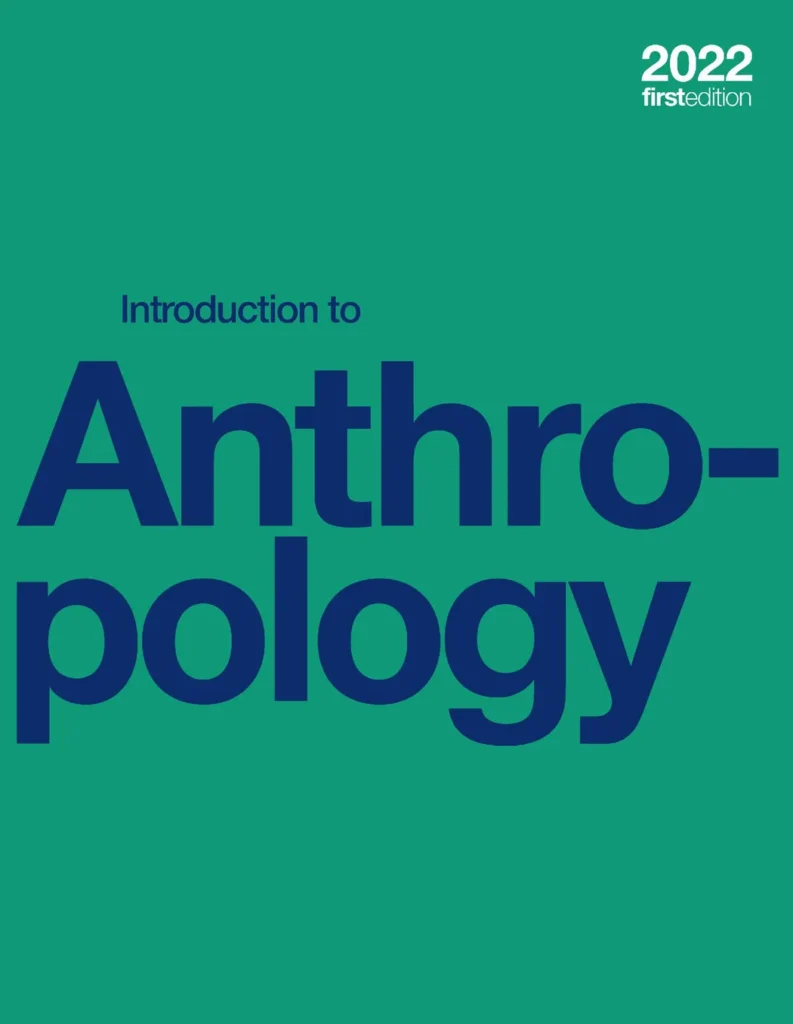
Introduction to Anthropology
Not rated yetRate this bookIntroduction to Anthropology by Jennifer Hasty, David G. Lewis, and Marjorie M. Snipes examines humanity through biological, archaeological, linguistic, and cultural perspectives. Twenty chapters connect evolution and research methods with language, economies, politics, kinship, inequality, religion, food, media, health, and Indigenous experience. This guide follows the textbook’s chapter structure and emphasizes comparison, context, evidence, and ethical responsibility when interpreting human lives.
Free reading is available at the official source. Opens in a new tab.
 Free
About this book
Introduction to Anthropology by Jennifer Hasty, David G. Lewis, and Marjorie M. Snipes examines humanity through biological, archaeological, linguistic, and cultural perspectives. Twenty chapters connect evolution and research methods with language, economies, politics, kinship, inequality, religion, food, media, health, and Indigenous experience. This guide follows the textbook’s chapter structure and emphasizes comparison, context, evidence, and ethical responsibility when interpreting human lives.
Chapter-wise summaries and study tasks
Chapter 1 What Is Anthropology?
Anthropology studies human diversity and the connections among biology, history, language, and social life. The first chapter introduces the four-field approach, holism, cross-cultural comparison, cultural relativism, and the effort to understand an insider’s perspective. Ethnocentrism treats familiar standards as the default measure of others, often making difference look like deficiency. Cultural relativism asks for contextual understanding; it does not mean that careful ethical evaluation becomes impossible. Readers should examine Western assumptions within research questions as well as within answers. Holism encourages relating a practice to wider conditions instead of explaining it in isolation. The chapter establishes a habit of asking what evidence and perspective are missing before declaring an unfamiliar behavior irrational.
Study task. Choose an everyday practice and describe it first through an outsider’s assumptions, then through plausible participant meanings. Identify evidence needed to avoid inventing an insider explanation.
Chapter 2 Methods: Cultural and Archaeological
Anthropological methods connect questions to evidence through archaeological research, ethnography, participant observation, interviewing, analysis, and collections. Different methods reveal different aspects of a situation: an interview gives an account, observation records activity in context, and material remains require interpretation through their relationships and preservation. Quantitative and qualitative approaches can complement one another when their purposes are clear. Readers should distinguish field notes from later interpretation and consider how a researcher’s presence affects access and responses. Conservation and museum collections also raise questions about ownership and the histories of acquisition. Ethical research requires more than gathering accurate information; relationships, consent, representation, and the consequences of publication shape responsible practice.
Study task. Design a fictional study of a public community space using observation and interviews. Explain the question each method addresses, how notes would separate evidence from inference, and how consent and privacy would be handled.
Chapter 3 Culture Concept Theory: Theories of Cultural Change
Culture includes learned meanings and practices that make life feel familiar while also allowing communication and change. The chapter examines elements and larger patterns of culture, different modes of analysis, and tensions within the concept itself. A gesture or practice can carry an implied meaning that is invisible without context. Culture is shared without being identical in every person’s experience, and it is patterned without being static or fully harmonious. Readers should avoid treating a society as a sealed container with one consistent belief system. Apparent contradictions can reveal negotiation, unequal power, or change. The chapter encourages understanding culture as something people enact and interpret rather than a simple list of national characteristics.
Study task. Analyze a familiar gesture or routine by separating its visible action from its contextual meaning. Identify a setting where the same action could be interpreted differently and explain what this shows about culture.
Chapter 4 Biological Evolution and Early Human Evidence
Biological anthropology situates humans within evolutionary processes and the wider primate world. The chapter introduces taxonomy, genetics, evolutionary mechanisms, primate characteristics, and early hominin evidence. Evolution concerns changes in populations across generations rather than an individual deciding to adapt. Similarity can reflect common ancestry, while classification requires multiple lines of evidence and remains open to revision. Fossils provide important information but are incomplete and unevenly preserved. Readers should resist imagining human evolution as a ladder leading inevitably to the present. A branching history better accommodates diversity, extinction, and uncertainty. The central task is to connect an evolutionary claim to the observations that support it and to distinguish established mechanisms from unresolved details.
Study task. Build a concept map connecting inheritance, variation, selection, and population change. Then explain why a branching evolutionary diagram is more appropriate than a simple progress ladder.
Chapter 5 The Genus Homo and the Emergence of Us
The history of the genus Homo draws together anatomy, tools, environments, and genetic evidence. The chapter discusses challenges in classification and the relationships among early Homo, later forms, and present humans. Larger brains and technological change are important, but no single feature should be treated as an automatic explanation for every development. Fossil interpretation can change when new specimens or methods become available. Genomic evidence adds information about relationships and population history that cannot be read directly from a stone tool or bone. Readers should distinguish a dated observation from the model used to connect several observations. The aim is to understand how different kinds of evidence build and revise an account of human emergence.
Study task. Compare what a fossil, a tool assemblage, and a genetic analysis can reveal about early Homo. Identify one inference each cannot establish alone and explain how combining evidence could strengthen a claim.
Chapter 6 Language and Communication
Language is both a system of communication and a social practice. The chapter examines its development, relationships with thought, community, ritual performance, and power. Words and grammatical structures matter, but meaning also depends on who speaks, to whom, in what setting, and with what recognized authority. Language differences can become markers of belonging or be used to justify unequal treatment. A ritual utterance may do something socially rather than merely report a fact. Readers should distinguish variation from deficiency and avoid assuming a standard variety is inherently more logical or expressive. Studying everyday speech can reveal how identities and relationships are negotiated through seemingly ordinary choices.
Study task. Analyze a fictional interaction in which the same sentence is spoken by different people or in different settings. Explain how authority, relationship, and context change its meaning or effect.
Chapter 7 Work, Life, and Value: Economic Anthropology
Economic anthropology studies how people produce, distribute, exchange, consume, and assign value within social relationships. The chapter compares approaches to economies and examines gathering and hunting, pastoralism, cultivation, industrialism, and later transformations. Subsistence categories describe patterns without establishing a hierarchy of human worth or a fixed sequence every society must follow. Exchanges can create obligations, status, and relationships as well as transfer goods. Readers should ask what counts as work and value in a particular setting, including activity that does not generate a wage. Economic choices are shaped by culture, institutions, and unequal access to resources. The chapter broadens analysis beyond a model of isolated individuals making market transactions.
Study task. Compare a gift, a market purchase, and unpaid household work in a fictional community. Explain what each transfers or creates and which forms of value a money-only account would miss.
Chapter 8 Authority, Decisions, and Power: Political Anthropology
Political anthropology examines how authority, decision making, and power operate across social arrangements. The chapter considers the colonial history of classification, decentralized and centralized systems, nation-states, and movements of resistance. Categories such as bands, tribes, chiefdoms, and states require historical care because they can conceal variation or reproduce assumptions about progress. Formal office is only one source of influence; kinship, reputation, control of resources, and shared narratives can also matter. Readers should distinguish power from recognized legitimacy and investigate how decisions are actually negotiated. Resistance shows that political order is not simply imposed on passive people. The chapter connects institutions with the practices through which authority is accepted, challenged, or transformed.
Study task. Map authority in a fictional organization or community without relying only on its formal chart. Identify recognized leaders, informal influence, decision procedures, and a possible route for challenging a decision.
Chapter 9 Social Inequalities
Social inequality involves patterned differences in resources, recognition, opportunities, and power. The chapter examines theories, systems, intersections, and inequalities within anthropology itself. Individual experiences connect to institutions and histories rather than being adequately explained by personal choices alone. Intersecting social positions can create experiences that are not captured by adding separate categories together. Readers should distinguish evidence of a difference from an explanation of how that difference is produced and maintained. Studying inequality also requires examining the researcher’s position, including whose questions and knowledge receive institutional recognition. The chapter encourages a framework that connects everyday encounters to structural conditions while preserving individual agency and variation.
Study task. Analyze a fictional access barrier using individual, institutional, and historical factors. Explain how two intersecting social positions could change the experience and what evidence would test your account.
Chapter 10 The Global Impact of Human Migration
Migration includes movements across long historical periods and contemporary movements within and between states. The chapter links early dispersal, cultural exchange, urbanization, and unequal conditions at the margins. People move for varied reasons, and voluntary and constrained choices can overlap. Borders and official categories shape the opportunities available after movement, while migrants maintain or transform relationships across places. Readers should avoid treating migration as an exceptional disruption to an otherwise immobile humanity. Cultural hybridity highlights the formation of new practices through contact, not a simple choice between retaining and losing an original identity. Analysis should connect mobility to labor, family, political conditions, and the institutions that classify people.
Study task. Trace a fictional migration trajectory through departure, movement, settlement, and ongoing connections. Identify constraints and resources at each stage without assuming a single motive or uniform migrant experience.
Chapter 11 Forming Family through Kinship
Kinship organizes relationships, responsibilities, belonging, and inheritance through cultural understandings of relatedness. The chapter distinguishes family and household and compares descent, kin terms, marriage, and family arrangements. Biological connection can matter without being the only basis for recognized kinship. A household describes a living arrangement, while a family relationship may extend beyond shared residence. Readers should examine how relatedness is created and recognized rather than use one familiar model as the universal standard. Kin terms can also express social expectations different from their apparent translation. Comparing arrangements reveals how care, property, authority, and obligations are distributed, while avoiding the assumption that every person within a system experiences it identically.
Study task. Create a fictional kinship example distinguishing residence, descent, and care responsibilities. Explain how two different kinship systems might classify the same relationships in different ways.
Chapter 12 Gender and Sexuality
Gender and sexuality are examined through biological evidence, cultural categories, performance, power, and queer anthropology. The chapter distinguishes concepts that are often collapsed and compares how societies organize expectations and identities. Describing a pattern in one setting does not establish that it is universal or biologically inevitable. Gendered practices can be learned and enforced through institutions and everyday interaction, while individuals also negotiate or challenge them. Readers should consider whose experience is made visible and whether a category captures the person’s own understanding. Patriarchy and other power arrangements require analysis of resources and authority rather than assumptions based only on a label. The chapter encourages contextual comparison without reducing people to categories.
Study task. Analyze a fictional rule about work or appearance by separating claims about bodies, identity, roles, and authority. Identify evidence needed to explain how the rule is learned and enforced.
Chapter 13 Religion and Culture
The anthropology of religion studies meanings and practices without requiring the researcher to decide the truth of a belief. The chapter considers religion, spirituality, worldview, sacred space, myth, doctrine, transition rituals, and other practices. A ritual can organize relationships, mark a change in status, or reinforce belonging through shared action. Meanings may vary among participants even when the visible form is similar. Readers should distinguish an insider account from an analytical interpretation and avoid treating unfamiliar practices as less coherent than familiar ones. Religious life also interacts with political authority and social change. Contextual understanding requires attending to what people do, what they say it means, and the conditions in which it occurs.
Study task. Study a publicly documented ritual using its stated meanings, sequence, setting, and social relationships. Keep participant explanations separate from your interpretation and note variation or uncertainty.
Chapter 14 Anthropology of Food
Food connects biological needs with material practices, social identity, and global relationships. The chapter uses a biocultural approach to examine production, preparation, sharing, preferences, and prohibitions. What counts as an appropriate meal can communicate belonging, status, morality, or memory as well as provide nourishment. Access to food is also shaped by work, institutions, and unequal resources. Readers should avoid explaining a food practice only through nutritional content or only through symbolism. Globalization changes ingredients and markets without making every local practice identical. Tracing a food’s pathway can reveal labor and environmental relationships hidden by the final product, alongside the meanings people give to eating it.
Study task. Trace one ordinary food from production to a fictional meal. Identify its material requirements, social meanings, labor relationships, and one way globalization could change its availability or interpretation.
Chapter 15 Anthropology of Media
Media anthropology examines how communication technologies are produced, interpreted, and used in social life. The chapter includes mass media, visual anthropology, film, photography, memory, news, nationalism, development, broadcasting, and digital relationships. A medium does not have one inevitable effect across settings; local practices and institutions shape its role. Images and recordings are constructed representations with choices about framing, editing, and audience. Readers should examine whose perspective is authorized and how a platform or institution organizes visibility. Digital interaction can extend existing relationships and create new forms of sociality. The chapter encourages analysis of media as situated practice rather than simply judging whether a technology is beneficial or harmful.
Study task. Compare two representations of the same community in different media. Identify framing, production context, intended audience, and what participants themselves might question about each representation.
Chapter 16 Art, Music, and Sport
Art, music, and sport are cultural activities through which people create meaning, perform identities, and organize relationships. The chapter compares these domains across time and context rather than treating one definition of art or competition as universal. Performance involves audiences, institutions, rules, and ideas about skill or value. An object displayed as art may previously have served a different social or ceremonial purpose. Music and sport can support belonging while also expressing inequality, political tension, or commercial interests. Readers should connect aesthetic or competitive features to the circumstances of participation and evaluation. The aim is to understand who decides what counts as valuable and how those decisions shape social life.
Study task. Analyze a publicly documented musical, artistic, or sporting event. Explain its participants, audiences, rules of evaluation, and a social relationship that a purely aesthetic or competitive description would miss.
Chapter 17 Medical Anthropology
Medical anthropology examines health, illness, healing, and care through cultural, biological, and social relationships. The chapter introduces ethnomedicine, theoretical approaches, research methods, and applied work. People’s explanations of illness shape experience and help-seeking, while material conditions affect exposure, access, and available choices. Studying those explanations respectfully is different from claiming that every treatment has equal evidence of effectiveness. Readers should distinguish the lived experience of illness from categories used to classify disease and ask how institutions organize care. An applied perspective can reveal mismatches between a service’s assumptions and the circumstances of the people using it. The focus is contextual understanding and research, not a substitute for clinical assessment.
Study task. Analyze a fictional barrier to using a health service through beliefs, communication, cost, and institutional arrangements. Propose research questions that would clarify the barrier without making treatment recommendations.
Chapter 18 Human-Animal Relationship
Human-animal relationships involve subsistence, symbolism, companionship, industry, and trade. The chapter connects everyday practices with cultural classifications and the roles animals occupy in different settings. The same species may be treated as a companion, resource, sacred figure, or pest depending on context. These categories have consequences for care, labor, regulation, and moral judgment. Readers should not assume familiar distinctions are shared everywhere or that one category captures all relationships with an animal. Studying the material and symbolic dimensions together reveals how livelihoods and values interact. The topic also crosses disciplinary boundaries, encouraging careful use of biological information alongside interpretation of human practices.
Study task. Compare two publicly documented relationships with the same animal in different settings. Explain the material and symbolic roles, affected people, and assumptions an outsider might bring to the comparison.
Chapter 19 Indigenous Anthropology
Indigenous anthropology addresses colonization, representation, agency, rights, and the relationship between research and communities. The chapter foregrounds Indigenous experience and includes a substantial North American and Pacific Northwest focus. Readers should recognize that regional examples cannot represent all Indigenous peoples. Anthropology’s own history of collecting, categorizing, and speaking for others makes questions about authority and accountability central. Community knowledge and self-determination can change who sets a research question, controls information, and benefits from the outcome. Applied and public work therefore requires more than adding a participant voice to an otherwise unchanged project. The chapter encourages examination of historical relationships and contemporary agency without portraying communities only through loss or disadvantage.
Study task. Redesign a fictional research project so community partners help define its purpose, data use, interpretation, and benefits. Identify which decisions would need shared authority rather than consultation alone.
Chapter 20 Anthropology on the Ground
The final chapter brings anthropology into practical engagement with contemporary problems. Its breadth becomes useful when researchers connect human experience, institutions, histories, and environments rather than treat a challenge as purely technical. The chapter considers why anthropological approaches matter and what practitioners can contribute across settings. Flexibility is valuable when it remains grounded in methods, evidence, and ethical responsibility. Readers should distinguish understanding a problem from deciding on an intervention and consider who defines success. Applied work may involve competing expectations and uncertain outcomes, so reflection and accountability should continue after a recommendation is made. The book concludes by inviting informed participation rather than presenting anthropology as a single universal solution.
Study task. Choose a fictional organizational or community challenge and write an anthropological research brief. State whose perspectives matter, suitable methods, ethical responsibilities, and how findings could inform a decision without predetermining it.
How to study this book
- For each chapter, connect its concepts to the four-field and holistic approach introduced at the start. Ask how history, biology, language, and social relationships might alter an explanation.
- Keep observations, participant accounts, and your own interpretations in separate notes. Compare alternatives and seek context before assigning motives or generalizing from one case.
- Use public sources and fictional examples for independent practice. Any real research involving people, personal information, collections, or communities needs appropriate consent, permissions, and ethical oversight.
Questions for reflection
- How can cultural relativism improve understanding without ending ethical discussion?
- What changes when the people being studied help control the research question and interpretation?
- Which familiar category might conceal variation or power when applied across contexts?
Source edition and coverage
This guide follows the twenty numbered chapters of the OpenStax textbook. It uses original summaries and study prompts; consult the source for case studies, detailed evidence, chapter questions, and bibliographies. Evolutionary findings and contemporary examples should be read in their publication context. This guide provides original explanations and learning tasks. Read the complete book at the publisher’s official source.
About access & copyright
This page provides book information and study material. Full-text access is provided by the original publisher or authorised source; a listing does not grant permission to republish the book.
Read our Library Access & Copyright policyExplore the contents
Check the chapters covered in this edition.
Visit the official source
See reading, preview or purchase options.
Save for later
Keep this textbook in your saved collection.
Reader ratings & reviews
Share your thoughts
Your review helps other students choose the right resources.
KEEP LEARNING
Your next great read
Social SciencesPrinciples of Microeconomics 3e
Principles of Microeconomics 3e
View Principles of Microeconomics 3e — bookPrinciples of Macroeconomics 3e
Principles of Macroeconomics 3e
View Principles of Macroeconomics 3e — book Social Sciences
Lifespan Development
View Lifespan Development — book Social Sciences
Introduction to Sociology 3e
View Introduction to Sociology 3e — book Social Sciences
Introduction to Political Science
View Introduction to Political Science — book Psychology
Introduction to Psychology (University of Minnesota, 2015 Edition)
View Introduction to Psychology (University of Minnesota, 2015 Edition) — book Political Science
American Government and Politics in the Information Age
View American Government and Politics in the Information Age — book Political Science
Social Problems - Continuity and Change
View Social Problems - Continuity and Change — book Cultural & Ethnic Studies



