
 Social Sciences
Textbook
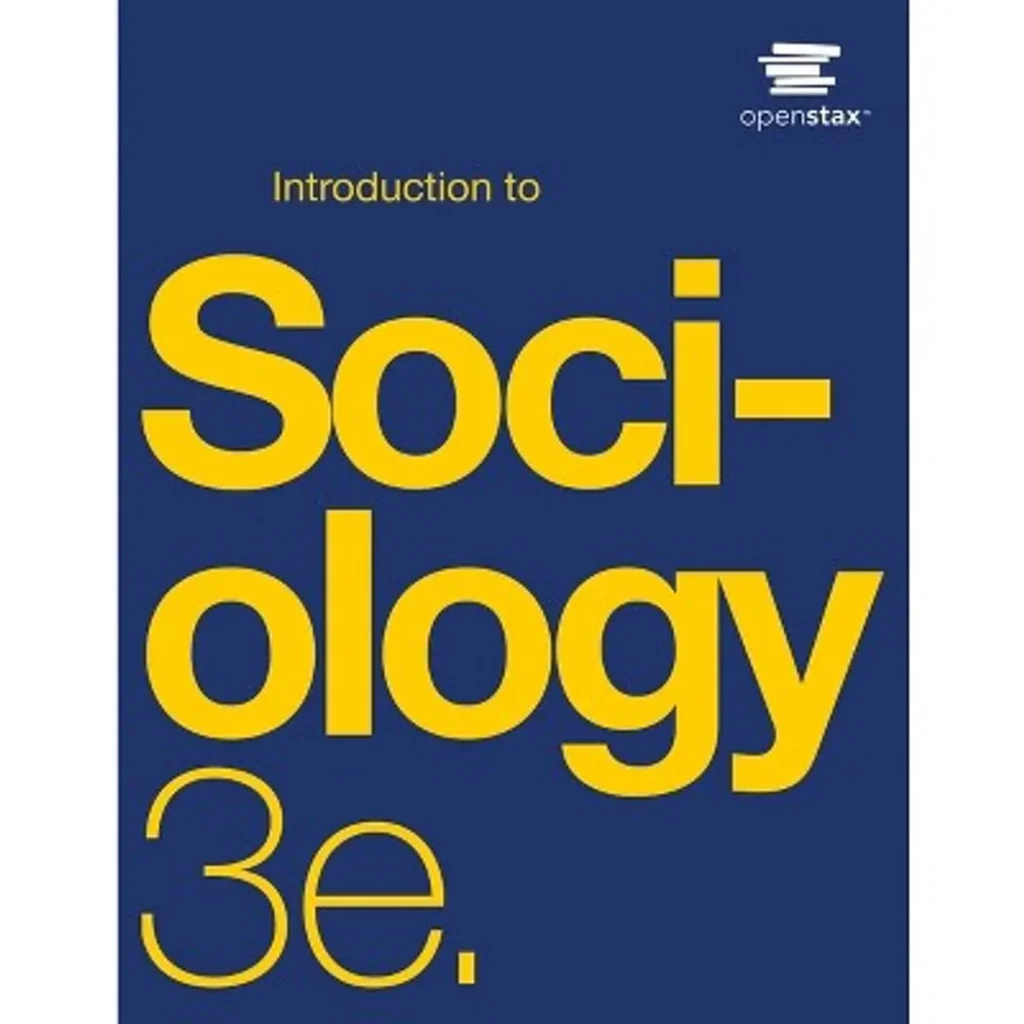
Introduction to Sociology 3e
Not rated yetRate this bookIntroduction to Sociology 3e connects personal experience with social relationships, institutions, inequality, and historical change. Twenty-one chapters introduce sociological theory and research before examining culture, interaction, socialization, groups, deviance, media, stratification, race, gender, aging, family, religion, education, politics, work, health, population, and social movements. The guide follows the OpenStax third edition and encourages comparisons across theoretical perspectives. Its central study habit is to ask how an apparently individual experience is shaped by social arrangements and what evidence would support that explanation.
Free reading is available at the official source. Opens in a new tab.
 Free
About this book
Introduction to Sociology 3e connects personal experience with social relationships, institutions, inequality, and historical change. Twenty-one chapters introduce sociological theory and research before examining culture, interaction, socialization, groups, deviance, media, stratification, race, gender, aging, family, religion, education, politics, work, health, population, and social movements. The guide follows the OpenStax third edition and encourages comparisons across theoretical perspectives. Its central study habit is to ask how an apparently individual experience is shaped by social arrangements and what evidence would support that explanation.
Chapter-wise summaries and reading tasks
Chapter 1 An Introduction to Sociology
Sociology investigates patterns in social relationships and the institutions through which people organize life. The opening chapter introduces the field’s history, major theoretical perspectives, and practical value. A sociological explanation connects individual experience with wider conditions without denying personal agency. Functionalist, conflict, and interactionist approaches direct attention to different questions, so they should be compared rather than treated as interchangeable labels. The aim is to make familiar arrangements open to investigation: what appears natural or inevitable may have a particular history and vary across settings. Evidence is needed to distinguish a persuasive social story from a supported explanation.
Study task. Choose a familiar everyday activity and examine it through two sociological perspectives. Identify a question and an observable pattern that each perspective would emphasize.
Chapter 2 Sociological Research
Sociological research turns broad interests into questions that can be investigated systematically. The chapter compares approaches and methods, including the relationship between concepts, observations, and conclusions. Method choice depends on whether the researcher needs breadth, detailed meaning, causal leverage, or another form of evidence. Sampling, measurement, and researcher influence affect interpretation. Ethical responsibilities include attention to consent, privacy, risk, and how findings are represented. A correlation alone is not a causal explanation, and a vivid individual account is not automatically representative. Readers should connect a method’s strengths and limits with the claim being made.
Study task. Design a survey and an interview approach to the same question. Explain what each could reveal, what it would miss, and one ethical issue requiring attention.
Chapter 3 Culture
Culture includes shared meanings, symbols, values, norms, language, and practices through which people interpret experience. The chapter examines cultural variation and change, including popular, high, subcultural, and countercultural forms. The labels often reflect relationships of status and power rather than an objective ranking of worth. Ethnocentrism treats one’s own assumptions as the standard for everyone, while a comparative approach asks how practices make sense within a context. Cultural patterns are learned and contested, not perfectly uniform across all group members. Theoretical perspectives help explain both the coordination culture enables and the inequalities or conflicts it may reproduce.
Study task. Analyse a norm that differs across two settings. Explain its meaning in each context and identify how judging it only through your own expectations could distort the interpretation.
Chapter 4 Society and Social Interaction
Society and social interaction are examined through forms of social organization and the construction of everyday reality. Roles, statuses, expectations, and shared definitions help make interaction intelligible. Those arrangements can feel self-evident because people repeatedly act in ways that reproduce them. The chapter connects large-scale types of society with the meanings developed in specific encounters. A socially constructed reality is not therefore imaginary or without consequences; shared classifications can organize access, obligations, and identity. Readers should trace how an expectation is maintained and what happens when someone violates or challenges it.
Study task. Describe an everyday role and identify its expected behaviours. Explain how others reinforce those expectations and what a disruption reveals about the underlying social arrangement.
Chapter 5 Socialization
Socialization is the continuing process through which people learn ways of participating in social life and develop a sense of self. The chapter connects theories of self-development with agents such as family, peers, education, and media. These influences do not simply transmit identical messages: people encounter contradictions and interpret them through different experiences. Socialization continues across the life course as roles and settings change, making it broader than childhood instruction. The relationship between individual development and social context is central. A useful analysis considers both what is learned and the institutional conditions that make some expectations more influential than others.
Study task. Compare socialization in two settings at different life stages. Identify a conflicting expectation and explain how a person might negotiate it rather than absorb it passively.
Chapter 6 Groups and Organization
Groups influence identity, belonging, expectations, and opportunities for action. The chapter compares group types, size, structure, and formal organizations. Changing the number of members can alter relationships and coordination, while formal rules create predictable procedures and specialized roles. Bureaucratic arrangements can support large-scale activity but may also generate rigidity or distance from individual needs. Informal relationships continue within formal structures, sometimes helping and sometimes undermining official goals. Readers should distinguish the organization’s stated rules from the way people actually interact. Both are relevant to understanding how collective activity works.
Study task. Compare a small friendship group with a formal organization. Explain how size, role definition, and rules change coordination and identify one important informal process.
Chapter 7 Deviance, Crime, and Social Control
Deviance concerns departures from social expectations, while crime involves violations defined through law. The chapter shows that both classifications depend on context and on the authority to define and enforce rules. Theoretical perspectives examine functions, conflict, social learning, labels, and other mechanisms. A behaviour’s classification and the response it receives can have consequences for identity and future opportunities. Unequal enforcement also raises questions about power and social control. Readers should separate describing an act from explaining how it becomes labelled and punished, avoiding the assumption that legal categories are timeless or applied identically to everyone.
Study task. Choose a hypothetical behaviour and compare how two settings might classify it. Explain how rule definition, enforcement, and labelling could affect the person involved.
Chapter 8 Media and Technology
Media and technology shape communication, access to information, social relationships, and institutions. The chapter connects technological change with global inequalities and competing theoretical explanations. Access involves more than possession of a device: infrastructure, skills, resources, and the power to produce or control content matter. Media can reinforce shared meanings while also providing spaces for challenge and new identities. Technological effects are therefore not automatic outcomes of a device’s features alone. A sociological analysis asks who creates, owns, uses, benefits from, or is excluded by the systems through which communication takes place.
Study task. Analyse a digital platform through access, ownership, participation, and influence. Compare a claim of universal connectivity with evidence about who remains excluded.
Chapter 9 Social Stratification in the United States
Social stratification organizes unequal access to resources, status, and opportunities. The chapter examines U.S. class patterns and mobility alongside wider comparisons and theoretical perspectives. Individual achievement occurs within structures that shape education, employment, wealth, and security. Income and wealth are related but distinct, and movement in one dimension does not necessarily indicate a complete change in social position. A mobility story should be evaluated against broader patterns rather than used to prove that all barriers have disappeared. The chapter encourages readers to connect personal trajectories with the institutions that distribute advantages across generations.
Study task. Distinguish income from wealth in a fictional household comparison. Explain how an apparent opportunity for mobility could coexist with persistent structural inequality.
Chapter 10 Global Inequality
Global inequality compares unequal resources and opportunities across and within societies. The chapter examines classification systems, wealth, poverty, and competing accounts of global stratification. Country averages can conceal substantial internal differences, and the chosen measure influences the picture presented. Explanations may emphasize historical relationships, development processes, institutional conditions, or dependence, each requiring evidence. A sociological approach avoids treating one national characteristic as a complete cause of poverty. It also asks how international relationships connect the prosperity of some groups with the disadvantages of others.
Study task. Compare two measures of global inequality and explain what each misses. Evaluate a simple country-level explanation by identifying a historical or relational factor it overlooks.
Chapter 11 Race and Ethnicity
Race and ethnicity are examined as social classifications with powerful consequences for identity, opportunity, and treatment. The chapter distinguishes prejudice, discrimination, and racism and considers patterns of intergroup relations and U.S. experience. Beliefs and individual actions interact with institutional arrangements, so unequal outcomes cannot be understood only by asking whether one person holds hostile attitudes. Group categories have histories and can change, while differences within categories remain important. Theoretical perspectives help examine how boundaries and advantages are produced and maintained. The goal is to connect concepts with mechanisms rather than assume a label explains every individual experience.
Study task. Distinguish prejudice, discriminatory action, and an institutional process in a fictional example. Explain what evidence would be needed to investigate the resulting inequality.
Chapter 12 Gender, Sex, and Sexuality
Sex, gender, identity, expression, and sexuality refer to related but distinct aspects of experience and social organization. The chapter examines how expectations and institutions shape opportunities and inequalities. A descriptive group pattern does not determine an individual’s identity, preferences, or abilities. Social norms influence the roles people are expected to occupy and the responses they encounter when those expectations are challenged. Analysing inequality requires attention to arrangements such as work, family, and authority rather than only personal attitudes. The chapter encourages precise language and comparison across contexts instead of treating one set of norms as universal.
Study task. Analyse a gendered expectation in an institution and distinguish the expectation from an individual characteristic. Identify how the institution might reward conformity or penalize difference.
Chapter 13 Aging and the Elderly
Aging is both a biological process and a social experience organized through roles, institutions, and cultural expectations. The chapter examines population aging, challenges facing older people, and theoretical approaches. Ageism can shape opportunities and treatment, while economic resources, relationships, health, and policy affect later-life experience. The category elderly contains substantial diversity and should not be treated as a single level of ability or dependency. Changing age structures also influence work, family, and services. A sociological analysis asks how society defines and responds to aging rather than attributing every later-life outcome to age itself.
Study task. Compare two later-life experiences with different resources and social settings. Explain how an age-only explanation would miss important influences.
Chapter 14 Relationships, Marriage, and Family
Marriage and family are examined as social institutions with varied forms and changing expectations. The chapter considers definitions, differences in family life, and challenges such as competing responsibilities and inequality. A family arrangement should not be judged solely against one assumed normal household. Economic conditions, law, culture, and social support influence what relationships and caregiving patterns are possible. Private experiences such as household work or relationship stress can therefore connect with public arrangements. The chapter encourages readers to distinguish describing variation from assuming that every change represents either decline or progress for all members.
Study task. Analyse how work schedules or housing conditions could affect a fictional family. Explain the connection between a private household difficulty and a wider institutional arrangement.
Chapter 15 Religion
Sociology studies religion as a social phenomenon without deciding the truth of religious beliefs. The chapter examines meanings, practices, organizations, world religions, and U.S. patterns. Religion can support solidarity and identity while also becoming involved in conflict or inequality, depending on the context. Functional, conflict, and interactionist perspectives ask different questions about those relationships. A sociological account should distinguish participants’ own understandings from an outside analytical explanation and avoid assuming every member experiences a tradition identically. Comparing settings reveals the role of history and institutions in how religion is organized.
Study task. Examine one religious practice through a participant’s meaning and a sociological question. Explain how those accounts differ without treating either as a test of theological truth.
Chapter 16 Education
Education transmits knowledge and skills while also organizing credentials, expectations, and access to opportunities. The chapter compares educational systems and theories and examines contemporary issues. Schools may support mobility and social integration while reproducing inequalities through resources, selection, or informal expectations. A curriculum’s explicit content is only part of what students learn; routines and relationships also communicate messages about authority and belonging. Evaluating educational outcomes therefore requires attention to both individual effort and institutional conditions. The chapter invites readers to connect classroom experience with the wider distribution of resources and recognition.
Study task. Compare an explicit learning objective with an informal lesson communicated by school routines. Explain how unequal resources could affect outcomes even under similar formal expectations.
Chapter 17 Government and Politics
Government and politics concern the organization and exercise of power in collective life. The chapter distinguishes power from legitimate authority, compares governmental forms, and examines U.S. politics through theoretical perspectives. Formal procedures do not by themselves reveal who can influence agendas, participate effectively, or obtain a response. Resources, organization, institutions, and beliefs about legitimacy shape political action. A sociological analysis therefore asks both how a system is officially structured and how power operates within it. Comparing explanations helps readers avoid reducing every political outcome either to individual leaders or to one all-encompassing structural cause.
Study task. Analyse a fictional public decision by separating formal authority, agenda-setting influence, and participation. Identify whose absence from the process could affect the outcome.
Chapter 18 Work and the Economy
Economic systems organize production, distribution, and work through institutions and social relationships. The chapter connects those arrangements with globalization and changing U.S. employment. Work provides income but also identity, status, routine, and social contact. Changes in technology or international production can benefit some groups while reducing security for others, so an overall growth measure does not describe every worker’s experience. A sociological approach examines how opportunities and risks are distributed and how employment arrangements interact with family and community life. The chapter links individual careers with broader economic transformations.
Study task. Trace how a change in production or employment affects a worker, household, and community. Identify why an aggregate economic benefit might coexist with local disadvantage.
Chapter 19 Health and Medicine
Health and medicine involve biological processes alongside social meanings, resources, and institutions. The chapter examines the social construction of health, global and U.S. patterns, comparative systems, and theoretical explanations. A condition’s recognition and treatment can be shaped by professional authority, cultural expectations, and access to services. Social determinants influence exposure and opportunities for care, so unequal outcomes cannot be explained only through personal choices. Comparing systems helps reveal that arrangements often taken for granted are not inevitable. The chapter’s purpose is sociological analysis rather than diagnosis or a recommendation for individual treatment.
Study task. Compare an individual-behaviour explanation of a health difference with a social-determinants explanation. Identify evidence and policy questions that follow from each.
Chapter 20 Population, Urbanization, and the Environment
Population, urbanization, and environmental conditions are examined as interconnected social processes. Demography uses patterns of births, deaths, and migration, while urbanization changes settlement and relationships with land and infrastructure. Environmental harms and benefits are not distributed evenly, and access to influence can affect where risks are located. Population size alone does not explain environmental impact without considering consumption, technology, and institutions. The chapter encourages readers to connect physical conditions with social organization rather than portray nature and society as entirely separate. Data and the scale of analysis shape how a problem is understood.
Study task. Analyse a local environmental concern using population movement, infrastructure, and inequality. Explain why a citywide average could conceal unequal exposure.
Chapter 21 Social Movements and Social Change
Collective behaviour and social movements examine how people coordinate beyond routine institutional arrangements. The chapter considers movement development, organization, resources, meanings, and broader social change. Shared dissatisfaction does not automatically produce an effective movement: opportunities, networks, leadership, and framing can influence mobilization. Change also has uneven and sometimes unintended consequences, so success needs a clearly defined criterion and timeframe. The chapter brings the book’s themes together by connecting individual participation with institutions, culture, and power. Readers should compare how a movement understands its goals with the outcomes that can be observed.
Study task. Analyse a social movement using grievance, resources, networks, opportunity, and framing. Define a measurable form of success and an unintended consequence worth investigating.
How to study this book
- For each chapter, connect an individual example with a group, institution, or wider historical process.
- Compare theoretical perspectives by the questions they ask and the evidence that would support their explanations.
- Distinguish a descriptive pattern, an association, and a causal claim when reading research or news.
- Use precise concepts and avoid treating a social category as a complete explanation of an individual.
- Evaluate examples with attention to variation across settings and to whose experiences an average or dominant account may leave out.
Questions for reflection
- How can a private difficulty be connected with a public issue without denying individual agency?
- Why can different theoretical perspectives produce useful but incomplete explanations of the same event?
- What evidence would distinguish an institutional mechanism from a stereotype about a group?
Source edition and coverage
All twenty-one main chapters of OpenStax Introduction to Sociology 3e are covered in source order. U.S. examples are identified as context rather than universal descriptions of every society. This original study guide explains the source in new wording and adds learning activities. Read the publisher’s book and complete exercises.
About access & copyright
This page provides book information and study material. Full-text access is provided by the original publisher or authorised source; a listing does not grant permission to republish the book.
Read our Library Access & Copyright policyExplore the contents
Check the chapters covered in this edition.
Visit the official source
See reading, preview or purchase options.
Save for later
Keep this textbook in your saved collection.
Reader ratings & reviews
Share your thoughts
Your review helps other students choose the right resources.
KEEP LEARNING
Your next great read
Social SciencesPrinciples of Microeconomics 3e
Principles of Microeconomics 3e
View Principles of Microeconomics 3e — bookPrinciples of Macroeconomics 3e
Principles of Macroeconomics 3e
View Principles of Macroeconomics 3e — book Social Sciences
Lifespan Development
View Lifespan Development — book Social Sciences
Introduction to Political Science
View Introduction to Political Science — book Social Sciences
Introduction to Anthropology
View Introduction to Anthropology — book Psychology
Introduction to Psychology (University of Minnesota, 2015 Edition)
View Introduction to Psychology (University of Minnesota, 2015 Edition) — book Political Science
American Government and Politics in the Information Age
View American Government and Politics in the Information Age — book Political Science
Social Problems - Continuity and Change
View Social Problems - Continuity and Change — book Cultural & Ethnic Studies



