
 Engineering & Technology
Earth SciencesTextbook
Coastal Dynamics
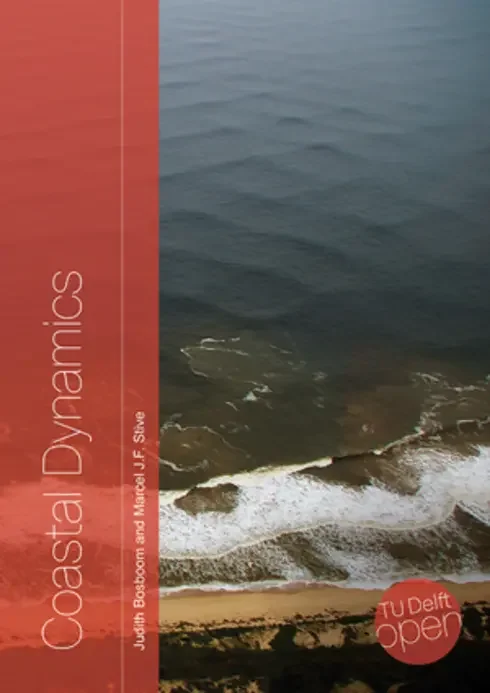
Not rated yetRate this bookCoastal Dynamics develops a process-based account of how waves, currents, sediment, and coastal forms interact. Judith Bosboom and Marcel J.F. Stive connect open coasts with tidal basins rather than treating them as unrelated settings. The ten chapters move from large-scale coastal variation through hydrodynamics and sediment transport to profiles, shorelines, inlets, and protection. This guide follows version 1.2, dated 2023, in the linked complete PDF. It emphasizes physical interpretation, scales, assumptions, and conservation alongside equations. Prior familiarity with waves, flow, and sediment processes helps readers connect the mathematical descriptions with actual coastal behavior.
Read on the publisher’s website. Opens in a new tab.
 Free
About this book
Overview
Coastal Dynamics develops a process-based account of how waves, currents, sediment, and coastal forms interact. Judith Bosboom and Marcel J.F. Stive connect open coasts with tidal basins rather than treating them as unrelated settings. The ten chapters move from large-scale coastal variation through hydrodynamics and sediment transport to profiles, shorelines, inlets, and protection. This guide follows version 1.2, dated 2023, in the linked complete PDF. It emphasizes physical interpretation, scales, assumptions, and conservation alongside equations. Prior familiarity with waves, flow, and sediment processes helps readers connect the mathematical descriptions with actual coastal behavior.
How to study this book
Keep a diagram of the relevant coast beside each calculation. Mark the control volume, coordinates, forcing, sediment sources and sinks, and time scale. Before using a transport relationship, record its variables, units, assumptions, and intended conditions. Compare instantaneous processes with cumulative morphological change; an energetic event and a long-term trend answer different questions. Reconstruct the reasoning behind a figure before attempting a numerical exercise. For protection proposals, trace where sediment and wave energy go after the intervention, including neighboring areas. Treat worked examples as training in analysis rather than site-specific engineering designs.
Chapter and section study guide
Chapter 1 — Overview
Coastal engineering problems connect waves and currents with sediment movement and changing morphology. The opening chapter explains the book’s goals, applications, and process-based perspective. Different spatial and temporal scales matter because an event-scale response can differ from long-term adjustment. Human interventions also alter the conditions under which a coast evolves. Begin by distinguishing a management objective from the physical processes that constrain it. A useful conceptual model identifies forcing, available material, boundaries, and feedbacks before selecting equations or judging an engineering measure.
Study application: Sketch a coastal-management problem and identify its objectives, physical boundaries, dominant processes, and relevant time scales.
Chapter 2 — Large-scale Geographical Variation of Coasts
Coastal form reflects cumulative geological history as well as present forcing. Tectonics, inherited landforms, sea-level change, sediment availability, and wave or tidal dominance help explain broad variation. Classification is useful when it organizes mechanisms, but a label cannot replace local investigation. A coast with similar visible geometry may have a different history or sediment budget. Distinguish transgression and regression from short-term shoreline movement, and connect the available material with possible responses. The chapter provides context for later process models by explaining why identical forcing need not produce identical coastal forms.
Study application: Compare two coast types using geological inheritance, sediment supply, relative sea-level history, and dominant contemporary forcing.
Chapter 3 — Ocean Waves
Wave description links time series, statistical measures, generation, dispersion, extremes, and tides. Individual waves vary, so a representative height or period is a summary with a particular definition. Short-term variability and long-term extreme estimates require different datasets and assumptions. Wind waves and astronomical tides originate through different processes and occupy different scales. Study how a measured surface-elevation record becomes a set of useful descriptors. Distinguish a physical prediction from a statistical estimate, and identify uncertainty before applying a return-period value to an engineering question.
Study application: Explain how you would characterize a wave record and why its significant height does not describe every individual wave.
Chapter 4 — Global Wave and Tidal Environments
Large-scale atmospheric circulation and ocean geometry create systematic differences in coastal wave and tidal conditions. Fetch, prevailing winds, storm tracks, basin shape, and tidal propagation affect the forcing reaching a coast. The chapter links global patterns to local boundary conditions without implying that a regional description replaces site measurements. Compare the relative importance of waves and tides across environments and seasons. A coastal process model needs forcing consistent with both its geographical setting and its time horizon; an average climate may not capture the events responsible for major change.
Study application: Select two regions and explain how their wind and tidal environments would lead to different coastal boundary conditions.
Chapter 5 — Coastal Hydrodynamics
As waves enter shallower water, transformation, breaking, asymmetry, and interactions with currents change the motion experienced near the bed. Wave-induced setup and circulation connect energy dissipation with water levels and transport pathways. Wind and tides provide additional forcing, while long-wave phenomena introduce further scales. The chapter links surface conditions with velocities, pressures, and bed shear stresses relevant to sediment movement. Trace the mechanism rather than assuming offshore wave conditions remain unchanged at the shoreline. Explicitly distinguish alongshore and cross-shore components and the averaging period used.
Study application: Draw how an offshore wave field transforms across a sloping bed and identify where resulting currents could move sediment.
Chapter 6 — Sediment Transport
Sediment movement depends on material properties, initiation of motion, fluid forcing, and the mechanisms carrying particles. Bed load and suspended load require different descriptions, while fine material can behave differently from sand. Transport formulas simplify complicated processes and have domains of applicability. The chapter compares approaches based on thresholds, diffusion, and energy, making model assumptions visible. A computed transport rate is not automatically a prediction of erosion: morphological change depends on spatial differences in transport and sediment supply. Check units, sign conventions, and material characteristics before interpreting a result.
Study application: Explain why a large transport rate can coexist with little bed change, using a sediment budget with balanced inflow and outflow.
Chapter 7 — Cross-shore Transport and Profile Development
Beach and shoreface profiles evolve through interactions among wave conditions, sediment properties, water levels, and cross-shore transport. Equilibrium-profile ideas provide an organizing approximation, while storms and recovery illustrate time-dependent adjustment. Structural gains or losses require distinguishing redistribution within a profile from sediment leaving the wider system. A shoreline retreat does not by itself reveal the complete sediment budget. Study the direction and distribution of transport and the assumptions behind a profile model. The chapter connects short-term hydrodynamic processes with longer-term form and potential management implications.
Study application: Construct before-and-after beach profiles and distinguish offshore redistribution from a net loss of sediment from the coastal system.
Chapter 8 — Longshore Transport and Coastline Changes
Oblique wave approach can generate alongshore sediment transport, and gradients in that transport alter the coastline. Formulas relate forcing to transport under specified assumptions, while shoreline models simplify geometry and sediment conservation. Structures and natural features interrupt pathways and can shift erosion or deposition to neighboring locations. A local gain should therefore be evaluated within a larger sediment budget. Separate transport direction from the direction of shoreline change: change depends on convergence or divergence. The chapter helps connect process reasoning with the spatial consequences of intervention.
Study application: Sketch an interrupted alongshore sediment pathway and predict where convergence and divergence could create accretion or erosion.
Chapter 9 — Coastal Inlets and Tidal Basins
Inlets connect coastal waters and basins through tidal exchange, currents, sediment transport, and evolving channels and shoals. Basin geometry and tidal volume influence the inlet, while inlet changes alter basin behavior. Ebb-tidal deltas, inner-basin forms, and sediment import or export are parts of a coupled system. Stability is dynamic and can shift when forcing, geometry, or human activity changes. Study feedbacks rather than assuming a fixed cross-section is a permanent natural condition. The chapter integrates earlier hydrodynamics and transport concepts at the scale of interconnected coastal elements.
Study application: Build a feedback diagram linking basin geometry, tidal exchange, inlet currents, and sediment redistribution after an intervention.
Chapter 10 — Coastal Protection
Protection measures change wave energy, water levels, sediment availability, or pathways of transport to meet an objective. The chapter compares strategies and structures with attention to erosion, alongshore effects, and wider coastal adjustment. A measure can protect one location while transferring a problem or creating future maintenance demands. Evaluation therefore requires a time horizon, performance criteria, sediment budget, and understanding of uncertainty. Connect a proposed measure with its physical mechanism before comparing costs or benefits. The educational examples develop engineering judgment and do not replace investigations needed for a real site.
Study application: Compare two protection options for the same conceptual coast, including effects on adjacent shores, sediment demand, and long-term adaptation.
Reflection and review
- Which assumptions make your chosen transport formula appropriate, and what observation would show they fail?
- How does changing the system boundary alter an apparent sediment gain or loss?
- Why should inlet and open-coast responses be considered together when assessing protection?
Source and edition notes
Version 1.2, 2023; ten chapters, 598 PDF pages.
Book summary
Overview
Coastal Dynamics develops a process-based account of how waves, currents, sediment, and coastal forms interact. Judith Bosboom and Marcel J.F. Stive connect open coasts with tidal basins rather than treating them as unrelated settings. The ten chapters move from large-scale coastal variation through hydrodynamics and sediment transport to profiles, shorelines, inlets, and protection. This guide follows version 1.2, dated 2023, in the linked complete PDF. It emphasizes physical interpretation, scales, assumptions, and conservation alongside equations. Prior familiarity with waves, flow, and sediment processes helps readers connect the mathematical descriptions with actual coastal behavior.
How to study this book
Keep a diagram of the relevant coast beside each calculation. Mark the control volume, coordinates, forcing, sediment sources and sinks, and time scale. Before using a transport relationship, record its variables, units, assumptions, and intended conditions. Compare instantaneous processes with cumulative morphological change; an energetic event and a long-term trend answer different questions. Reconstruct the reasoning behind a figure before attempting a numerical exercise. For protection proposals, trace where sediment and wave energy go after the intervention, including neighboring areas. Treat worked examples as training in analysis rather than site-specific engineering designs.
Chapter and section study guide
Chapter 1 — Overview
Coastal engineering problems connect waves and currents with sediment movement and changing morphology. The opening chapter explains the book’s goals, applications, and process-based perspective. Different spatial and temporal scales matter because an event-scale response can differ from long-term adjustment. Human interventions also alter the conditions under which a coast evolves. Begin by distinguishing a management objective from the physical processes that constrain it. A useful conceptual model identifies forcing, available material, boundaries, and feedbacks before selecting equations or judging an engineering measure.
Study application: Sketch a coastal-management problem and identify its objectives, physical boundaries, dominant processes, and relevant time scales.
Chapter 2 — Large-scale Geographical Variation of Coasts
Coastal form reflects cumulative geological history as well as present forcing. Tectonics, inherited landforms, sea-level change, sediment availability, and wave or tidal dominance help explain broad variation. Classification is useful when it organizes mechanisms, but a label cannot replace local investigation. A coast with similar visible geometry may have a different history or sediment budget. Distinguish transgression and regression from short-term shoreline movement, and connect the available material with possible responses. The chapter provides context for later process models by explaining why identical forcing need not produce identical coastal forms.
Study application: Compare two coast types using geological inheritance, sediment supply, relative sea-level history, and dominant contemporary forcing.
Chapter 3 — Ocean Waves
Wave description links time series, statistical measures, generation, dispersion, extremes, and tides. Individual waves vary, so a representative height or period is a summary with a particular definition. Short-term variability and long-term extreme estimates require different datasets and assumptions. Wind waves and astronomical tides originate through different processes and occupy different scales. Study how a measured surface-elevation record becomes a set of useful descriptors. Distinguish a physical prediction from a statistical estimate, and identify uncertainty before applying a return-period value to an engineering question.
Study application: Explain how you would characterize a wave record and why its significant height does not describe every individual wave.
Chapter 4 — Global Wave and Tidal Environments
Large-scale atmospheric circulation and ocean geometry create systematic differences in coastal wave and tidal conditions. Fetch, prevailing winds, storm tracks, basin shape, and tidal propagation affect the forcing reaching a coast. The chapter links global patterns to local boundary conditions without implying that a regional description replaces site measurements. Compare the relative importance of waves and tides across environments and seasons. A coastal process model needs forcing consistent with both its geographical setting and its time horizon; an average climate may not capture the events responsible for major change.
Study application: Select two regions and explain how their wind and tidal environments would lead to different coastal boundary conditions.
Chapter 5 — Coastal Hydrodynamics
As waves enter shallower water, transformation, breaking, asymmetry, and interactions with currents change the motion experienced near the bed. Wave-induced setup and circulation connect energy dissipation with water levels and transport pathways. Wind and tides provide additional forcing, while long-wave phenomena introduce further scales. The chapter links surface conditions with velocities, pressures, and bed shear stresses relevant to sediment movement. Trace the mechanism rather than assuming offshore wave conditions remain unchanged at the shoreline. Explicitly distinguish alongshore and cross-shore components and the averaging period used.
Study application: Draw how an offshore wave field transforms across a sloping bed and identify where resulting currents could move sediment.
Chapter 6 — Sediment Transport
Sediment movement depends on material properties, initiation of motion, fluid forcing, and the mechanisms carrying particles. Bed load and suspended load require different descriptions, while fine material can behave differently from sand. Transport formulas simplify complicated processes and have domains of applicability. The chapter compares approaches based on thresholds, diffusion, and energy, making model assumptions visible. A computed transport rate is not automatically a prediction of erosion: morphological change depends on spatial differences in transport and sediment supply. Check units, sign conventions, and material characteristics before interpreting a result.
Study application: Explain why a large transport rate can coexist with little bed change, using a sediment budget with balanced inflow and outflow.
Chapter 7 — Cross-shore Transport and Profile Development
Beach and shoreface profiles evolve through interactions among wave conditions, sediment properties, water levels, and cross-shore transport. Equilibrium-profile ideas provide an organizing approximation, while storms and recovery illustrate time-dependent adjustment. Structural gains or losses require distinguishing redistribution within a profile from sediment leaving the wider system. A shoreline retreat does not by itself reveal the complete sediment budget. Study the direction and distribution of transport and the assumptions behind a profile model. The chapter connects short-term hydrodynamic processes with longer-term form and potential management implications.
Study application: Construct before-and-after beach profiles and distinguish offshore redistribution from a net loss of sediment from the coastal system.
Chapter 8 — Longshore Transport and Coastline Changes
Oblique wave approach can generate alongshore sediment transport, and gradients in that transport alter the coastline. Formulas relate forcing to transport under specified assumptions, while shoreline models simplify geometry and sediment conservation. Structures and natural features interrupt pathways and can shift erosion or deposition to neighboring locations. A local gain should therefore be evaluated within a larger sediment budget. Separate transport direction from the direction of shoreline change: change depends on convergence or divergence. The chapter helps connect process reasoning with the spatial consequences of intervention.
Study application: Sketch an interrupted alongshore sediment pathway and predict where convergence and divergence could create accretion or erosion.
Chapter 9 — Coastal Inlets and Tidal Basins
Inlets connect coastal waters and basins through tidal exchange, currents, sediment transport, and evolving channels and shoals. Basin geometry and tidal volume influence the inlet, while inlet changes alter basin behavior. Ebb-tidal deltas, inner-basin forms, and sediment import or export are parts of a coupled system. Stability is dynamic and can shift when forcing, geometry, or human activity changes. Study feedbacks rather than assuming a fixed cross-section is a permanent natural condition. The chapter integrates earlier hydrodynamics and transport concepts at the scale of interconnected coastal elements.
Study application: Build a feedback diagram linking basin geometry, tidal exchange, inlet currents, and sediment redistribution after an intervention.
Chapter 10 — Coastal Protection
Protection measures change wave energy, water levels, sediment availability, or pathways of transport to meet an objective. The chapter compares strategies and structures with attention to erosion, alongshore effects, and wider coastal adjustment. A measure can protect one location while transferring a problem or creating future maintenance demands. Evaluation therefore requires a time horizon, performance criteria, sediment budget, and understanding of uncertainty. Connect a proposed measure with its physical mechanism before comparing costs or benefits. The educational examples develop engineering judgment and do not replace investigations needed for a real site.
Study application: Compare two protection options for the same conceptual coast, including effects on adjacent shores, sediment demand, and long-term adaptation.
Reflection and review
- Which assumptions make your chosen transport formula appropriate, and what observation would show they fail?
- How does changing the system boundary alter an apparent sediment gain or loss?
- Why should inlet and open-coast responses be considered together when assessing protection?
Source and edition notes
Version 1.2, 2023; ten chapters, 598 PDF pages.
About access & copyright
This page provides book information and study material. Full-text access is provided by the original publisher or authorised source; a listing does not grant permission to republish the book.
Read our Library Access & Copyright policyExplore the contents
Check the chapters covered in this edition.
Visit the official source
See reading, preview or purchase options.
Save for later
Keep this textbook in your saved collection.
Reader ratings & reviews
Share your thoughts
Your review helps other students choose the right resources.
KEEP LEARNING
Your next great read
Engineering & Technology Chemistry
The Basics of General, Organic, and Biological Chemistry
View The Basics of General, Organic, and Biological Chemistry — book Computer Science
Essentials of Geographic Information Systems
View Essentials of Geographic Information Systems — book Earth Sciences
World Regional Geography - People, Places and Globalization
View World Regional Geography - People, Places and Globalization — book Natural Sciences
The Adventure of Physics - Vol. I: Fall, Flow, and Heat
View The Adventure of Physics - Vol. I: Fall, Flow, and Heat — book Natural Sciences
The Adventure of Physics - Vol. VI: The Strand Model - A Speculation on Unification
View The Adventure of Physics - Vol. VI: The Strand Model - A Speculation on Unification — book Natural Sciences
Mind, Body, World: Foundations of Cognitive Science
View Mind, Body, World: Foundations of Cognitive Science — book Biology
Anatomy and Physiology of Animals
View Anatomy and Physiology of Animals — book Biology
General Biology
View General Biology — book Cultural & Ethnic Studies



