
 New Media Journalism
Textbook
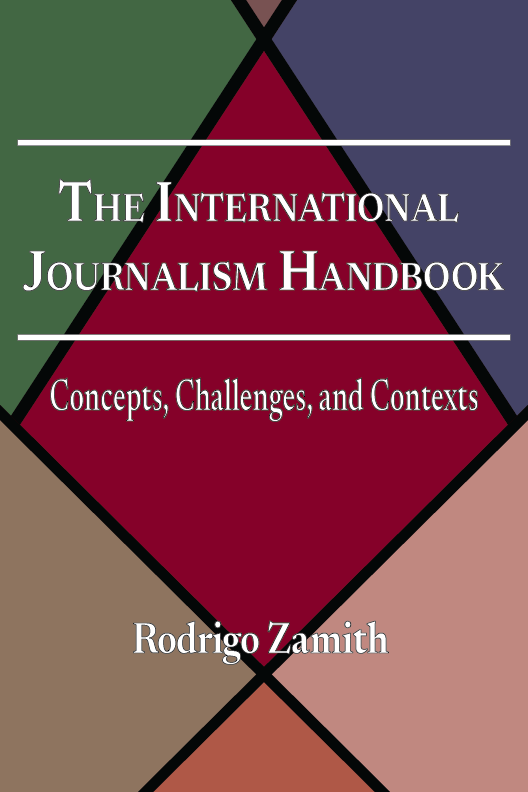
The International Journalism Handbook
Not rated yetRate this bookRodrigo Zamith’s handbook introduces journalism through concepts, theories, and international contexts. Its opening asks readers to understand both events beyond national borders and the different ways journalism itself is practised.
Free reading is available at the official source. Opens in a new tab.
 Free
About this book
The International Journalism Handbook examines journalism through concepts, cultural differences, institutions, economics, international reporting, sourcing, and working conditions. Rodrigo Zamith organizes the reviewed edition into nine units containing 43 short chapters. This guide follows every chapter, retaining the distinction between general frameworks and region-specific discussions. Regional profiles and legal or platform examples describe the publication’s context rather than a continuously updated world survey. Readers can use the book to compare how journalism operates under different conditions without assuming that one country’s professional model supplies the natural standard for every other setting.
The detailed guide below follows the book’s chapter, unit, or section structure. Read it alongside the study instructions and the complete official text.
Book summary
Chapter-by-chapter summaries
Chapter 1: News
The opening chapter asks how information becomes news and why its selection matters. Recent events do not arrive already organized into a complete public account. Journalistic choices connect novelty with relevance and audience. Reading this internationally encourages comparison of whose affairs receive attention and whose experience becomes difficult to see through the resulting selection.
Chapter 2: Journalism
Journalism is considered through its activities and social role, extending beyond a particular medium or employment category. The chapter supplies a foundation for comparing practices across settings. Readers should specify which function is being discussed rather than assume that the same title guarantees the same responsibilities. This helps separate an idealized description from the institutions through which journalism is performed.
Chapter 3: Social actors
People and institutions participate in producing and circulating news with unequal resources and influence. The chapter makes those relationships part of the account. A reporter’s choice can be shaped by editors, owners, sources, and other participants. Comparative analysis therefore needs more than an explanation based on one person’s beliefs; it should identify how the relevant actors interact.
Chapter 4: Technological actants
Technical systems help organize what journalistic actors can do. An interface or publishing arrangement can make some actions easy and others unavailable. The chapter encourages examining these conditions without attributing human motives to a machine. Technology becomes part of the explanation of a journalistic outcome rather than an invisible channel assumed to leave every decision unchanged.
Chapter 5: Audiences
Audiences differ in goals, experiences, and relationships with news. The chapter invites readers to question whose needs a publication assumes and how it understands the people it reaches. An international audience is especially unlikely to form one homogeneous group. Comparing intended service with actual participation can reveal gaps that a total readership figure conceals.
Chapter 6: Journalistic activities
The work of journalism includes several connected stages, not only writing a final story. Gathering, evaluation, production, and circulation create dependencies among decisions. The chapter supplies a process perspective useful for comparing organizations. Readers can ask where an account’s strengths or limitations originated and which part of the workflow would need to change to address them.
Chapter 7: Media dependency theory
The importance of a medium depends partly on what people rely on it to accomplish. The chapter connects that relationship with potential influence. Dependence can vary with available alternatives and circumstances, so an identical message need not have an identical effect everywhere. Comparative readers should identify the audience’s needs and information environment before applying a general explanation.
Chapter 8: Framing theory
Frames organize an account by emphasizing selected aspects and relationships. They can make a problem and its apparent causes intelligible in one way rather than another. The chapter encourages comparison of concrete choices in wording, imagery, and structure. International reporting makes this especially useful because the same event may enter different public conversations through substantially different interpretive frames.
Chapter 9: Agenda setting
Coverage can contribute to public judgments about which issues deserve attention. The chapter focuses on prominence rather than a claim that audiences adopt every opinion presented. Readers should compare patterns of emphasis and examine the evidence for influence. A topic’s visibility within one national agenda may differ from its importance to the people most directly affected.
Chapter 10: Priming
Priming concerns the considerations made available for subsequent evaluation. The chapter distinguishes this mechanism from simply choosing a topic or framing a story. Readers should ask which standard a message might encourage an audience to use and what evidence supports that inference. The framework becomes more precise when the judgment and context are specified rather than left as a general assertion of media power.
Chapter 11: News avoidance and fatigue
Reduced consumption can reflect overload, emotional strain, competing interests, or other motives. The chapter cautions against treating disengagement as one uniform behavior. International comparison also needs attention to differences in trust, safety, and available sources. A useful response begins with the reason people avoid news, rather than assume that producing more material will restore participation.
Chapter 12: Journalistic cultures
Professional values and practices develop within cultural and institutional settings. The chapter examines shared ideals while questioning the assumption that a Western professional model is universal. Readers should distinguish what journalists say their work should do from how it operates under actual constraints. Cultural comparison is strongest when it recognizes variation within a country as well as differences between countries.
Chapter 13: Role orientations
Journalists can understand their social purpose through different relationships with citizens, authority, and public debate. The chapter compares these orientations rather than reduce every difference to professionalism versus its absence. Readers should identify the role claimed and the conditions that support or constrain it. An expressed ideal does not necessarily predict behavior in every reporting situation.
Chapter 14: Ethical considerations
Ethical judgment addresses actions with possible harmful consequences, often under competing responsibilities. The chapter examines differences in how journalists interpret those situations. Readers should reconstruct the alternatives and reasons rather than assume a rule’s wording settles every case. Comparative analysis can reveal disagreement about the appropriate role of journalism as well as about a particular reporting method.
Chapter 15: Trust in institutions
A journalist’s willingness to accept institutional information affects how claims are gathered and tested. The chapter treats trust as a relationship that can vary across organizations and contexts. Skepticism and automatic disbelief are not equivalent. Readers should ask what grounds the trust, what verification remains necessary, and how a pattern of dependence on official information shapes the account available to audiences.
Chapter 16: Hierarchy of influences
The framework connects individual action with professional routines, organizations, institutions, and wider social conditions. It provides categories for comparison without automatically identifying the strongest cause. Readers should assemble evidence at the relevant levels and examine how they interact. This avoids explaining every international difference through national culture alone when ownership, resources, or working routines may also matter.
Chapter 17: News values
Judgments of newsworthiness influence selection and emphasis. The chapter makes those criteria visible as professional and contextual practices rather than qualities that events possess independently. Readers can compare how similar developments receive different treatment and ask whose perspective the criteria favor. The framework supports inquiry into both published coverage and significant absences.
Chapter 18: Truth, bias, and neutrality
The chapter examines tensions among accuracy, interpretation, and claims to neutrality. A perspective is not automatically a factual error, and a formally balanced presentation can still mislead. Readers should identify the particular claim and the methods supporting it. Comparative work benefits from separating professional conventions from the more basic question of whether an account is warranted by evidence.
Chapter 19: Audience fragmentation
A growing range of media choices can divide attention among smaller groups. The chapter connects that pattern with journalism’s public and economic roles. Readers should identify which form of fragmentation is being described and avoid equating it automatically with complete social isolation. The relevant consequences depend on what information remains shared and which groups receive adequate coverage.
Chapter 20: Commodification of news
Turning news into a marketable product creates incentives that interact with journalistic purposes. The chapter examines this relationship rather than assume commerce explains every decision. International comparison can reveal different arrangements of payment, advertising, ownership, and service. Readers should ask what revenue depends on and how that dependence affects the conditions under which reporting is produced.
Chapter 21: Audience measurement and bundling
Audience data support decisions about products and content, while bundling connects different offerings within a commercial arrangement. The chapter invites scrutiny of what a measurement includes and omits. A metric can be accurate for its defined purpose while insufficient for assessing public service. Readers should keep the indicator, the objective, and the inference distinct.
Chapter 22: Third-party platforms
External technical platforms influence access to audiences and revenue. The chapter connects that mediation with changing relationships of power and dependence. An outlet can gain reach without controlling the terms of distribution. Readers should examine which functions depend on another organization and how its priorities differ. The examples provide context for analysis rather than current instructions for using a particular service.
Chapter 23: Nonprofit journalism
Nonprofit organizations can pursue public-service or other missions outside a conventional profit-distribution model. They still need funding, priorities, and accountable governance. The chapter encourages examining those relationships rather than presume independence from the label alone. Comparative readers can ask how the model addresses a particular gap and what new dependencies its resource arrangements introduce.
Chapter 24: State-supported journalism
The chapter distinguishes forms of public support and their relationship with editorial control. Funding does not answer every question about independence or purpose. Governance and actual practice are essential evidence. Readers should avoid treating every state-supported outlet as identical or assuming that a commercial alternative is free of influence. The comparison concerns specific institutional arrangements and their consequences.
Chapter 25: International news coverage
International reporting involves selection and interpretation across distance, language, and different public agendas. The chapter examines why some places and events attract sustained coverage while others remain marginal. Readers should ask whose audience defines relevance and what resources support the account. A foreign event can be framed mainly through its consequences elsewhere, changing which people and experiences become central.
Chapter 26: Global journalistic outlets
Organizations with extensive international resources can shape the material available to other outlets as well as their own audiences. The chapter examines reach and influence through these networks. Readers should distinguish a genuinely distributed reporting capacity from a claim of global identity. Repeated publication of one originating account can amplify it without creating independent evidence.
Chapter 27: Correspondents and bureaus
Sustained presence can provide knowledge, relationships, and continuity in foreign reporting. The chapter also examines the organizational conditions behind that presence. Readers should avoid treating the correspondent as a solitary observer independent of support and local expertise. Comparing bureau-based work with shorter assignments helps clarify what time, resources, and institutional priorities make possible.
Chapter 28: Parachute journalism
Briefly dispatching a reporter can enable rapid coverage while limiting familiarity with a place and its people. The chapter examines these tradeoffs rather than assume every short assignment is necessarily poor. Readers should ask what preparation, local collaboration, and verification support the work. A compelling event narrative may still omit context that longer engagement would reveal.
Chapter 29: News sources
Sources provide information through people, documents, organizations, and other material. The chapter encourages matching evidence to the question rather than equate an accessible spokesperson with a complete account. International reporting adds language and context challenges but does not change the need to examine provenance and limitations. Readers should identify what a source knows directly and what requires corroboration.
Chapter 30: Fixers
Local collaborators can contribute access, interpretation, logistics, and substantive reporting knowledge. The chapter challenges accounts that render this labor invisible behind a visiting correspondent. Readers should consider credit, authority, responsibility, and risk within the working relationship. Recognizing the contribution is part of understanding how the story was made, not simply a courtesy added after publication.
Chapter 31: Nongovernmental organizations
NGOs can supply expertise, access, and prepared information while pursuing their own missions. The chapter examines their role as sources rather than treat useful assistance as proof of neutrality. Readers should identify how information was produced and which perspectives or incentives shape it. Collaboration does not remove the journalist’s obligation to examine claims and seek other relevant evidence.
Chapter 32: User-generated content
User material can make distant events visible, but origin, context, and permissions need examination. The chapter connects its value with verification responsibilities. An authentic recording may still be presented with an inaccurate time, location, or interpretation. Readers should separate what the material directly shows from what another person says it proves, especially when access to the scene is limited.
Chapter 33: Crowdsourcing and ambient journalism
Networked contributions can expand the information available and involve audiences in reporting. The chapter also raises questions about coordination and validation. Many contributions do not automatically establish a reliable collective account. Readers should examine how material is selected, checked, and synthesized and whether participants’ roles and risks are understood. Participation changes the workflow rather than eliminates editorial responsibility.
Chapter 34: Misinformation and disinformation
The chapter examines misleading information and the importance of distinguishing error from claims about deliberate manipulation. Intention may be difficult to establish even when content is demonstrably inaccurate. Readers should document what the evidence supports and avoid using a label as a substitute for explanation. Cross-border circulation also makes context and translation important parts of verification.
Chapter 35: Legal landscape
Journalistic rights and restrictions differ across legal settings and in their practical enforcement. The chapter provides comparative orientation within the edition’s horizon. Readers should distinguish a formally recognized freedom from conditions that make its exercise possible. The summary is educational rather than current legal advice. An actual reporting decision needs the applicable contemporary law and circumstances.
Chapter 36: Surveillance
Monitoring and digital intrusion can threaten journalists, sources, and confidential relationships. The chapter makes these conditions part of the analysis of news production. Readers should consider how the possibility of observation changes behavior and what can safely be communicated. The educational point is to recognize the issue and its effects; historical examples cannot supply a complete current operational-security plan.
Chapter 37: Journalism, war, and conflict
Conflict reporting intensifies questions about access, independence, representation, and safety. The chapter examines both public-service ambitions and the constraints shaping what can be reported. Readers should distinguish proximity to events from a complete understanding of them. Institutional arrangements and reliance on particular actors can affect the resulting account. The analysis should make those conditions visible rather than romanticize danger.
Chapter 38: Violence against journalists
Threats and attacks can suppress information beyond the immediate harm to one person. The chapter connects violence with the ability of communities to receive scrutiny of powerful actors. Readers should examine consequences for sources, colleagues, and future coverage. Understanding the working environment helps explain absences in the news without treating silence as proof that no important event occurred.
Chapter 39: Journalism in Africa
The regional chapter connects journalism with colonial legacies, institutions, ownership, and changing communication environments. Africa is not one uniform media system, so the overview should prompt more specific inquiry. Readers should identify which place and period an example concerns. The chapter’s publication-era account is a starting framework, not a current description of every country or outlet.
Chapter 40: Journalism in Asia
The chapter examines substantial variation in media organization and practice across Asia. Large audiences and diverse political and economic conditions complicate any single regional model. Readers should avoid carrying an example from one country into a claim about the whole region. Historical figures and institutional descriptions need their dates. The comparative task is to connect practices with the particular setting being discussed.
Chapter 41: Journalism in Europe
Historical development, commercial organizations, public support, and national differences shape the chapter’s account of European journalism. Readers should distinguish common patterns from the institutions of a particular country. Public-service and commercial arrangements can coexist and influence one another. The overview encourages examining governance and purpose rather than judge a system only through a broad regional label or funding category.
Chapter 42: Journalism in Latin America
The chapter connects the region’s journalism with historical and institutional relationships, including the consequences of political and economic power. Readers should identify the countries and periods supporting an argument and remain alert to variation. A regional overview is useful for comparison but cannot establish every present working condition. Its strongest use is to generate specific questions for further contextual research.
Chapter 43: Middle East and North Africa
The final regional chapter examines pressures affecting reporting and the circulation of information. Governments, other powerful actors, and differing institutional arrangements shape the conditions discussed. Readers should avoid treating the region as politically or culturally uniform. The source’s historical horizon matters especially for changing safety and legal conditions. The handbook ends by reinforcing the need to connect journalism’s ideals with the actual circumstances under which people attempt to practice it.
Study instructions
Choose a news item reported in two settings. Record the audience, sources, selection of details, and assumptions in each account before evaluating either. Separate a difference you can observe from your explanation of why it exists.
As you read a theory chapter, write the question the theory addresses and the evidence it would require. Return to the definitions of journalism and news when a comparison becomes unclear. Avoid treating one example as proof of an entire national media culture.
Study across the full book
- Compare journalism in two contexts using the book's concepts of culture, roles, institutions, and influences. Identify the evidence for the comparison and avoid treating a regional overview as a description of every outlet or journalist.
- Plan a hypothetical international reporting assignment by mapping sources, correspondents, fixers, organizations, and user-generated material. Specify how information would be checked and how attribution and local knowledge affect the account.
- Connect the legal, surveillance, conflict, and working-condition chapters with that plan. Record the date and context of examples, identify limits to the evidence, and revise claims that generalize beyond what the source supports.
Questions for reflection
- What does an international comparison reveal about a familiar news routine?
- Which people or technologies shape the account?
- What evidence would distinguish an observed difference from its explanation?
The study suggestions and questions are independent Academic Master editorial material.
Sources and coverage
All 43 short chapters within nine units are covered. Regional profiles describe the source’s historical horizon. These original summaries draw on review of the source text, including chapter or section introductions and selected explanations, examples, exercises, and concluding or review material. They are condensed study guides, not a page-by-page account or a replacement for the complete resource. Supplementary study discussions are identified separately.
About access & copyright
This page provides book information and study material. Full-text access is provided by the original publisher or authorised source; a listing does not grant permission to republish the book.
Read our Library Access & Copyright policyComparison
Examine practices without assuming one universal model.
Definitions
Notice how labels influence perceived authority.
Participants
Include technologies and audiences in analysis.
Effects
Ask both what news can influence and where its limits lie.
Reader ratings & reviews
Share your thoughts
Your review helps other students choose the right resources.
KEEP LEARNING
Your next great read
New Media Journalism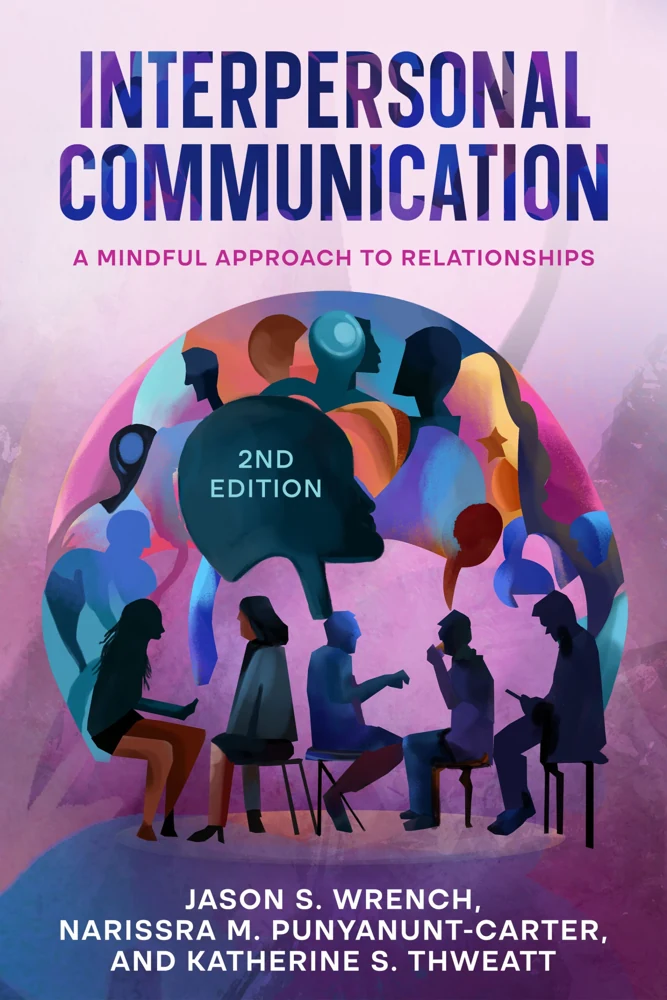 Psychology
Interpersonal Communication: A Mindful Approach to Relationships
View Interpersonal Communication: A Mindful Approach to Relationships — book Computer Science
How to Think Like a Computer Scientist: C++ Version
View How to Think Like a Computer Scientist: C++ Version — book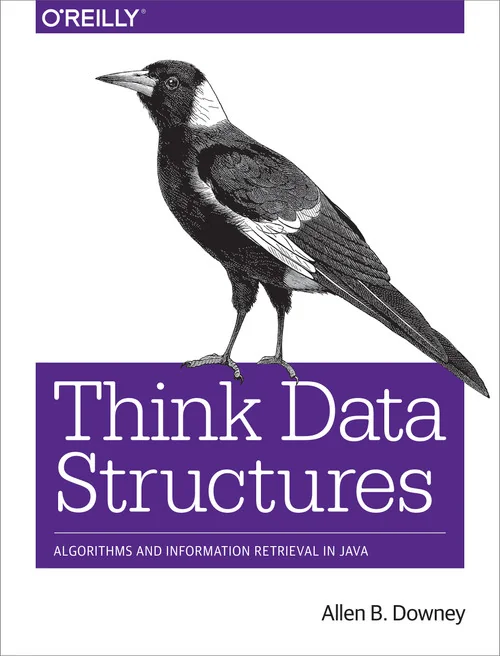 Computer Science
Think Data Structures: Algorithms and Information Retrieval in Java
View Think Data Structures: Algorithms and Information Retrieval in Java — book Computer Science
Think DSP: Digital Signal Processing in Python
View Think DSP: Digital Signal Processing in Python — book Computer Science
Think Complexity: Exploring Complexity Science with Python
View Think Complexity: Exploring Complexity Science with Python — book Computer Science
Think Stats: Probability and Statistics for Programmers
View Think Stats: Probability and Statistics for Programmers — book Computer Science
The Little Book of Semaphores
View The Little Book of Semaphores — book Computer Science
Think Java: How To Think Like a Computer Scientist
View Think Java: How To Think Like a Computer Scientist — book Psychology



