
Introduction
The Northern Lights, or aurora borealis, provide a vivid example of how magnetism, plasma physics, and atmospheric chemistry interact. Auroras are produced when energy from the solar wind enters Earth’s magnetosphere and accelerates charged particles, especially electrons, toward the upper atmosphere. Those particles collide with oxygen and nitrogen, transferring energy that is later released as visible light. Earth’s magnetic field guides the motion of charged particles, which is why auroral displays are organized mainly around high magnetic latitudes rather than appearing equally across the planet. The phenomenon should not be described as ions being “released” by Earth’s magnetic field because a magnetic field does not manufacture or emit particles. Earth’s field is generated primarily by the motion of electrically conducting liquid iron in the outer core through the geodynamo. The aurora therefore connects several scientific ideas at once: electromagnetism, the solar wind, magnetic reconnection, particle motion, atomic excitation, and the structure of the upper atmosphere (NOAA Space Weather Prediction Center, 2026).
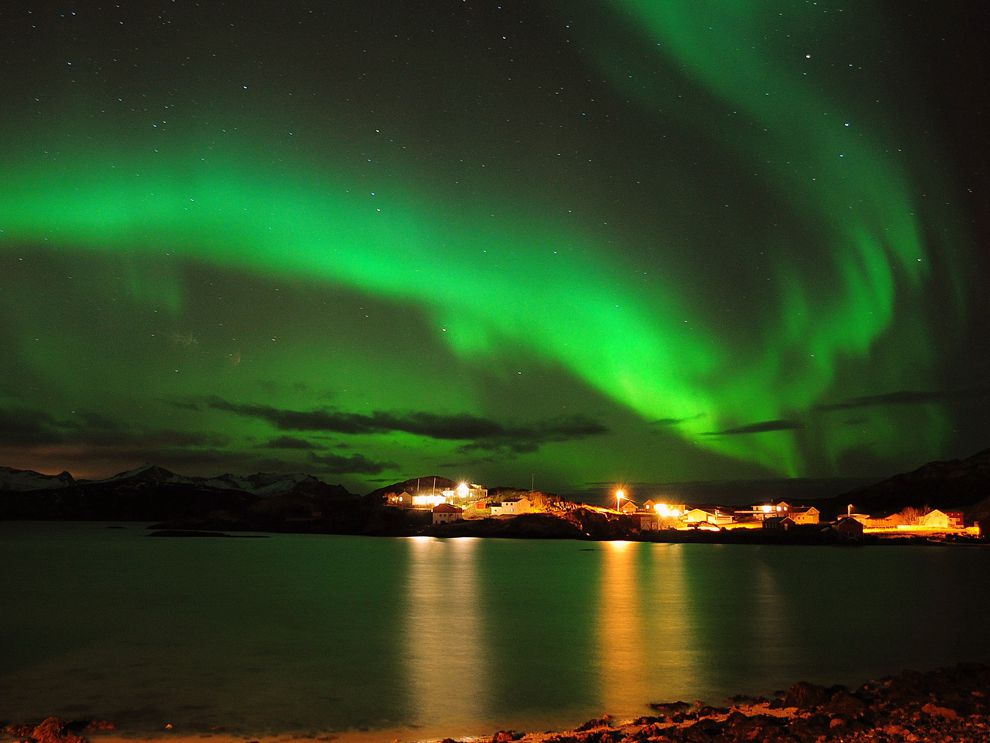
Figure 1. Northern Lights, preserved from the original essay.
Earth’s Magnetic Field and Magnetosphere
Earth behaves approximately like a magnetic dipole at large scales, but its magnetic field is more complex than the field of a simple bar magnet. The geographic and magnetic poles do not coincide exactly, and the magnetic field changes gradually over time. The magnetosphere is the region around Earth in which the planetary magnetic field strongly influences the motion of charged particles. Solar wind compresses the dayside magnetosphere and stretches the nightside into a long magnetotail. Magnetic field lines are useful diagrams showing direction and relative strength; they are not physical strings suspended in space. Charged particles move in curved or spiral trajectories around the field and can be guided toward polar regions. The magnetosphere is also not a perfectly sealed shield. Energy and particles cross its boundary through processes including magnetic reconnection, which allows solar-wind energy to be transferred efficiently into near-Earth space under favorable magnetic conditions. This transfer is fundamental to geomagnetic storms and auroral activity.
From the Sun to the Aurora
The Sun continually emits solar wind, a stream of plasma containing charged particles and an embedded magnetic field. Solar activity can change the speed, density, and magnetic orientation of this flow. Coronal holes often produce high-speed streams, while coronal mass ejections can send large structures of plasma and magnetic field through interplanetary space. Auroral activity becomes especially intense when the solar-wind magnetic field couples effectively with Earth’s magnetosphere. Magnetic reconnection can store and release energy in the magnetotail, accelerating electrons earthward. Those particles then follow magnetic field geometry into the polar upper atmosphere. Solar flares should not be confused with this particle-transport process. Flares are bursts of electromagnetic radiation, whereas coronal mass ejections and solar-wind structures carry plasma and magnetic fields. The visible aurora is therefore the atmospheric expression of a much larger Sun–Earth energy-transfer system. The light itself is harmless to observers on the ground even though the associated geomagnetic disturbance can affect technological systems in space and on Earth.
Why the Aurora Glows and Changes Color
Auroral light is produced when energetic electrons collide with atoms and molecules in the upper atmosphere. These collisions excite atmospheric particles to higher energy states. When the particles return to lower energy states, they emit photons at characteristic wavelengths. Atomic oxygen commonly produces green light at typical auroral altitudes and red emission at higher altitudes where collisions are less frequent. Molecular nitrogen and ionized nitrogen contribute blue, purple, pink, and reddish features, particularly during energetic displays or at lower edges of auroral curtains. The comparison with a gas-discharge lamp is useful only in a limited sense: both involve excited atoms or molecules releasing light, but a neon lamp uses an electrical discharge in a sealed gas, whereas an aurora is driven by energetic space particles interacting with the upper atmosphere. Camera photographs can also show colors more strongly than human vision because longer exposures, sensor sensitivity, white balance, and image processing collect faint wavelengths that the eye may perceive only as pale green or gray.
Auroral Ovals, Storms, and Observation
Auroras usually form within oval-shaped regions around the magnetic poles rather than as fixed circles centered on the geographic poles. During stronger geomagnetic activity, these ovals expand toward lower latitudes, allowing observers much farther from the Arctic or Antarctic to see auroral displays. Visibility depends on several factors at once: geomagnetic latitude, solar activity, cloud cover, darkness, local light pollution, and the position of the auroral oval. Space-weather forecasts therefore describe probability and broad geographic extent rather than guaranteeing that a particular town will see a display. Scientists monitor the system with solar observatories, satellites, upstream solar-wind monitors, magnetometers, radars, all-sky cameras, and spectrometers. Measurements of solar-wind speed and magnetic orientation can provide short-term warning of disturbed conditions after solar structures reach spacecraft located upstream of Earth. Earlier solar observations can provide longer notice when a coronal mass ejection is detected. Forecasting remains probabilistic because magnetic orientation and the exact interaction with Earth can change while the disturbance travels through space.
Space Weather and Scientific Models
The same energy transfer that produces auroras can create practical space-weather effects. Geomagnetic storms can disturb the ionosphere, alter high-frequency radio propagation, reduce satellite-navigation accuracy, increase satellite drag, produce spacecraft charging and radiation hazards, and generate electrical currents in long conductors such as power grids and pipelines. The auroral glow is therefore a visible indicator of processes that extend well beyond the sky display itself. Scientists use conceptual, numerical, and experimental models to study these interactions. A conceptual model connects the Sun, solar wind, magnetosphere, particle acceleration, atmosphere, and emitted light. Numerical simulations calculate plasma and field behavior under specified assumptions. Laboratory demonstrations can show how charged particles respond to magnetic fields, but they are analogs rather than exact miniature magnetospheres. Models are scientifically useful when their assumptions and limitations are explicit. The aurora is particularly effective for teaching magnetism because an invisible field becomes indirectly visible through the organized motion of particles and the resulting atmospheric emission.
Conclusion
The Northern Lights demonstrate magnetism through the behavior of charged particles, but the complete explanation requires a broader chain of physical processes. Earth’s geodynamo generates a magnetic field; the solar wind carries plasma and magnetic energy from the Sun; magnetic reconnection transfers part of that energy into the magnetosphere; accelerated electrons travel toward high magnetic latitudes; and collisions with oxygen and nitrogen produce visible photons. Different atmospheric species and altitudes generate the range of green, red, blue, purple, and pink colors observed in auroral displays. Strong geomagnetic activity can expand the auroral oval toward lower latitudes and simultaneously disturb communication, navigation, satellites, and power infrastructure. The phenomenon is therefore both an aesthetic spectacle and an operational sign of space weather. A scientifically accurate account avoids treating field lines as physical wires, confusing solar flares with particle streams, or assuming that Earth’s magnetic field releases ions. The aurora is best understood as a dynamic interaction among the Sun, Earth’s magnetic environment, and the upper atmosphere.
References
Cite This Work
To export a reference to this article please select a referencing stye below:

Academic Master Education Team is a group of academic editors and subject specialists responsible for producing structured, research-backed essays across multiple disciplines. Each article is developed following Academic Master’s Editorial Policy and supported by credible academic references. The team ensures clarity, citation accuracy, and adherence to ethical academic writing standards
Content reviewed under Academic Master Editorial Policy.



