
 college preparation
Communication Science/JournalismTextbook
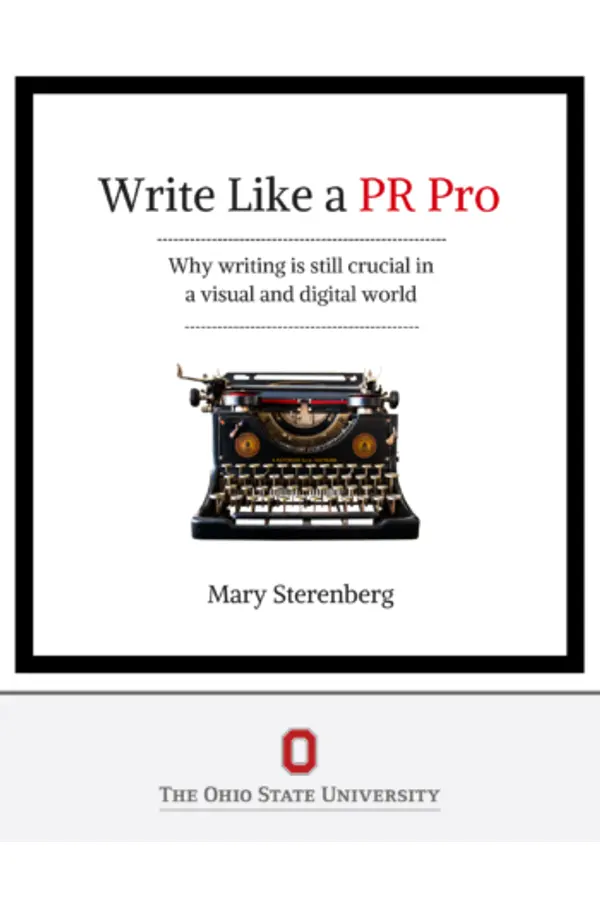
Write Like a PR Pro
Not rated yetRate this bookWrite Like a PR Pro explains public relations writing as a strategic process connecting audience, brand, message, and channel. Across thirteen chapters in five parts, it moves from communication fundamentals to blogs, social media, video, visuals, and earned-media story development.
Free reading is available at the official source. Opens in a new tab.
 Free
About this book
Write Like a PR Pro explains public relations writing as a strategic process connecting audience, brand, message, and channel. Across thirteen chapters in five parts, it moves from communication fundamentals to blogs, social media, video, visuals, and earned-media story development.
How to study this book
Choose one organization and one communication objective. Build a portfolio of related messages as you read, using the professional examples to examine decisions rather than copying their wording. Revise every draft for accuracy, audience relevance, and channel fit.
Chapter-wise explanations and study tasks
Chapter 1 — Cornerstones of Communication
Good writing rests on clear language, careful reading, curiosity, and resourcefulness. The chapter also introduces Associated Press style as a tool for consistency. Treat accuracy and editing as part of professional judgment rather than a final cosmetic stage after the real work is finished.
Study task: Edit a 250-word announcement for clarity and consistency, explaining five changes and checking every factual claim.
Chapter 2 — Setting Strategy: Finding the “Why”
Discovery establishes the brand, audiences, and objectives that justify a communication effort. The campaign examples show why identifying a specific desired response matters before drafting content. A broad aspiration becomes useful when you can explain who should respond, how, and why that response serves the organization.
Study task: Write a discovery brief with a defined audience, a communication problem, and two measurable objectives.
Chapter 3 — Strategic Messaging
A message must communicate useful information while remaining recognizable as part of the brand. Channel selection follows purpose and audience rather than the availability of a fashionable platform. Examine how the examples connect a central idea to different forms of delivery.
Study task: Create a message map with one central claim, three supporting points, and a reasoned channel choice for each audience.
Chapter 4 — Blogging
The blogging chapter considers topic, voice, content quality, and the wider online presence. A useful post gives readers a reason to continue and supports the organization's purpose without reading like an unfocused advertisement. Study how concrete detail and a consistent voice create value.
Study task: Draft a 500-word blog post with a specific audience promise, descriptive headings, verified details, and a relevant next step.
Chapter 5 — Different Sides of Social
Social media involves different communication relationships and uses rather than a single interchangeable publishing space. Examine the distinction between distributing content and participating in an ongoing public conversation. Identify what a platform enables and what expectations its users bring.
Study task: Compare two social channels for the same organization, identifying audience expectations, suitable formats, and likely interaction patterns.
Chapter 6 — Setting an Up Front Social Strategy
A social strategy should precede individual posts. The chapter's campaign example shows how deliberate planning can shift the conversation around a brand. Connect social activity to a larger goal and decide what evidence would show whether the chosen approach is working.
Study task: Prepare a social brief with objectives, audience, message priorities, channel roles, and a response plan.
Chapter 7 — Social Content Creation
Content marketing and calendars connect individual creative decisions to a sustained publishing programme. Timely topics can help reach an audience, but relevance and brand fit remain necessary. A calendar should explain the purpose of each item rather than simply fill empty dates.
Study task: Build a two-week calendar showing each post's audience, purpose, format, owner, and desired response.
Chapter 8 — Social Community Management
Community management concerns what happens after publication: listening, responding, and sustaining relationships. Consider how consistent responses and escalation decisions shape public trust. A useful response demonstrates that the organization understands the concern and can take an appropriate next step.
Study task: Draft responses to a genuine question, a complaint, and misinformation, including when each should be escalated.
Chapter 9 — Social Analytics and Reporting
Monitoring and analysis turn activity into evidence for improving communication. Distinguish a large visible count from a measure that speaks to the campaign objective. Reporting should explain what the results suggest and what decision follows, while acknowledging what the data cannot establish.
Study task: Design a one-page report linking three metrics to objectives and recommending a change supported by the results.
Chapter 10 — Video Messaging
Video combines message, sequence, voice, and production choices. The chapter considers its role in PR alongside practical cautions and lessons transferable to other formats. Plan the story around what an audience needs to understand rather than around impressive footage alone.
Study task: Create a 60-second storyboard with narration, visuals, audience purpose, and accessibility requirements.
Chapter 11 — Visual Messaging
Photography, design details, packaging, and infographics all communicate meaning. Visual choices should make information easier to interpret and remain faithful to the underlying facts. Consider whether the image adds evidence or merely decoration and whether a graphic's labels support accurate reading.
Study task: Sketch an infographic from a small verified dataset and explain its hierarchy, labels, image choices, and source attribution.
Chapter 12 — Finding and Making News
Understanding the media environment and news values helps identify stories that could matter beyond the organization itself. A pitch needs a reason for a particular journalist's audience to care. Separate organizational enthusiasm from an independently understandable public-interest angle.
Study task: Evaluate three possible story ideas for news value and tailor the strongest to a specific publication's audience.
Chapter 13 — Producing Your Own News
The final chapter develops newsworthy ideas while emphasizing editorial gatekeeping. Producing organizational news still requires relevance, verification, and decisions about what deserves publication. The newsroom example illustrates connecting a useful story to a wider conversation.
Study task: Draft an organizational news story and a gatekeeping checklist covering evidence, relevance, timing, and potential stakeholder questions.
Applied assignment
Develop one integrated PR portfolio: strategy brief, message map, blog post, social calendar, community responses, video storyboard, visual concept, and news pitch. Explain how every item advances the same objective.
Suggested reading plan
Read Chapters 1–3 for foundations, Chapter 4 for owned content, Chapters 5–9 for social work, Chapters 10–11 for visual formats, and Chapters 12–13 for news.
Questions for reflection
- What makes a message useful to its audience?
- Which metric would change your communication decision?
- When should an attractive story idea be rejected?
Edition and source notes
The guide follows the source's thirteen chapters and five parts. Campaigns and platform examples are historical teaching cases; assess their reasoning without assuming that platform features or industry conventions remain unchanged.
About access & copyright
This page provides book information and study material. Full-text access is provided by the original publisher or authorised source; a listing does not grant permission to republish the book.
Read our Library Access & Copyright policyExplore the contents
Check the chapters covered in this edition.
Visit the official source
See reading, preview or purchase options.
Save for later
Keep this textbook in your saved collection.
Reader ratings & reviews
Share your thoughts
Your review helps other students choose the right resources.
KEEP LEARNING
Your next great read
college preparation Business and Economics
Essentials of Project Management (v. 1.2 – January 22, 2024)
View Essentials of Project Management (v. 1.2 – January 22, 2024) — book Business and Economics
Pop-up Retail Strategies in an Omnichannel Context
View Pop-up Retail Strategies in an Omnichannel Context — book Law, Economics and Social Sciences
Research Methods: Exploring the Social World in Canadian Context
View Research Methods: Exploring the Social World in Canadian Context — book Communication Science/Journalism
Professional Communication Skills for Health Studies
View Professional Communication Skills for Health Studies — book Business and Economics
Understanding Business
View Understanding Business — book Law, Economics and Social Sciences
Principles of Social Psychology - 1st International Edition
View Principles of Social Psychology - 1st International Edition — book Business and Economics
Sales Leadership Management
View Sales Leadership Management — book Early childhood care and education
Reflective Practice in Early Years Education
View Reflective Practice in Early Years Education — book Business and Economics



