
 Mathematics
Geometry and TrigonometryTextbook
Trigonometry
Not rated yetRate this bookKatherine Yoshiwara develops trigonometry through geometry, practical problems, graphs, and the interpretation of periodic behavior. Ten main chapters connect triangles with functions, identities, radians, vectors, polar coordinates, and complex numbers.…
Read on the publisher’s website. Opens in a new tab.
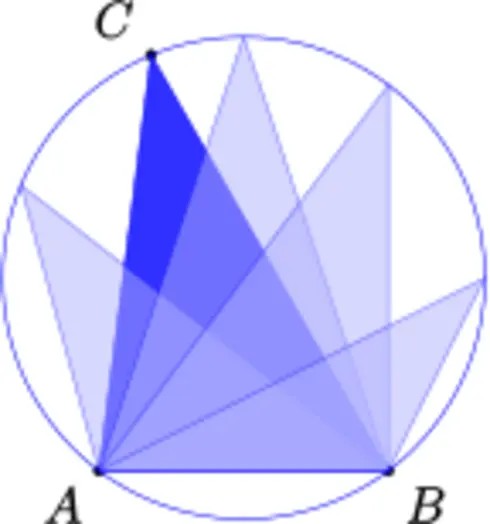 Free
About this book
Katherine Yoshiwara develops trigonometry through geometry, practical problems, graphs, and the interpretation of periodic behavior. Ten main chapters connect triangles with functions, identities, radians, vectors, polar coordinates, and complex numbers. The progression is cumulative: a ratio first understood in a right triangle becomes part of a wider account of rotation and functions. These summaries explain those connections and the conditions that make a chosen calculation appropriate, while distinguishing the main chapters from answer and reference material.
The detailed guide below explains the resource’s main ideas and how its chapters or sections connect. Read it alongside the study instructions and the complete official text.
Book summary
Chapter-by-chapter summaries
1. Triangles and Circles
The opening chapter establishes geometric relationships used throughout the text. Angle relationships, congruence, similarity, and circle geometry provide ways to determine unknown quantities without treating every problem as unrelated. Similar triangles are particularly important because they explain why ratios of corresponding sides can remain fixed even when the triangles have different sizes. Coordinate ideas connect a diagram with equations and distance calculations. The chapter therefore builds a language for reasoning, not only a set of shapes to recognize. Students should identify what is given, what follows from a theorem or definition, and what a drawing only appears to suggest. A sketch need not be to scale, and visual similarity is not a proof. This distinction prepares the use of trigonometric ratios by grounding them in relationships that can be justified and transferred to a new configuration.
2. The Trigonometric Ratios
Right-triangle trigonometry connects an acute angle with ratios among side lengths. Similarity explains why those ratios depend on the angle rather than the triangle’s overall size. The chapter develops the relationship between sides and angles and then uses the ratios to solve right triangles and applications. The first task is choosing the reference angle and identifying opposite, adjacent, and hypotenuse correctly. Those labels are relational, so changing the angle changes the role of some sides. Inverse operations allow an angle to be recovered from a suitable ratio, while calculator mode and rounding affect numerical results. Students should distinguish a side length from a ratio and check whether the computed angle and lengths fit the original geometry. A well-explained solution begins with a labeled diagram, chooses the relevant relationship, and ends by interpreting the requested quantity with units rather than reporting every value a calculator can produce.
3. Laws of Sines and Cosines
The third chapter extends triangle-solving beyond the right-triangle setting. Coordinate definitions allow trigonometric ratios to be understood for obtuse angles, making signs and supplementary relationships important. The Law of Sines and Law of Cosines then connect angle and side information in general triangles. The available data determine which route is appropriate and whether the triangle is uniquely specified. In the ambiguous sine-law case, a calculator’s principal inverse-sine value may not represent every possible angle, so a second geometrically valid configuration must be considered where relevant. Triangle-area reasoning adds another connection among sides and included angle. Students should identify the configuration of known quantities before choosing a formula and verify the resulting angle sum and side relationships. A computed number is not enough if the original measurements cannot form a triangle or allow more than one.
4. Trigonometric Functions
Angles now describe rotation, including directions and amounts beyond the acute-angle range of a right triangle. Placing an angle in standard position connects its terminal side with coordinates and the signs of trigonometric values. Repeated rotation leads to periodicity, which becomes visible in function graphs. The chapter uses these ideas to model changing quantities that recur over time. This requires separating an input angle from a time variable and explaining how the model connects them. Amplitude, range, period, and starting position describe different features and should not be substituted for one another. Students should use a circle or reference-angle argument to check signs and a graph to interpret repetition. The wider conceptual move is from one triangle to a function across a domain, making earlier ratios part of a model that can describe cycles and repeated motion.
5. Equations and Identities
The chapter distinguishes an equation to solve from an identity that holds throughout its common domain. Trigonometric expressions require careful attention to function notation: the sine of a sum is not a product, and squaring a function value is different from doubling its argument. Algebraic techniques can isolate a ratio or transform an expression, but periodicity means that one calculator result may not give every solution. Reference angles and the requested interval help organize the answer. An identity provides a justified equivalence for simplification or proof, whereas an operation such as dividing by a potentially zero expression may discard a valid case. Students should state domain restrictions and check solutions in the original equation. The chapter connects symbolic skill with graphical understanding so that manipulation remains accountable to the functions involved rather than becoming a search for an expression that looks simpler.
6. Radians
Radians connect an angle with the ratio of arc length to radius. This gives angle measurement a direct geometric relationship with distance around a circle and prepares the circular-function viewpoint used in later mathematics. Degree and radian descriptions represent the same rotation through different scales, so conversions must preserve that relationship. The chapter develops circle-based values and graphs with radian inputs rather than treating radians as an arbitrary new notation. Exact values involving pi and decimal approximations serve different purposes, and a calculator must be set consistently with the input. Students should connect a familiar fraction of a revolution with both measures before using conversion factors mechanically. The practical advantage appears when a problem involves arc length, movement, or periodic input. Recognizing the unit convention prevents an otherwise correct formula from producing a result based on the wrong interpretation of its argument.
7. Circular Functions
Transformations of sine and cosine create models with changed amplitude, period, midline, and horizontal position. The chapter connects those parameters with the observable features of a periodic quantity and then uses the models to solve questions about thresholds or particular times. Several formulas can describe the same sinusoidal behavior, so matching one memorized form is less important than interpreting the parameters consistently. The order and placement of transformations matter, especially when a factor inside the argument changes a horizontal shift. Students should use known points, extrema, and a full cycle to test a proposed formula. When solving an equation, a principal inverse value is only a starting point for finding all relevant times. The chapter’s applications also illustrate the limits of idealization: a sinusoid can describe a useful recurring pattern without capturing every irregular feature of a real process.
8. More Functions and Identities
Sum and difference formulas extend the relationships among trigonometric values and support exact calculations, equation-solving, and further identities. They also correct a tempting but invalid analogy with ordinary addition: a function of a sum generally cannot be split into a sum of function values. Inverse trigonometric functions require restricted ranges so that an input has a unique output, which distinguishes them from reciprocal functions. The chapter develops both sets of functions and their graphs. That distinction is especially important when interpreting inverse notation on a calculator. Students should identify what operation is being performed and which branch or domain is involved before simplifying a composition. An apparently obvious cancellation may return a principal angle rather than every original input. The chapter therefore deepens functional reasoning while expanding the set of identities available for justified transformations.
9. Vectors
Vectors represent quantities with both magnitude and direction, providing another use for the chapter sequence’s geometric and trigonometric tools. The text connects geometric arrows with coordinate components, addition, scaling, and unit directions. A resultant is obtained through vector relationships rather than simply adding magnitudes. The dot product then links components with the angle between vectors and supports questions involving orthogonality and projection. Students should distinguish a scalar result from a vector result and identify the reference directions used in a decomposition. A component can be negative without the vector’s magnitude being negative. Sketches and special cases help check the calculation: parallel, perpendicular, and opposite directions should produce interpretable outcomes. The chapter broadens trigonometry from solving shapes to analyzing directed quantities while keeping the same need for consistent geometry and clear interpretation.
10. Polar Coordinates and Complex Numbers
Polar coordinates describe a point through directed radial position and angle rather than two perpendicular components. Conversions connect the two descriptions, but choosing an angle requires quadrant information, and one point can have several polar representations. Polar graphs therefore need to be understood through how points are generated, not by transferring every Cartesian graphing habit unchanged. The chapter also introduces complex numbers and their representation in the plane. Polar form connects magnitude and angle with operations that become geometrically meaningful as scaling and rotation. Students should distinguish a number from its chosen representation and keep the conventions consistent. A negative radial coordinate or an angle differing by a full revolution can describe a point already encountered. This final chapter unifies the circle, vector, and function perspectives while demonstrating why an algebraic conversion should always be checked against the intended geometry.
Appendices, Answers, and Glossary
The supplementary sections supply selected answers, terminology, and reference material. They support review but cannot establish whether a method was understood merely because a final number matches. A useful check reconstructs the diagram, verifies units and domain, and explains why the selected relationship applies. When an answer differs, students should locate whether the error involved geometry, algebra, angle mode, or incomplete treatment of multiple solutions. The glossary can help resolve notation that appears similar but means different things, particularly inverse functions, reciprocals, and powers. Using the references in that way strengthens the connections among chapters instead of reducing study to the memorization of isolated formulas.
Study instructions
- Review angle measurement and practice converting degrees and radians. Draw the angle and indicate its quadrant before evaluating a trigonometric function.
- Connect right-triangle ratios to coordinates on the unit circle. Explain signs and reference angles instead of memorizing isolated values without a diagram.
- Graph periodic functions by identifying amplitude, period, shifts, and any asymptotes. Check the graph at several meaningful points.
- For identities, transform a chosen side through justified equivalences. For equations, track domain restrictions and list all solutions in the requested interval.
- Apply triangle and periodic models to a concrete problem, recording units and checking whether the result is reasonable. Revisit an error after a delay without looking at the correction.
Practice and review task
Create a comparison sheet linking one function’s circle definition, graph, key values, and a practical interpretation.
Questions for reflection
Why does an equation have several solutions? Which algebraic step could introduce or discard a solution?
Sources and coverage
These original summaries draw on review of the source text, including chapter or section introductions and selected explanations, examples, review material, and concluding discussions. They are condensed study guides, not a page-by-page account or a replacement for the complete resource. Supplementary sections and original study illustrations are identified separately.
About access & copyright
This page provides book information and study material. Full-text access is provided by the original publisher or authorised source; a listing does not grant permission to republish the book.
Read our Library Access & Copyright policyExplore the contents
Check the chapters covered in this edition.
Visit the official source
See reading, preview or purchase options.
Save for later
Keep this textbook in your saved collection.
Reader ratings & reviews
Share your thoughts
Your review helps other students choose the right resources.
KEEP LEARNING
Your next great read
Mathematics Algebra
Fanshawe Pre-Health Sciences Mathematics 2
View Fanshawe Pre-Health Sciences Mathematics 2 — book Algebra
Fanshawe Pre-Health Sciences Mathematics 1
View Fanshawe Pre-Health Sciences Mathematics 1 — book Mathematics
Math 3080 Preparation
View Math 3080 Preparation — book Algebra
Linear Algebra with Applications
View Linear Algebra with Applications — book Business and Economics
Mathematics of Finance
View Mathematics of Finance — book Algebra
The Essence of Mathematics Through Elementary Problems
View The Essence of Mathematics Through Elementary Problems — book complex numbers
Making up Numbers: A History of Invention in Mathematics
View Making up Numbers: A History of Invention in Mathematics — book Business and Management
Inventory Analytics
View Inventory Analytics — book Challenges and roles for textbooks in a pandemic context



