
 Humanities
EducationTextbook
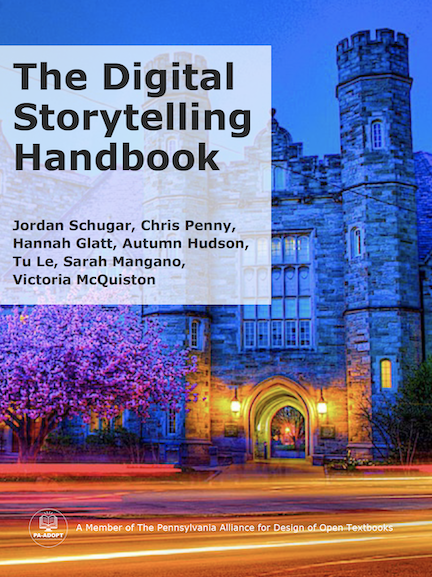
The Digital Storytelling Handbook
Not rated yetRate this bookA handbook on digital storytelling that places narrative experience at the centre of communication across text, images, sound, video, and other digital forms.
Free reading is available at the official source. Opens in a new tab.
 Free
About this book
A handbook on digital storytelling that places narrative experience at the centre of communication across text, images, sound, video, and other digital forms.
This page introduces the source edition and offers a focused reading route. Use the linked original resource for the complete text, references, activities, and the author’s full explanation. The overview below is limited to the sections identified in the coverage note.
Contents and further reading
Consult the official book or repository page for the resource’s contents and publication information. Open the source PDF to read the complete available edition.
Sources and coverage
This original overview is based on Setting the Stage (PDF sheets 13–14), with title-page authorship and rights information checked. It is not a whole-book review. The verified source PDF contains 92 PDF sheets, including preliminary or repository pages; this may differ from its printed pagination. The source retains its own authorship, rights notices, and any separately credited third-party material.
Book summary
The Digital Storytelling Handbook moves from planning and available resources to interviews, emotion, visual communication, short forms, documentary, and color. Its sections combine practical production choices with attention to meaning and cultural understanding. The guide follows those named sections, treating digital storytelling as an intentional relationship among audience, material, and medium rather than a software demonstration.
Chapter-by-chapter summaries
Before the Beginning
The opening invites preparation before production. A story needs a reason to be told and a workable understanding of its audience. Initial decisions about purpose and available resources shape later choices more effectively than starting with effects and trying to invent a message afterward.
Setting the Stage
This section establishes the circumstances in which the story will be created and encountered. Clarifying the task, expectations, and context gives production a direction. It also helps explain why the same material may need different treatment for different viewers or settings.
Using What You Have
Available equipment and material can support a strong story when their capabilities are understood. The section shifts attention from obtaining ideal tools to making deliberate choices with usable resources. A limitation can shape form without preventing meaningful communication.
Process of Digital Storytelling
The process connects planning, gathering material, construction, revision, and presentation. Each stage informs the next, and later editing may reveal a gap in the original plan. Treating production as a process makes revision part of storytelling rather than a rescue operation after technical work is complete.
Why Use Digital Storytelling?
Digital forms combine modes that can communicate experience in ways a single medium may not. The section asks what the format contributes to learning or expression. Its value depends on the task, not on assuming that a video or digital artifact is automatically more engaging or effective.
Building Cultural Competence
Storytelling can create opportunities to encounter perspectives and examine assumptions. The section connects representation with the responsibility to understand context. A storyteller needs to consider whose account is being presented and whether the chosen form allows that perspective to remain intelligible rather than reducing it to a convenient illustration.
Strategies for Digital Stories
Strategies help organize a story's focus and progression. The section supports deliberate selection rather than including every available image or recording. A clear structure gives the audience a route through the material and makes production decisions answerable to a communicative purpose.
Video Interviews
An interview is both an interaction and source material for a later account. Preparation, questions, listening, and recording choices affect what can be represented. Editing must preserve meaning and context; a concise sequence should not suggest that an interviewee said something different from the original exchange.
Storytelling Using Emotion
Emotion can connect an audience with a story, but its effect depends on context and selection. The section examines emotional communication as a storytelling decision. A useful distinction is between helping viewers understand an experience and relying on intensity to substitute for a clear or responsible account.
Photography and Videography
Visual material contributes through framing, sequence, viewpoint, and the information it makes available. The section encourages seeing images as meaningful choices rather than generic accompaniment. A visual detail should have a role in the story and be understood in relation to what the audience has already encountered.
Short Films
Short forms require economy and a coherent progression. Limited duration makes selection particularly important: each scene or moment needs to contribute. The section helps learners consider how a story can establish a situation and create a meaningful change without trying to include the scope of a much longer work.
Six Words, Six Shots
The constrained exercise makes planning and selection visible. A small number of words and images must work together rather than repeat one another without purpose. Its educational value is in explaining why each element was retained and how their sequence creates an interpretable whole.
Documentary
Documentary connects storytelling with claims about people, events, or conditions. The section makes evidence and representation part of production. Selection and editing remain unavoidable, so responsible work requires attention to source context and the difference between an observed event and the interpretation built around it.
Color's Impact
Color affects attention, atmosphere, and relationships within a digital story. The section encourages deliberate use rather than assuming a filter improves every image. Color choices should be considered alongside the subject and context, with care about meanings that may vary across audiences.
Conclusion and Appendix
The closing material supports further practice and review. It is useful for checking the relationship among intent, production decisions, and the finished artifact. Reflection should explain what the audience can now understand and which technical or representational choice most needs revision.
Study instructions
- Write a brief naming the audience, purpose, and central experience before collecting media.
- Create a storyboard and explain the role of every planned image, sound, or spoken passage.
- Check permissions, attribution, and the preservation of source meaning when using other people's material.
- Show a rough version to a viewer and ask what they understood before making final edits.
Sources and coverage
This original study guide follows the linked source edition and its chapters or explicitly identified sections. It condenses the main ideas and their relationships; examples and practice directions are for study alongside the complete text. Complete source edition.
About access & copyright
This page provides book information and study material. Full-text access is provided by the original publisher or authorised source; a listing does not grant permission to republish the book.
Read our Library Access & Copyright policyNarrative first
Establish the story before choosing tools.
Multiple modes
Give each medium a purposeful role.
Sequence
Arrangement influences meaning and audience experience.
Responsible production
Plan permissions, credit, and access alongside form.
Reader ratings & reviews
Share your thoughts
Your review helps other students choose the right resources.
KEEP LEARNING
Your next great read
Humanities Humanities
Stand up, Speak out - The Practice and Ethics of Public Speaking
View Stand up, Speak out - The Practice and Ethics of Public Speaking — book Curriculum & Instruction
Teaching in a Digital Age: Guidelines for designing teaching and learning
View Teaching in a Digital Age: Guidelines for designing teaching and learning — book Humanities
Yorùbá Yé Mi
View Yorùbá Yé Mi — book Humanities
The Process of Research Writing
View The Process of Research Writing — book Curriculum & Instruction
Teaching Crowds: Learning and Social Media
View Teaching Crowds: Learning and Social Media — book Humanities
Modern Philosophy
View Modern Philosophy — book Humanities
A Foundation Course in Reading German
View A Foundation Course in Reading German — book Curriculum & Instruction
Efficacious Technology Management: A Guide for School Leaders
View Efficacious Technology Management: A Guide for School Leaders — book Humanities



