
BUS 310: Business Communications
BusinessTextbook
Sustainability, Innovation, and Entrepreneurship
Not rated yetRate this bookSustainability, Innovation, and Entrepreneurship examines how environmental challenges can reshape products, processes, business models, and venture opportunities. These instructions follow the eight chapters of the anonymous LibreTexts source, connecting conceptual frameworks with its historical company cases.
Free reading is available at the official source. Opens in a new tab.
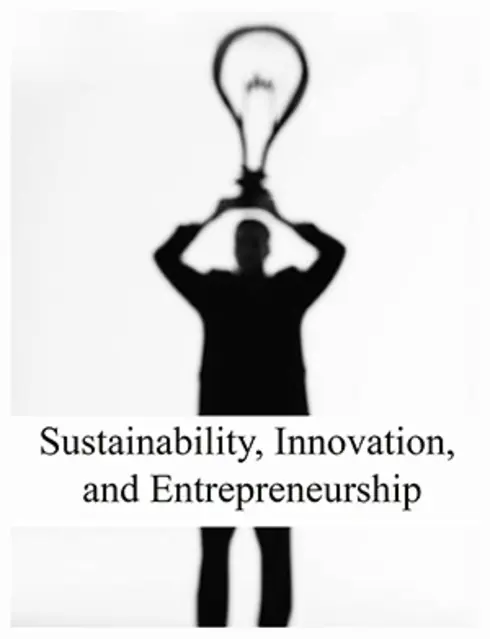 Free
About this book
Sustainability, Innovation, and Entrepreneurship examines how environmental challenges can reshape products, processes, business models, and venture opportunities. These instructions follow the eight chapters of the anonymous LibreTexts source, connecting conceptual frameworks with its historical company cases.
How to study this book
Separate an environmental objective from a claim that a particular business action achieves it. Define system boundaries, affected stakeholders, material and energy flows, and the comparison baseline. Read company cases in their historical setting and distinguish a proposed innovation from independently demonstrated results.
Chapter-wise explanations and study tasks
Chapter 1 — History
Environmental events, regulation, and changing business responses establish the context for sustainability innovation. Follow how problems become visible and enter organizational decisions rather than treating regulation as the sole driver.
Study task: Create a historical cause-and-response map and distinguish an event from an interpretation of its business effect.
Chapter 2 — Sustainability Innovation in Business
Energy and material pressures challenge familiar growth assumptions and motivate changes in value creation. Define the innovation and the sustainability claim separately before evaluating their connection.
Study task: Compare a conventional offering with a proposed sustainable alternative and specify the baseline and indicators needed for a fair assessment.
Chapter 3 — Framing Innovation and Entrepreneurship
Paradigms, adaptation, core ideas, and analytical tools shape how an opportunity is recognized. A framing choice can reveal interactions or hide costs outside the selected boundary.
Study task: Analyze one fictional business problem under two different system boundaries and explain the resulting change in opportunity.
Chapter 4 — Entrepreneurial Analysis
The entrepreneurial process is connected with systems thinking, molecular thinking, weak ties, collaborative networks, and radical incrementalism. Translate each concept into a specific role in developing a feasible solution.
Study task: Map a venture’s material choices, partners, and staged changes, identifying where one analytical lens changes the proposal.
Chapter 5 — Energy and Climate
The chapter combines climate context with East West Partners, Frito-Lay, and Calera cases. Examine the mechanism claimed for each improvement, its operational setting, and the evidence or assumptions supporting it.
Study task: Compare two cases using energy or material flows, claimed outcomes, boundaries, and unresolved verification questions.
Chapter 6 — Clean Products and Health
Green supply chains, product design, green chemistry, and entrepreneurial strategy link business choices with health and environmental concerns. A benefit in one dimension does not establish superiority in every dimension.
Study task: Develop an evaluation table for a fictional cleaner product, separating performance, exposure-related concerns, resource use, and commercial feasibility.
Chapter 7 — Buildings
Project Frog, Hermes Microtech, and Shaw Industries connect sustainability with facilities, building-related products, and organizational innovation. Building performance depends on design, materials, operation, and the conditions of use.
Study task: Compare a design-stage claim with an operational outcome and identify what measurements would be needed to reconcile them.
Chapter 8 — Biomaterials
The NatureWorks case examines green chemistry and biotechnology within a business setting. Evaluate feedstocks, processing, product use, and end-of-life assumptions rather than equating a biological origin with an automatic overall benefit.
Study task: Draw a biomaterial lifecycle and identify two trade-offs that a full comparison would need to investigate.
Applied assignment
Develop a fictional sustainability-innovation proposal. Include the customer problem, baseline, material and energy flow diagram, stakeholder map, business model, partner network, and staged validation plan. Use one source case as an analytical comparison, then state which environmental and commercial claims remain unverified.
Suggested reading plan
Read Chapters 1–2 for context and definitions, 3–4 for analytical frameworks, and 5–8 for applications. Apply the same evidence checklist to each case and revisit the proposal after learning about a new system boundary or trade-off.
Questions for reflection
- Does the claimed improvement depend on excluding part of the lifecycle?
- What evidence connects the innovation with the intended outcome?
- Which partner or capability is necessary for the business model to work?
Edition and source notes
The linked LibreTexts text identifies its authorship as anonymous. Its eight chapters contain historical company cases rather than current performance audits. These instructions use the cases to practice systems and venture analysis without presenting old environmental, health, or financial claims as verified present-day findings.
About access & copyright
This page provides book information and study material. Full-text access is provided by the original publisher or authorised source; a listing does not grant permission to republish the book.
Read our Library Access & Copyright policyExplore the contents
Check the chapters covered in this edition.
Visit the official source
See reading, preview or purchase options.
Save for later
Keep this textbook in your saved collection.
Reader ratings & reviews
Share your thoughts
Your review helps other students choose the right resources.
KEEP LEARNING
Your next great read
Business
INT 2080: Database Design (Watt and Eng)
INT 2080: Database Design (Watt and Eng)
View INT 2080: Database Design (Watt and Eng) — bookBusiness Law I Essentials
Business Law I Essentials
View Business Law I Essentials — bookACCT 311: Managerial Accounting
ACCT 311: Managerial Accounting
View ACCT 311: Managerial Accounting — bookBUS 215: Introduction to Business
BUS 215: Introduction to Business
View BUS 215: Introduction to Business — book Business
BMT 1600: Principles of Management
View BMT 1600: Principles of Management — book Business
BMT 2580: Compensation and Benefits Management
View BMT 2580: Compensation and Benefits Management — book Business
SMALL BUSINESS MANAGEMENT IN THE 21ST CENTURY
View SMALL BUSINESS MANAGEMENT IN THE 21ST CENTURY — bookBUS 340: Business Law
BUS 340: Business Law
View BUS 340: Business Law — bookBMT 2720: Managing Workplace Diversity



