
 interdisciplinary methods
BiotechnologyTextbook
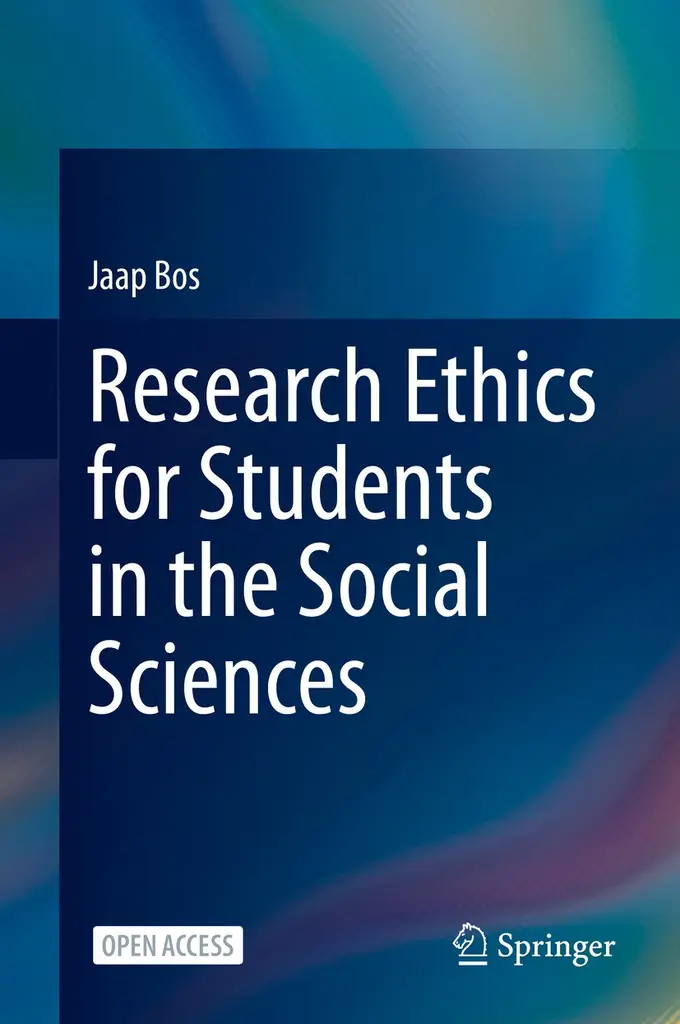
Research Ethics for Students in the Social Sciences
Not rated yetRate this bookJaap Bos’s Research Ethics for Students in the Social Sciences develops ethical judgement through cases, concepts and practical research decisions. Ten chapters connect the purposes of science with plagiarism, fabrication, falsification, confidentiality, conflicts of interest, institutional incentives and the preparation of an ethical research project.
Free reading is available at the official source. Opens in a new tab.
 Free
About this book
Jaap Bos’s Research Ethics for Students in the Social Sciences develops ethical judgement through cases, concepts and practical research decisions. Ten chapters connect the purposes of science with plagiarism, fabrication, falsification, confidentiality, conflicts of interest, institutional incentives and the preparation of an ethical research project.
How to study this book
Read each case before its discussion and write a provisional response. Identify the people affected, the competing obligations, the uncertainty and the practical alternatives. Revisit that response after reading the chapter. Keep a distinction between explaining why misconduct occurs, deciding whether a practice is acceptable and designing a process that makes responsible conduct easier.
Chapter-wise explanations and study tasks
Chapter 1 — Introduction
The opening chapter presents ethics as part of ordinary research work rather than a topic reserved for spectacular scandals. Students encounter ethical choices through assignments, collaboration, data handling and relationships with participants. The book’s case-based approach asks for reasoned judgement, not merely the ability to name a rule. Begin by recognising that good intentions and formal compliance can still leave difficult questions about harm, honesty and responsibility unresolved.
Study task: Describe an ethical choice that could arise in a small student project and explain why checking a rule alone might not settle it.
Chapter 2 — Science
Bos places ethical responsibility within an account of scientific knowledge, universities and the values associated with research. Claims to reliability depend on practices that others can examine and question. The chapter also considers the tension between an ideal scientific ethos and the competitive arena in which researchers work. Distinguish the norms that justify trust in science from the behaviour that institutional pressures may reward.
Study task: Choose a scientific value and explain both how it supports trustworthy knowledge and how a research environment might undermine it.
Chapter 3 — Perspectives
Research ethics, research integrity and professional obligations overlap without being identical. Codes and principles provide structure, but cases reveal competing values and limits to formulaic application. The chapter develops a language for identifying these tensions and considering the reasons for a decision. A defensible response should show what was prioritised, what remains problematic and why an alternative was rejected, rather than presenting a convenient outcome as self-evidently ethical.
Study task: Analyse one dilemma using two principles and explain how you would justify a decision when they point in different directions.
Chapter 4 — Plagiarism
The discussion moves beyond copying sentences to appropriation, authorship, patch-writing, translation and the reuse of earlier work. Attribution helps readers distinguish another person’s contribution from the writer’s own reasoning, while accurate paraphrase requires more than replacing words. Intent matters to some judgements but does not eliminate the need to correct misleading presentation. Connect citation habits with a transparent record of how ideas and formulations entered the work.
Study task: Compare a quotation, an independent paraphrase and patch-writing from a short source, explaining the attribution and quotation marks required.
Chapter 5 — Fabrication and Cheating
Inventing evidence and misrepresenting academic work compromise the basis on which others judge a result. The chapter examines practices and pressures that can lead to cheating while retaining the distinction between explanation and justification. Cases make clear why an apparently small shortcut can damage a larger chain of research. Consider how records, supervision and honest reporting of difficulty can prevent the temptation to manufacture a successful project.
Study task: Design a project log that would make the origin of observations and decisions traceable without claiming that documentation alone guarantees honesty.
Chapter 6 — Falsifying
Falsification concerns the misleading alteration or presentation of research material and results. Decisions about exclusions, coding, analysis and reporting can change the story while leaving a superficially plausible dataset. The chapter encourages scrutiny of the boundary between defensible judgement and manipulation. Transparency about what was changed and why is essential, especially when the decision follows inspection of an inconvenient result.
Study task: Describe two possible data exclusions, one justified and one misleading, and specify the documentation needed to tell them apart.
Chapter 7 — Confidentiality
Research relationships create obligations concerning what is learned, recorded, stored and disclosed. Confidentiality and anonymity are different promises, and removing a name may not prevent recognition from contextual detail. The chapter examines practical tensions rather than treating consent as a one-time release of all responsibility. Think through collection, access, publication and possible later use as linked stages in protecting participants and maintaining trust.
Study task: Map an interview record from collection to publication and identify where a participant could be recognised despite removal of their name.
Chapter 8 — Conflicts of Interest
Financial, professional and personal commitments can influence judgement or create reasonable concerns about it. Conflicts of values and disciplinary commitments broaden the discussion beyond direct payments. Disclosure makes an interest visible but does not necessarily manage its effects. Evaluate what role a person should have in a decision and whether additional safeguards are required, while avoiding the assumption that an interest automatically proves a conclusion false.
Study task: Analyse a hypothetical sponsor relationship and distinguish disclosure, independent review and removal from a decision as different responses.
Chapter 9 — Science and University Politics
Replication, publication pressure and reward systems connect individual choices with institutional conditions. The chapter asks how incentives can encourage weak practices even when researchers endorse scientific ideals. A failed replication and deliberate fraud are not interchangeable explanations, so careful interpretation matters. Consider whether a proposed reform changes the underlying rewards or simply adds another requirement to the same environment.
Study task: Choose one incentive discussed in the chapter and propose a reform, including a way it might generate an unintended consequence.
Chapter 10 — Research Ethics Step by Step
The final chapter turns reflection into project planning, covering relevance, participant selection, vulnerability, procedures and ethical review. Ethical reasoning must be built into design before data collection, while remaining responsive to problems that arise later. A convincing application explains risks, benefits and protections in concrete terms rather than supplying reassuring language without operational detail. Use the sequence to test whether your methods fit both the research question and the obligations created.
Study task: Draft a short ethics application for a fictional interview study, including recruitment, consent, data protection, withdrawal and a plan for unexpected distress.
Applied assignment
Prepare an ethics dossier for a proposed social-science project. Include a stakeholder map, a source and authorship plan, data-management decisions and two unresolved dilemmas. For each dilemma, justify a preferred response and explain what new information could change it. Use your institution’s current requirements for any real submission.
Suggested reading plan
Read Chapters 1–3 to establish the conceptual vocabulary, then study integrity in Chapters 4–6 and research relationships in Chapters 7–8. Use Chapter 9 to consider the institutional setting before applying Chapter 10 to a complete fictional project.
Questions for reflection
- What does transparency reveal, and which ethical problems can it leave unresolved?
- How can institutional incentives explain misconduct without excusing it?
- Which promises to participants can a research design realistically keep?
Edition and source notes
Based on Bos’s 2020 Springer textbook, covering all ten numbered chapters. These original explanations and tasks are a study companion, not a substitute for local ethical review or current institutional policies. The distinction between ethical justification and procedural approval remains part of the learning focus.
About access & copyright
This page provides book information and study material. Full-text access is provided by the original publisher or authorised source; a listing does not grant permission to republish the book.
Read our Library Access & Copyright policyExplore the contents
Check the chapters covered in this edition.
Visit the official source
See reading, preview or purchase options.
Save for later
Keep this textbook in your saved collection.
Reader ratings & reviews
Share your thoughts
Your review helps other students choose the right resources.
KEEP LEARNING
Your next great read
interdisciplinary methodsTopics in Heart Failure Management
Topics in Heart Failure Management
View Topics in Heart Failure Management — bookBreast Imaging
Breast Imaging
View Breast Imaging — bookPulmonary Emphysema
Pulmonary Emphysema
View Pulmonary Emphysema — bookSediment Transport in Aquatic Environments
Sediment Transport in Aquatic Environments
View Sediment Transport in Aquatic Environments — bookManagement in a Dynamic Environment
Management in a Dynamic Environment
View Management in a Dynamic Environment — bookTextbook of Patient Safety and Clinical Risk Management
Textbook of Patient Safety and Clinical Risk Management
View Textbook of Patient Safety and Clinical Risk Management — bookUnderstanding Acute Coronary Syndrome
Understanding Acute Coronary Syndrome
View Understanding Acute Coronary Syndrome — book Surgical orthopaedics and fractures
Surgery of the Knee
View Surgery of the Knee — book Climate Change and Ethics



