
BIOL 440: General Microbiology
BiologyTextbook
A Student's Guide to Tropical Marine Biology
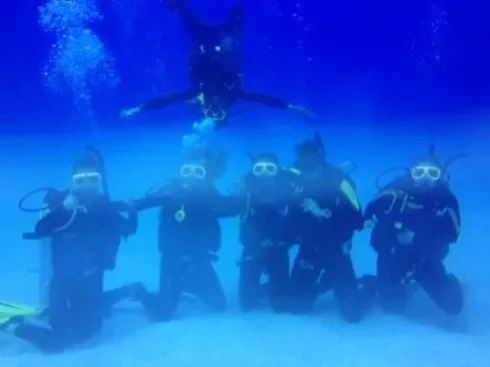
Not rated yetRate this bookA Student’s Guide to Tropical Marine Biology is a collaborative work by Keene State College BIO 381 students taught by Karen Cangialosi. The 2019 compilation names Haley Zanga, Audrey Boraski, and Alana Olendorf as final-revision chief editors alongside a larger author and editor team. Its forty-six short chapters form five parts: reef ecology, common fishes, environmental threats, conservation, and marine animal phyla. This guide follows that complete source. Historical statistics, species-status statements, program details, and costs are treated as edition material rather than current facts or travel recommendations. The original cover photograph depicts students during scuba training.
Free reading is available at the official source. Opens in a new tab.
 Free
About this book
A Student’s Guide to Tropical Marine Biology is a collaborative work by Keene State College BIO 381 students taught by Karen Cangialosi. The 2019 compilation names Haley Zanga, Audrey Boraski, and Alana Olendorf as final-revision chief editors alongside a larger author and editor team. Its forty-six short chapters form five parts: reef ecology, common fishes, environmental threats, conservation, and marine animal phyla. This guide follows that complete source. Historical statistics, species-status statements, program details, and costs are treated as edition material rather than current facts or travel recommendations. The original cover photograph depicts students during scuba training.
Book summary
A Student’s Guide to Tropical Marine Biology is a collaborative work by Keene State College BIO 381 students taught by Karen Cangialosi. The 2019 compilation names Haley Zanga, Audrey Boraski, and Alana Olendorf as final-revision chief editors alongside a larger author and editor team. Its forty-six short chapters form five parts: reef ecology, common fishes, environmental threats, conservation, and marine animal phyla. This guide follows that complete source. Historical statistics, species-status statements, program details, and costs are treated as edition material rather than current facts or travel recommendations. The original cover photograph depicts students during scuba training.
Chapter-by-chapter summaries
Chapter 1: Why Do the Oceans Matter?
The opening connects ocean ecosystems with climate, food webs, livelihoods, transport, and human well-being. Tropical reefs are situated within larger ocean processes rather than treated as isolated attractions. Identify a pathway connecting an ocean process with a human activity and explain which evidence supports it. The chapter’s dated numerical examples should not be repeated as current measurements without checking their sources.
Chapter 2: Coral Reefs — An Introduction
Corals are animals whose polyps can form colonies, with many reef-building species supporting photosynthetic symbionts and producing a hard skeleton. Light, water conditions, temperature, and other environmental factors influence their functioning. Distinguish a coral organism from the larger reef structure and community. Avoid extending every statement about shallow tropical reef builders to all corals in every habitat.
Chapter 3: Different Types of Corals
Different coral forms and groups contribute differently to reef structure and habitat. Appearance can help recognition, but growth form is not always sufficient for precise identification. Compare the features used in the chapter and distinguish a common descriptive name from a formal taxonomic assignment. Connect the organism’s structure with its ecological role rather than memorizing visual labels alone.
Chapter 4: Reef Types and How Coral Reefs Are Formed
Reef forms reflect coral growth, sea-level history, geological setting, and other environmental processes. Fringing reefs, barrier reefs, and atolls represent distinct arrangements, not merely different sizes of the same feature. Draw their relationship with land and water depth. Then explain which historical or physical process the source uses to account for a transition or configuration.
Chapter 5: Coral Reef Colors
Color arises from relationships among coral tissue, pigments, symbionts, and the light environment. A reef’s appearance can therefore communicate biological processes without making visual color alone a complete health diagnosis. Compare ordinary color variation with stress-related changes. Identify what additional observation would be needed before inferring a cause from a photograph.
Chapter 6: Symbiotic Relationships in Coral Reef Ecosystems
Interactions between species can involve mutual benefit, unequal benefit, or harm, depending on the relationship and conditions. Coral–algal associations provide an important example, but reefs contain many other close interactions. For each case, identify the organisms, exchanged resources or services, and evidence of benefit or cost. Do not assume every association is mutualism simply because the organisms occur together.
Chapter 7: Importance of Coral Reefs
Reefs contribute habitat, shoreline protection, food-related activity, livelihoods, and other values. The chapter connects biological functions with social consequences of reef loss. Distinguish an ecological process from a monetary estimate of its value. Explain whose benefits are being counted and what may be omitted when a complex ecosystem is reduced to one economic figure.
Chapter 8: Coral Reefs Are Complex Ecosystems
Reef communities involve food webs, competition, habitat structure, nutrient cycling, and links with surrounding environments. A change affecting one organism can influence others through several pathways. Build a simple interaction map and distinguish direct from indirect effects. Complexity does not justify assuming that every species has an identical role or that one disturbance always produces the same outcome.
Chapter 9: Larval Dispersal and Settlement
Many reef organisms have early stages that move through the water before settling into a suitable habitat. Currents, behavior, survival, timing, and available settlement sites connect populations across space. The location of adults does not fully describe that connectivity. Trace a life cycle and identify where a disturbance could interrupt recruitment even if mature organisms remain visible.
Chapter 10: Squirrel Fish
The profile connects conspicuous eyes, coloration, shelter use, and nocturnal feeding with reef life. Similar common names can encompass several species, so precise identification needs the relevant diagnostic features. Compare daytime location with nighttime activity and ask how survey timing influences what an observer records. Historical conservation assessments in the source require date-specific interpretation.
Chapter 11: Jackknife Fish
The jackknife-fish profile emphasizes distinctive appearance and its place within reef habitat. Body pattern and fin shape help recognition, including differences that can occur during development. Record several features rather than relying on one striking photograph. Then connect shelter and feeding observations with the conditions under which the fish is likely to be seen.
Chapter 12: Queen Triggerfish
Color pattern, body structure, feeding, and defensive features provide a rounded account of this reef fish. The profile illustrates why morphology should be connected with behavior rather than treated as decoration. Identify which features support recognition and which help explain an ecological interaction. A descriptive field profile is not a reason to disturb, handle, or provoke the animal.
Chapter 13: Blue Chromis
Blue chromis illustrates a fish whose position in the water column and feeding behavior connect reef structure with resources in the surrounding water. Compare its activity and grouping with fishes that remain close to the bottom or shelter. An identification note should include habitat and behavior alongside color, since light and viewing conditions can change apparent appearance.
Chapter 14: Honeycomb Cowfish
The cowfish profile links a distinctive body and surface pattern with identification and reef ecology. Compare its form with the more streamlined fishes elsewhere in the section. Distinguish a structural feature from a claim about what that feature accomplishes. Supporting an adaptive interpretation requires more than observing that a trait looks unusual.
Chapter 15: Spotted Drum
Pattern, body form, and changes across life stages make the spotted drum a useful example of careful identification. Compare juvenile and adult descriptions before deciding that differently patterned individuals represent unrelated species. Note the habitat and activity context in the account. Field observations become more informative when location and behavior accompany a species name.
Chapter 16: Peacock Flounder
A flattened body and close association with the substrate distinguish the flounder from many other reef fishes. The profile connects appearance and concealment with its way of life. Consider how an observer’s method affects detection of a fish that can blend with the bottom. Failure to see it during a brief survey is not direct evidence that it is absent.
Chapter 17: Caribbean Reef Shark
The profile introduces a predator within a reef ecosystem and connects its characteristics with habitat and behavior. Its ecological role should be analyzed separately from cultural images of sharks. Identify the evidence for a feeding or habitat claim and compare it with other species. General descriptions cannot predict how an individual animal will behave in every encounter.
Chapter 18: Black Durgon
This triggerfish profile highlights the relationship among light, apparent color, form, distribution, and reef use. A fish described as dark can show different visual qualities under another viewing condition. Record the setting and multiple identifying features. The example reinforces why underwater color should be used cautiously rather than treated as a constant independent of illumination.
Chapter 19: Bull Sharks
The bull-shark chapter expands comparison within the shark profiles, including habitat use and characteristics relevant to recognition. Distinguish an account of a species’ possible range from an observation of a particular individual. Compare ecological conditions rather than explaining every shark through one generalized behavioral stereotype. Historical status or distribution claims should be traced to their dated references.
Chapter 20: Longfin Damselfish
Damselfish behavior connects small-scale habitat use with interactions over resources. The profile invites attention to territory and feeding rather than judging ecological importance from body size alone. Describe what the fish does, where it does it, and how neighboring organisms respond. This makes a field note an observation of relationships rather than a color-and-name inventory.
Chapter 21: Parrotfish
Parrotfish feeding links specialized mouth structures with grazing, reef surfaces, and sediment production. Species and life stages can differ substantially in appearance and reproductive biology, so broad group descriptions need qualification. Compare the food source, feeding action, and consequence for the reef. Avoid interpreting every grazing event as identical or transferring one species’ pattern to the entire group.
Chapter 22: Indigo Hamlet
The final fish profile adds another example of reef-fish diversity and the features used to distinguish closely related forms. Use morphology, behavior, and habitat together when reviewing an identification. Then compare the profile with another fish occupying a different ecological role. The purpose is to understand variation within a community, not only to complete a visual checklist.
Chapter 23: Plastics in Our Oceans
Plastic pollution involves different sources, sizes, transport routes, and pathways of harm. Ingestion, entanglement, and environmental persistence are not the same mechanism. Trace one item from use and disposal to a marine exposure pathway. Distinguish reducing input from removing material already present. The scale of the problem does not make all proposed cleanup approaches equally effective.
Chapter 24: Noisy Oceans
Sound is an important part of marine environments, and human-generated noise can interact with communication, behavior, and other activities. Effects depend on the source, frequency, intensity, duration, and organism involved. Identify the proposed pathway from a sound source to a biological consequence. A general claim that noise is present is weaker than evidence explaining a specific exposure and response.
Chapter 25: Ocean Acidification
Carbon-dioxide chemistry can change seawater conditions relevant to organisms and ecosystems. Acidification describes a shift in chemistry, not a claim that seawater must become acidic in the everyday sense. Distinguish this mechanism from warming even though both can be connected with rising atmospheric carbon dioxide. Explain how a chemical change could affect a biological process and what evidence is needed.
Chapter 26: Harmful Algal Blooms
Not every algal increase has identical causes or consequences. Harmful blooms may affect organisms and people through several mechanisms, and nutrient conditions, circulation, and species identity can matter. Separate a visible bloom from evidence of toxicity or oxygen-related harm. Build a pathway linking environmental conditions with the particular effect described rather than treating algae as universally undesirable.
Chapter 27: Coral Bleaching
Bleaching involves disruption of the relationship between corals and their photosynthetic symbionts or associated pigmentation. It indicates stress but is not automatically identical to immediate coral death. Outcomes depend on conditions, duration, recovery opportunities, and other pressures. Distinguish the stressor, physiological response, and subsequent survival or mortality. A photograph alone does not establish the complete history of an event.
Chapter 28: The Warming of Our Oceans
Ocean warming can affect organisms, ecological interactions, and reef stress. The chapter connects temperature change with wider consequences while requiring attention to timescale and local conditions. Distinguish a short-lived fluctuation from a longer-term trend and an organism’s tolerance from the condition of the whole ecosystem. Historical temperature or impact examples should be used with their original dates.
Chapter 29: Oil Spills and Marine Life
Oil releases create exposure pathways that vary with the substance, location, timing, organisms, and response. Visible contamination is one part of a wider ecological problem. Trace how exposure could lead to an effect and distinguish acute impacts from longer-lasting consequences. Cleanup decisions can also have tradeoffs. The chapter is ecological study rather than an operational guide for responding to a spill.
Chapter 30: Destructive Fishing Methods
Fishing practices differ in target, selectivity, habitat disturbance, and effects on non-target organisms. The chapter connects destructive methods with changes in reef structure and populations. Identify the mechanism of harm instead of treating every form of fishing as identical. Compare the ecological objective of a proposed restriction with its implementation and the needs of communities dependent on marine resources.
Chapter 31: Protecting the Reefs — Organizations
Organizations contribute research, protection, education, restoration, and advocacy through different activities and scales. A mission statement does not demonstrate the result of a program. Choose one example and identify its objective, method, partners, and evidence of effect. Organization names and initiatives in this edition are historical examples, not a verified list of currently available services or opportunities.
Chapter 32: Artificial Reefs
Artificial structures can provide substrate and habitat, but their ecological value depends on site, materials, design, and the response of organisms. Attracting visible fish is not necessarily the same as increasing overall production or replacing the full functions of a natural reef. Specify the intended outcome and how it would be evaluated. Consider unwanted effects alongside the potential benefit.
Chapter 33: Bioremediation to Clean Our Oceans
Bioremediation uses biological processes to address contamination under suitable conditions. Its effectiveness depends on the organism, pollutant, environment, and the practical limits of the process. Identify what is transformed or removed and where the resulting material goes. A promising mechanism in one setting does not establish that it can solve every kind of marine pollution at ecosystem scale.
Chapter 34: Biocontrol in Hawaiian Reefs
The chapter uses control of problematic algae to examine ecological intervention, including the role of grazing organisms. A locally appropriate response must consider the target, native community, and possible unintended effects. Distinguish reducing an existing pressure from removing its underlying causes. Ask what monitoring would reveal whether the intervention benefits the reef rather than simply changing one visible indicator.
Chapter 35: Ecotourism, Recreation, and Reefs
Tourism and recreation can generate both support and pressure for reef ecosystems. Benefits depend on how activities are organized, who receives income, and whether conservation claims translate into practice. Compare direct physical impacts with broader economic incentives. The label ecotourism is a claim to evaluate, not proof of environmental benefit. Identify observable practices that would support the stated conservation purpose.
Chapter 36: How Technology Is Saving the World’s Coral Reefs
Monitoring, imaging, robotics, and restoration-related technologies create possibilities for understanding or assisting reefs. Each tool addresses a particular task and has limits of scale, cost, and ecological effectiveness. Separate observing a problem from correcting it. Evaluate a technology through the evidence it provides or outcome it achieves rather than assuming that novelty itself establishes conservation success.
Chapter 37: Indigenous People and Conservation
Conservation involves communities, knowledge, rights, livelihoods, and relationships with place. Indigenous participation should not be reduced to supplying information for decisions already made elsewhere. Identify who defines the problem and controls the response. The chapter’s examples encourage attention to collaboration and local context. Compare a project’s stated inclusion with evidence that community priorities can shape its design and outcomes.
Chapter 38: Volunteer to Be Victorious
Volunteer activities are presented as possible forms of participation in conservation. Educational value and environmental benefit depend on preparation, supervision, local priorities, and the task’s design. Prices, requirements, and organizations listed in the 2019 edition are not current offers. Before using such examples in a planning exercise, evaluate the intended contribution and how its benefit would be assessed, rather than assuming that participation alone proves a positive impact.
Chapter 39: Keene State College Outreach
The outreach chapter connects learning with communication beyond the course. Translating scientific ideas for an audience requires clear purpose, accessible language, and a distinction between evidence and persuasion. Design an outreach activity around one specific concept and explain how the audience can demonstrate understanding. Evaluate the result rather than measuring success only by the number of materials distributed or people attending.
Chapter 40: Phylum Porifera
Sponges introduce an animal body organization based on pores, water movement, and cellular functions rather than the familiar arrangement of organs. Relate structure to feeding and habitat. Compare the defining features with those of other phyla before identifying an unfamiliar organism. An animal’s simple-looking form does not imply that it lacks ecological significance or complex relationships with its environment.
Chapter 41: Phylum Cnidaria
Cnidarians connect polyps, medusae, specialized stinging cells, and diverse life histories. Corals belong within this larger group alongside other forms. Distinguish a shared defining feature from a characteristic present only in some members. Use the chapter to reconnect coral biology with broader animal diversity rather than assuming that every cnidarian forms a reef or has an identical life cycle.
Chapter 42: Phylum Annelida
Segmented worms demonstrate another major body plan and a range of marine lifestyles. Structure, locomotion, feeding, and habitat should be connected rather than memorized separately. Compare segmentation with the organization of another phylum. Common resemblance to a worm is not enough to assign every elongated animal to Annelida; identification requires the relevant anatomical evidence.
Chapter 43: Phylum Arthropoda
Jointed appendages, an exoskeleton, and growth through molting support the comparison of marine arthropods. Different groups modify these features for varied roles and habitats. Identify the shared body-plan characteristics and then the features distinguishing particular forms. Explain how a protective external structure also creates constraints during growth. This links classification with the practical biology of the organisms.
Chapter 44: Phylum Mollusca
Molluscs encompass strikingly different forms, making shared organization and modified structures more informative than a single familiar shell shape. Compare major groups through body regions, feeding, movement, and habitat. Not every mollusc carries the same external shell or uses identical locomotion. The chapter encourages recognition of diversity within a phylum alongside the features that support its grouping.
Chapter 45: Phylum Echinodermata
Echinoderms introduce characteristic skeletal and water-vascular features and distinctive patterns across life stages. Connect structure with movement and feeding rather than treating symmetry as the only identifying clue. Compare several forms within the phylum and distinguish shared anatomy from differences in appearance. Their roles in grazing, predation, or sediment processes link classification with reef and marine-community ecology.
Chapter 46: Phylum Chordata
Chordates are defined by a combination of features expressed during some stage of life, not solely by the familiar adult form of vertebrates. The chapter connects marine diversity with the broader group containing fishes and humans. Distinguish the defining chordate traits from characteristics of only particular subgroups. This closes the book by placing common reef animals within a larger comparative framework.
Study instructions
- Read Part I as the ecological foundation, then use the fish profiles to practice connecting identification with habitat and behavior.
- For each of the forty-six chapters, record one central concept, supporting source, and question requiring further evidence.
- Build a table separating warming, acidification, pollution, fishing, and other pressures by their mechanisms and possible interactions.
- Evaluate conservation examples through a stated objective, method, affected community, measurable outcome, and potential tradeoff.
- Compare marine phyla using shared anatomy and life history rather than resemblance alone.
- Treat the 2019 program listings, costs, statistics, and conservation-status references as historical. Consult current primary sources before using them for decisions or present-day claims.
Questions for reflection
- What evidence supports an identification beyond a photograph’s color?
- How is bleaching different from coral death?
- Does an intervention remove a cause, reduce a pressure, or only monitor a result?
- Who defines success in a conservation project?
- Which anatomical feature distinguishes a phylum from a superficially similar organism?
Sources and coverage
This original reading guide follows the linked source edition’s chapter, module, unit, or lesson structure. Consult the source for full arguments, cases, worked examples, exercises, illustrations, and references. Coverage follows all forty-six numbered chapters in the 2019 compilation. The collective authorship and final editors are credited, and the original Karen Cangialosi cover photograph is used from the book catalog. Student-written claims and historical listings should be evaluated through their cited sources rather than treated as verified current data. Read the source edition.
About access & copyright
This page provides book information and study material. Full-text access is provided by the original publisher or authorised source; a listing does not grant permission to republish the book.
Read our Library Access & Copyright policyExplore the contents
Check the chapters covered in this edition.
Visit the official source
See reading, preview or purchase options.
Save for later
Keep this textbook in your saved collection.
Reader ratings & reviews
Share your thoughts
Your review helps other students choose the right resources.
KEEP LEARNING
Your next great read
Biology
Microbiology with NEC
Microbiology with NEC
View Microbiology with NEC — bookBiology for Science Majors I
Biology for Science Majors I
View Biology for Science Majors I — bookBIOL 400: Principles of Biology
BIOL 400: Principles of Biology
View BIOL 400: Principles of Biology — bookB21C: Cell and Molecular Biology
B21C: Cell and Molecular Biology
View B21C: Cell and Molecular Biology — bookBiol 101: General Biology l – Laboratory Manual
Biol 101: General Biology l - Laboratory Manual
View Biol 101: General Biology l - Laboratory Manual — bookBIOL 310: General Biology
BIOL 310: General Biology
View BIOL 310: General Biology — bookIntegrated Human Anatomy and Physiology Lab Manual III: Metabolism, Regulation, Defense, Excretion
Integrated Human Anatomy and Physiology Lab Manual III: Metabolism, Regulation, Defense, Excretion
View Integrated Human Anatomy and Physiology Lab Manual III: Metabolism, Regulation, Defense, Excretion — book Biology
Integrated Human Anatomy and Physiology Lab Manual II: Neural and Cardiopulmonary Systems
View Integrated Human Anatomy and Physiology Lab Manual II: Neural and Cardiopulmonary Systems — book Biology



