
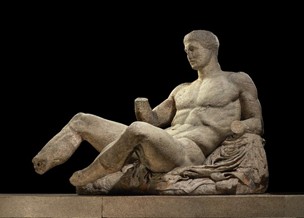
Figure 1. Reclining figure from the east pediment of the Parthenon, museum number 1816,0610.93.
Object, Context, and Method
The sculpture is a marble male figure from the east pediment of the Parthenon, completed in fifth-century BCE Athens. The British Museum catalogues it as East Pediment D. Formal analysis begins with what survives—pose, anatomy, surface, scale, drapery, and relation to the triangular architectural frame—before moving to uncertain identification and mythology. This distinction is important because the central part of the pediment was destroyed, ancient labels do not survive, and modern reconstructions depend on fragments, early drawings, comparison, and interpretation (British Museum, 2026, Statue; pediment).
The east pediment represented the birth of Athena from the head of Zeus. The reclining figure occupied the left side near the rising chariot of Helios. He has often been identified as Dionysos, although Herakles and Theseus have also been proposed. The uncertainty should not be hidden. The figure’s meaning comes partly from its role in the complete composition, even if his precise name remains debated (British Museum, 2026, Statue; pediment; Acropolis Museum, 2026).
Material and Carving
The work is carved from marble and designed to be seen high above the ground. The sculptor simplified some details while producing strong transitions of light and shadow that remained visible at architectural distance. The body is modeled through broad planes across the chest, abdomen, thighs, and shoulders. Subtle changes in surface describe muscles without turning the figure into an anatomical diagram (British Museum, 2026, Statue; pediment).
Marble appears both solid and responsive. The stone carries the weight of the reclining body, yet the torso seems capable of breathing and turning. Missing hands and feet remind the viewer that the object is a damaged archaeological fragment. Metal attachments once added details, and the right foot was made separately. Ancient sculpture was also associated with color and added materials, so the present pale surface should not be mistaken for the original total appearance (British Museum, 2026, Statue; pediment).
Pose and Distribution of Weight
The man reclines on a rock, leaning on his left arm. His bent legs create a compact zigzag that fits the lowering slope of the pediment. The pose appears relaxed, but it is carefully engineered. Weight travels through the supporting arm and hip, while the chest rotates and the legs overlap. This combination produces stability without stiffness (British Museum, 2026, Statue; pediment).
The pose is especially effective because the figure belongs to architecture. A standing body would not fit the corner. The sculptor turns the triangular restriction into an expressive choice: as the roofline descends, the divine body reclines. The figure therefore mediates between the geometry of the temple and the imagined space of the myth (Acropolis Museum, 2026).
Anatomy and Idealization
The nude body communicates youth, vitality, and heroic or divine status. Proportions are idealized, but the figure does not look mechanically symmetrical. The torso twists, the neck turns, and the legs occupy different depths. The head survives, making this figure unusually valuable among the pedimental sculptures. Traces of braided hair remain at the nape (British Museum, 2026, Statue; pediment).
Greek idealization should not be confused with simple realism. The body is believable enough to invite recognition, yet organized according to an aesthetic of balance, clarity, and controlled energy. The sculptor selects and harmonizes forms rather than reproducing an ordinary individual. This ideal body also reflects cultural assumptions about masculinity, citizenship, divinity, and beauty in classical Athens.
Drapery, Animal Skin, and Texture
A mantle lies over the rock, and an animal skin is visible beneath it. Claw-like details suggest a feline skin. These elements create textural contrast with smooth flesh and rough support. They may also contribute to identification. An animal skin can evoke heroic labor or Dionysian associations, but no single attribute settles the question (British Museum, 2026, Statue; pediment).
The drapery is not merely decorative. Its folds occupy gaps, connect the body to the rock, and create shadow beneath the figure. Across the pediment, fabric on other figures becomes a major vehicle for motion. Deep cuts and ridges make marble appear thin, layered, and responsive to bodies (Acropolis Museum, 2026).
Helios, Dawn, and the Cosmic Frame
The figure faces the chariot of Helios rising at the left corner. At the opposite end, the horse of Selene or Nyx descends. This arrangement frames Athena’s birth within a complete cosmic cycle from night to dawn. The event is not presented as a private family scene but as a transformation witnessed by the universe (British Museum, 2026, Statue; pediment; British Museum, 2026, Parthenon east pediment horse).
The horses intensify the temporal contrast. Helios’s team emerges with upward energy, while the moon horse at the far end appears strained and exhausted as it sinks below the horizon. The reclining figure belongs to this awakening side of the composition. His open posture and orientation toward dawn support the frequent identification as Dionysos, a god associated with vitality, although the evidence remains interpretive (British Museum, 2026, Parthenon east pediment horse; British Museum, 2026, Statue; pediment).
Rhythm Across the Pediment
A pediment must guide the eye across a long horizontal base while adapting figures to narrowing corners. The Parthenon sculptors created rhythm through changing poses: central figures likely stood or acted vigorously; figures farther outward sat, reclined, or became animals. Overlapping bodies, angled limbs, and flowing drapery prevent the composition from becoming a row of isolated statues (Acropolis Museum, 2026).
The surviving figure has an independent sculptural presence, yet its original design anticipated neighbors and sightlines. Its turn toward Helios creates directional movement beyond its own boundaries. Formal analysis must therefore resist treating it as a museum object conceived to stand alone (British Museum, 2026, Statue; pediment).
Myth of Athena’s Birth
According to Greek myth, Zeus swallowed Metis after a prophecy concerning her child. Later, suffering intense pain, he was struck on the head, and Athena emerged fully armed. Versions differ about who performed the blow, often naming Hephaestus. The story presents Athena as born directly from Zeus while retaining traces of Metis, a figure associated with wisdom and cunning.
On the Athenian temple, the myth linked the city’s patron goddess to divine authority, intelligence, warfare, and civic identity. It also raises questions about gender and power: a male god appropriates childbirth, while a daughter appears without ordinary infancy. The sculpture does not illustrate every narrative detail; it translates the myth into a gathering of divine bodies and cosmic witnesses (Acropolis Museum, 2026).
Possible Identification of the Reclining Figure
The traditional identification as Dionysos depends on youthful nudity, relaxed posture, possible animal skin, and location near dawn. Dionysos also had strong significance in Athenian religious and theatrical life. Herakles has been suggested because of the skin, while Theseus would connect the figure to an Athenian hero. Some scholars prefer cautious descriptive labels because attributes are incomplete (British Museum, 2026, Statue; pediment).
Uncertainty does not weaken analysis. It shows how art historians reason from physical evidence and context. A good interpretation states which features support an identification, which evidence is missing, and what changes if another identity is accepted.
Movement, Stillness, and Emotional Tone
The figure combines repose with alertness. He is not performing the violent center of the myth, but his turned head indicates attention. This contrast may establish a transition between the energetic sunrise and the divine assembly. The emotional tone is restrained: there is no exaggerated facial reaction, yet bodily orientation implies participation (British Museum, 2026, Statue; pediment).
Classical restraint is often described as calm, but the pediment contains strong motion in horses, drapery, and twisting bodies. The achievement lies in organizing energy rather than eliminating it. Even at rest, the reclining figure carries potential movement through the lifted chest and bent limbs (Acropolis Museum, 2026).
Reconstruction and the Evidence of Jacques Carrey
Jacques Carrey’s drawings of 1674 preserve valuable information about sculptures before the destructive explosion of 1687, but the central east pediment was already damaged. Modern reconstructions combine those drawings with surviving fragments, cuttings in the architecture, dowel holes, weathering, and comparison with other works. No reconstruction should be presented as certain (Acropolis Museum, 2026).
Museum display also changes perception. At eye level, viewers can study details ancient spectators saw from below and at a distance. Lighting, spacing, missing color, and separation between London and Athens alter the visual whole. Formal analysis should acknowledge these conditions rather than imagining an unmediated encounter with antiquity (British Museum, 2026; Acropolis Museum, 2026).
Athenian Society and Artistic Achievement
The Parthenon was created within a democracy that excluded women, enslaved people, and noncitizens from political equality and was funded in the context of Athenian imperial power. Its artistic achievement and political context should be considered together. Celebrating technical mastery need not erase the inequalities and conflicts of the society that produced it.
The sculpture reflects collaboration among architects, designers, quarry workers, carvers, metalworkers, painters, and laborers. Although Pheidias is associated with supervision of the sculptural program, attributing every figure to one hand oversimplifies the collective production of a monumental building (Acropolis Museum, 2026).
Viewer Experience and the Question of Ownership
Modern viewers encounter parts of the Parthenon program in different institutions, especially the British Museum and the Acropolis Museum. Separation makes close study possible in several places but prevents a single viewing of the surviving ensemble. The long-running restitution debate concerns legality, ethics, conservation, colonial power, and whether architectural sculpture gains meaning through reunion with its monument (British Museum, 2026; Acropolis Museum, 2026).
Formal analysis does not settle ownership, but the debate affects interpretation. A label that presents the sculpture only as an isolated masterpiece can obscure its removal, architectural function, and relationship to fragments in Athens. Responsible display should make provenance and the existence of related pieces clear (British Museum, 2026; Acropolis Museum, 2026).
Comparing East Pediment D With the Moon Horse
The reclining figure and the horse at the opposite corner show how the program varies energy within the same triangular frame. The human body is expansive but controlled, while the horse’s open mouth, bulging eye, and flattened ear convey exhaustion. One appears to awaken toward the rising sun; the other strains at the end of the night journey (British Museum, 2026, Statue; pediment; British Museum, 2026, Parthenon east pediment horse).
This comparison strengthens the reading of the pediment as temporal movement rather than a static assembly. Anatomy, expression, and location cooperate to create dawn across stone. The sculptors used different bodies—divine human and animal—to mark different phases of the cosmic cycle (British Museum, 2026, Parthenon east pediment horse).
Conclusion
East Pediment D transforms a reclining male body into a bridge between architecture, myth, and cosmic time. Its weight distribution fits the triangular corner, while anatomy, drapery, texture, and orientation create controlled vitality. The identification as Dionysos remains plausible rather than certain. The broader pediment framed Athena’s birth between the rising sun and setting moon, presenting the patron goddess’s arrival as an event of universal significance. The fragment’s beauty is strongest when viewed alongside its uncertainty, damage, original architectural setting, and contested modern display (British Museum, 2026, Statue; pediment; Acropolis Museum, 2026).
Works Cited
British Museum. (2026). Statue; pediment, museum number 1816,0610.93. https://www.britishmuseum.org/collection/object/G_1816-0610-93
British Museum. (2026). Parthenon east pediment horse, museum number 1816,0610.98. https://www.britishmuseum.org/collection/object/G_1816-0610-98
Acropolis Museum. (2026). The Parthenon Gallery. https://www.theacropolismuseum.gr/en/exhibit-halls/parthenon-gallery
Cite This Work
To export a reference to this article please select a referencing stye below:

Academic Master Education Team is a group of academic editors and subject specialists responsible for producing structured, research-backed essays across multiple disciplines. Each article is developed following Academic Master’s Editorial Policy and supported by credible academic references. The team ensures clarity, citation accuracy, and adherence to ethical academic writing standards
Content reviewed under Academic Master Editorial Policy.





