
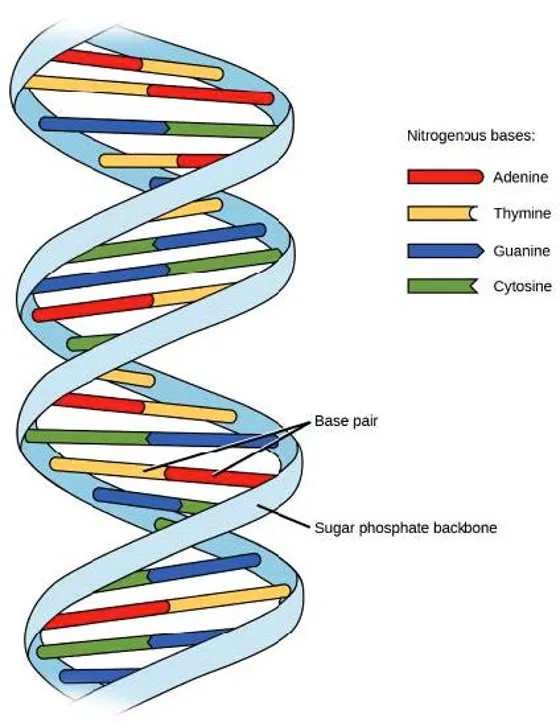
 Biology
Textbook
Human Biology
Not rated yetRate this bookHuman Biology connects scientific reasoning and cellular foundations with the structure, function, and coordination of the human body. Its sixteen chapters begin with the scientific method, chemistry, cells, and body organization before developing the skeletal, muscular, cardiovascular, immune, respiratory, digestive, nervous, endocrine, urinary, and reproductive systems. Case studies and chapter summaries help relate the concepts to broader biological questions. The final chapters address cell reproduction, genetic information, inheritance, and biotechnology. This makes the collection useful for introductory learners seeking a connected account of human function rather than isolated anatomical terms. Homeostasis provides a recurring framework for understanding how systems interact and respond to change. Readers should distinguish an educational case from an assessment of a real person and connect explanations across levels, from molecules and cells to tissues, organs, and whole-body processes, while keeping the evidence and limitations of each explanation visible.
Free reading is available at the official source. Opens in a new tab.
 Free
About this book
Human Biology connects scientific reasoning and cellular foundations with the structure, function, and coordination of the human body. Its sixteen chapters begin with the scientific method, chemistry, cells, and body organization before developing the skeletal, muscular, cardiovascular, immune, respiratory, digestive, nervous, endocrine, urinary, and reproductive systems. Case studies and chapter summaries help relate the concepts to broader biological questions.
The final chapters address cell reproduction, genetic information, inheritance, and biotechnology. This makes the collection useful for introductory learners seeking a connected account of human function rather than isolated anatomical terms. Homeostasis provides a recurring framework for understanding how systems interact and respond to change. Readers should distinguish an educational case from an assessment of a real person and connect explanations across levels, from molecules and cells to tissues, organs, and whole-body processes, while keeping the evidence and limitations of each explanation visible.
AI-assisted book summary
Reading guide
Begin with the foundational chapters and use homeostasis as a recurring organizing principle. For each system, identify structures, functions, interactions, and the evidence used in examples. Read a case before the chapter, then revisit it after studying the mechanisms. Keep anatomical description separate from a clinical conclusion.
Chapter and section guide
1: Introduction to Human Biology and the Scientific Method
Study shared features of life, diversity, science, theories, investigations, experiments, and the limits of extrapolation.
Study task: Turn a biological claim into a testable question and identify what evidence would support it.
2: Chemistry of Life
Connect elements, bonds, biological molecules, energy, reactions, water, acids, and bases.
Study task: Explain how a molecular property can matter to a biological function.
3: Cells
Study cell theory, variation, membranes, organelles, transport, respiration, and fermentation.
Study task: Compare passive and active transport through their mechanisms and energy relationships.
4: Introduction to the Human Body
Connect levels of organization, tissues, organs, cavities, system interactions, and feedback.
Study task: Draw a conceptual feedback loop with a monitored variable, signal, and response.
5: Skeletal System
Study skeletal divisions, bone structure, growth, remodeling, repair, joints, and disorder examples.
Study task: Explain how bone can provide support while remaining a dynamic tissue.
6: Muscular System
Connect muscle types, contraction, activity, and disorder discussions.
Study task: Compare a muscle’s structural organization with the process that produces movement.
7: Cardiovascular System
Study the heart, vessels, blood, blood types, and disease-related examples.
Study task: Trace a conceptual circulation pathway and distinguish the functions of its components.
8: Immune System
Connect lymphatic structures, innate and adaptive defenses, immune disorders, and the microbiome.
Study task: Compare an innate response with an adaptive response without treating them as isolated systems.
9: Respiratory System
Study respiratory structure, gas exchange, breathing, disorders, and smoking-related discussion.
Study task: Explain the distinction between moving air and exchanging gases.
10: Digestive System
Follow digestion, absorption, upper and lower tracts, accessory organs, and disorder examples.
Study task: Trace a food component through processing and absorption, identifying the relevant structures.
11: Nervous System
Connect neurons, glia, signaling, central and peripheral organization, senses, and psychoactive-drug discussion.
Study task: Map a conceptual signal from detection to response and identify the roles of different components.
12: Endocrine System
Study hormones, pituitary, thyroid, adrenal glands, and pancreas.
Study task: Compare hormonal communication with nervous signaling and explain a feedback relationship.
13: Urinary System
Connect kidneys, urinary pathways, waste removal, and regulation.
Study task: Distinguish producing urine from transporting and storing it.
14: Reproductive System
Study reproductive structures and functions, menstrual cycling, disorders, infertility, and contraception-related material.
Study task: Compare a structural, hormonal, and cellular aspect of reproduction without drawing a clinical conclusion.
15: Cell Reproduction
Connect the cell cycle, mitosis, protein synthesis, genetic code, mutation, cancer, meiosis, and variation.
Study task: Compare mitosis and meiosis by purpose and chromosome relationships, then distinguish division from gene expression.
16: Inheritance and Biotechnology
Study Mendelian experiments, inheritance patterns, non-Mendelian examples, genetic disorders, and biotechnology.
Study task: Explain how a simple inheritance model can be useful while failing to describe every trait.
How to study this book
Build diagrams that link one system to another, such as respiratory and cardiovascular function or endocrine and urinary regulation. Use the cases to practice explanation rather than diagnosis. After each chapter, write one mechanism in plain language and identify a question it does not answer alone. Revisit chemistry and cellular processes when a system-level explanation becomes unclear.
Reflection questions
- How do cells and organ systems contribute to a regulated internal environment?
- Why can one observable effect have several possible biological explanations?
- What distinguishes inheritance, gene expression, and cell division?
Sources and coverage
Original source and online reader. This original reader guide follows the source contents and selected material described below. Study tasks are original additions, not exercises or answers attributed to the source.
The guide follows all sixteen numbered chapters in this course collection and their case-study structure. Clinical, genetic, and reproductive examples are educational topics, not individual assessments or current treatment guidance.
About access & copyright
This page provides book information and study material. Full-text access is provided by the original publisher or authorised source; a listing does not grant permission to republish the book.
Read our Library Access & Copyright policyIntegrated biology
Connect molecules, cells, tissues, and organ systems.
Regulation
Explain homeostasis and interactions among systems.
Biological literacy
Interpret cases and genetic concepts with appropriate limits.
Reader ratings & reviews
Share your thoughts
Your review helps other students choose the right resources.
KEEP LEARNING
Your next great read
Biology Biology
PGCC Microbiology
View PGCC Microbiology — book Biology
BIOL 130: Human Biology
View BIOL 130: Human Biology — bookBIOL 440: General Microbiology
BIOL 440: General Microbiology
View BIOL 440: General Microbiology — bookEnvironmental Science
Environmental Science
View Environmental Science — bookIntroduction to Conservation Biology
Introduction to Conservation Biology
View Introduction to Conservation Biology — bookCell Biology for Allied Health
Cell Biology for Allied Health
View Cell Biology for Allied Health — book Biology
BIOL 440: General Microbiology
View BIOL 440: General Microbiology — book Biology
Microbiology with NEC
View Microbiology with NEC — book Biology



