
 History
Textbook
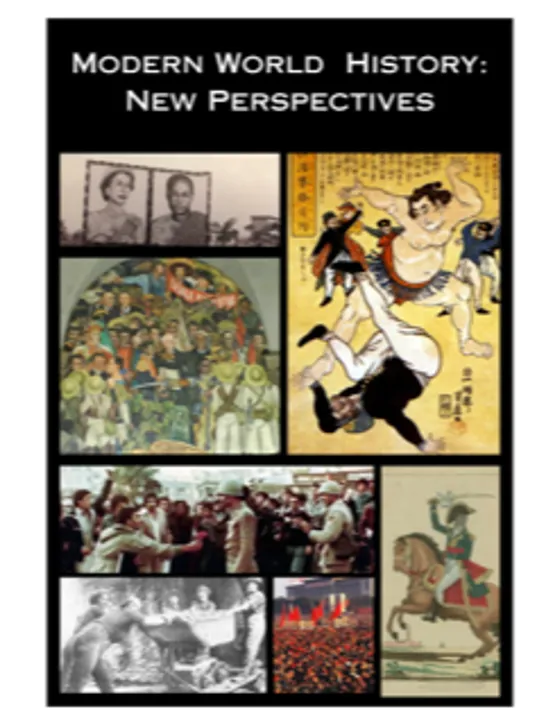
Modern World History: New Perspectives
Not rated yetRate this bookExplore thirteen modern-world-history chapters through global interaction, revolution, empire, war, decolonization and historical interpretation. Original tasks make the source’s stated equity lens and evidence questions explicit.
Read on the publisher’s website. Opens in a new tab.
 Free
About this book
Modern World History: New Perspectives is a collaborative OERI history resource that explicitly approaches the modern world through anti-racism, equity and social-justice questions. Thirteen chapters move from an introduction and interactions around 1450 through expansion, revolutions, industrial and national transformations, imperialism and twentieth-century wars. Decolonization, the Cold War and late-century change lead to an epilogue about history education.
The source’s analytical lens is part of its stated purpose, while particular historical explanations still require evidence. This guide adds original tasks for comparing perspectives, connecting regions and separating an event from an argument about its causes or consequences. Overviews reflect selected learning objectives, introductory passages and verified contents rather than every narrative or primary source. Date ranges overlap because processes do not fit neatly into isolated periods. Readers can use a timeline and a connection map together, noting whose experience a claim concerns and which voices or sources would be needed to evaluate it.
AI-assisted book summary
Reading guide
Begin with the authors’ framing, then trace overlapping processes across regions rather than memorize isolated periods. Compare causes and consequences separately. Use the epilogue to reflect on how historical narratives are constructed.
Chapter-by-chapter guide
1: Introduction
The introduction states the project’s interpretive goals and asks what its guiding concepts mean. A declared lens helps readers identify the questions emphasized. Evaluate specific explanations through evidence as well as their stated purpose.
Study task: Identify the lens, one question it foregrounds and evidence needed to address that question.
2: Global Interactions - 1450-1650
Early global interactions are presented as intensifying processes across multiple regions. Avoid treating global connection as invented by one region. Compare forms and effects of interaction at a specified scale.
Study task: Map a connection between regions and identify different participants’ questions.
3: Expansive Cultures - 1500-1650
Expansion and empire raise questions about markets, geopolitics and unequal experiences. A broad process can have different consequences for different people. Specify the population before generalizing an effect.
Study task: Compare two positions within an imperial relationship and their evidence needs.
4: A Revolutionary New World - 1600-1850
The revolutionary chapter links political change, colonial relationships and the Atlantic world. A shared label does not make revolutions identical. Compare goals, participants and consequences separately.
Study task: Construct a comparison framework for two revolutions without assuming the same outcome.
5: Economic Transformation and Nation-Building - 1800-1900
Economic transformation and nation-building connect industrial change with inclusion, exclusion and resistance. A technological or political change does not determine one uniform social result. Examine proposed mechanisms.
Study task: Map a source causal claim and identify evidence for each link.
6: Imperialism - 1800-1900
Imperialism learning examines expansion and anti-imperialist activity across regions. An account of rule and an account of resistance offer different evidence. Keep actors and context explicit.
Study task: Compare an institutional source question with a question about colonized people’s responses.
7: The Great War - 1914-1919
The Great War is framed through global roots and consequences rather than only European events. A settlement can affect groups differently. Separate causes of conflict from consequences of the settlement.
Study task: Formulate distinct cause and consequence questions about one source example.
8: Causes and Consequences of the Great Depression - 1920-1938
The Depression chapter begins with postwar economic relationships and extends into varied regional responses. A connected crisis need not produce identical politics everywhere. The guide does not validate historical monetary conversions.
Study task: Map a cross-regional economic connection and compare two possible response questions.
9: World War II - 1939-1945
World War II connects conflict, mass violence and changing orders. A broad overview cannot represent every experience of the war. Identify what kinds of evidence support a particular comparison.
Study task: Separate a military-event question from a civilian-experience question.
10: A World of New Nations- 1945-1970
New nations and international institutions are examined through decolonization and postwar relationships. Formal independence and the distribution of influence raise different questions. Avoid treating a political transition as a completed social process.
Study task: Compare a sovereignty question with an institutional-power question.
11: Cold War and the Politics of Race- 1950-2000
Cold War learning connects racial equality, citizenship and anti-colonial struggles with international politics. Domestic and international explanations can interact. State the proposed connection rather than assume it.
Study task: Trace a claim linking two levels of politics and identify evidence needed.
12: Optimism and Unease- 1970-2000
Late-century change examines democratization, reaction and racial-justice movements. Period-wide labels can conceal regional differences. Specify whose conditions and which outcome are being compared.
Study task: Compare two source change questions using the same criteria and distinct contexts.
13: Epilogue- Charting A Course towards Equity
The epilogue reflects on curriculum and the writing of history. Educational purpose, selection of material and historical truth claims have different roles. Consider both narrative choices and the evidence retained.
Study task: Revise a fictional course-topic outline and explain what perspective and evidence the revision adds.
How to study this book
For each topic, record period, region, participants, claim and evidence. Compare perspectives without assuming one actor represents an entire population. Distinguish a normative judgment from a supported causal explanation.
Reflection questions
- Whose experience is centered or missing?
- What evidence supports the causal account?
- How does the narrative change at another regional scale?
Sources and coverage
Source: Modern World History: New Perspectives — LibreTexts.
Original reader guide based on the verified contents and selected substantive chapter or section openings, introductions and learning objectives in the linked source PDF. It is not a full review of every subsection, exercise, figure, procedure, story or linked media item. Study tasks are original additions, not exercises or solutions attributed to the source.
Selected chapter introductions and objectives were reviewed; Chapter 8 coverage also uses its substantive 8.1 opening. The guide describes the source’s stated lens rather than independently validating every historical interpretation, monetary conversion, image or primary-source example.
About access & copyright
This page provides book information and study material. Full-text access is provided by the original publisher or authorised source; a listing does not grant permission to republish the book.
Read our Library Access & Copyright policyPerspective
The source states an anti-racist and equity-oriented lens.
Connections
Processes link regions across overlapping periods.
Evidence
Framing does not remove the need to support historical claims.
Reader ratings & reviews
Share your thoughts
Your review helps other students choose the right resources.
KEEP LEARNING
Your next great read
History History
A History of Women in the United States
View A History of Women in the United States — book History
World History Cultures, States, and Societies to 1500
View World History Cultures, States, and Societies to 1500 — book History
Slavery to Liberation: The African American Experience
View Slavery to Liberation: The African American Experience — book History
 of Applied Science & Technology : An Open Access Textbook
View History of Applied Science & Technology : An Open Access Textbook — book History
 of Applied Science & Technology
View History of Applied Science & Technology — book citizenship
The European Experience: A Multi-Perspective History of Modern Europe, 1500–2000
View The European Experience: A Multi-Perspective History of Modern Europe, 1500–2000 — book Africa
History of International Relations: A Non-European Perspective
View History of International Relations: A Non-European Perspective — book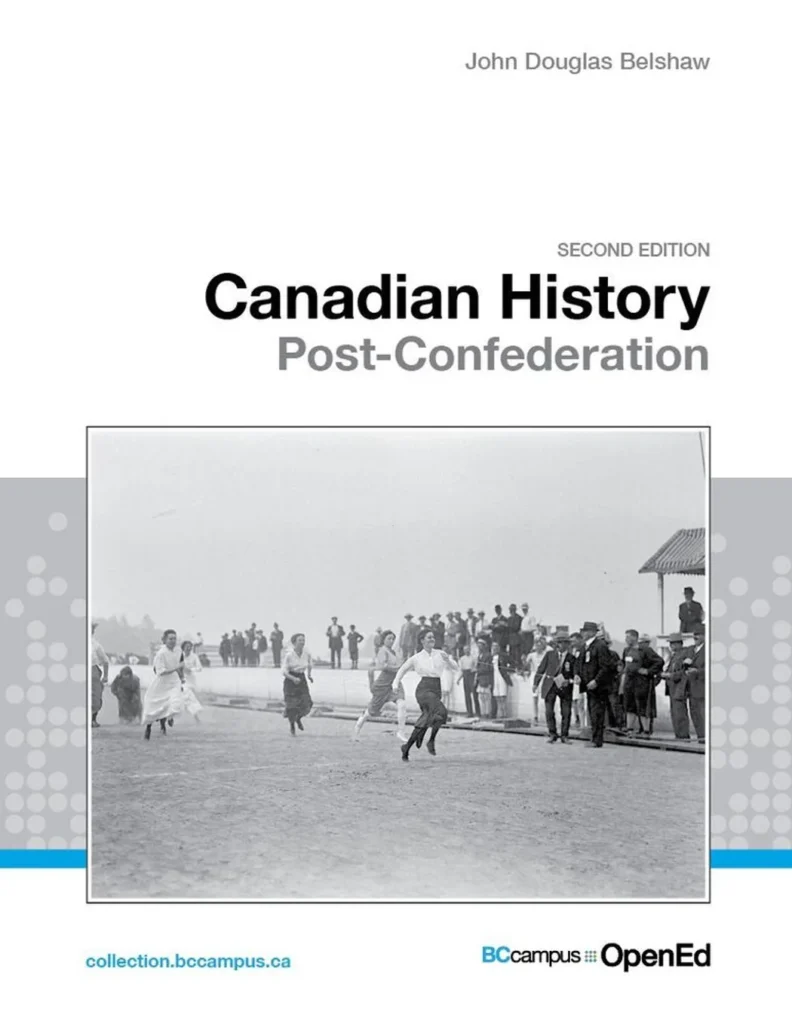 Canada
Canadian History: Post-Confederation - 2nd Edition
View Canadian History: Post-Confederation - 2nd Edition — book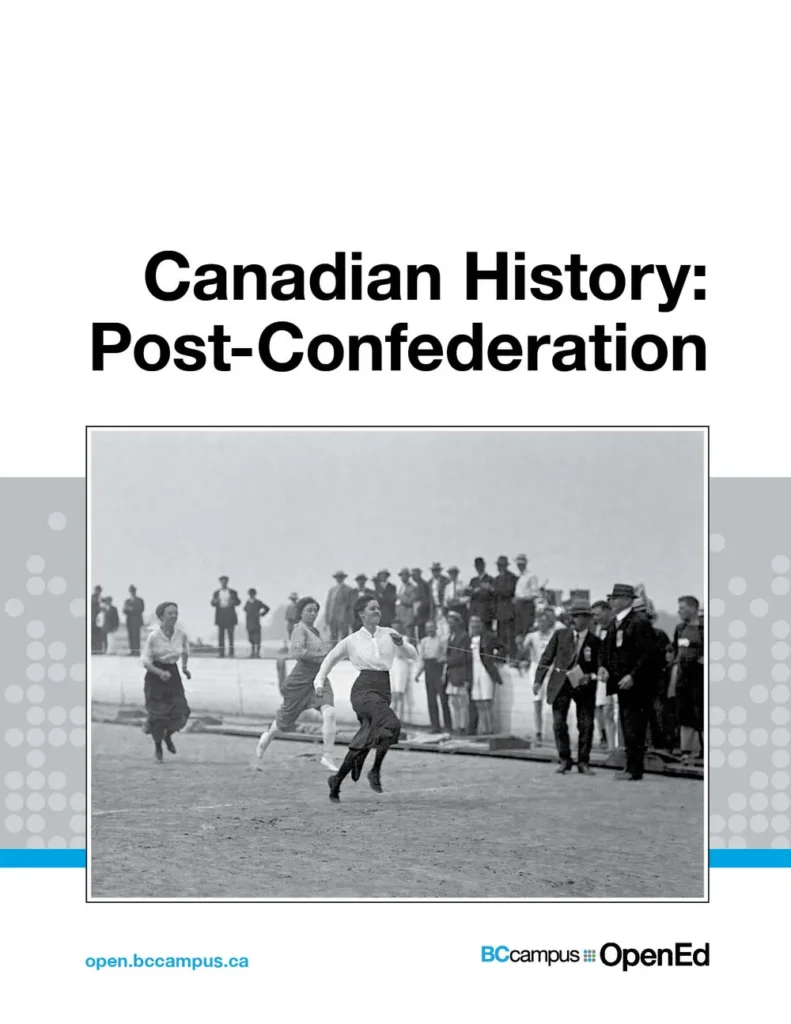 Canada



