
Medical Terminology 2e
MedicineTextbook
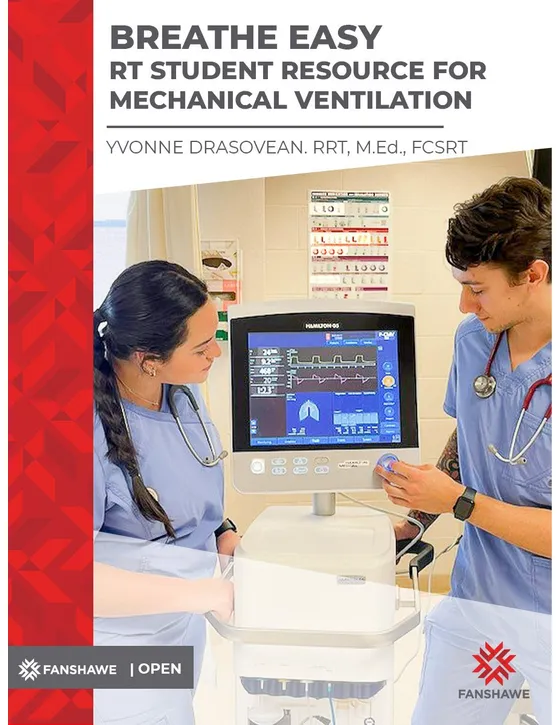
Breathe Easy: RT Student Resource for Mechanical Ventilation
Not rated yetRate this bookBuild a conceptual map of adult mechanical ventilation, including breathing physiology, modes, monitoring and discontinuance. Original study tasks help distinguish mechanisms, observations and clinical judgments within supervised respiratory therapy education.
Read on the publisher’s website. Opens in a new tab.
 Free
About this book
Breathe Easy: RT Student Resource for Mechanical Ventilation by Yvonne Drasovean introduces adult mechanical ventilation for respiratory therapy students. Ten chapters move from the physiology of breathing and basic ventilator concepts to settings, non-invasive support, controlled and spontaneous modes, indications, monitoring, adjustments and discontinuance. The sequence connects terminology to the physiological questions that make the terminology useful.
This guide supports conceptual preparation for supervised instruction. Each chapter has an original task involving comparison, explanation or evidence organization. These tasks do not provide patient-specific ventilator settings, treatment changes or criteria for removing support. The source’s adult focus also matters when considering how far an example applies. Learners can distinguish a mode’s description from its suitability for an individual and distinguish a measured value from the interpretation requiring a complete clinical assessment. Use the full text and instructor-led teaching for the detailed explanations behind the chapter concepts.
AI-assisted book summary
Reading guide
Read the physiology and fundamentals before studying settings or modes. Compare control and spontaneous ventilation conceptually, then connect indications, monitoring and discontinuance to questions requiring a complete assessment.
Chapter-by-chapter guide
Chapter 1: How the Human Body Breathes - Physiology of Ventilation
The chapter starts with normal breathing physiology as a basis for understanding assisted ventilation. Pressure, airflow and gas movement should be connected before interpreting machine terminology. Keep the physiological explanation distinct from any proposed intervention.
Study task: Draw a conceptual diagram linking pressure differences and airflow during normal breathing.
Chapter 2: Fundamentals of Mechanical Ventilation
The overview introduces the purpose and basic language of mechanical ventilation. Understanding what support contributes precedes interpreting a particular mode. Relate the equipment’s role to physiological functions without treating a general description as a patient-specific plan.
Study task: Explain mechanical ventilation to a fictional classmate using a mechanism-and-purpose format.
Chapter 3: Ventilator Settings
Ventilator settings are introduced as adjustable elements of respiratory support. Naming a setting and understanding the physiological question it addresses are different tasks. This overview does not recommend values or changes.
Study task: Build a glossary linking setting names from the text to the concepts they describe, without numeric recommendations.
Chapter 4: Non-Invasive Respiratory Support
Non-invasive support is presented as a distinct approach to respiratory assistance. Compare its general interface and purpose with invasive support while leaving selection decisions to full clinical assessment and supervised instruction.
Study task: Compare invasive and non-invasive support in terms of interface and conceptual purpose only.
Chapter 5: Ventilation Modes - Control Ventilation
Control ventilation is introduced through how the ventilator contributes to delivered breaths. Mode names require attention to the underlying description. Distinguish the mechanism of a controlled breath from a judgment about a particular patient.
Study task: Summarize the conceptual features of control ventilation without choosing a mode for a case.
Chapter 6: Ventilation Modes - Spontaneous Ventilation
Spontaneous ventilation shifts attention to the patient’s contribution and the support provided around it. Compare this relationship with the preceding chapter rather than assuming all spontaneous modes work identically.
Study task: Create a conceptual comparison of patient and ventilator contributions across the two mode chapters.
Chapter 7: Mechanical Ventilation Indications
Indications introduce reasons mechanical support may be considered. A general category of need is not sufficient for an individual decision. Connect the terminology to assessment questions without turning examples into treatment rules.
Study task: List questions a supervised learner would ask to understand a fictional indication, without deciding treatment.
Chapter 8: Patient Monitoring During Mechanical Ventilation
Monitoring places observations in the context of ongoing ventilation. Distinguish what is measured, how it is described and what additional information is needed for interpretation. An isolated reading cannot represent the whole clinical picture.
Study task: Organize fictional observations into measurement, interpretation and missing-context columns without thresholds.
Chapter 9: Ventilatory Adjustments for Oxygenation and Ventilatory Support
The chapter addresses adjustments in relation to oxygenation and ventilatory support. The educational distinction between these goals comes before operational changes. This guide supports comparison of concepts rather than an adjustment algorithm.
Study task: Explain the conceptual difference between an oxygenation question and a ventilation question without proposing changes.
Chapter 10: Mechanical Ventilation Weaning and Discontinuance
Weaning and discontinuance introduce the transition away from mechanical support. The chapter completes the sequence by connecting support to reassessment. Decisions require supervised clinical reasoning rather than a simplified checklist from this guide.
Study task: Draw a non-operational map of the questions involved in assessing ongoing support needs.
How to study this book
Make a glossary with separate columns for mechanism, observation and interpretation. Use hypothetical descriptions without selecting settings or recommending changes. Bring unresolved clinical questions to supervised teaching.
Reflection questions
- How do oxygenation and ventilation differ?
- What makes a measured value different from a clinical interpretation?
- Why does a mode description alone not determine its suitability?
Sources and coverage
Source: Breathe Easy: RT Student Resource for Mechanical Ventilation — LibreTexts.
Original reader guide based on the verified contents and selected chapter openings, introductions or learning objectives in the linked source PDF. It is not a full review of every section, research study, exercise or procedure. The study tasks are original additions, not exercises attributed to the source.
The reviewed source focuses on adult ventilation. These overviews and tasks do not supply settings, adjustment protocols or patient-specific discontinuance criteria.
About access & copyright
This page provides book information and study material. Full-text access is provided by the original publisher or authorised source; a listing does not grant permission to republish the book.
Read our Library Access & Copyright policyPhysiology
Ventilator concepts build on the mechanisms of breathing.
Modes
Control and spontaneous modes require distinct conceptual comparisons.
Assessment
Monitoring information needs clinical context.
Reader ratings & reviews
Share your thoughts
Your review helps other students choose the right resources.
KEEP LEARNING
Your next great read
Medicine
 Medicine
Principles of Epidemiology
View Principles of Epidemiology — book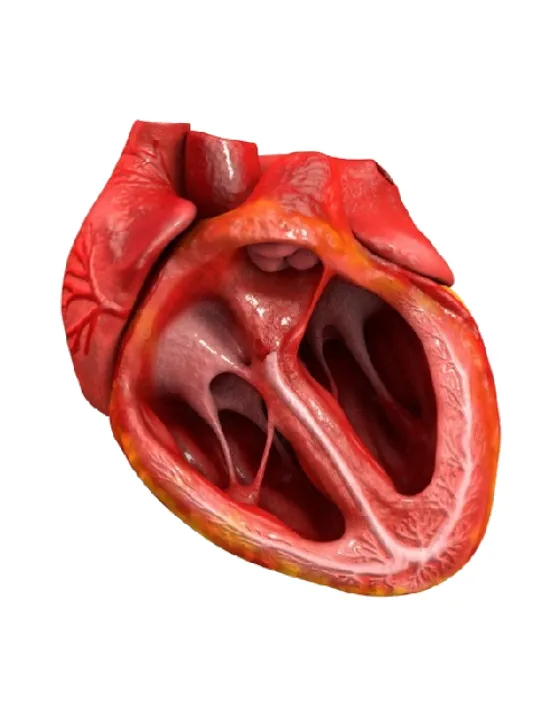 Medicine
Textbook of Cardiology
View Textbook of Cardiology — book bioinformatics
Bioimage Data Analysis Workflows
View Bioimage Data Analysis Workflows — book Behavioral sciences
Understanding Statistics and Experimental Design
View Understanding Statistics and Experimental Design — book Medicine
Veterinary Epidemiology: Principles and Methods
View Veterinary Epidemiology: Principles and Methods — book Medicine
Public Health Ethics: Cases Spanning the Globe
View Public Health Ethics: Cases Spanning the Globe — book Medicine
Cell Biology, Genetics, and Biochemistry for Pre-Clinical Students
View Cell Biology, Genetics, and Biochemistry for Pre-Clinical Students — book Medicine
Applying the International Classification of Functioning, Disability & Health: A Team-Based/Project Based Course for Undergraduate Students
View Applying the International Classification of Functioning, Disability & Health: A Team-Based/Project Based Course for Undergraduate Students — book Medicine



