
Medical Terminology 2e
MedicineTextbook
Textbook of Cardiology
Not rated yetRate this bookOrganize cardiovascular study across thirteen chapters, from cardiac anatomy to disease categories and history. Original tasks focus on concepts and evidence, with clear notes about dated material and an incomplete subsection.
Read on the publisher’s website. Opens in a new tab.
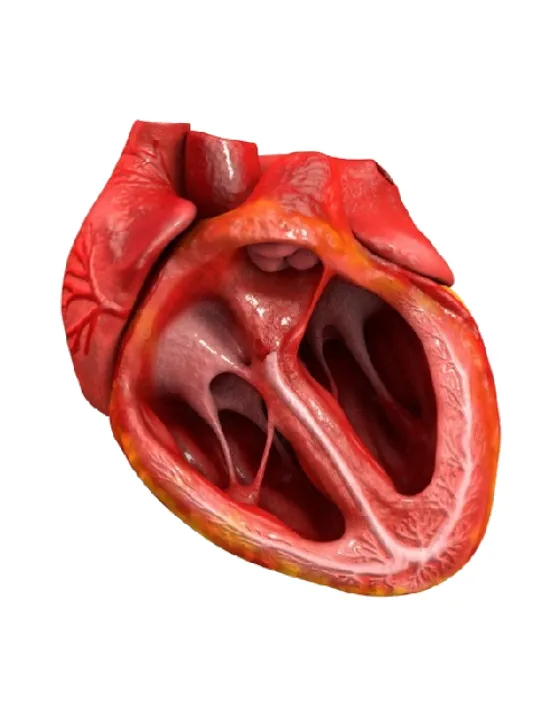 Free
About this book
Textbook of Cardiology, edited by Jonas S. S. G. de Jong and Fransje van der Waals, brings together cardiovascular anatomy, clinical topics and historical development. Thirteen main chapters begin with anatomy and examination before heart failure, arrhythmias, coronary and valvular disease. Later chapters address myocardial and pericardial disease, atherosclerosis, pulmonary embolism, congenital topics, women’s heart health and a historical timeline.
The source is a collected educational reference whose own notice does not assure that its medical content is current. The contents also explicitly mark the atherosclerosis risk-factor subsection as incomplete. This guide preserves those limits and uses selected openings to organize conceptual questions rather than present contemporary treatment recommendations. Original tasks compare anatomy, mechanisms, histories and evidence needs without giving drug choices, doses, diagnostic thresholds or emergency protocols. Readers can use the structure to prepare questions for teaching, while returning to the source for its full discussions and consulting current approved references separately for clinical practice.
AI-assisted book summary
Reading guide
Establish anatomy and the purpose of history-taking before comparing disease categories. Distinguish structural, electrical and circulatory explanations. Read historical statistics and treatment discussions in their original context.
Chapter-by-chapter guide
1: Anatomy
Cardiac anatomy emphasizes spatial relationships among chambers as well as their internal morphology. Orientation matters because familiar right–left labels do not fully describe the heart’s position. The section also relates anatomy to arteries and conduction.
Study task: Draw a conceptual chamber map and explain two spatial relationships using the source.
2: Physical Examination
Examination begins with constructing a history across symptoms, previous health and family information. Chronology helps organize interpretation. A single symptom or finding cannot represent the whole account.
Study task: Arrange fictional history details chronologically and identify unanswered questions without diagnosing.
3: Heart Failure
The heart-failure opening traces historical understanding and therapy. Historical practices belong to that account and are not current recommendations. Use the chapter structure to separate definition, mechanism and later clinical discussion.
Study task: Build a concept organizer separating historical milestones from questions about heart-failure mechanisms.
4: Cardiac Arrhythmias
Arrhythmia learning begins with action potentials and conduction. Electrical processes provide a foundation for interpreting rhythm concepts. This guide does not identify a patient’s rhythm or recommend an anti-arrhythmic response.
Study task: Connect conduction and action-potential concepts in a non-clinical diagram.
5: Coronary Disease
Coronary disease introduces relationships between myocardial oxygen supply, demand and coronary circulation. Distinguish the mechanism being discussed from a symptom description. An overview cannot determine the cause of chest discomfort.
Study task: Map supply–demand concepts and identify what a fictional symptom account leaves unknown.
6: Valvular Disease
Valvular disease compares topics organized by particular valves and altered function. The opening’s epidemiological statements belong to the source period and populations. Anatomical location and mechanism provide a useful starting comparison.
Study task: Compare two valve-topic headings by location and type of functional question without treatment choices.
7: Myocardial Disease
Myocardial disease distinguishes primary and secondary categories. The selected opening connects secondary disease with an identified origin. Classification helps organize inquiry but does not establish the cause of an individual finding.
Study task: Compare primary and secondary categories and list evidence needed to support an etiological claim.
8: Pericardial Disease
Pericardial learning begins with relationships among pressure, fluid accumulation and cardiac filling. The rate of change and surrounding structure matter to the conceptual account. No emergency recognition or intervention protocol is supplied here.
Study task: Diagram the conceptual relation between the pericardium and filling without thresholds or actions.
9: Atherosclerosis
Atherosclerosis opens with a case prompting questions about risk and arterial disease. A risk-related characteristic and an established outcome are different. The source explicitly labels subsection 9.5 on risk factors incomplete.
Study task: Identify questions raised by a fictional risk account and label the source’s incomplete subsection.
10: Pulmonary Embolism
Pulmonary embolism introduces obstruction within pulmonary circulation and its relationship to the heart. Trace the anatomical connection before reviewing clinical topics. The guide provides no diagnostic rule or treatment sequence.
Study task: Map the pulmonary-circulation relationship and distinguish mechanism from clinical decision questions.
11: Congenital
Congenital topics begin with septal defects and extend to several anatomical conditions. Location and structural relationships help organize the comparison. The shared category does not imply identical physiological consequences.
Study task: Compare two source-listed congenital topics through anatomical questions without predicting a patient outcome.
12: Women's Heart Health
Women’s heart health brings population-specific evidence into cardiovascular learning. Statistics and comparative claims require their date, population and definitions. Source figures should not be presented as newly verified current estimates.
Study task: Take one source comparison and list the date, population and evidence details needed to interpret it.
13: History of Scientific Progress in Cardiovascular Disease
The historical chapter collects milestones in cardiovascular knowledge across three timeline sections. A chronological account can show changing ideas and tools. It does not itself validate a current clinical practice.
Study task: Select two source milestones and explain how the kind of cardiovascular question changed.
How to study this book
Map the anatomical structure, mechanism, source claim and evidence question for each topic. Avoid deriving clinical decisions from short summaries. Use a separate current approved reference when studying practical diagnostic or treatment standards.
Reflection questions
- Which anatomical or physiological level explains the topic?
- What does a history contribute that an isolated finding cannot?
- Which claims require a current clinical reference?
Sources and coverage
Source: Textbook of Cardiology — LibreTexts.
Original reader guide based on the verified contents and selected substantive chapter or section openings, introductions and learning objectives in the linked source PDF. It is not a full review of every subsection, exercise, illustration, research study or procedure. Study tasks are original additions, not exercises attributed to the source.
The source’s own disclaimer does not assure medical accuracy or currency. Subsection 9.5 is explicitly marked incomplete. This guide reviews selected openings and supplies conceptual tasks, not current diagnostic or treatment recommendations.
About access & copyright
This page provides book information and study material. Full-text access is provided by the original publisher or authorised source; a listing does not grant permission to republish the book.
Read our Library Access & Copyright policyStructure
Anatomy supports comparison of cardiovascular mechanisms.
Context
Histories and observations need interpretation.
Limits
The source includes dated material and an incomplete risk-factor subsection.
Reader ratings & reviews
Share your thoughts
Your review helps other students choose the right resources.
KEEP LEARNING
Your next great read
Medicine
 Medicine
Breathe Easy: RT Student Resource for Mechanical Ventilation
View Breathe Easy: RT Student Resource for Mechanical Ventilation — book Medicine
Principles of Epidemiology
View Principles of Epidemiology — book bioinformatics
Bioimage Data Analysis Workflows
View Bioimage Data Analysis Workflows — book Behavioral sciences
Understanding Statistics and Experimental Design
View Understanding Statistics and Experimental Design — book Medicine
Veterinary Epidemiology: Principles and Methods
View Veterinary Epidemiology: Principles and Methods — book Medicine
Public Health Ethics: Cases Spanning the Globe
View Public Health Ethics: Cases Spanning the Globe — book Medicine
Cell Biology, Genetics, and Biochemistry for Pre-Clinical Students
View Cell Biology, Genetics, and Biochemistry for Pre-Clinical Students — book Medicine
Applying the International Classification of Functioning, Disability & Health: A Team-Based/Project Based Course for Undergraduate Students
View Applying the International Classification of Functioning, Disability & Health: A Team-Based/Project Based Course for Undergraduate Students — book Medicine



