
 Air Pollution
BiologyTextbook
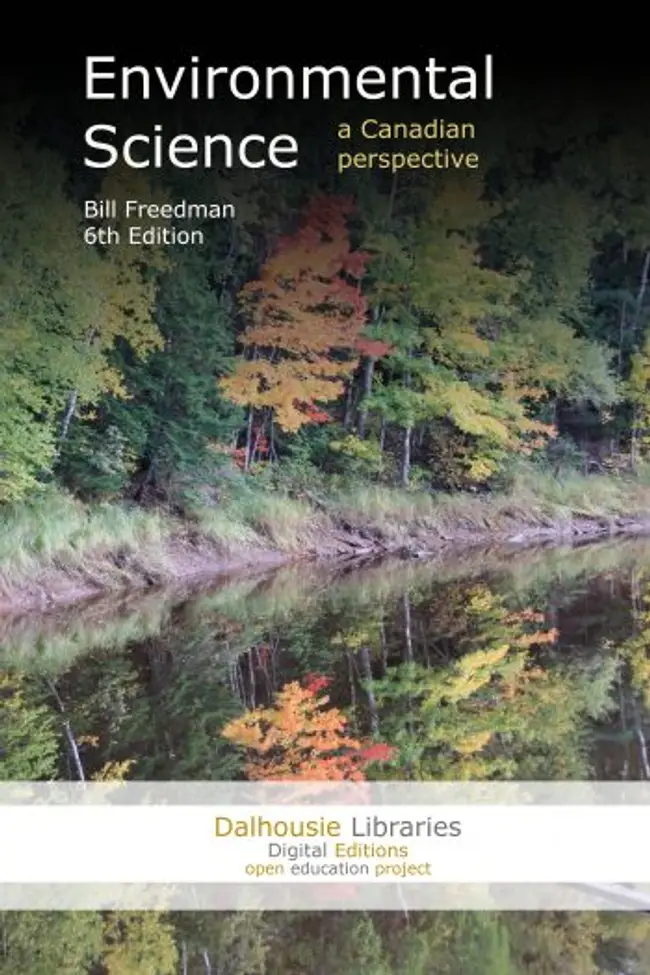
Environmental Science
Not rated yetRate this bookBill Freedman’s Environmental Science connects ecological foundations with resources, pollution and sustainability. Twenty-eight chapters move from energy, nutrients, evolution and populations to Canadian environmental issues, land use, urban systems, war and the biodiversity crisis.
Free reading is available at the official source. Opens in a new tab.
 Free
About this book
Bill Freedman’s Environmental Science connects ecological foundations with resources, pollution and sustainability. Twenty-eight chapters move from energy, nutrients, evolution and populations to Canadian environmental issues, land use, urban systems, war and the biodiversity crisis.
How to study this book
For each issue, map the source, pathway, affected system and proposed response. Distinguish a measured concentration from exposure, risk or observed harm, and a historical case from a current condition. Use a local ecosystem as a continuing example and connect biological processes with human decisions without reducing a complex issue to one cause.
Chapter-wise explanations and study tasks
Chapter 1 — Ecosystems and Humans
The opening chapter places people within ecological systems while examining the environmental consequences of human activity. It introduces the relationships needed to analyse problems across scales. Separate a description of how a system works from a value judgement about what should be protected.
Study task: Map a human activity into an ecosystem, identifying dependencies and effects in both directions.
Chapter 2 — Science and the Natural World
Scientific inquiry connects questions, evidence, hypotheses and revision. Environmental questions can involve uncertainty and competing explanations without becoming matters of arbitrary opinion. Evaluate the method and scope behind a conclusion rather than relying on the confidence of its presentation.
Study task: Turn an environmental concern into a testable question and identify an observation that could challenge your explanation.
Chapter 3 — The Physical World
Physical and chemical foundations help explain environmental materials and processes. Matter, reactions and environmental conditions constrain what organisms can do. Connect a later ecological claim with its physical basis rather than treating chemistry as an unrelated preliminary topic.
Study task: Explain how one physical or chemical property affects a biological process in an ecosystem.
Chapter 4 — Energy and Ecosystems
Energy enters, is transformed and moves through ecological systems with losses of usable energy at each stage. Food-web relationships therefore involve more than counting organisms. Distinguish energy flow from the cycling of material, and identify the system boundary used in an account.
Study task: Draw an energy pathway and explain why energy is not recycled in the same way as a nutrient.
Chapter 5 — Flows and Cycles of Nutrients
Nutrients move among organisms and physical reservoirs through processes operating at different rates. Human activity can alter inputs, storage or transfer without creating a new natural cycle. Follow quantities and pathways to identify where a disturbance changes availability.
Study task: Map a nutrient cycle and add one human intervention, predicting where its effects could accumulate.
Chapter 6 — Evolution
Evolution explains change in inherited characteristics and the diversity of adaptations. Selection operates through variation and differences in reproduction, not an organism’s desire to improve. Connect evolutionary timescales with environmental change and avoid treating every characteristic as an optimal response.
Study task: Explain a possible selection process while distinguishing inherited change from an individual’s short-term adjustment.
Chapter 7 — Biodiversity
Diversity includes different levels of biological variation and cannot be represented by a species count alone. The chapter establishes language for describing that variety and its significance. Identify which level a measure captures before using it to compare sites or assess a loss.
Study task: Compare two biodiversity measures and explain what each could miss in the same habitat.
Chapter 8 — Biomes and Ecozones
Climate, physical setting and ecological history help organise large-scale patterns of life. Biomes and ecozones provide different ways of grouping environments. Regional classification is useful without implying uniform conditions at every location. Examine the criteria behind a boundary.
Study task: Place a local habitat in a broader classification and identify a feature that the regional label does not describe.
Chapter 9 — Individuals to the Biosphere
Ecology connects organisms, populations, communities and ecosystems through interactions and environmental limits. An explanation can change with scale, so evidence about an individual does not automatically establish a population outcome. Follow the proposed mechanism across levels.
Study task: Analyse one ecological interaction at individual and community scales, stating what additional evidence each requires.
Chapter 10 — Global Populations
Population change reflects births, deaths, movement and the distribution of resources and consumption. Aggregate totals conceal different demographic conditions. Avoid attributing environmental pressure to numbers alone without examining per-person demands and institutions.
Study task: Compare two hypothetical populations with different growth and consumption patterns and explain the limits of a size-only comparison.
Chapter 11 — The Canadian Population
The Canadian case connects demographic patterns with settlement and environmental demand. National averages can obscure regional differences and unequal consumption. Treat the source’s figures as historical evidence, using the chapter to learn how population and environmental indicators should be related.
Study task: Design an updated comparison of two regions, identifying the demographic and consumption data needed.
Chapter 12 — Resources and Sustainable Development
Resource use depends on ecological processes, technology and choices about value and access. Sustainable development raises questions about time horizons, distribution and limits. A resource can be economically valuable without being renewable at the rate it is used.
Study task: Assess a fictional resource proposal through renewal rate, demand, distribution and long-term consequences.
Chapter 13 — Non-Renewable Resources
Finite stocks and their extraction create questions about availability, cost and environmental effects. A reserve estimate depends on knowledge and conditions rather than describing an unchanging total. Compare the resource’s benefits with impacts across extraction, use and disposal.
Study task: Map the life cycle of a non-renewable material and identify an impact missed by considering extraction alone.
Chapter 14 — Renewable Resources
Renewable resources can be depleted when harvesting or disturbance exceeds recovery. Sustainability therefore requires understanding regeneration and uncertainty, not merely assigning a renewable label. Management choices interact with habitat, demand and the time needed for renewal.
Study task: Explain how a renewable resource could decline under harvesting and propose evidence needed to assess a sustainable rate.
Chapter 15 — Environmental Stressors
Stressors, contamination, pollution, disturbance and toxicity describe related but distinct conditions. Effects depend on intensity, duration, exposure and the system affected. Risk analysis connects possible harm with evidence and uncertainty rather than equating the presence of a substance with damage.
Study task: Distinguish a hazard, an exposure pathway and a measured effect in a fictional case.
Chapter 16 — Gaseous Air Pollution
Sulphur, nitrogen and other gases interact with atmospheric processes and biological systems. Sources, chemical transformation and exposure shape effects, while ozone illustrates the importance of location and context. Compare a pollutant’s emission with the concentration experienced by a receptor.
Study task: Trace a gaseous pollutant from source to exposure and identify where atmospheric conditions change the relationship.
Chapter 17 — Atmospheric Gases and Climate Change
The greenhouse effect links atmospheric composition with Earth’s energy balance. The chapter examines carbon dioxide and responses within its source-era evidence. Distinguish a physical mechanism from the historical numerical record and from a policy choice, updating time-sensitive figures before practical use.
Study task: Explain a carbon-related climate mechanism and identify which supporting observations would need a current update.
Chapter 18 — Toxic Elements
Element concentrations, chemical availability and exposure affect toxicity. Natural and human sources can contribute to the same environmental material, so origin alone does not determine safety. Trace how a substance becomes available to organisms rather than judging risk from a total concentration without context.
Study task: Compare total concentration with biologically available exposure in a hypothetical assessment.
Chapter 19 — Acidification
Acidification connects emissions and atmospheric chemistry with changes in soils, vegetation and waters. Buffering and site conditions influence response. Management can address sources or damaged systems, but those actions operate through different mechanisms and timescales.
Study task: Draw a causal chain from emissions to a surface-water effect and identify a factor that could moderate it.
Chapter 20 — Surface-Water Problems
Eutrophication and dams illustrate different ways human activity changes aquatic systems. Nutrient enrichment affects biological processes, while impoundment changes flows and habitat. Evaluate the benefits and costs of a response within the affected watershed rather than assuming a single water-quality measure captures everything.
Study task: Compare a nutrient-control proposal with a flow-management proposal, identifying the ecological question each addresses.
Chapter 21 — Oil Spills
Oil-spill effects depend on product properties, exposure, habitat and recovery processes. Visible contamination and longer-term ecological harm are not identical measures. Consider how response actions can have their own consequences, and compare cases without assuming all spills behave alike.
Study task: Develop a spill-assessment framework separating immediate exposure, ecological effects and recovery indicators.
Chapter 22 — Pesticides
Pesticides connect intended control with possible effects on non-target organisms and environmental pathways. Persistence, movement and exposure shape risk alongside toxicity. Compare benefits with alternatives and unintended effects, keeping a product’s intended use distinct from evidence of its wider consequences.
Study task: Map target and non-target pathways for a fictional pesticide use and identify evidence needed for comparison with an alternative.
Chapter 23 — Environmental Effects of Forestry
Forestry changes habitats, nutrient flows and landscape structure while supplying valued materials. Harvest method, extent and recovery time influence consequences. A stand-level observation may miss landscape effects, so define the scale and time horizon of an assessment.
Study task: Compare two hypothetical harvesting patterns using habitat continuity, regeneration and watershed effects.
Chapter 24 — Agriculture and the Environment
Food production interacts with soil, water, nutrients, biodiversity and energy. Productivity alone does not describe sustainability, while an environmental comparison must also consider what is produced. Examine management choices as a system rather than judging a practice from one attractive feature.
Study task: Compare two farming strategies using yield, resource inputs and one off-site effect under stated boundaries.
Chapter 25 — Urban Ecology
Cities concentrate people, infrastructure and resource flows but remain ecological systems. Green space, waste, transport and water connect urban conditions with distant environments. Assess both local conditions and displaced impacts rather than treating the city boundary as the limit of its footprint.
Study task: Map an urban resource flow from its origin through use and disposal, including an effect outside the city.
Chapter 26 — War
Conflict can damage ecosystems through immediate destruction, contamination and longer-term disruption of governance and livelihoods. Environmental consequences vary with location, activity and recovery conditions. The chapter broadens analysis beyond conventional peacetime pressures while requiring care about the evidence behind historical cases.
Study task: Separate direct, indirect and persistent environmental effects in a historical conflict discussed by the source.
Chapter 27 — The Biodiversity Crisis
Habitat change, exploitation and other pressures interact in biodiversity loss. The chapter connects threats with conservation questions at multiple scales. A protected-area designation is an action, not sufficient evidence of effectiveness. Ask which species, habitats or processes are being maintained and how this is known.
Study task: Propose a conservation evaluation with a clear target, baseline, threat mechanism and outcome measure.
Chapter 28 — Ecologically Sustainable Development
The concluding chapter integrates ecological understanding with decisions about development. Trade-offs, uncertainty and distribution remain important even when a proposal has a sustainability label. Build a judgement from explicit criteria and evidence, and identify who bears the risks and benefits over time.
Study task: Evaluate a development proposal using ecological limits, social distribution and a plan for monitoring and revision.
Applied assignment
Prepare an environmental systems study connecting one ecological process with a resource use and a pollution or habitat issue. Define boundaries, assess evidence, compare two responses and specify what monitoring could challenge your preferred option.
Suggested reading plan
Read Chapters 1–9 for foundations, 10–14 for populations and resources, 15–22 for stressors and pollution and 23–28 for land use and synthesis. Keep a source–pathway–effect diagram throughout and update only clearly identified historical indicators when needed.
Questions for reflection
- Does an indicator measure a pressure, an exposure or an outcome?
- How do scale and system boundaries change a comparison?
- Who receives the benefits and bears the environmental costs of a proposal?
Edition and source notes
Based on Freedman’s linked 2018 Canadian resource, covering all twenty-eight chapters. The guide presents historical cases and figures as source-edition material, not current environmental statistics. The explanations and tasks are original and distinguish scientific mechanisms from value-based decisions.
About access & copyright
This page provides book information and study material. Full-text access is provided by the original publisher or authorised source; a listing does not grant permission to republish the book.
Read our Library Access & Copyright policyExplore the contents
Check the chapters covered in this edition.
Visit the official source
See reading, preview or purchase options.
Save for later
Keep this textbook in your saved collection.
Reader ratings & reviews
Share your thoughts
Your review helps other students choose the right resources.
KEEP LEARNING
Your next great read
Air Pollution Mathematics
 for Public and Occupational Health Professionals
View Mathematics for Public and Occupational Health Professionals — book Biology
Principles of Development - An inquisitive journey into embryology -
View Principles of Development - An inquisitive journey into embryology - — book Algebra
Fanshawe Pre-Health Sciences Mathematics 2
View Fanshawe Pre-Health Sciences Mathematics 2 — book Algebra
Fanshawe Pre-Health Sciences Mathematics 1
View Fanshawe Pre-Health Sciences Mathematics 1 — book Mathematics
Math 3080 Preparation
View Math 3080 Preparation — book Algebra
Linear Algebra with Applications
View Linear Algebra with Applications — book Atoms
Introductory Chemistry- 1st Canadian Edition
View Introductory Chemistry- 1st Canadian Edition — book Business and Economics
Mathematics of Finance
View Mathematics of Finance — book Business and Economics



