
 Science
Textbook
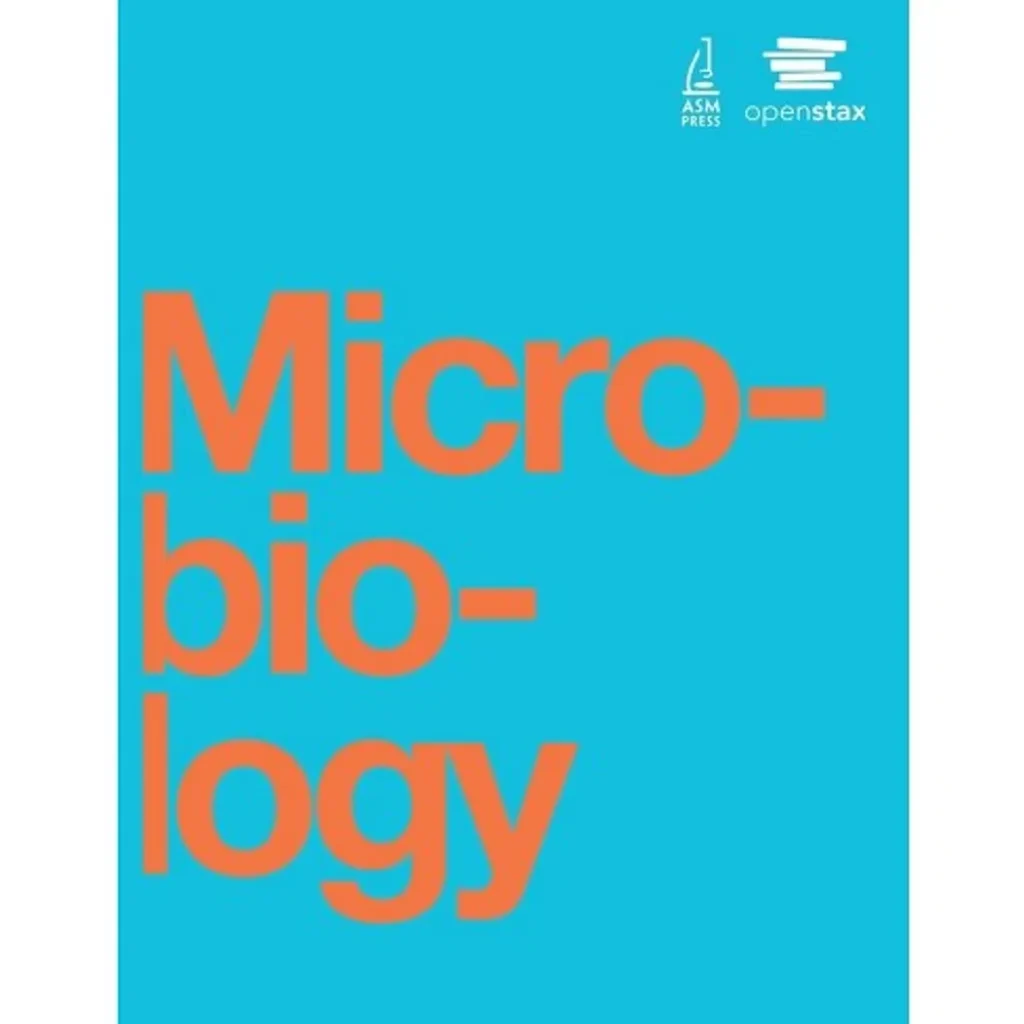
Microbiology
Not rated yetRate this bookOpenStax Microbiology connects the biology of microorganisms with host responses, infection, and applications in allied health. Twenty-six chapters progress from microscopy and cell structure through metabolism, growth, genetics, control methods, epidemiology, immunity, and infections organized by body system. This guide follows that progression and emphasizes mechanisms and comparisons rather than memorizing isolated organism lists. The final disease chapters are presented as academic surveys of the source, while diagnostic and treatment decisions require current professional guidance and the appropriate clinical context.
Free reading is available at the official source. Opens in a new tab.
 Free
About this book
OpenStax Microbiology connects the biology of microorganisms with host responses, infection, and applications in allied health. Twenty-six chapters progress from microscopy and cell structure through metabolism, growth, genetics, control methods, epidemiology, immunity, and infections organized by body system. This guide follows that progression and emphasizes mechanisms and comparisons rather than memorizing isolated organism lists. The final disease chapters are presented as academic surveys of the source, while diagnostic and treatment decisions require current professional guidance and the appropriate clinical context.
Chapter-wise summaries and reading tasks
Chapter 1 An Invisible World
Microbiology begins with organisms and processes that are not readily visible to unaided observation. The chapter connects historical discoveries with systematic classification and the major types of microorganisms. Microbes are not synonymous with pathogens: their ecological roles and relationships with other organisms extend far beyond disease. Classification provides a language for organizing similarities, but the categories must be linked with biological characteristics. Historical examples also show how methods and evidence changed explanations over time. Readers should distinguish observing a phenomenon, identifying an organism, and establishing its role in a process, because those require different kinds of evidence.
Study task. Compare major microbial groups by cellular organization and a representative role. Explain why discovering a microorganism in a setting does not by itself establish that it caused disease.
Chapter 2 How We See the Invisible World
Microscopy makes different aspects of small structures accessible through the interaction of light, instruments, and specimen preparation. The chapter connects magnification with resolution and contrast, showing why a larger image is not necessarily more informative. Different instruments suit different questions, while stains can make features distinguishable at the cost of introducing preparation effects. The image is therefore an observation produced under specific conditions rather than an unmediated view of every property of the organism. Choosing a method requires knowing which structure or behaviour needs to be examined and what the technique can actually reveal.
Study task. Compare two microscopy methods for a defined question. Explain the distinction between magnification and resolution and identify a limitation introduced by specimen preparation.
Chapter 3 The Cell
Cell theory developed through evidence that challenged earlier explanations of life’s origins and organization. The chapter compares prokaryotic and eukaryotic cells and links structural features with their functions. Membranes, walls, internal compartments, and external structures affect how cells interact with the environment and how they can be studied. A difference in organization can also help explain why a treatment or method affects one cell type differently from another. The aim is to understand relationships rather than merely label a diagram. Historical debates provide an example of how controlled experiments can distinguish competing explanations.
Study task. Create a structure–function comparison of prokaryotic and eukaryotic cells. Explain how one structural difference could affect identification or selective targeting.
Chapter 4 Prokaryotic Diversity
Prokaryotes display extensive diversity in habitat, physiology, and relationships with other organisms. The chapter surveys major bacterial groups and archaea while connecting them with microbiomes and environmental roles. Broad classifications can be useful starting points, but membership in a group does not establish that every member shares the same clinical or ecological behaviour. Differences in metabolism, cell characteristics, and evolutionary relationships help explain that variation. The chapter also counters the assumption that all prokaryotes are harmful by examining cooperative and environmental functions. A comparison table is most useful when it connects a group’s distinguishing feature with an actual biological consequence.
Study task. Compare selected prokaryotic groups by cell characteristics, habitat, and role. Include one example that demonstrates why prokaryotic diversity cannot be reduced to a list of pathogens.
Chapter 5 The Eukaryotes of Microbiology
Microbial eukaryotes include organisms with very different structures, life cycles, and ecological relationships. The chapter examines unicellular parasites, helminths, fungi, algae, and lichens. Some organisms are microscopic throughout life, while others have stages important to microbiology. Life-cycle knowledge helps explain transmission and persistence and prevents unrelated groups from being treated as if they share the same biology. Fungi and algae also have significant environmental and practical roles beyond disease. The learning task is to connect cellular organization and reproduction with the organism’s relationship to its environment or host.
Study task. Compare a fungus, a unicellular parasite, and a helminth through organization and life cycle. Identify which stage matters for understanding each example’s interaction with a host.
Chapter 6 Acellular Pathogens
Acellular infectious agents differ from cellular organisms in structure and dependence on hosts. The chapter develops viral organization and replication before considering cultivation, identification, viroids, virusoids, and prions. A virus relies on host processes, so its life cycle cannot be understood as ordinary cell division. Different replication strategies also influence what can be observed or measured. Prions provide a further contrast because their infectious process is not based on the same kind of nucleic-acid genome. Understanding these distinctions helps explain why methods effective against one class of agent may not address another.
Study task. Compare viral replication with bacterial cell division. Then explain how a prion differs from a virus and why the distinction matters for understanding the infectious process.
Chapter 7 Microbial Biochemistry
Microbial biochemistry relates molecular structure to cellular function. Carbohydrates, lipids, and proteins contribute to energy storage, barriers, recognition, catalysis, and other activities. The chapter connects those roles with ways biochemical characteristics can support identification. A positive test is evidence about a capability or reaction under the test conditions, not a complete description of the organism. Linking the molecular basis of a result with its interpretation makes identification more meaningful than memorizing a colour change. This foundation also supports later chapters on metabolism, genetics, and selective control.
Study task. For one biochemical identification test, explain the underlying capability, the observed result, and the limit of the inference. Connect the capability with a relevant molecular function.
Chapter 8 Microbial Metabolism
Metabolism organizes how microbes obtain energy and materials and use them to sustain cellular activity. The chapter examines enzymes, carbohydrate catabolism, respiration, fermentation, alternative substrates, photosynthesis, and biogeochemical cycles. Respiration and fermentation differ in how electron transfer and energy recovery are organized, rather than simply in whether a process happens quickly. Microbial diversity allows different organisms to exploit different environments and contribute to large-scale material cycling. Tracking inputs, outputs, electron donors, and acceptors helps connect pathways without reducing them to disconnected names. The central question is how the pathway supports the organism under the conditions available.
Study task. Compare respiration and fermentation using energy transfer and products. Trace one microbial role in an environmental cycle and explain why its metabolic capability matters.
Chapter 9 Microbial Growth
Microbial growth usually refers to increasing population size rather than merely enlargement of an individual cell. The chapter connects growth patterns with oxygen, pH, temperature, other environmental conditions, and culture media. Conditions that support one organism may inhibit another, which makes them useful for selective cultivation while also limiting what a culture reveals. A growth curve reflects changing population behaviour and environmental constraints. Laboratory observation therefore needs interpretation: failure to grow under one set of conditions does not necessarily prove absence from the original sample. The chapter prepares readers to connect environmental requirements with both identification and control.
Study task. Explain how a selective medium and incubation condition influence what is detected. Interpret the phases of a growth curve and identify an inference that culture alone cannot justify.
Chapter 10 Biochemistry of the Genome
The genome chapter connects historical experiments with the structure and function of DNA, RNA, and cellular genomes. Nucleic acids store or help express information through particular molecular arrangements. Different genome organizations influence how genetic material is maintained and used. The experiments are important because they show how conclusions about hereditary material were established rather than simply asserted. Readers should distinguish the chemical structure of a molecule from the biological role it performs. This prepares the transition from identifying information-bearing structures to explaining replication, expression, regulation, and genetic change.
Study task. Outline the logic of an experiment supporting the role of DNA in inheritance. Compare DNA and RNA through structure and function without assuming each has only one role.
Chapter 11 Mechanisms of Microbial Genetics
Microbial genetics explains how information is copied, expressed, altered, exchanged, and regulated. The chapter moves through replication, transcription, translation, mutation, horizontal gene transfer, and operon-based regulation. A change in DNA sequence differs from a change in gene expression, and both can affect phenotype through different mechanisms. Horizontal transfer allows prokaryotes to gain variation without the sexual reproduction familiar from many eukaryotes. Regulation links expression with environmental conditions, avoiding the assumption that every gene is expressed continuously. A process map helps readers connect molecular events with observable changes in microbial behaviour.
Study task. Trace information from a gene to a functional product, then distinguish mutation, regulation, and horizontal transfer as explanations for a changed phenotype.
Chapter 12 Modern Applications of Microbial Genetics
Genetic tools allow microbial molecules and information to be studied and used in new ways. The chapter examines engineering methods, visualization and characterization of DNA, RNA, and protein, genome-scale approaches, pharmaceutical applications, and gene therapy. Each technique answers a particular question and has limits on what its signal establishes. Detecting a sequence is not automatically evidence of expression or biological activity. The applications also introduce ethical and practical considerations about interpretation and use. Readers should connect the method’s target, output, controls, and intended inference rather than learn techniques as a list of interchangeable tests.
Study task. Compare a method that detects DNA with one that measures a protein product. Explain what additional evidence would be needed before claiming that a detected gene is functionally active.
Chapter 13 Control of Microbial Growth
Controlling microbial growth requires distinguishing goals such as removing, reducing, inhibiting, or eliminating relevant organisms. The chapter compares physical and chemical methods and explains how effectiveness can be tested. Performance depends on the organism, material, exposure conditions, and intended use, not only the name of a product or method. A result obtained under one laboratory condition should not be generalized without considering those factors. The chapter’s conceptual distinctions help readers understand why a method suitable for one surface or specimen may be unsuitable for another. Academic comparison should remain separate from operational procedures governed by current safety standards.
Study task. Compare two control methods by target, mechanism, and important conditions. Explain why an effectiveness claim needs a specified organism and context.
Chapter 14 Antimicrobial Drugs
Antimicrobial drugs exploit biological differences or processes to inhibit pathogens while limiting harm to a host. The chapter connects discovery, mechanisms, resistance, testing, and development of new agents. Drugs directed at bacteria, fungi, viruses, or other agents are not interchangeable, because the targets differ. Resistance involves biological mechanisms and selection; it is not a patient’s body becoming resistant in the same sense. Susceptibility evidence contributes to decisions but must be interpreted with clinical context and current guidance. The learning goal is to understand selectivity and evolutionary consequences rather than memorize treatment choices.
Study task. Link several antimicrobial mechanisms with their biological targets. Explain how selection can increase resistance and why a laboratory result alone is not a complete treatment plan.
Chapter 15 Microbial Mechanisms of Pathogenicity
Pathogenicity concerns the ability to cause disease, while virulence concerns the degree or mechanisms of harmful effect in context. The chapter examines entry, attachment, invasion, damage, and factors associated with different pathogen groups. Exposure does not guarantee disease: dose, route, host conditions, and microbial capabilities interact. A virulence factor is useful to understand through what it enables, such as attachment or evasion, rather than as an isolated vocabulary item. The chapter connects microbial biology with host interaction and sets up the study of disease patterns and immune responses.
Study task. Map a hypothetical infection from exposure to possible harm. Identify one host factor and one microbial factor and explain why neither alone guarantees the outcome.
Chapter 16 Disease and Epidemiology
Epidemiology describes the occurrence, distribution, and determinants of disease in populations. The chapter develops terminology, methods of tracking, transmission routes, and the role of global public health. A cluster of cases raises questions about shared exposure and spread, but temporal association alone does not establish the cause. Incidence and prevalence summarize different aspects of occurrence, while surveillance depends on consistent definitions and reporting. Understanding transmission helps connect a prevention measure with its intended mechanism. The chapter moves from individual infection to population patterns without losing the need to evaluate study design and evidence.
Study task. Compare incidence and prevalence for an infectious disease scenario. Construct a possible transmission explanation and identify the evidence required to distinguish it from a shared-source exposure.
Chapter 17 Innate Nonspecific Host Defenses
Innate defenses provide barriers and responses that act before the development of a highly specific adaptive response. The chapter considers physical, chemical, and cellular defenses, recognition, phagocytosis, inflammation, and fever. These responses are coordinated processes rather than a simple wall around the body. Recognition mechanisms detect features associated with potential threats, while cellular activities help contain or remove them. Inflammation can be protective but also contributes to symptoms and damage depending on context. Linking the steps makes it possible to understand what happens after a barrier is breached and how innate responses interact with later adaptive mechanisms.
Study task. Trace a barrier breach through recognition and an innate cellular response. Explain how inflammation can contribute to protection while also producing observable symptoms.
Chapter 18 Adaptive Specific Host Defenses
Adaptive immunity develops targeted responses and memory through interacting cells and molecular recognition. The chapter connects antigen presentation and major histocompatibility complexes with T-cell and B-cell roles, cellular and humoral responses, and vaccination. Antibodies are one component of the system rather than the entirety of immunity. Primary and later responses differ because of memory, but the details depend on the antigen and context. Understanding how cells communicate and become activated is more useful than treating immune categories as separate lists. The chapter also provides a basis for interpreting immune disorders and laboratory assays.
Study task. Compare cellular and humoral adaptive responses and connect both with antigen presentation. Explain how memory changes a later response without claiming that all immunity is identical.
Chapter 19 Diseases of the Immune System
Immune function can produce disease when responses are inappropriate, misdirected, insufficient, or otherwise dysregulated. The chapter examines hypersensitivity, autoimmunity, transplantation and rejection, immunodeficiency, and cancer immunobiology. These categories involve different mechanisms and should not all be described as simply a weak immune system. A response that is protective in one context can be harmful in another. The chapter applies earlier cellular and molecular concepts to explain those differences. Readers should connect a disorder’s mechanism with the part of the immune system involved rather than infer a diagnosis from one nonspecific symptom.
Study task. Compare hypersensitivity, autoimmunity, and immunodeficiency through mechanism. Identify which earlier immune concepts are needed to explain each category.
Chapter 20 Laboratory Analysis of the Immune Response
Immune-based laboratory methods use recognition between antigens and antibodies to generate detectable signals. The chapter examines antibody production, complex detection, agglutination, enzyme-linked assays, and fluorescent techniques. A positive signal depends on the assay design, controls, and target; it can reflect different biological information in different tests. Sensitivity, specificity, timing, and the context in which the result is used affect interpretation. The chapter encourages readers to trace the sequence from target binding to measured output rather than treat a test label as an explanation. Detection and clinical meaning remain distinct steps in reasoning.
Study task. Draw a conceptual antigen–antibody assay and label target, binding reagent, signal, and controls. Explain one way a result could be misinterpreted without context.
Chapter 21 Skin and Eye Infections
The skin and eyes combine protective anatomy with microbial communities and opportunities for infection. The chapter first establishes normal conditions, then surveys bacterial, viral, fungal, protozoan, and helminthic infections affecting these sites. Comparing pathogens by transmission, tissue interaction, and characteristic mechanisms is more informative than grouping them solely by similar symptoms. A disrupted barrier can change risk, while the presence of normal microbiota should not automatically be labelled disease. The chapter applies earlier ideas about attachment, defenses, and identification to a concrete body-system setting. It is an educational comparison rather than a diagnostic shortcut.
Study task. Compare two skin or eye infections from different pathogen groups using route, affected tissue, and mechanism. Explain why symptom overlap limits identification from appearance alone.
Chapter 22 Respiratory System Infections
Respiratory infections are organized around anatomy, normal microbiota, and bacterial, viral, and fungal causes. The chapter connects exposure and transmission with the defenses and vulnerabilities of the respiratory tract. Different agents can cause overlapping clinical patterns, making the relationship between organism, site, and host important. The survey also illustrates why a disease label and an etiological explanation are not always the same. Readers should connect earlier concepts such as droplets, barriers, immune responses, and laboratory evidence rather than memorize a list of names detached from mechanisms. Current diagnostic and management decisions remain outside the scope of a summary.
Study task. Choose respiratory examples from two pathogen groups and compare transmission and host interaction. Identify what evidence would be needed beyond a shared symptom.
Chapter 23 Urogenital System Infections
Urogenital infection is examined through the distinct anatomy and microbial conditions of urinary and reproductive sites. The chapter surveys bacterial, viral, fungal, and protozoan causes and connects them with routes and host responses. Similar anatomical proximity does not make all infections alike in transmission or biology. Normal microbiota and site-specific conditions influence how findings should be interpreted. The chapter develops a comparative framework that links organism type, location, exposure, and mechanism. Careful terminology also avoids equating every urogenital infection with sexual transmission or assuming one explanation for all symptoms.
Study task. Compare urinary and reproductive infection pathways using two source examples. Explain why location, organism, and transmission route must be considered separately.
Chapter 24 Digestive System Infections
Digestive infections are introduced through anatomy and normal microbiota, then compared across oral, gastrointestinal, bacterial, viral, protozoan, and helminthic conditions. The chapter links ingestion, survival, colonization, toxins, and host effects through different mechanisms. The same general symptom can result from very different biological processes, and normal microbial roles remain distinct from pathogenic activity. Life cycles and exposure sources can be especially important for understanding parasites. Applying the earlier framework of route, agent, host, and evidence helps readers organize a large disease survey without confusing all food-associated problems with one infectious mechanism.
Study task. Compare a toxin-associated digestive illness with an infection requiring microbial establishment. Identify how the mechanism changes the evidence needed to explain the outcome.
Chapter 25 Circulatory and Lymphatic System Infections
Circulatory and lymphatic infections demonstrate how pathogens interact with transport systems and can produce effects beyond an initial entry site. The chapter compares bacterial, viral, and parasitic examples using anatomy, spread, and host responses. A local infection, bloodstream involvement, and systemic consequences are related but not interchangeable descriptions. Vectors and other exposure routes introduce additional links between ecology and disease. The survey applies earlier principles of dissemination, immunity, and epidemiology, encouraging readers to trace how the agent reaches and affects the system. Similar severity does not imply an identical pathogen or mechanism.
Study task. Trace one source example from exposure to circulatory or lymphatic involvement. Identify where host defenses act and compare the pathway with a different pathogen group.
Chapter 26 Nervous System Infections
Nervous-system infections are examined through the anatomy that normally protects neural tissues and the routes by which different agents can affect them. The chapter surveys bacterial, acellular, fungal, and parasitic causes. Direct invasion, toxins, and other mechanisms can produce neurological effects through different pathways, so a symptom alone does not identify the agent. This final system chapter draws together microbial diversity, barriers, pathogenicity, immune response, and diagnostic reasoning. A mechanism-based comparison helps retain those connections without turning the survey into a list of interchangeable conditions. Professional assessment and current clinical guidance are essential for real presentations.
Study task. Compare two nervous-system conditions with different microbial mechanisms. Explain how the pathway to neurological effects differs and which earlier microbiology concepts clarify the contrast.
How to study this book
- Build comparison tables using organism group, structure, metabolism, transmission, host interaction, and evidence rather than disease names alone.
- For every laboratory method, identify its target, signal, controls, and limits on interpretation.
- Link genetics and metabolism with later topics such as resistance, growth control, and pathogenicity.
- Use body-system chapters to apply mechanisms learned earlier; distinguish normal microbiota, colonization, infection, and disease.
- Follow institutional biosafety procedures for any laboratory work. Use current professional guidance for diagnostic or treatment decisions rather than these study summaries.
Questions for reflection
- Why does detection of an organism not necessarily establish causation?
- How do cellular differences support selective antimicrobial action?
- How can the same immune mechanism protect in one context and contribute to harm in another?
Source edition and coverage
All twenty-six main chapters of the linked OpenStax Microbiology edition are covered. The body-system sections summarize educational mechanisms and comparisons without providing individualized diagnostic or treatment advice. This original study guide explains the source in new wording and adds learning activities. Read the publisher’s book and complete exercises.
About access & copyright
This page provides book information and study material. Full-text access is provided by the original publisher or authorised source; a listing does not grant permission to republish the book.
Read our Library Access & Copyright policyExplore the contents
Check the chapters covered in this edition.
Visit the official source
See reading, preview or purchase options.
Save for later
Keep this textbook in your saved collection.
Reader ratings & reviews
Share your thoughts
Your review helps other students choose the right resources.
KEEP LEARNING
Your next great read
Science Science
Concepts of Biology
View Concepts of Biology — book Science
College Physics For AP® Courses 2e
View College Physics For AP® Courses 2e — book Science
College Physics 2e
View College Physics 2e — book Science
Chemistry: Atoms First 2e
View Chemistry: Atoms First 2e — book Science
Chemistry 2e
View Chemistry 2e — book Science
Biology for AP® Courses
View Biology for AP® Courses — book Science
Biology 2e
View Biology 2e — book Science
Astronomy 2e
View Astronomy 2e — book Science



